

China has begun fielding its new HQ-16F surface-to-air missile system with units in the Eastern Theater Command, placing an upgraded air-defense interceptor opposite Taiwan.
The system represents a significant evolution of the long-running HQ-16 family, extending engagement range while incorporating updated radar and guidance technologies.
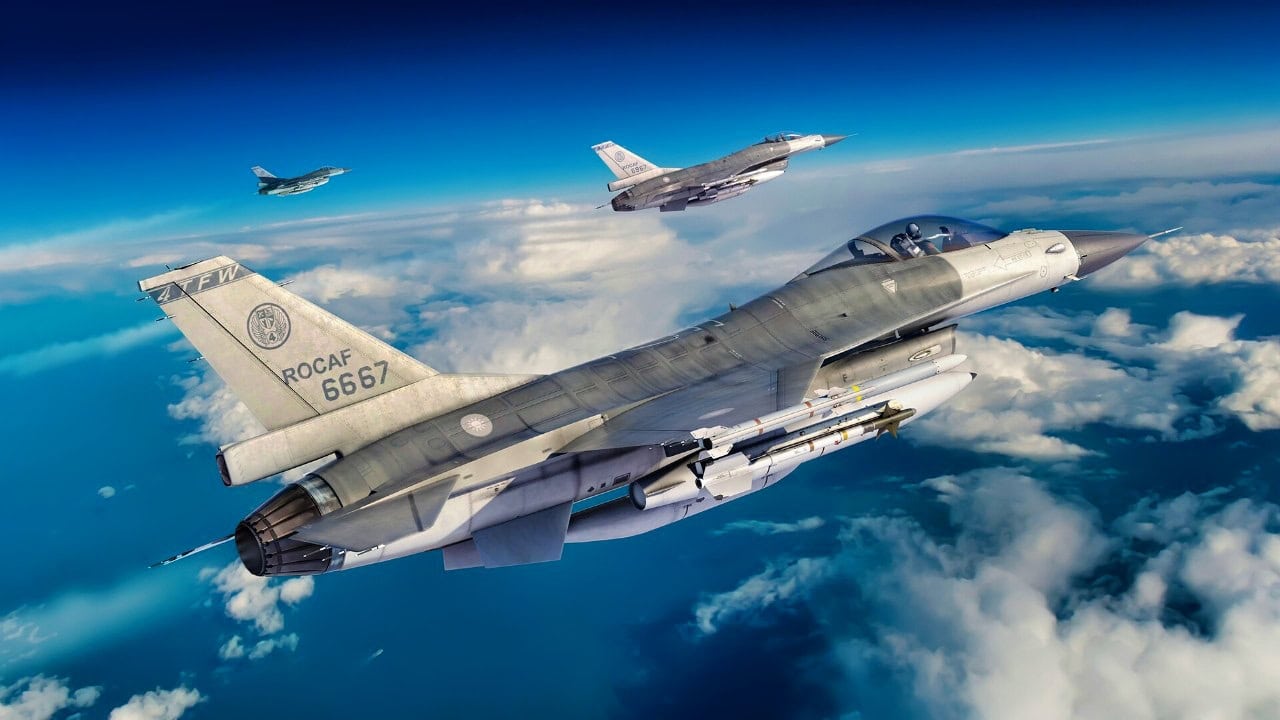
F-16V Fighter Jet. Image Credit: Creative Commons.
More broadly, the deployment reflects Beijing’s ongoing efforts to strengthen layered air and missile defenses around the Taiwan Strait.
What is the HQ-16F?
The HQ-16F is the latest evolution of China’s HQ-16 medium-range SAM family. Developed from a legacy design with roots in Soviet Buk concepts, the HQ-16 is assigned to frontline PLA formations responsible for engaging aircraft, cruise missiles, and precision-guided weapons coming from Taiwan.
The F-model offers a major upgrade in range. Whereas the HQ-16A had a 40-km range and the HQ-16B/C had a 70-km range, the HQ-16F has a 160-km range.
This more than doubles the engagement envelopes of earlier variants, allowing batteries to defend a much larger area from a single firing position.
Technological Upgrades
Earlier missile designs featured large mid-body wings. The HQ-16F, however, adopts a much slimmer, nearly wingless layout that is much more aerodynamic.
The benefits here include lower drag, greater energy retention, longer reach, and improved flight efficiency. The redesign explains much of the increase in range.
Simultaneously, improvements have been made to the guidance system, which has been upgraded with AESA fire-control radar, inertial mid-course navigation, and active/semi-active radar terminal guidance.
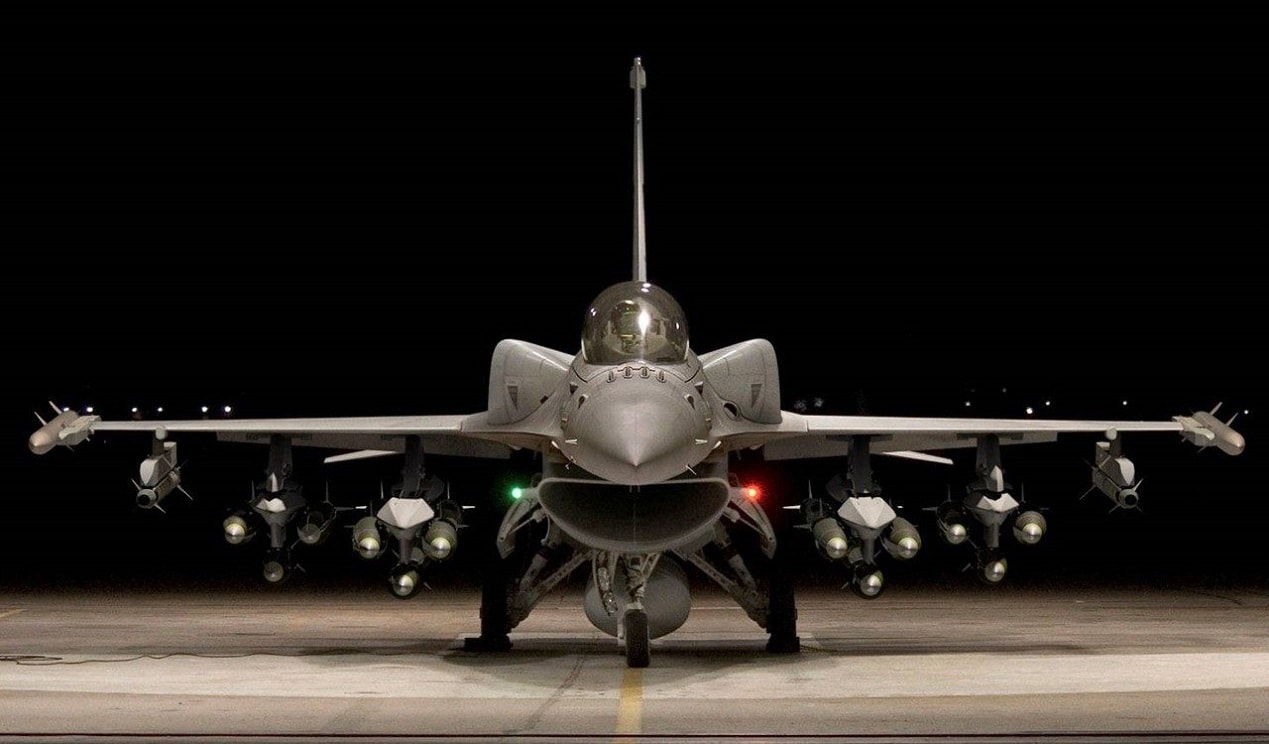
F-16 Fighter. Image: Creative Commons.
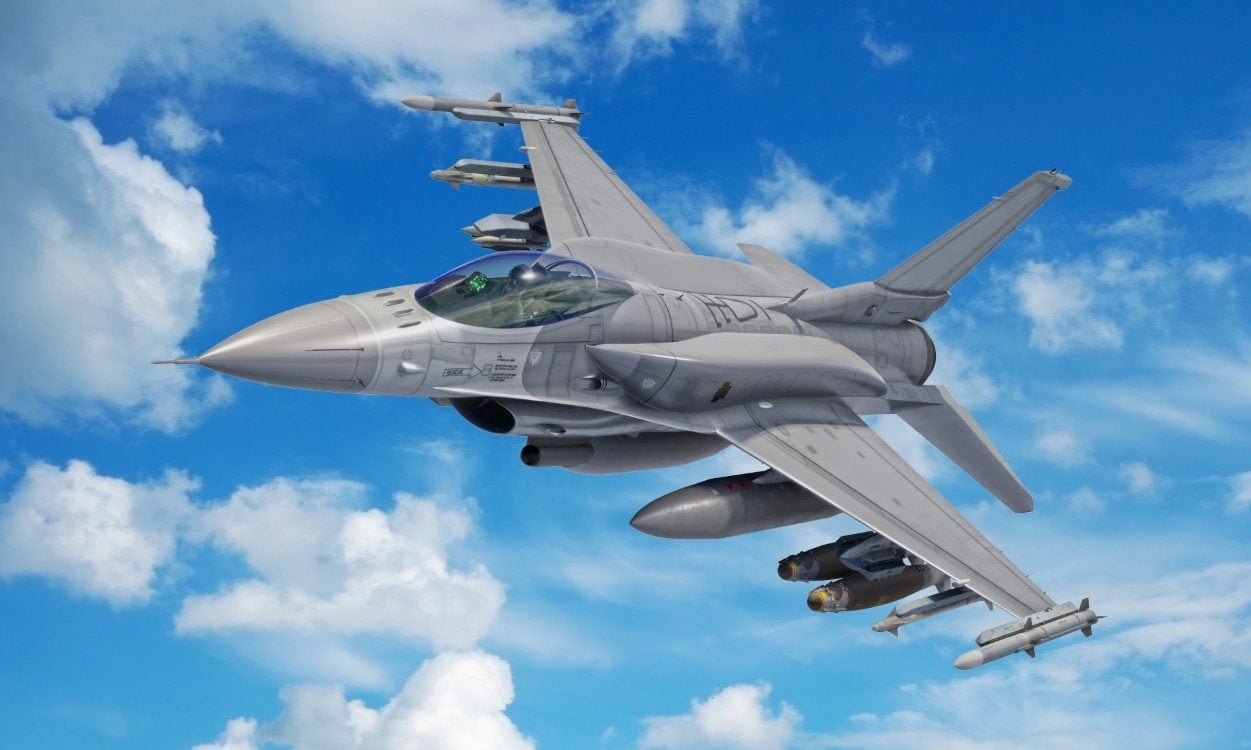
Image: Lockheed Martin.
Together, these upgrades are intended to improve target tracking, resistance to electronic warfare, and engagement of low-observable targets. The system is deployed with a truck-mounted vertical launch system.
Featuring six cells, the system can engage threats at 360 degrees without rotating the launcher, reducing reaction time to incoming aircraft or missiles from multiple directions.
Why Deploy Opposite Taiwan?
The strategic logic is defensive, an effort to strengthen protection for coastal staging areas, logistics hubs, command facilities, and troop concentrations during a potential cross-Strait conflict.
The larger defensive umbrella could complicate attacks using precision-guided rockets and missiles. The HQ-16F is not built to operate alone.
Instead, it fits into China’s broader integrated air-defense network alongside longer-range systems, including the HQ-9 and other interceptors.
China’s objective here is overlapping engagement zones that force incoming aircraft or missiles to penetrate multiple defensive layers rather than relying on a single interceptor system.
Strategic Implications
With the HQ-16F’s 160-km engagement envelope, China can extend its defensive coverage across much of the Taiwan Strait from mainland positions.
Interceptor improvements could also make it more difficult to attack China’s mainland military infrastructure, possibly forcing adversaries to contend with denser air-defense coverage.
This deployment is consistent with China’s broader anti-access/area-denial posture by adding another layer to existing coastal defenses rather than replacing higher-end systems.
Specifically, the HQ-16F is designed to occupy the middle tier of China’s increasingly layered integrated air-defense system.
The HQ-9 occupies the upper end of the network, capable of engaging aircraft and missiles at long-range. And at the lower end are shorter-range systems that protect military bases, logistics hubs, and maneuver forces; they defend against drones, helicopters, and low-flying cruise missiles.
The HQ-16F fills the gap between those layers, extending medium-range coverage while providing additional engagement opportunities.
The HQ-16F deployment also speaks to China’s tendency to modernize rather than replace; rather than design an entirely new missile family, Beijing continues to upgrade existing platforms with improved aerodynamics, electronics, sensors, and software, extending capabilities while leveraging an established production base.
Still, the HQ-16F is not just a routine missile upgrade. The new interceptor features substantially greater range, improved radar and guidance, and vertical-launch capability.
China is actively expanding the density and reach of its layered air-defense network opposite Taiwan.
This deployment illustrates Beijing’s continued focus on making the airspace around the Taiwan Strait increasingly difficult for opposing aircraft and precision-guided weapons to operate within.
About the Author: Harrison Kass
Harrison Kass is a writer and attorney focused on national security, technology, and political culture. His work has appeared in Tablet, City Journal, The Hill, The Spectator, and The Cipher Brief. He holds a JD from the University of Oregon and a master’s in Global & Joint Program Studies from NYU. More at harrisonkass.com.