

The Shenyang J-16 is China’s answer to the American F-15E Strike Eagle. This system is a large, speedy, and heavily armed fourth-generation multirole warplane designed to shoot down other planes–and so much more. China has built hundreds of them. The downside is that it is fairly easy to spot on radar. Nevertheless, the platform is fast and packs quite a wallop. This plane can carry heavy loads of air-to-air missiles and precision-guided munitions, while performing strike, maritime attack, and suppression-of-enemy-air-defense (SEAD) mission sets.
These planes may have their origins in the Soviet-era Su-27 Flanker, but they shouldn’t be written off as either old or merely imitative of that older Soviet design.
The Beginnings of J-16
It all started when China entered into a licensing agreement with the Russians to build the Su-27 in China. That deal produced the J-11.
But that was just the start. China then bought Russia’s two-seat Su-30MKK multirole warplane. After years of studying both the Su-27 and the Su-30MKK, China built the J-16.
Shenyang Aircraft Corporation (SAC) developed the plane and designed it from the start to incorporate the Chinese-made WS-10B turbofan engines.
The J-11s, for example, had those systems added after several iterations, and they used Russian-made engines.
Not even the more advanced fifth-generation air superiority warplane, the J-20 Mighty Dragon, initially used Chinese-made engines.
The J-16 first hit the unfriendly skies around 2012. Initial production reached the People’s Liberation Army Air Force (PLAAF) in 2014, and it officially entered service a year later.
The J-16 measures around 71 feet, ten inches long. It has a wingspan of about 48 feet, three inches, and stands 20 feet, ten inches tall.
Its maximum takeoff weight is about 77,000 pounds.
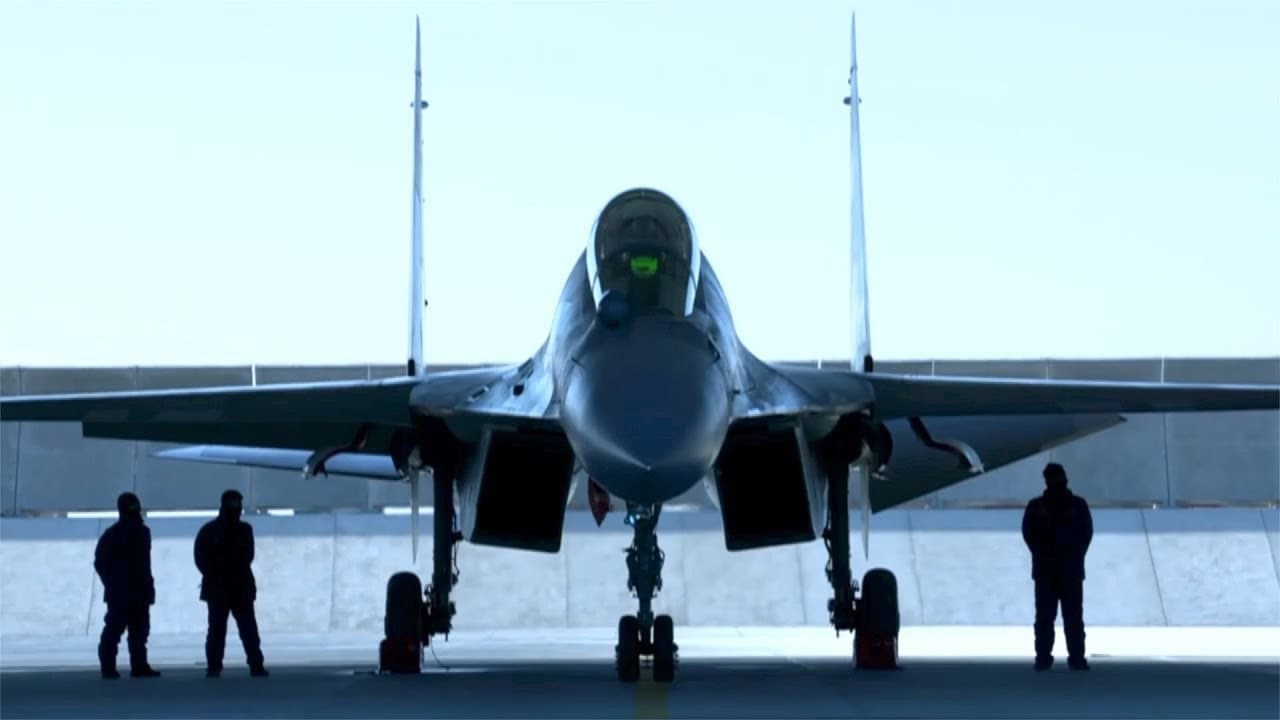
J-16D. Image Credit: Chinese Military.
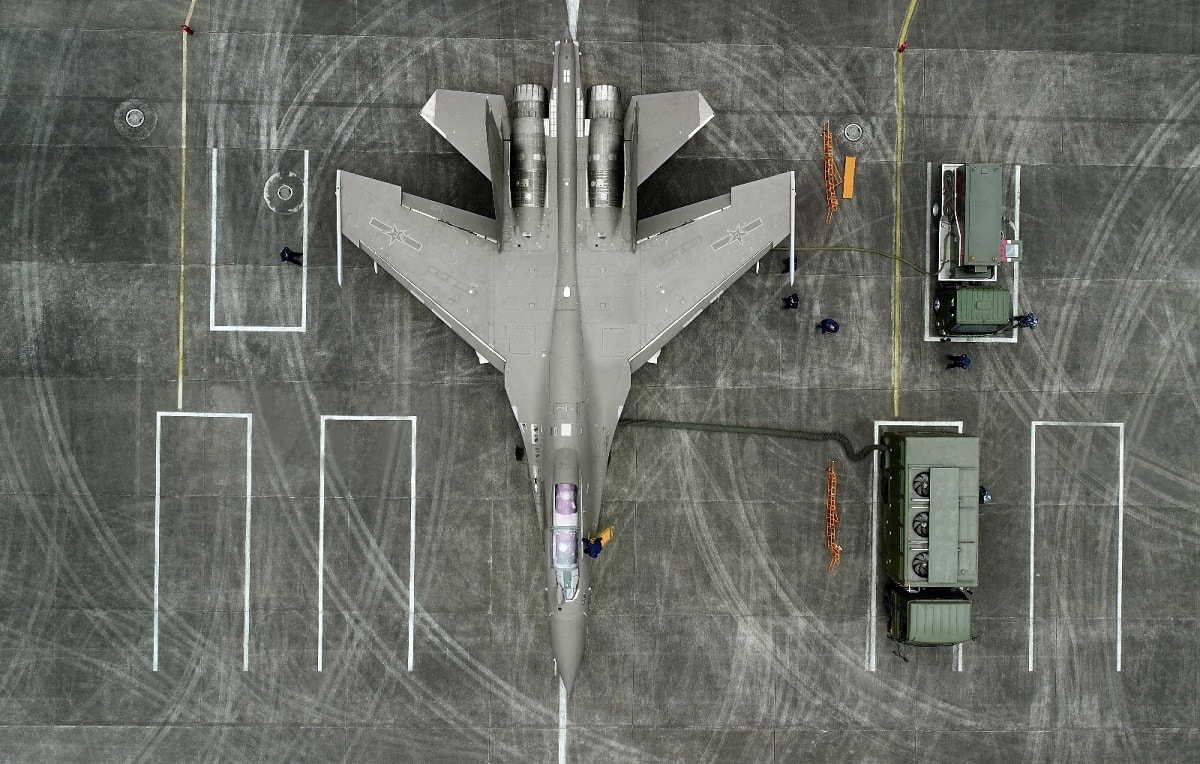
J-16 fighter. Image: Creative Commons.
Those two WS-10B afterburning turbofans provide around 30,000 pounds of thrust apiece. J-16s can reach a maximum speed of Mach 2 (about 1,320 miles per hour) with a service ceiling of 56,800 feet.
Specifications of the J-16
Most experts believe that the J-16 has a combat radius of around 1,860 miles.
For combat operations, the Pentagon believes the plane has an operational radius of around 621 miles.
That’s a key capability in any possible Taiwan invasion or blockade scenario.
These planes can reach the battlefield from Mainland China without needing complex midair refueling that could make the plane (and the midair refueler) vulnerable to attack.
When paired with China’s impressive (and growing) arsenal of beyond-visual-range (BVR) air-to-air missiles, notably the PL-15 and PL-17, the J-16 is a mean bird.
Speaking of weapons, the J-16 has 12 external hardpoints, allowing the fourth-generation warplane to carry a substantial payload.
These birds can fire short-range infrared-guided PL-10 and longer-range radar-guided PL-12 missiles (as well as the PL-15 and PL-17 very-long-range air-to-air missiles).
And those last two weapons fundamentally change the J-16’s role.
With the PL-17 onboard, a J-16 can threaten high-value support aircraft (midair refuelers, airborne early-warning aircraft, and intelligence platforms) operating hundreds of miles behind the frontline.
This also exposes evolving Chinese air warfare doctrine, which appears heavily concentrated on destroying the enablers for US combat operations.
A J-16 carrying PL-17 missiles gives the fourth-generation Chinese warplane an astonishing maximum engagement reach of 870 miles (combining the J-16’s combat radius with the missile range).
J-16s also carry anti-radiation weapons, guided bombs, land-attack missiles, and anti-radiation ship weapons.
They also carry a 30mm cannon with 150 rounds, just in case enemy planes get too close.
And China has equipped these fighters with next-level eyes and ears to see, track, and target their prey.
At the core of the J-16 is a powerful AESA radar paired with an infrared search-and-track system that gives the J-16 its lethality.
A second crewmember can assist with complex strike missions, allowing the pilot to focus on flying.
At the same time, the weapons systems officer manages the sensors, electronic warfare (EW) suite, and any air-to-ground weapons.
Quantity Remains the Most Important
Its greatest advantage, though, is its numbers. More than 225 units of these systems are available.
Sure, the Chengdu J-20 Mighty Dragon fifth-generation air superiority fighter might represent the next generation of Chinese fighters.
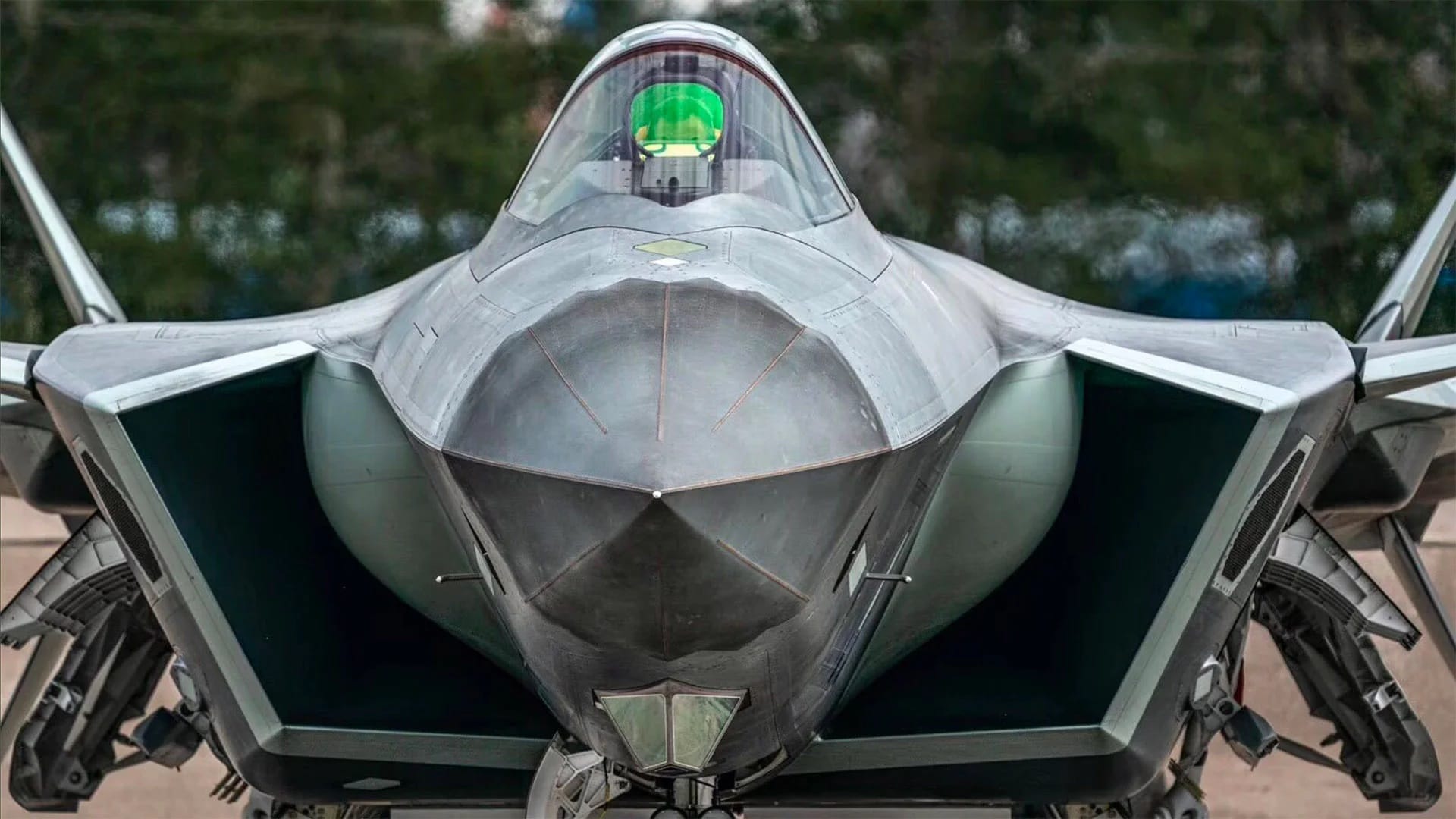
J-20 Stealth Fighter. Image Credit: Industry Handout.
The J-16, though, gives the PLAAF something important: massive payload, effective range, potent sensors, and lethal missiles paired with superior numbers.
Any war fought over the First Island Chain or, more specifically, Taiwan, would see a great flying wall of Chinese J-16s versus a much smaller number of US and allied warplanes.
About the Author: Brandon J. Weichert
Brandon J. Weichert is the Senior National Security Editor at 19FortyFive.com. He also manages The Weichert Brief on Substack. Weichert also hosts “National Security Talk” on Rumble. He is the author of four bestselling national security books, most recently A Disaster of Our Own Making: How the West Lost Ukraine (Encounter Books). Follow him via Twitter/X @WeTheBrandon.