

Chinese state news recently released footage from a PLAAF exercise, showing the largest assembly of heavy strategic transport aircraft seen in China in a long time.
The footage revealed dozens of Y-20B heavy transports lined up for short takeoff in a display many colloquially refer to as an ‘elephant walk.’ During the exercises, the heavy transports participated in a refueling exercise with J-20 fifth-generation stealth fighters and simulated air-drop missions with airborne troop formations.
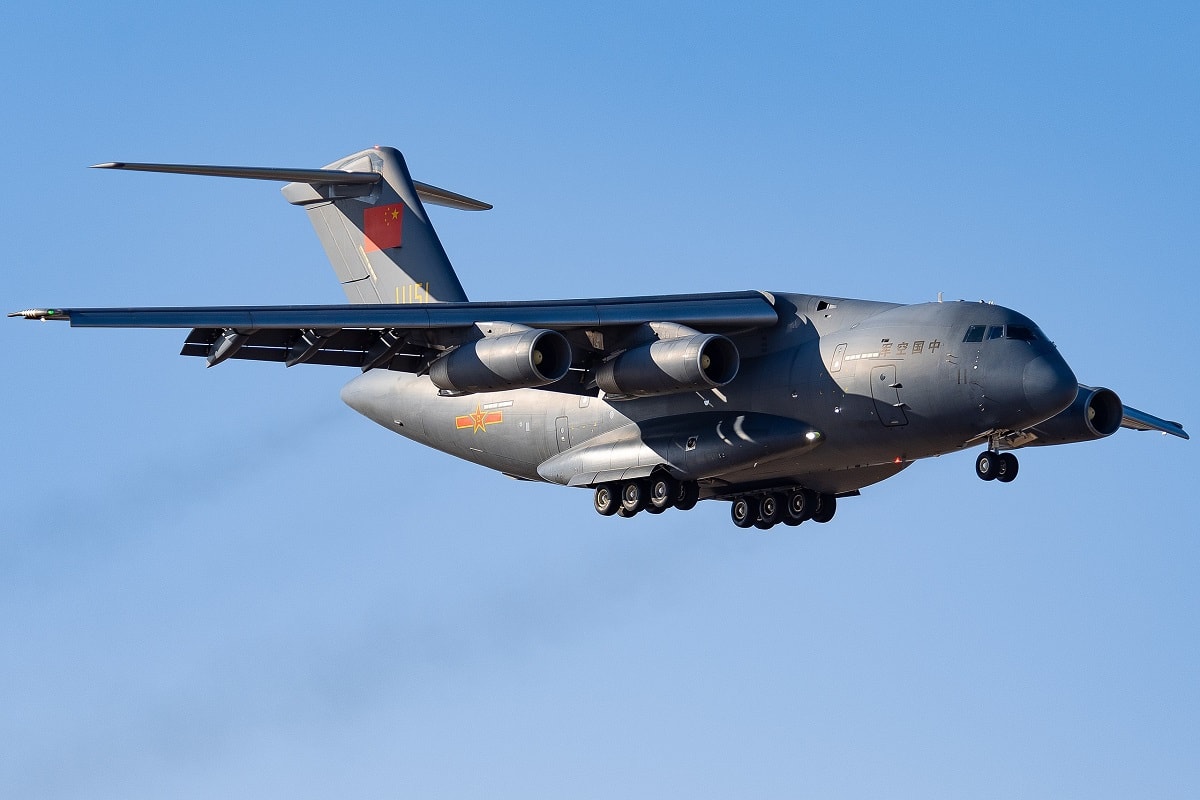
Y-20 transport plane. Chinese military handout.
While not nearly as flashy as the PLAAF’s fifth- or sixth-generation aircraft, the recent demonstration highlights the progress China’s aeronautical engineering and industry have made over the last decade.
The Y-20B is currently the fastest-produced heavy transport in the world (although the U.S. and Russia possess more heavy transports) and is a testament to China’s commitment to modernizing its Air Force across all domains.
Show of Force: China’s Growing Long-Range Capabilities
The Y-20B is the largest transport aircraft in the world, and with a maximum takeoff weight of around 66 tons, it also has one of the heaviest payloads.
The aircraft platform is highly versatile and has served as the basis for developing the YY-20 aerial tanker and the KJ-3000 airborne early warning and control system.
What’s more impressive is the steady rate of production that China has achieved. Of the dozens of aircraft shown in its most recent elephant walk, all are new models.
Despite entering service in 2023, the Xi’an Aircraft Corporation has produced a steady stream of these heavy transports, with production proceeding at a much faster rate than in the United States or Russia. It is suspected that China currently possesses around 100 Y-20 aircraft of all variants.
While transport aircraft are not nearly as interesting as China’s sixth-generation programs, the Y-20B occupies an important strategic niche for the PLAAF.
Strategic airlift capability is a critical component of any air military power because it determines how rapidly a nation can deploy its forces to sustain operations.
The Y-20B significantly enhances China’s ability to move troops, equipment, and other logistical resources across China and beyond its borders. The relatively new and improved aircraft further improve these capabilities, allowing the PLA to transport more materials across greater ranges.
Development of China’s Newest Heavy Transport
For many years, the PLAAF relied on a small number of imported Russian Il-76 aircraft and smaller transports such as the Y-8 and Y-9.
While these platforms performed valuable roles, they lacked the raw performance metrics that the PLAAF sought.
Development of the Y-20 began during the 2000s under Xi’an Aircraft Industrial Corporation. Images of the aircraft first appeared publicly in late 2012, and the prototype completed its maiden flight on January 26, 2013.
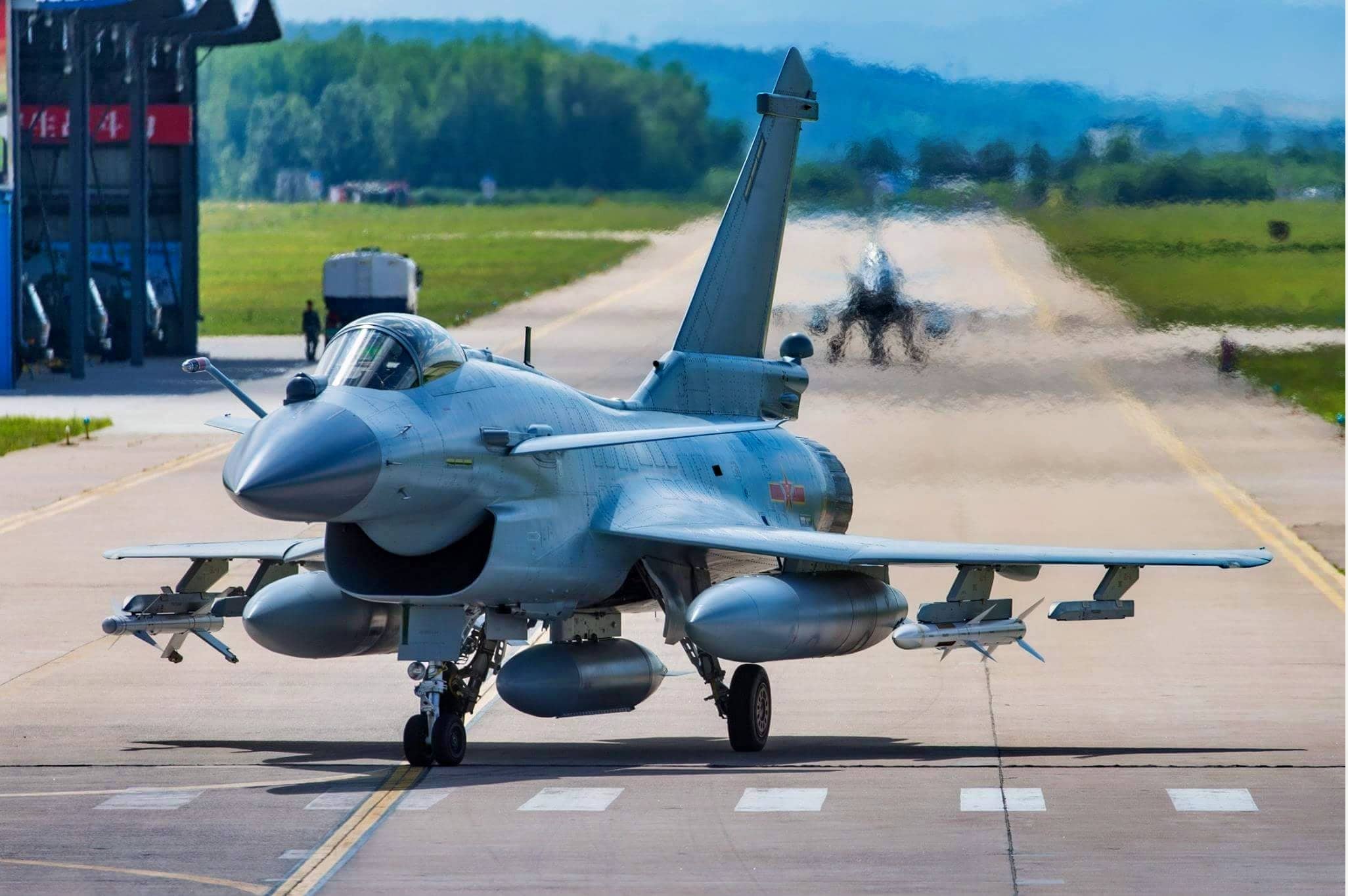
J-10C Fighter from China. Image Credit: Creative Commons.
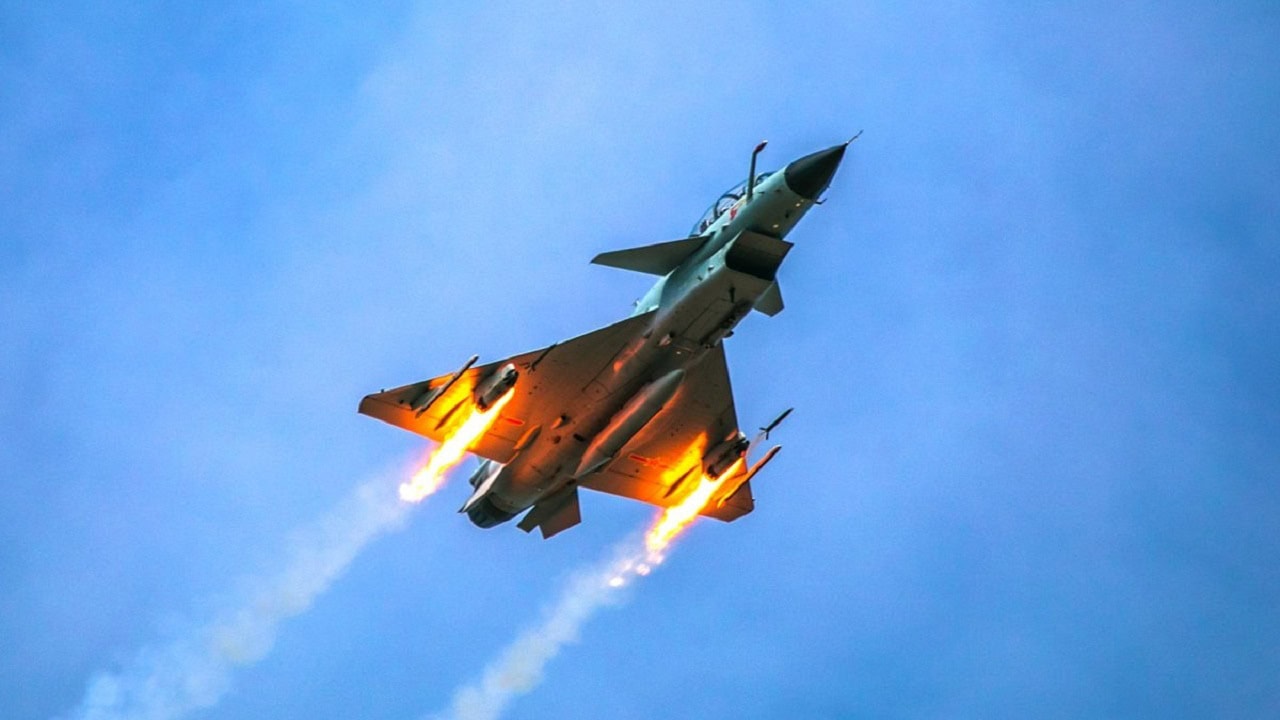
J-10 Fighter. Image Credit: Creative Commons.
Following extensive testing, the aircraft entered operational service in 2016, marking a major achievement for China’s aerospace industry.
Early models utilized Soviet-era Soloviev D-30KP-2 turbofan engines used on the Il-76. These engines were fine, but they failed to provide the power necessary for heavier payloads.
Chinese engineers therefore pursued the development of an indigenous replacement capable of delivering greater thrust and improved efficiency.
As a stopgap measure, the aircraft, designated Y-20A, was fitted with domestically made WS-18 engines, which improved efficiency but didn’t offer any notable gains in overall thrust. In 2023, the Y-20B entered into service with the PLAF, now equipped with WS-20 engines.
Longer Range, Greater Payload
From a design perspective, the Y-20B retains the overall configuration of the original Y-20. It features a high-mounted wing, a T-tail arrangement, four turbofan engines, and a large rear loading ramp that allows rapid cargo loading and unloading.
The aircraft’s cargo compartment is sufficiently large to accommodate armored vehicles, engineering equipment, military supplies, and substantial numbers of personnel.
Its landing gear system consists of multiple wheels distributed across several bogies, enabling operations from a variety of airfields, including those with less-than-ideal runway conditions.
The most important change introduced with the Y-20B is the adoption of the WS-20 engine. Developed specifically for the Y-20 family, the WS-20 is a high-bypass turbofan capable of producing approximately 138 kilonewtons of thrust.
Compared to older Russian engines, it offers greater fuel efficiency, improved reliability, higher thrust, and reduced logistical dependence on foreign sources.
The larger engine nacelles associated with the WS-20 are among the most visible external differences between the Y-20B and its predecessor.
The new engines not only enable greater range and payload capabilities; they also facilitate increased production, as China is no longer constrained by engine imports when expanding its transport fleet.
These developments should be considered in tandem with China’s other aeronautical advancements. For the past several decades, the CCP has sought to expand its reach beyond its borders.
It has been expanding its reach out in the Pacific as it seeks to expand beyond the first island chain.
The development of the Y-20B, along with the aerial tanker and AWAC variants, is one of many steps to increase the PLAAF’s reach.
While a heavy transport aircraft may seem insignificant next to a stealth fighter or a new type of hypersonic, logistics is key to warfare.
The only capability that the CCP has yet to replicate is in the realm of super-heavy transports like the C-5M Galaxy possessed by the United States.
About the Author: Isaac Seitz
Isaac Seitz, a Defense Columnist, graduated from Patrick Henry College’s Strategic Intelligence and National Security program. He has also studied Russian at Middlebury Language Schools and has worked as an intelligence Analyst in the private sector.