
China Launches 24 Submarines and Exposes the U.S. Undersea Production Gap
 Marcus Chen
China Launches 24 Submarines and Exposes the U.S. Undersea Production Gap
Twenty-four Chinese submarines in five years is the number that should make Washington stop talking about undersea advantage as if it were a permanent condition. Naval News reported on June 24 that China has launched about 24 submarines since 2021, compared with 12 for Russia and seven for the United States. That is not a marginal lead. It is a production-rate problem, and production rate is what decides whether a fleet can absorb losses, sustain presence, and still keep pressure on an opponent after the first week of a fight.
The individual quality of each submarine still matters. A Virginia-class nuclear attack submarine remains a more mature and probably quieter boat than most Chinese designs. But the operational question is not whether the best U.S. submarine can beat the best Chinese submarine in a controlled comparison. The question is whether the United States can put enough undersea hulls west of Guam, keep them supplied, replace them when they go into maintenance, and do that while also covering the Atlantic, the Arctic, the Middle East, and AUKUS commitments.
China Has Turned Submarine Building Into a Three-Yard Problem
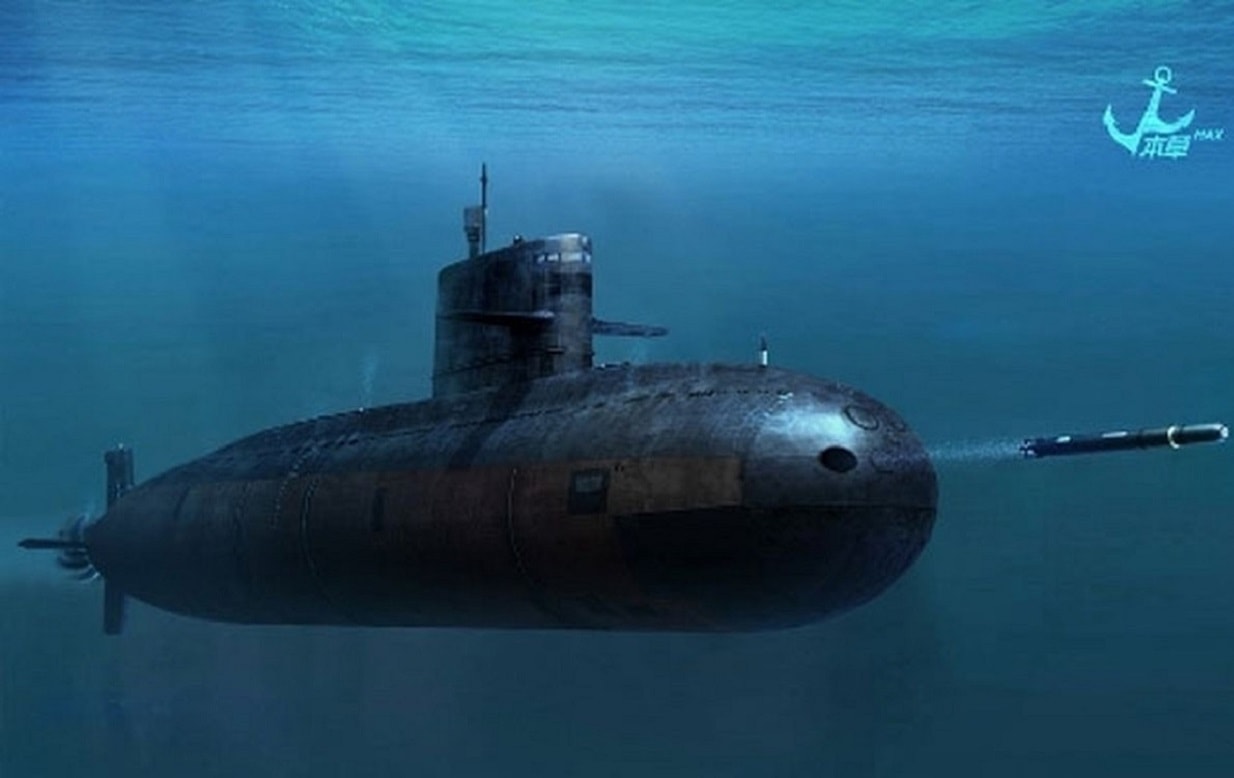
The important detail in the Naval News count is not only the total. It is the spread of the industrial base. China historically built nuclear submarines at Huludao. Now Wuchang in Wuhan and Jiangnan in Shanghai appear to have joined the nuclear submarine workload. Wuchang is associated with the Type 041 Zhou class, a small nuclear-powered design using what has been described as nuclear air-independent propulsion. Jiangnan has launched a larger attack submarine with a very small sail, while Huludao reportedly launched an identical boat within days.
That means China is moving from a single nuclear-submarine yard model toward a distributed production model. For a navy that expects to operate inside the first island chain and increasingly beyond it, that is a serious change. A single yard constrains learning, workforce depth, and surge capacity. Three yards create competition, parallel experimentation, and redundancy. They also let the People’s Liberation Army Navy accept risk in new classes because one failed design does not freeze the whole line.
Naval News counted seven new Chinese submarine classes in the five-year period. The United States launched seven submarines, all Virginia class. That comparison cuts two ways. The U.S. Navy benefits from a stable, known design. China is still experimenting. But experimentation at volume is how a shipbuilding system learns. Anyone who has served on a destroyer knows the difference between a platform that looks good in a brief and a fleet that can be maintained, repaired, and operated by tired crews at tempo. China is now buying that learning curve in steel.
The U.S. Rate Is Not Enough for AUKUS or Taiwan
The United States wants a submarine industrial base that can build roughly two Virginia-class boats per year and later support SSN-AUKUS requirements. China is already estimated by Naval News to be moving toward about six nuclear submarines per year. Even if that estimate proves high, Washington has a math problem. If China produces three nuclear boats per year and the United States produces around two, Beijing is still closing the undersea gap while operating much closer to the likely fight.
Distance makes the U.S. problem worse. A submarine based in San Diego or Pearl Harbor does not equal one continuously available in the Luzon Strait. Transit time, maintenance cycles, crew availability, weapons loadout, and intelligence tasking all reduce the number of boats actually on station. In a Taiwan scenario, the United States would need submarines for anti-surface warfare, intelligence collection, land-attack options, and possibly hunting Chinese submarines leaving their bastions. Seven launches in five years does not support a strategy that assumes submarines will compensate for vulnerabilities in surface forces and forward air bases.
AUKUS adds a second pressure point. The political promise to provide Australia with nuclear-powered submarines rests on the assumption that the U.S. industrial base can first meet U.S. Navy demand. That assumption has been shaky for years. If Chinese yards are moving toward a six-per-year nuclear rhythm while the United States struggles to normalize two, then AUKUS is no longer just an alliance-management issue. It becomes a question of whether the United States can export scarcity without weakening its own war plan.
Repair Capacity Is the Other Half of the Fleet Count
The submarine production story also connects to a June Defense News report on a RAND study of battle-damage repair in a war with China. RAND found that U.S. maintenance facilities would be overwhelmed, spare parts would be insufficient, and allied repair access could not be assumed once missiles start flying. The wargame focused on Arleigh Burke-class destroyers, but the logic is harsher for nuclear-powered submarines. Nuclear repair is harder, security restrictions are tighter, and usable facilities are fewer.
China would be fighting close to its shipyards and industrial base. U.S. submarines would be operating at the end of a long logistics chain. That does not mean China wins the undersea fight. It does mean the U.S. Navy cannot treat submarine superiority as a magic offset for every other weakness in the Pacific posture. Undersea forces are powerful precisely because they are scarce, quiet, and hard to replace. Scarcity is not a strategy.
Uncrewed Systems Will Not Erase the Gap
China is also pushing into extra-extra-large uncrewed underwater vehicles, essentially drone submarines large enough to matter operationally. These systems will not replace crewed attack submarines soon. They can, however, complicate U.S. planning by adding decoys, sensors, mine warfare payloads, or seabed missions at lower risk. If the PLAN can pair more nuclear boats at the high end with large uncrewed systems at the low end, it gets a layered undersea force that forces the United States to spend expensive SSN time on cheaper Chinese problems.
The U.S. Navy is working on uncrewed undersea vehicles as well, but the same industrial and integration questions apply. Prototypes are useful. Fleet architecture is different. The side that can build, maintain, deploy, lose, and replace systems at scale will have the advantage. China is showing that it understands this.
The Undersea Advantage Is Now Conditional
For two decades, U.S. planners could assume that American submarines were the one part of the Pacific balance that Beijing could not easily neutralize. That assumption is aging. China does not need to match Virginia-class performance boat for boat to change the equation. It needs enough submarines, enough yards, enough crews, and enough repair capacity to make U.S. undersea operations more crowded, more risky, and more expensive.
The U.S. Navy still has better submarines. But China is building the fleet faster, closer to the theater, and with a wider design portfolio. If Washington wants to keep the undersea advantage, it has to stop treating two submarines a year as an aspiration and start treating it as the floor. Otherwise the Pacific submarine balance will not flip in one dramatic moment. It will erode one launch at a time.
China has launched 24 submarines since 2021, significantly outpacing the U.S. and Russia in production. This shift indicates a move towards a distributed submarine production model, enhancing the People's Liberation Army Navy's capabilities. The U.S. faces challenges in maintaining its undersea advantage, with production rates and logistics becoming critical issues in potential conflicts.
- China has launched 24 submarines since 2021, compared to 12 for Russia and 7 for the U.S.
- China is moving towards a distributed production model for submarines.
- The U.S. aims to build two Virginia-class submarines per year, while China is estimated to produce six nuclear submarines per year.
- U.S. maintenance facilities may be overwhelmed in a conflict with China, affecting submarine operations.
- China is developing uncrewed underwater vehicles to complement its submarine fleet.