
China Uses Scarborough Water Cannon To Stress Test Manila in 2026
 Marcus Chen
China Uses Scarborough Water Cannon To Stress Test Manila in 2026
Fifty meters is not a navigational misunderstanding. According to the Philippine Coast Guard, China Coast Guard vessel 3302 closed to roughly 50 meters from the bow of BRP Datu Dumangsil at 5:54 a.m. on July 23, then fired a water cannon for more than two minutes at 6:29 a.m. near Scarborough Shoal. No one was injured, and the Philippine fisheries mission continued. That is the easy headline. The harder military point is that Beijing just rehearsed a controlled maritime denial action inside the daily operating space of a US treaty ally.
The Incident Was Small by Design
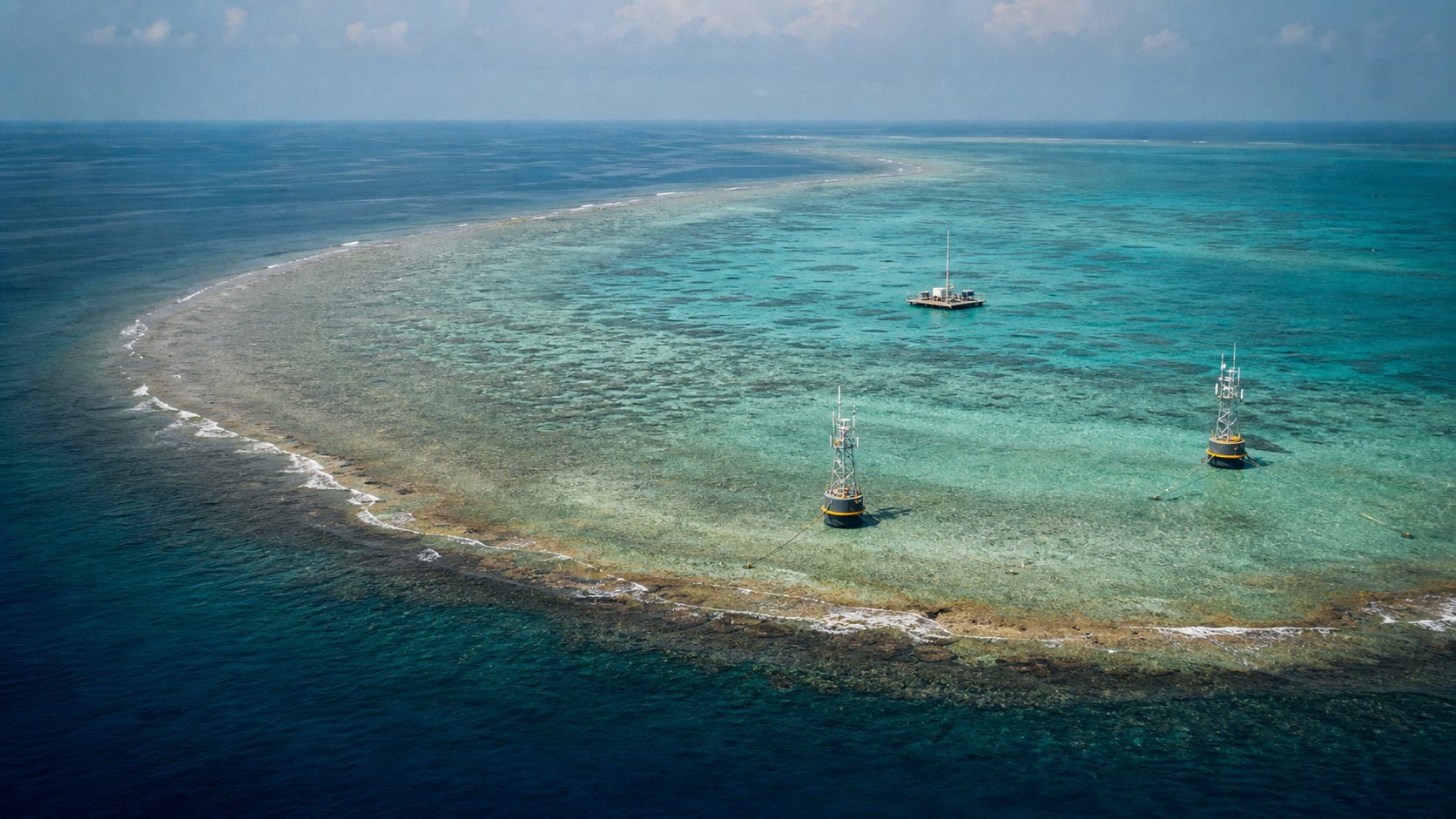
The Philippine mission was not a naval challenge. It was a Bureau of Fisheries and Aquatic Resources operation carrying fuel subsidies and food packs to Filipino fishermen. The vessels named in Philippine reporting included BRP Datu Dumangsil and BRP Datu Paiburong, while Chinese statements identified Philippine public vessels MMOV 3012 and MMOV 3018. That mix matters. Beijing did not need a destroyer to create tactical pressure. It used coast guard hulls, water cannon, close maneuvering, radio challenges, and numbers.
Inquirer reported that a second Chinese vessel, CCG 21579, crossed about 500 meters ahead of BRP Datu Paiburong around 6 a.m. The Philippine side later monitored three China Coast Guard vessels, two Chinese maritime militia vessels, and one People’s Liberation Army Navy vessel during an aerial maritime domain awareness flight. As of Thursday morning, Manila said three Philippine Coast Guard vessels, four BFAR vessels, and M/V Mamalakaya remained around Panatag Shoal alongside nine Chinese coast guard vessels and one maritime militia vessel.
That is the operating picture. It is not a battle line. It is a pressure box.
Scarborough Is a Better Test Than Second Thomas Shoal
Second Thomas Shoal is emotionally and politically charged because of BRP Sierra Madre and the Philippine Marines stationed there. Scarborough Shoal is different. It is closer to a sea-control problem. It sits about 190 nautical miles from Zambales and roughly 500 nautical miles from Hainan, based on the distance figures cited in Philippine reporting. It has no grounded Philippine warship, no permanent Philippine garrison, and no easy escalation ladder that starts with resupplying troops.
That makes Scarborough useful for Beijing. China can contest access without immediately triggering the same visual drama as a boarding incident at Second Thomas. It can vary force levels by adding coast guard cutters, militia boats, or a nearby navy presence. It can keep the encounter below the threshold of naval combat while collecting exactly the data a maritime commander wants: how quickly Manila reinforces, how close its vessels will hold station, whether aircraft appear overhead, and how Washington phrases its response.
The China Coast Guard statement followed the familiar script. Spokesperson Jiang Lue said the Philippine vessels ignored repeated warnings, entered waters under Chinese jurisdiction at Huangyan Dao, and were tracked, monitored, blocked, and compelled to leave. Beijing called the operation professional, standardized, legitimate, and lawful. Manila called it dangerous and a violation of COLREGs. Both descriptions are political. The geometry is military.
Water Cannon Changes the Cost Curve
A water cannon is not harmless. It can break windows, damage antennas, injure exposed crew, and force a small vessel to turn away without producing the legal and political clarity of gunfire. That is why it is useful. It gives China a coercive tool with enough violence to change behavior and enough deniability to avoid the clean threshold that alliance planners prefer.
Anyone who has served on a destroyer knows close maneuvering is not theatrical when steel is moving in a crowded sea lane. A 50-meter closure at low speed can still leave very little time for correction if one captain misreads helm orders or current. Add water cannon, radio challenges, unmanned cameras, and multiple hulls crossing ahead, and the physical risk becomes a command-and-control test. The question is not whether a Philippine vessel can survive one blast. The question is whether Manila can keep sending civil-agency ships into the same box every week without turning every mission into a national crisis.
The US Commitment Is Clear but Operationally Thin
US Secretary of State Marco Rubio reportedly called the latest Chinese action disturbing and reaffirmed US defense commitments to the Philippines. That is necessary language. It is not a maritime plan.
The 1951 Mutual Defense Treaty is politically powerful, and Washington has repeatedly clarified that armed attacks on Philippine armed forces, public vessels, or aircraft in the South China Sea can trigger treaty obligations. But gray-zone operations are designed to live in the space below that line. If China uses cutters and water cannon rather than missiles, the US Navy does not get a clean tripwire. It gets an ally asking for persistent presence, surveillance, logistics, and a way to keep fishermen supplied without turning Scarborough into a daily alliance referendum.
The US can help with maritime domain awareness, rotational access under the Enhanced Defense Cooperation Agreement, Coast Guard cooperation, and joint patrols. But the practical constraint is distance and hull availability. A US destroyer or littoral combat ship cannot be everywhere, and putting one near every Philippine resupply or fisheries mission would be both escalatory and unsustainable. The better answer is to make Philippine civil and coast guard operations more resilient: better communications, more cameras, rapid damage repair, unmanned overwatch, and enough small hulls to keep missions going after harassment.
Beijing Is Measuring Persistence
The July 23 encounter came after another confrontation at Second Thomas Shoal and during ASEAN-related diplomacy in Manila. That timing was not accidental. China was signaling that foreign ministers can talk while coast guard units keep enforcing facts at sea. It was also testing whether the Philippines can absorb two incidents in one week without losing operational rhythm.
For Manila, the answer has to be boring persistence. The BFAR mission reportedly continued after the water cannon incident. That matters more than the press release. If Philippine vessels finish the delivery, keep station, document the encounter, and return on schedule, the Chinese tactic imposes risk but does not achieve denial. If each incident delays or cancels the next mission, Beijing does not need to win a battle. It only needs to make routine access feel exceptional.
Scarborough Shoal is not about one water cannon blast. It is about whether China can turn a disputed reef 190 nautical miles from Luzon into a managed exclusion zone without firing a shot. On July 23, Beijing showed the method. Manila completed the mission anyway. The next test is whether it can keep doing that when the number of Chinese hulls goes from ten to twenty.
Sources
- Rappler, July 23, 2026, China fires water cannon on PH ship in Bajo de Masinloc
- Inquirer, July 23, 2026, China Coast Guard fires water cannon at PH vessel
- China Coast Guard, July 23, 2026, statement on Philippine public vessels at Huangyan Dao
- Reuters reporting carried by regional outlets on the July 23 Scarborough Shoal incident and US reaction
China Coast Guard vessel 3302 fired a water cannon at Philippine vessel BRP Datu Dumangsil near Scarborough Shoal on July 23, 2026. The incident involved multiple Chinese and Philippine vessels, with no injuries reported. The Philippine fisheries mission continued despite the encounter, highlighting the ongoing maritime tensions in the region. The US reaffirmed its defense commitments to the Philippines in response to the incident.
- China Coast Guard vessel 3302 fired a water cannon at BRP Datu Dumangsil.
- The incident occurred near Scarborough Shoal on July 23, 2026.
- No injuries were reported, and the Philippine mission continued.
- Multiple Chinese vessels were present during the encounter.
- The US reaffirmed its defense commitments to the Philippines.