
China's 100-Vessel Naval Pressure Near Japan Changes Taiwan's First Island Chain
 Marcus Chen
China's 100-Vessel Naval Pressure Near Japan Changes Taiwan's First Island Chain
More than 100 Chinese military-linked vessels appeared near Taiwan in early November. That number matters less as a snapshot than as evidence of a new operating pattern: China is using naval and coast guard mass to make pressure around Japan, Taiwan, and the southwestern islands routine.
The Fleet Is Building a Pattern
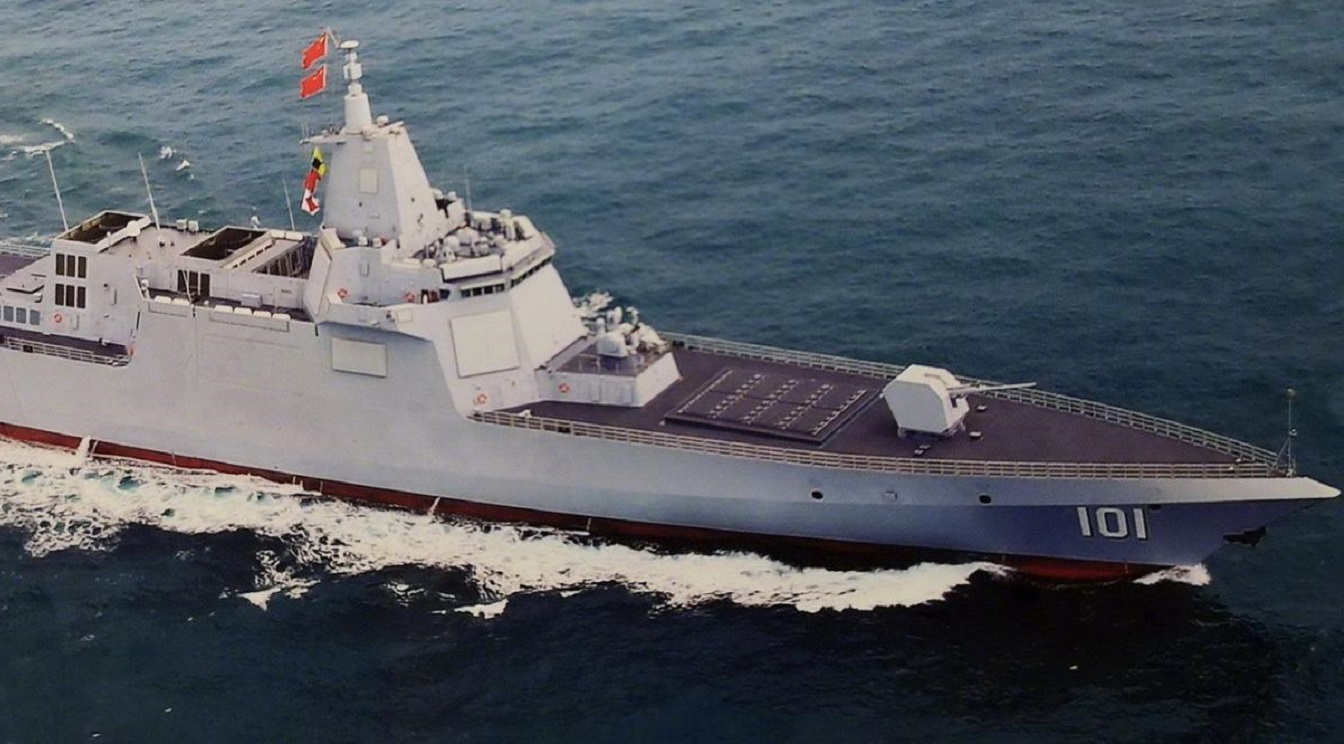
Defense News reported on November 16 that Chinese far-seas deployments near Japan have increased since a political dispute that began in November 2025, when Japanese Prime Minister Sanae Takaichi described a Chinese blockade or conflict over Taiwan as potentially threatening Japan's survival. The reported activity includes navy warships, coast guard vessels, live-fire exercises, uncrewed missions, and complete carrier groups.
Beijing does not need to cross a recognized territorial boundary to create military effects. Repeated transits through the Miyako Strait and waters around Japan's southwestern islands force Tokyo to track, identify, and potentially respond to Chinese formations. The cost is paid in aircraft hours, ship days, maintenance, and attention. China pays it too, but the balance is improving as the People's Liberation Army Navy (PLAN) generates more hulls and more experience.
Japan's own response shows the pressure is not theoretical. Tokyo has protested Chinese activity, tracked ships, and scrambled fighters. The issue is not whether Japan can observe a single formation. It can. The issue is whether it can sustain that watch while also preparing for a Taiwan contingency, protecting the Senkaku Islands, and supporting U.S. operations.
Why This Is About Taiwan
The first island chain is often drawn as a geographical barrier. In practice, it is a set of operating areas that must be surveilled and defended continuously. Japan's southwestern islands sit across the sea routes that connect the East China Sea to the Philippine Sea. Taiwan sits in the middle of the chain. The Philippines closes its southern approach.
China's deployments test the seams between these positions. A coast guard ship can apply political pressure without looking like the opening move of a war. A navy escort can provide protection and collect intelligence. An aircraft carrier group can train air operations and demonstrate that a formation can move through the chain under pressure. Put together, the activity creates options without requiring Beijing to announce a blockade.
That is the important distinction. A blockade is an act. Normalization is a condition. If Chinese ships are present often enough, a future crisis begins with a force already in the area, already familiar with the routes, and already practiced at coordinating military and law-enforcement vessels. Taiwan's warning time becomes shorter, while Japan must decide whether a response to each new transit is escalation or simply the price of staying informed.
The Math Favors the Persistent Fleet
Any destroyer officer understands the difference between a surge and a deployment cycle. A surge can create a dramatic photograph. A cycle creates combat power. Ships need fuel, food, spare parts, crews, escorts, and maintenance. The fleet that can return next week has more influence than the fleet that appears once and disappears.
China's advantage is not unlimited. Long-range operations impose real burdens, and coast guard hulls do not replace air-defense destroyers or submarines. A large formation can also become a lucrative target if its location is predictable. But repeated operations generate the very information that makes later operations safer: transit times, weather data, reaction patterns, communications habits, and the readiness levels of opposing forces.
CSIS data cited by Defense News identified a spike in notable PLA escalatory activity after the 2025 political dispute. The same reporting noted that Chinese naval presence around the Senkaku Islands remained very high, while joint Chinese-Russian activity around Japan also appeared to increase. Those are not proof of an imminent attack. They are indicators of a force learning how to operate close to the first island chain as a normal matter of business.
Japan's Spending Cannot Solve the Immediate Problem
Japanese media have reported that Tokyo is considering a defense plan worth 70 trillion to 80 trillion yen for the five years beginning in April 2027, compared with 43 trillion yen in the previous five-year period. That would fund more aircraft, missiles, ships, and bases. It would also take years to translate money into trained crews, stocked magazines, hardened infrastructure, and reliable maintenance capacity.
The near-term requirement is less glamorous: persistent maritime domain awareness, distributed fuel and munitions, runway resilience, and enough ready aircraft to respond without exhausting pilots. Japan also needs clear operating arrangements with the United States, Australia, and the Philippines. An alliance that meets only after an incident has begun is a diplomatic network, not a war plan.
Washington Should Stop Treating Presence as Deterrence
Chinese activity near Japan creates a familiar temptation in Washington: answer every deployment with another deployment. That produces reassuring headlines but can become a losing exchange if the United States reacts episodically while China operates continuously.
The answer is a distributed system that can see, report, and strike without depending on one carrier or one obvious base. Japan's southwestern islands, Philippine access points, undersea sensors, long-range fires, and unmanned aircraft all matter more when linked into one operational picture. The U.S. Navy's role remains essential, but it should reinforce a network that can survive the first salvos rather than serve as the network's only visible centerpiece.
Conclusion
China is not required to close the Taiwan Strait to change the military balance. It only has to make the waters around Taiwan and Japan permanently busy, contested, and expensive to monitor. The reported 100-vessel concentration is newsworthy, but the larger development is repetition.
Beijing is turning access into habit. Tokyo is responding with plans and patrols. Washington is still inclined to measure commitment by the number of ships it sends for a visit. In a crisis, the side with the better opening position will be the side that has already made its presence ordinary. On that measure, China is no longer waiting outside the first island chain.
Sources
Over 100 Chinese military-linked vessels applied pressure around Taiwan and Japan in early November 2026, establishing a new operational pattern. The People's Liberation Army Navy (PLAN) has increased its presence, conducting live-fire exercises and uncrewed missions. Japan has responded by tracking these vessels and scrambling fighters, indicating heightened military readiness. This ongoing situation reflects a strategic shift in the region, with implications for Taiwan's security and Japan's defense posture.
- Over 100 Chinese military-linked vessels were reported near Taiwan in early November 2026.
- China's naval presence has increased since a political dispute in November 2025.
- Japan has protested Chinese activities and scrambled fighters in response.
- Chinese operations include live-fire exercises and uncrewed missions.
- Japan is considering a significant defense budget increase for 2027-2028.