
China's 2026 Coast Guard Patrols Put Taiwan's East Coast Under Pressure
 Marcus Chen
China's 2026 Coast Guard Patrols Put Taiwan's East Coast Under Pressure
Fifty-four nautical miles is not a long distance at sea. It is roughly the space a modern cutter can cover in three hours at a conservative patrol speed, and it is now the distance that matters east of Taiwan. Defense News reported that Chinese Coast Guard vessels have been operating in the Pacific east of Taiwan since May, with a formation as close as 54 nautical miles, or about 100 kilometers, from the island.
That number matters more than the white paint on the hulls. Beijing is not just sending another signal across the Taiwan Strait. It is testing whether a persistent coast guard presence can normalize pressure on Taiwan's eastern approaches without triggering the political cost of a People's Liberation Army Navy deployment.
That is the problem Washington and Taipei should be counting, not just condemning.
A White-Hull Patrol With Military Consequences
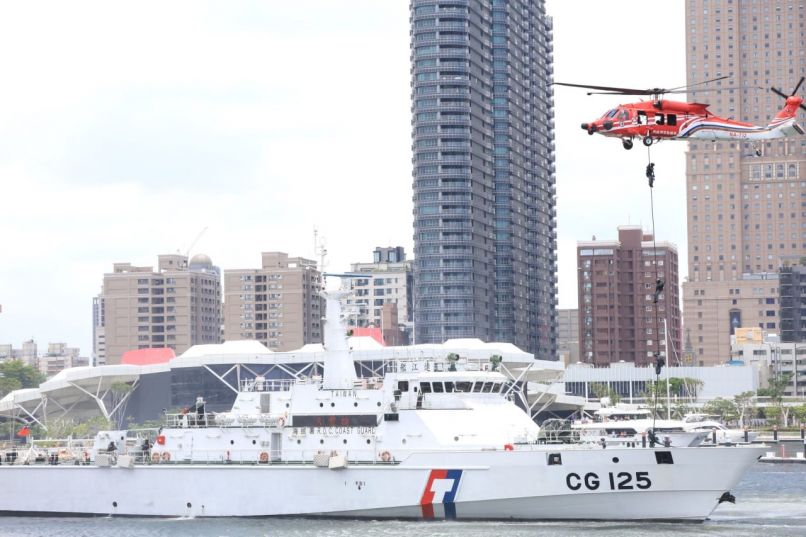
Chinese state messaging described the mission as routine law enforcement patrols. Taiwan's Mainland Affairs Council said the activity violated international law and damaged regional stability. Those two descriptions are not mutually exclusive in the way Beijing wants outsiders to think. The coast guard is precisely the instrument China uses when it wants operational effect with political ambiguity.
The eastern side of Taiwan has always been harder for the People's Liberation Army to pressure than the western approaches. The Taiwan Strait is narrow, monitored, and crowded. Taiwan's east coast opens into the Philippine Sea, where the island's ports, air bases, and potential wartime resupply routes matter. In most Taiwan contingency planning, the east is where outside support tries to stay alive after the first wave of missile strikes and air attacks.
A sustained Chinese Coast Guard patrol there changes the daily operating picture. It forces Taiwan to track, shadow, and respond with its own coast guard and navy. It creates a standing Chinese presence along routes that would matter in evacuation, reinforcement, intelligence collection, and maritime interdiction. It also lets Beijing gather experience in the weather, currents, communications environment, and reaction timelines east of the island.
Anyone who has stood watch on a destroyer knows that presence is not symbolic when it consumes someone else's watch floor. Ships that must be tracked become a demand on manpower, sensors, fuel, and command attention. That is how grey-zone operations become a readiness tax.
The Rotation Is the Signal
The important detail is not that a Chinese formation appeared. It is that Defense News reported a rotation between two vessel formations on July 4, and analysts cited by the outlet said China's stated intent points toward routine activity. A one-time pass can be dismissed as signaling. A rotation looks like a patrol model.
That distinction matters for Taiwan's force structure. Taiwan's Coast Guard Administration is capable and politically useful because it can meet white hulls with white hulls. But it cannot be everywhere indefinitely. If China can sustain one formation east of Taiwan while continuing activity around Kinmen, Matsu, the median line, and the South China Sea, Taipei has to choose where to spend scarce patrol capacity.
For Beijing, this is cheap compared with a carrier deployment or a large PLAN exercise. Large coast guard cutters can remain on station for long periods. They carry law-enforcement legitimacy in Chinese messaging. They also operate inside a civil-military system that increasingly blurs the line between constabulary pressure and military preparation.
That blur is the point. If Taipei responds with navy ships, Beijing can accuse Taiwan of militarizing the encounter. If Taipei responds only with coast guard vessels, China can shape the operating area without using naval grey hulls. If the United States or Japan becomes involved, Beijing gets another chance to frame the east-of-Taiwan patrols as a response to foreign interference.
The Missile Test Completes the Picture
The coast guard patrols should be read alongside China's July 6 submarine-launched ballistic missile test. Defense News separately reported that the People's Liberation Army Navy launched a missile from a submarine off China's coast that flew roughly 7,000 kilometers across the Pacific before splashing down near Nauru and Tuvalu. A later Defense News analysis cited a 7,300-kilometer flight estimate and noted that the missile likely overflew parts of the Philippines, according to CSIS estimates.
Beijing called the launch routine and said relevant governments received advance notification. The missile reportedly carried a simulated training warhead. Those details matter legally. They do not erase the operational message.
The message is that China is working both ends of the escalation ladder. At the low end, it uses coast guard patrols to make a contested maritime presence feel normal. At the high end, it demonstrates that its sea-based nuclear deterrent is not just a parade asset. If the missile was a JL-2 or JL-3, as analysts have suggested, the specific model is less important than the trajectory: a Chinese ballistic-missile submarine force is being shown to the region in a way that Japan, Australia, New Zealand, the United States, and Pacific island governments cannot ignore.
The timing also matters. The test came during the China-Russia Joint Sea 2026 cycle, according to reporting cited by Defense News, and amid a wider regional debate over AUKUS, nuclear submarines, and military access in the Pacific. Beijing has spent years criticizing nuclear submarine cooperation among the United States, United Kingdom, and Australia. Now it is demonstrating its own undersea nuclear reach near the South Pacific nuclear-weapons-free zone.
That is not hypocrisy as a talking point. It is leverage as a military fact.
What Washington Should Count
The wrong response is to treat the patrols and the missile shot as separate headlines. They are different tools serving the same campaign: make China's presence normal where the United States and its partners need maneuver space.
Washington should be asking three practical questions.
- How many Chinese Coast Guard hulls can Beijing keep east of Taiwan without weakening patrols in the South China Sea and East China Sea?
- How many Taiwan Coast Guard and navy sorties are required to shadow those vessels every week?
- How quickly can US and Japanese maritime patrol aircraft, surface ships, and coast guards build a shared operating picture east of Taiwan without escalating every contact into a naval confrontation?
The United States has good slogans for the first island chain. It has fewer answers for persistent white-hull pressure in the Philippine Sea. Freedom of navigation operations do not solve that problem by themselves. They are episodic. China's patrol model is becoming continuous.
The answer is not to send a destroyer after every cutter. That would let Beijing choose the tempo. The better answer is a layered maritime picture: Taiwan Coast Guard presence where possible, Japanese and US maritime domain awareness in the Philippine Sea, and routine allied publication of track data when Chinese vessels operate in patterns that look less like law enforcement and more like rehearsal.
There is also an industrial piece. If Taipei needs more patrol endurance east of the island, that means hulls, crews, fuel, maintenance capacity, and unmanned surface or aerial sensors. Taiwan's asymmetric defense debate often jumps straight to missiles and mines. Those are necessary. But an island under pressure also needs the boring capacity to keep eyes on white hulls every day.
The East Coast Is No Longer a Rear Area
For years, Taiwan's eastern approaches were treated as the safer side of the map. Not safe, exactly, but less saturated than the strait. China's 2026 patrol pattern is aimed at that assumption.
The July 6 missile test shows the PLAN wants regional audiences to believe its undersea deterrent is operational. The coast guard patrols east of Taiwan show Beijing wants local actors to accept Chinese presence as routine. One is loud. The other is patient. Together they narrow the space in which Taiwan, Japan, the United States, and Australia can operate without friction.
The math is uncomfortable. If China can make a 54-nautical-mile patrol feel ordinary, then Taiwan's east coast stops being a rear area before a crisis begins. That is how a blockade rehearsal starts: not with a declaration, but with a patrol everyone gets used to seeing.
Chinese Coast Guard vessels have been conducting patrols 54 nautical miles east of Taiwan since May 2026, with a rotation of formations reported on July 4. This activity is part of a strategy to normalize Chinese maritime presence in the region, coinciding with a submarine-launched ballistic missile test on July 6. Taiwan is responding by tracking these vessels with its coast guard and navy, indicating a shift in the operational landscape in the Philippine Sea.
- Chinese Coast Guard vessels are operating 54 nautical miles east of Taiwan.
- The patrols began in May 2026 and involve a rotation of vessel formations.
- A submarine-launched ballistic missile test occurred on July 6, 2026, demonstrating China's military capabilities.
- Taiwan's response involves tracking and shadowing Chinese vessels with its own coast guard and navy.
- The presence of Chinese vessels is intended to normalize pressure on Taiwan's eastern approaches.