

Summary and Key Points: The Challenger 3 tank trouble list starts with the turret: reports say the gearbox is not strong enough to turn it, and some believe the tank may be delayed by up to two years. At about 66 tons, it is lighter than the 75-ton Challenger 2 but too heavy for most bridges in Ukraine, which are rated for 50. Trophy was built for missiles, not FPV drones. And the program of record is just 148 tanks, an armored brigade’s worth.
The Challenger 3 Tank Problem?
The UK unveiled the latest prototype of the Challenger 3 main battle tank (MBT) last month at Defense Vehicle Dynamics 2026 at UTAC Millbrook.
Stavros Atlamazoglou recently wrote that “the new hardware and software that will be incorporated into the production units is being developed and tested.”
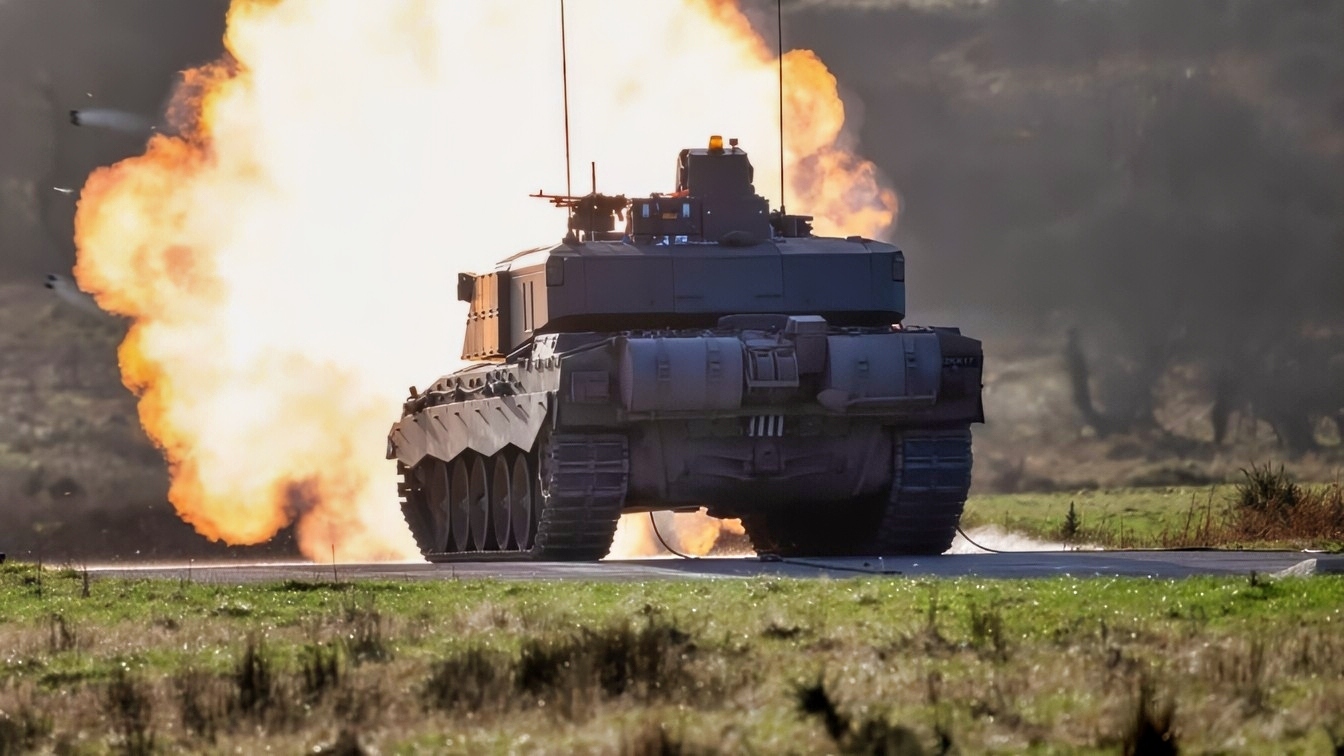
Challenger 3 British Army Photo Handout
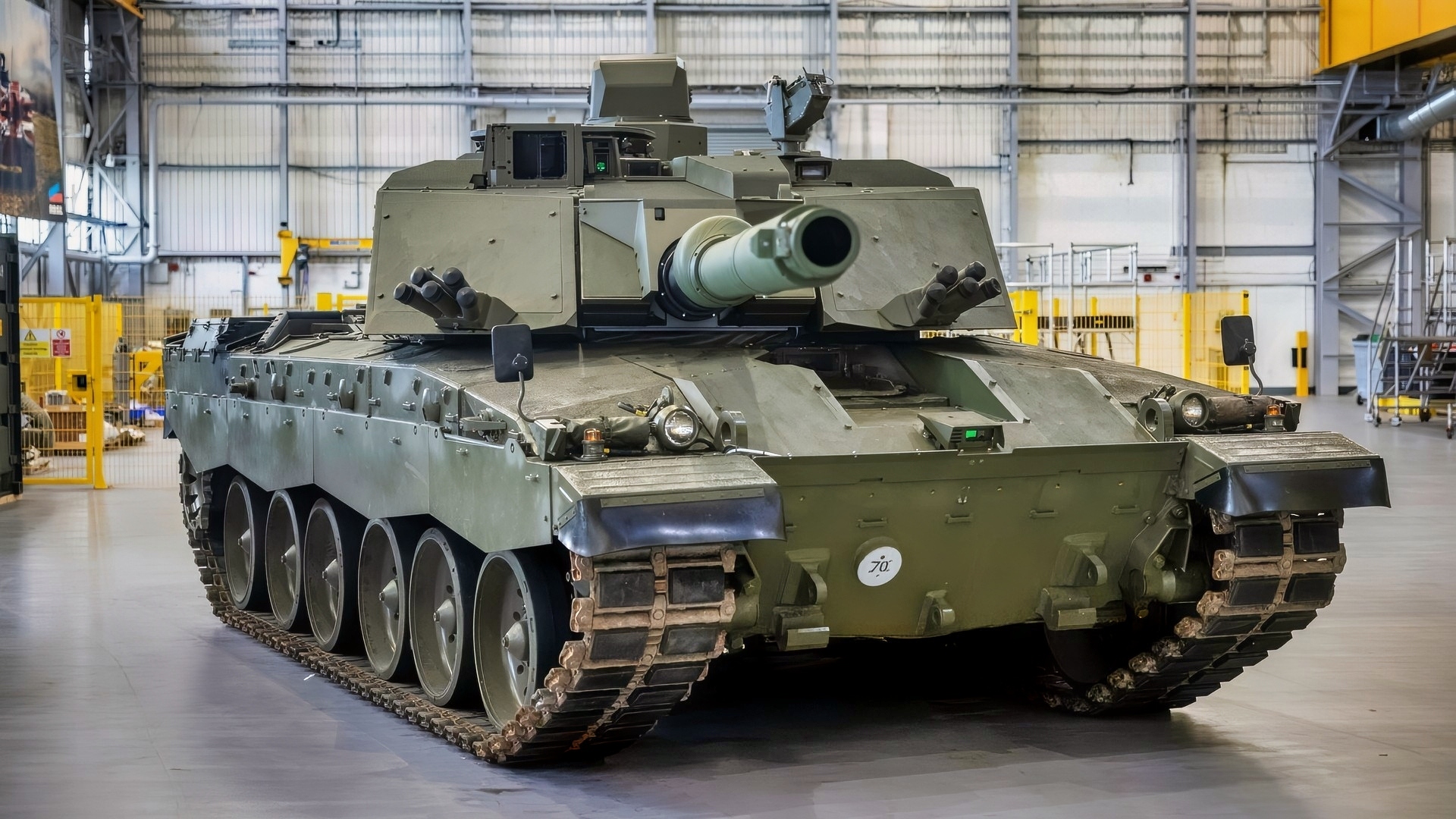
Challenger 3 Tank British Army Photo
The British Army has been closely monitoring the war in Ukraine and how both sides use and counter armor.
It’s taking notes, and despite the plethora of drones and anti-armor weapons on the Ukrainian battlefield, the Brits are constantly looking for ways to upgrade their newest main battle tank (MBT) to survive a modern conflict.
According to Business Insider, a UK Ministry of Defense spokesperson said Britain is “taking a load of data from Ukraine” and integrating it straight into the development of the Challenger 3 main battle tank.
The spokesperson said the tank’s new features are modular, so they can be swapped in and out, and that Britain has options for drone-related defensive equipment and protection packages that can be bolted on as needed.
However, despite the improvements and enhancements the Brits have made in the Challenger 3, there are some issues.
A New Tank Built On An Old Hull
The Challenger 3 isn’t a new platform design. Rheinmetall BAE Systems Land keeps the Challenger 2 hull but adds a completely new turret, armament, sensors, protection, and digital architecture.
The UK awarded the joint venture a roughly $1 billion contract in 2021 to convert about 150 Challenger 2s. Business Insider reports there are seven prototypes, with an eighth in production.
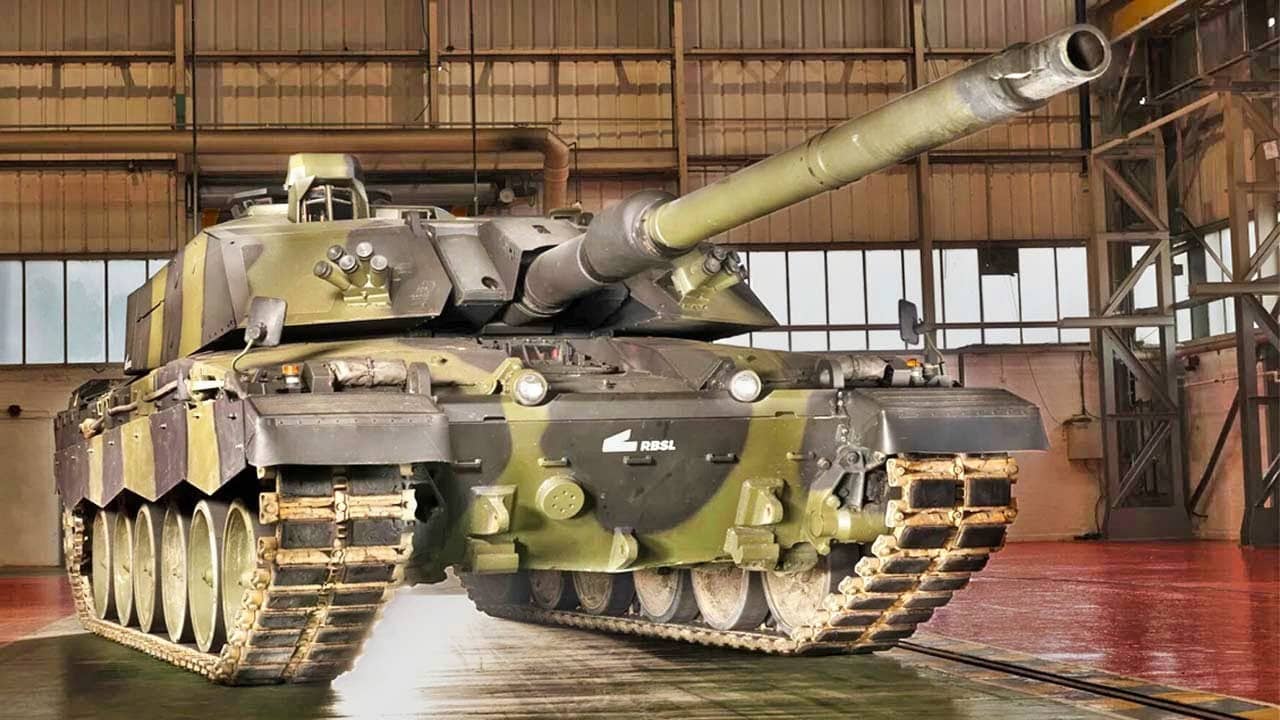
Challenger 3 Tank. Image Credit: Creative Commons.
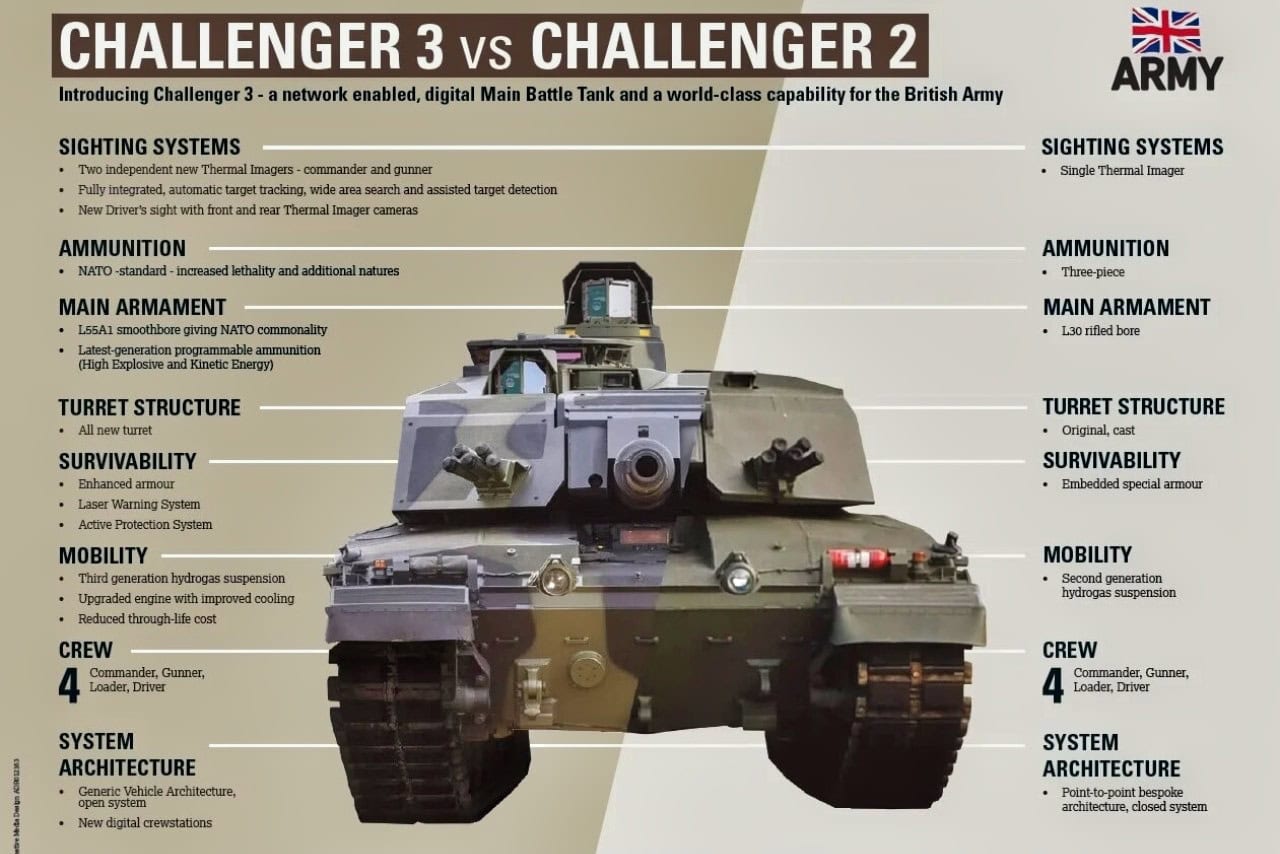
Challenger 3 Tank. Image Credit: Creative Commons.
The biggest change is the gun.
The Brits are finally ditching the rifled L30 for the Rheinmetall 120mm L55A1 smoothbore, the same gun on the Leopard 2.
That means the tank fires single-piece NATO-standard ammunition, including Rheinmetall’s DM63 and DM73 rounds, instead of the two-piece rounds the Challenger 2 used.
For a NATO army that may have to share ammo dumps with allies in a potential war with Russia, that alone is worth the price.
For protection, the tank gets new modular armor and the Israeli-made Trophy active protection system, which uses radar to detect incoming missiles and fires its own intercepting munitions. The Army first showed the tank to the public at Tankfest in June.
Challenger 3’s Trouble Areas Begin With The New Turret
However, many potentially worrisome areas remain.
It begins with the new turret.
Specifically, the gearbox that moves the turret.
Various in-depth investigative reports note that Rheinmetall BAE Systems Land (RBSL) has found the gearbox isn’t strong enough to turn the turret.
While the MOD is optimistic it can fix the issue quickly without additional costs to British taxpayers, others believe the tank may be delayed by up to two years.
The tank’s weight will be a challenge. Russian MBTs weigh about 45 tons; the Challenger 3 will weigh about 66 tons.
Although this is down from the Challenger 2’s 75 tons, it’s still too heavy for many European bridges. For example, most bridges in Ukraine are rated for only 50 tons.
Despite the weight, the Challenger 3 can still move along at 37 mph.
Earlier this year, the Challenger 3’s supply chain reportedly faced delays.
The Trophy system was also built to stop anti-tank guided missiles and RPGs.
The FPV drones that have savaged armor in the war in Ukraine attack from the top and the rear, often slowly and in numbers.
That’s a different problem, and it’s why those modular drone-defense options matter so much.
If they aren’t installed when the shooting starts, they won’t help.
British officers told Business Insider that today’s Challenger 3 isn’t a finished product. That’s honest, and it’s the right mindset.
It also means the Army is fielding a tank whose final shape depends on a war still being fought.
And the numbers crunch is real.
The program of record calls for just 148 tanks.
The Brits will have a similar number of Challenger 2s that won’t be upgraded.
No determination has been made on what to do with them.
Ukraine has shown how fast a battlefield can deplete armor.
A small fleet of excellent tanks is still a small fleet, and you can’t put the same tank in two places.
The Data Pipeline From Ukraine Is Invaluable
The Brits now have formal access to much more than tank crew feedback.
In September, Britain became the first international partner to gain access to Ukraine’s battlefield data, collected over more than four years of war, in exchange for British research, computing capacity and missile technology.
That includes drone footage, jamming data and the operation of autonomous systems.
“This world-first access to real battlefield data will allow British companies to continue pushing the frontier of defense innovation, deterring our enemies and making us safer at home as well as further strengthening Ukraine,” British defense minister Wes Streeting said in a statement.
Kyiv knows exactly how valuable the battlefield data is and how allied militaries need it. Ukrainian officials have described that data as priceless and a bargaining chip with allies, as Business Insider has also reported.
For tank designers, millions of hours of first-person footage of drones hunting armor is an intelligence goldmine.
The 20-40-40 Model Under The 2025 Strategic Defense Review
Business Insider notes the Challenger 3 sits at the center of the British Army’s “20-40-40” model.
Under the 2025 Strategic Defense Review, 20 percent of capability goes to heavy platforms like the Challenger 3, 40 percent to single-use munitions such as one-way attack drones and artillery shells, and 40 percent to reusable strike and surveillance drones.
The drones enter the battlespace first. The tanks arrive after drones clear out the enemy’s defenses.
It is arguably the smartest thing about this program.
The British Army isn’t pretending the tank is dead, and it isn’t pretending the tank can fight alone.
Cheap drones and robots absorb the risk so the expensive, crewed platforms don’t have to.
Say what you will about whether the tank has a future on 21st-century battlefields. The British military has decided armor still matters, and it’s building the Challenger 3 on lessons learned from the war in Ukraine.
While no longer the standalone dominant force it was for decades, the MBT still has a role, connecting mechanized infantry with organic artillery and the drones that proliferate on battlefields.
The real test is whether the British MoD acts on all the data before they need it. And how they plan to field a force that consists of only 148 tanks, the size of an armored brigade.
About the Author: Steve Balestrieri
Steve Balestrieri is a National Security Columnist. He served as a US Army Special Forces NCO and Warrant Officer. In addition to writing on defense, he covers the NFL for PatsFans.com and is a member of the Pro Football Writers of America (PFWA). His work was regularly featured in many military publications.