
China's 2026 Pacific SLBM Shot Changes the Submarine Math
 Marcus Chen
China's 2026 Pacific SLBM Shot Changes the Submarine Math
One missile left the water at 12:01 p.m. Beijing time on July 6. That is the number that matters. China's Ministry of National Defense said a People's Liberation Army Navy strategic nuclear submarine fired a submarine-launched ballistic missile carrying a training warhead into designated high-seas waters in the Pacific, after notifying relevant countries in advance. Beijing called it routine annual training. It was not routine in operational terms.
China has fired long-range ballistic missiles before, including a publicized Pacific shot in September 2024. A submerged launch from a ballistic-missile submarine is different. It is not just a missile event. It is a command-and-control event, a crew event, a tracking event, and a political signal aimed well beyond the first island chain.
The launch was a systems test
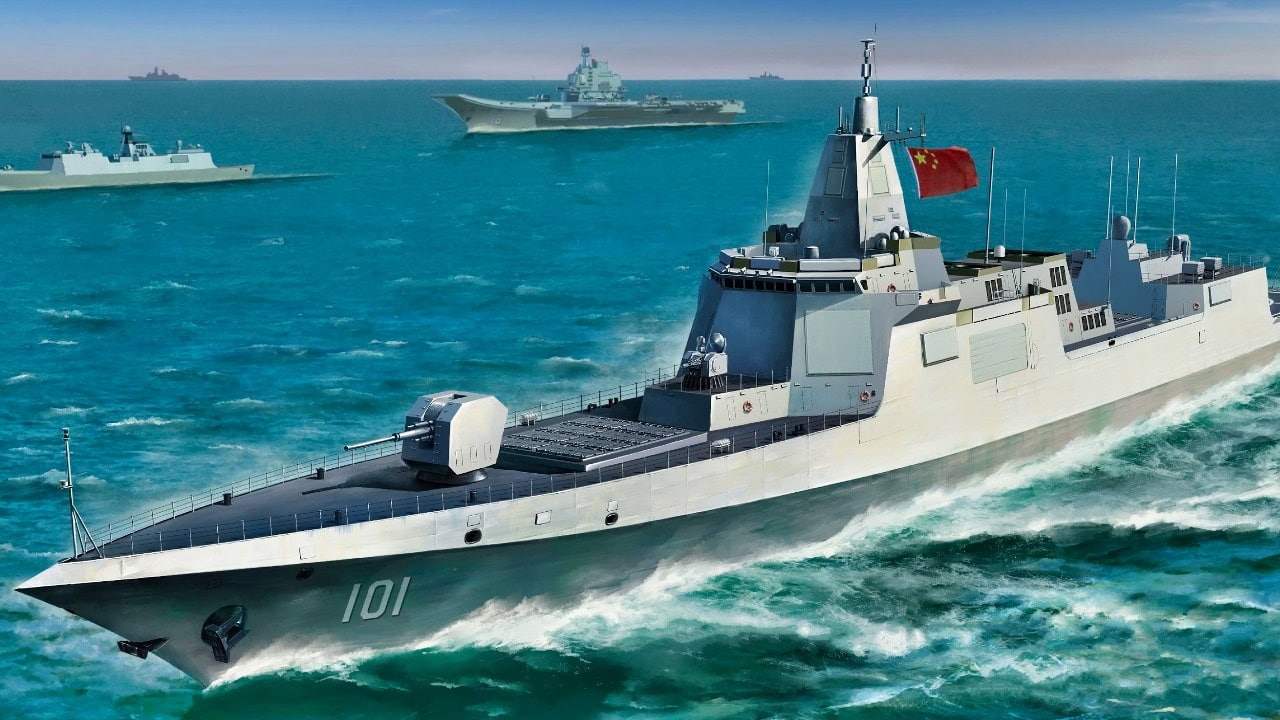
A land-based missile test can validate booster performance, range, reentry behavior and telemetry. A submarine-launched ballistic missile test adds harder pieces. The boat has to receive an authenticated order, maintain communications while staying concealed, establish a launch position, eject the missile from underwater, transition it cleanly into powered flight, and support tracking over an ocean-range trajectory.
Anyone who has served at sea understands the difference between a system that works at the pier and a system that works when the ship is moving, wet, noisy and trying not to be found. Submarines magnify that problem. A ballistic-missile submarine is valuable because it can survive. But survivability does not mean much if the crew, communications link, missile tube, fire-control system and missile cannot perform together under realistic conditions.
That is why the July 6 shot deserves more attention than a standard missile headline. It suggests the PLAN is practicing the full chain of maritime nuclear employment, not simply displaying a catalog capability.
The Type 094 force is becoming more useful
China's current sea-based deterrent centers on the Type 094 Jin-class nuclear-powered ballistic missile submarine. Open-source assessments generally put the force at about six boats, each with 12 missile tubes. Older estimates tied the class to the JL-2 submarine-launched ballistic missile, which the CSIS Missile Threat project lists at roughly 8,000 to 9,000 kilometers in range. More recent U.S. and analyst assessments judge that China has moved toward the longer-range JL-3, often described as an intercontinental-range missile.
The exact missile used on July 6 was not specified by Beijing. That uncertainty matters, but it does not erase the operational point. Range changes the patrol box. If a Chinese SSBN must push deep into the Pacific to hold U.S. targets at risk, it has to pass through waters watched by U.S., Japanese, Australian and allied anti-submarine warfare forces. If it can launch from waters closer to China, including bastion-like areas in or near the South China Sea, the PLAN can wrap that patrol area with surface ships, maritime patrol aircraft, seabed sensors, shore-based missiles and land-based air cover.
That is the math. A louder Type 094 is still a harder target when it is operating under a protective umbrella. The United States and its allies do not have to find one submarine in the whole Pacific. They have to find it early enough, in the right water, before a crisis turns every contact into a political decision.
The South China Sea now has a nuclear layer
Washington has long treated the South China Sea as a sea-control and sea-denial problem: surface ships, anti-ship missiles, air bases, logistics nodes, gray-zone pressure and freedom-of-navigation operations. A credible Chinese SSBN patrol architecture adds another layer. The same islands, airfields and missile networks that complicate U.S. naval operations can also help shield China's most survivable nuclear force.
That does not mean the South China Sea becomes an impenetrable sanctuary. It is shallow in places, noisy in others, and heavily trafficked. Those are not ideal conditions for SSBN operations. But China does not need perfection. It needs enough uncertainty to make U.S. planners assume that a retaliatory missile force could survive a first strike.
For a nuclear deterrent, uncertainty is not a bug. It is the product.
The regional signal landed in the Pacific
The Ministry of National Defense said the test complied with international law and did not target any specific country. That phrasing is predictable and partly true in a narrow legal sense if notifications were made and the impact area was managed. But geography is also a message. A missile sent from a submerged Chinese platform into the Pacific tells Japan, Australia, New Zealand, the United States and South Pacific governments that China's nuclear modernization is no longer a silo-field story on the mainland.
Army Recognition, summarizing regional reactions, reported that Australia described the launch as destabilizing and that New Zealand raised concern that the impact area fell within the South Pacific Nuclear Free Zone. Those reactions are not just diplomatic noise. Pacific island governments have spent decades trying to keep the region from becoming a nuclear testing and missile-impact space.
The timing also overlaps with a broader pattern: Chinese naval operations are becoming more comfortable at distance, more public, and more integrated with political signaling. USNI News reported that the SLBM test coincided with the opening of China's annual naval exercise cycle with Russia. Even if those events were scheduled separately, the combined effect is useful for Beijing. It presents China as a navy that can exercise with partners, protect nearby seas, and reach into the Pacific with strategic weapons.
What Washington should count
The U.S. response should not be panic. It should be arithmetic. Count Chinese SSBN hulls. Count missile tubes. Count patrol days. Count allied P-8 aircraft availability, undersea sensor coverage, attack-submarine maintenance delays, and the number of ports that can support sustained anti-submarine operations west of Hawaii.
A single July launch does not prove that China has solved quieting, command resilience, patrol discipline or wartime launch authority. It does prove that the PLAN is working the hardest part of the problem in public. That matters because nuclear forces become credible through repeated, boring competence: crews train, messages pass, missiles leave tubes, tracking ships collect data, and political leaders learn what the system can do.
The uncomfortable conclusion is simple. The United States has spent years thinking about how to break China's anti-access network in a conventional fight. China is now showing that the same maritime geography can help protect a sea-based nuclear deterrent. If that becomes normal, the first island chain problem gets bigger. It stops being only about who controls the surface of the water. It becomes about who can find what is hiding underneath it before the clock runs out.
Sources
- China Ministry of National Defense, July 6, 2026 statement on the PLAN submarine-launched strategic missile test.
- CSIS Missile Threat, JL-2 submarine-launched ballistic missile specifications and service history.
- Army Recognition reporting on the July 2026 Pacific SLBM launch and regional reactions.
- USNI News reporting on the launch and concurrent China-Russia naval exercise activity.
China's Ministry of National Defense reported that a Type 094 Jin-class submarine launched a ballistic missile into the Pacific Ocean on July 6, 2026. This test, part of routine training, demonstrates China's advancing capabilities in maritime nuclear deterrence and highlights the operational complexities of submarine-launched missile systems. The launch is significant as it indicates a shift in China's strategic posture, emphasizing the importance of survivability and operational readiness in its nuclear forces.
- China conducted a submarine-launched ballistic missile test on July 6, 2026.
- The test involved a Type 094 Jin-class submarine.
- The missile was launched into designated high-seas waters in the Pacific.
- The launch is part of China's routine annual training but has significant operational implications.
- The test signals China's advancing capabilities in maritime nuclear deterrence.