
Senegal and Sahel in 2026 — Diomaye Faye's call tests border security
 S.W
S.WSenegal and Sahel in 2026 — Diomaye Faye's call tests border security
New York, September 24, 2026. At the podium of the United Nations General Assembly, Bassirou Diomaye Faye described terrorism as a transnational threat by nature and called for the Sahel not to be abandoned. The message seems diplomatic. On the ground, however, it touches on the weak point of the entire Sahel region: armed groups do not maneuver within administrative borders, while the armies remain confined within them.
The Senegalese president was not only speaking on behalf of Dakar. As the current president of the Economic Community of West African States (ECOWAS), he was trying to bring the security issue back to the center of a regional space fractured by the withdrawal of Mali, Burkina Faso, and Niger from the organization. This is an attempt to reassemble the political map before smuggling routes and jihadist corridors become the only functional continuity in West Africa.
A call from a country still removed from the theater of operations
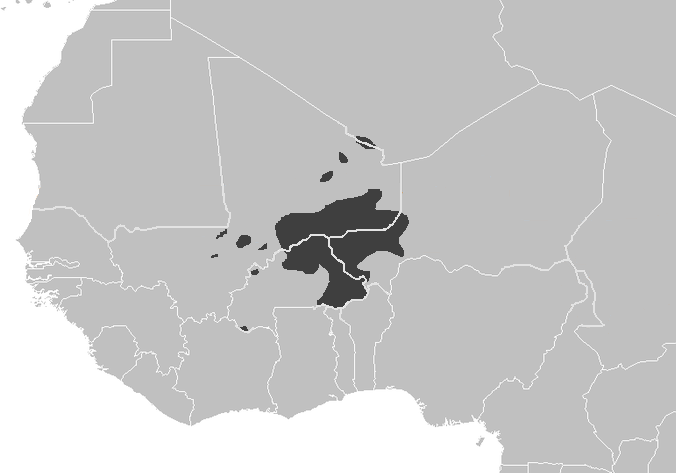
Senegal is not Mali. It does not experience, on a national scale, the collapse of isolated posts that is observed in central Mali or eastern Burkina Faso. This difference gives weight to Faye's words, but it also imposes caution. Dakar can propose a regional architecture; it cannot, on its own, provide the battalions, human intelligence, and air assets necessary to sustain it.
The statement comes as the attack in Dioura, in the Mopti region, reminds us of the cost of isolation. On September 10, JNIM — the Group for Support of Islam and Muslims, linked to al-Qaeda — claimed responsibility for the assault on the Malian camp. Initial reports spoke of dozens of dead. Subsequent assessments relayed by RFI, France 24, and other media mentioned at least a hundred military personnel killed, while JNIM claimed to have killed 150 soldiers and captured 93 others. These figures have not all been independently confirmed. The absence of comprehensive Malian communication leaves a margin of uncertainty, but not on the essential fact: a military position has been neutralized in the heart of an area where the state no longer continuously controls the axes.
The border does not stop a unit moving on motorcycles
In the Sahelian theater, the border is primarily a constraint for regular forces. A jihadist group can recruit in one village, store weapons in another, and attack a garrison several dozen kilometers away, before dispersing into grazing areas. JNIM exploits this depth. It does not necessarily seek to hold a capital: it wants to make the roads impassable, tax the markets, intimidate local leaders, and demonstrate that the nearby military post protects no one.
This is why Dakar's discourse is more concrete than a simple request for international aid. Useful cooperation should begin with real-time sharing of alerts, linking border units, and securing a few specific corridors. The Kayes–Tambacounda corridor, access routes to northern Senegal, and roads connecting Mali to coastal areas cannot be treated as lines on a map. They are routes for trade, transhumance, and intelligence. Closing a post without monitoring the surrounding tracks amounts to moving the problem twenty kilometers away.
ECOWAS facing the security void of the AES
The political problem is tougher. The Alliance of Sahel States (AES) accuses ECOWAS of serving external interests and now refuses part of its mechanisms. Dakar cannot therefore present future cooperation as an operation to return to institutional order. Bamako, Ouagadougou, and Niamey may accept occasional technical exchanges; they will likely refuse a chain of command perceived as controlled from Abuja or supported by Paris.
France has learned the hard way that real military capability is not enough when associated with political oversight. Faye's discourse may open another door, provided that Senegal recognizes the operational sovereignty of its neighbors and starts with limited objectives. A liaison cell, common procedures for cross-border prosecutions, and coordinated patrols are more likely to succeed than a new regional force announced with fanfare.
The risk for Senegal is deferred, not abstract
Senegal remains a coastal anchor point, but its strategic depth diminishes if central Mali and northern Burkina become unmonitored transit spaces. The immediate danger is not necessarily a jihadist column marching on Dakar. It is the gradual establishment of gray zones in which traffickers, recruiters, and fighters move faster than official information.
The speech in New York will therefore have real value only if it is followed by thankless work on the ground. It is necessary to know which unit covers which track, which post can be reinforced before the rainy season, and which local authority answers the phone when a convoy goes missing. In Dioura, JNIM showed what a border without coordination costs. The next strategic alert for Dakar may not come from a spectacular attack, but from a secondary axis that has become safe for armed men.
Sources
- United Nations, general debate of the 81st session, intervention of Senegal, September 24, 2026.
- UN Web TV, speech by Bassirou Diomaye Faye, September 2026.
- Africa Radio, call not to abandon the Sahel, September 25, 2026.
- RFI, attack claimed against the Dioura camp, September 10, 2026, updated reports on September 18 and 19.
- Senego, coverage of Dakar's regional advocacy, September 24, 2026.
Diomaye Faye addressed the UN General Assembly in September 2026, calling for enhanced regional cooperation to combat terrorism in the Sahel. He highlighted the recent attack by JNIM on a Malian military camp, which resulted in numerous casualties, underscoring the urgent need for a coordinated security response. Faye's remarks reflect the challenges faced by Senegal and the broader region due to the transnational nature of terrorist threats.
- Diomaye Faye emphasized the need for regional cooperation against terrorism at the UN.
- The JNIM claimed responsibility for an attack on a Malian military camp, resulting in significant casualties.
- Faye's statements reflect concerns about the security situation in the Sahel, particularly with the withdrawal of Mali, Burkina Faso, and Niger from ECOWAS.