

In 2013, Lockheed Martin unveiled plans for a revolutionary hypersonic aircraft, the SR-72, nicknamed the “Son of Blackbird.” The proposed aircraft would reach Mach 6, approximately twice the speed of the legendary SR-71.
Lockheed envisioned a reusable platform capable of high-speed intelligence gathering and potentially strike missions.
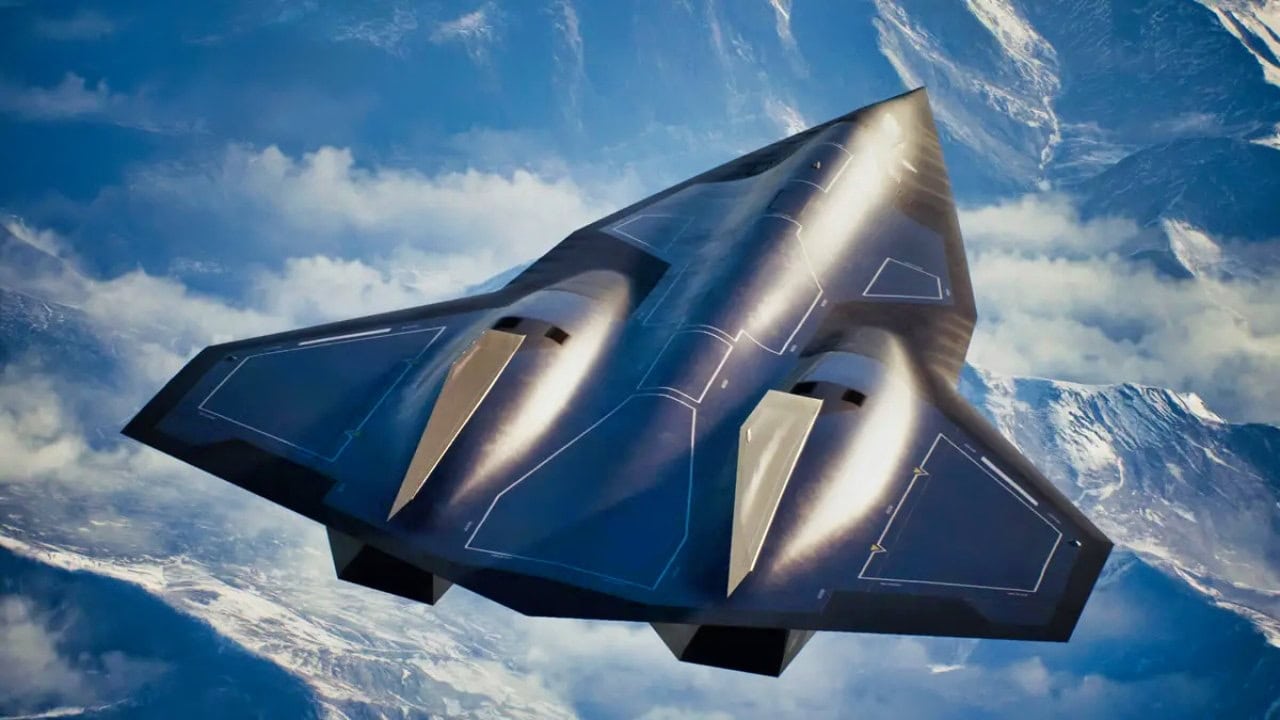
SR-72 Darkstar or SR-71 Son of Blackbird. Image Credit: Creative Commons.
But more than a decade later, the SR-72 has yet to make a publicly confirmed flight, and the US military has never acknowledged an operational aircraft.
With the development timeline slipping, questions have emerged about whether the program remains alive.
What is the SR-72?
The SR-72 concept emerged from Lockheed Martin’s Skunk Works, the division responsible for aircraft including the U-2, A-12, SR-71, and F-117.
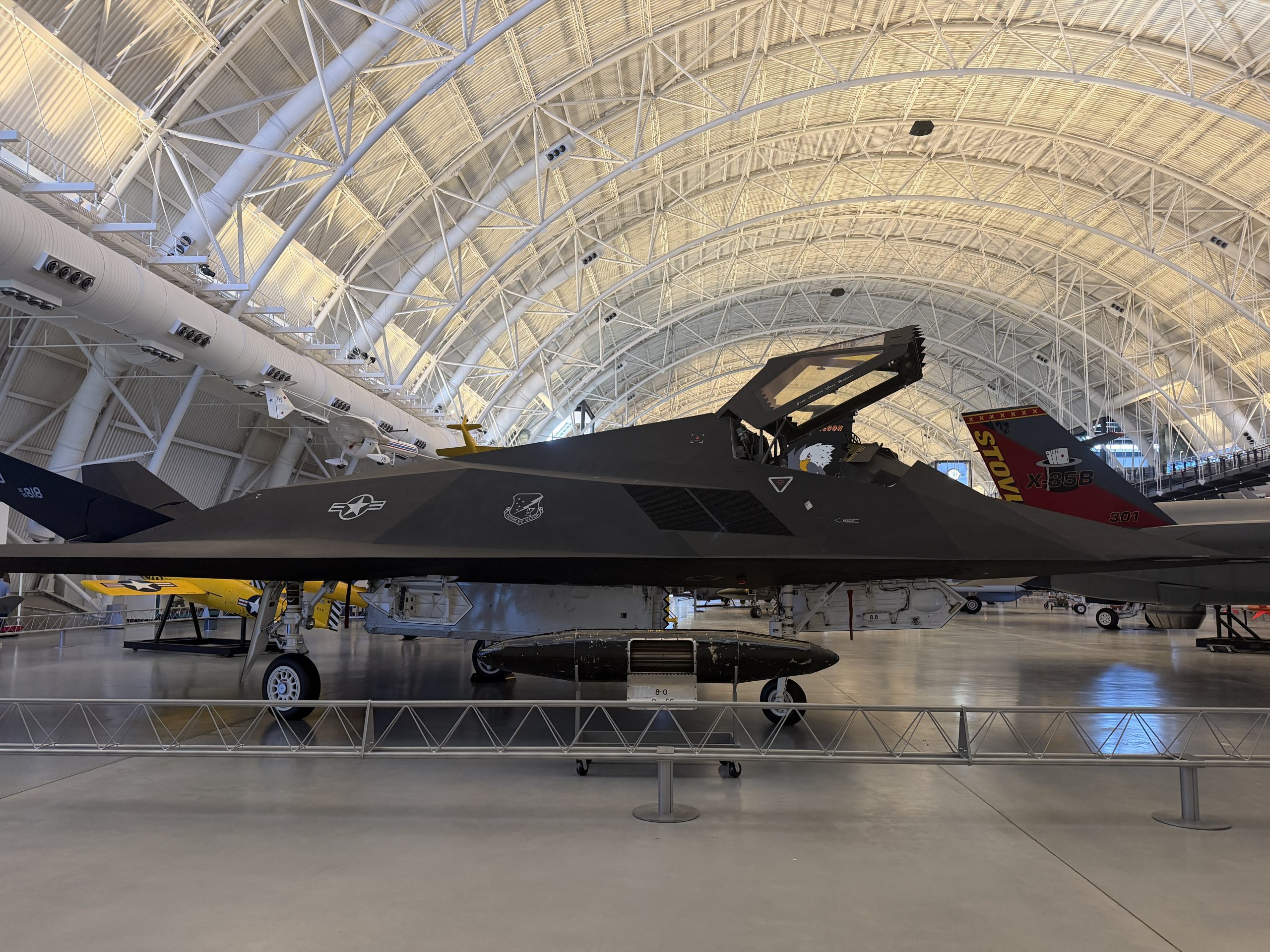
F-117 Nighthawk at the Smithsonian. 19FortyFive Original Image by Christian D. Orr.
The SR-72’s defining performance goal was approximately Mach 6, or roughly 4,000 mph depending on altitude.
Potential missions included high-speed strategic reconnaissance, intelligence collection in contested airspace, and time-sensitive strikes against distant targets.
The concept sought to combine the SR-71’s speed advantage with modern propulsion and aircraft technology.
Unlike a conventional cruise missile, the SR-72 was intended to be reusable, with proposed capabilities that would exceed the performance envelope of conventional military jets.
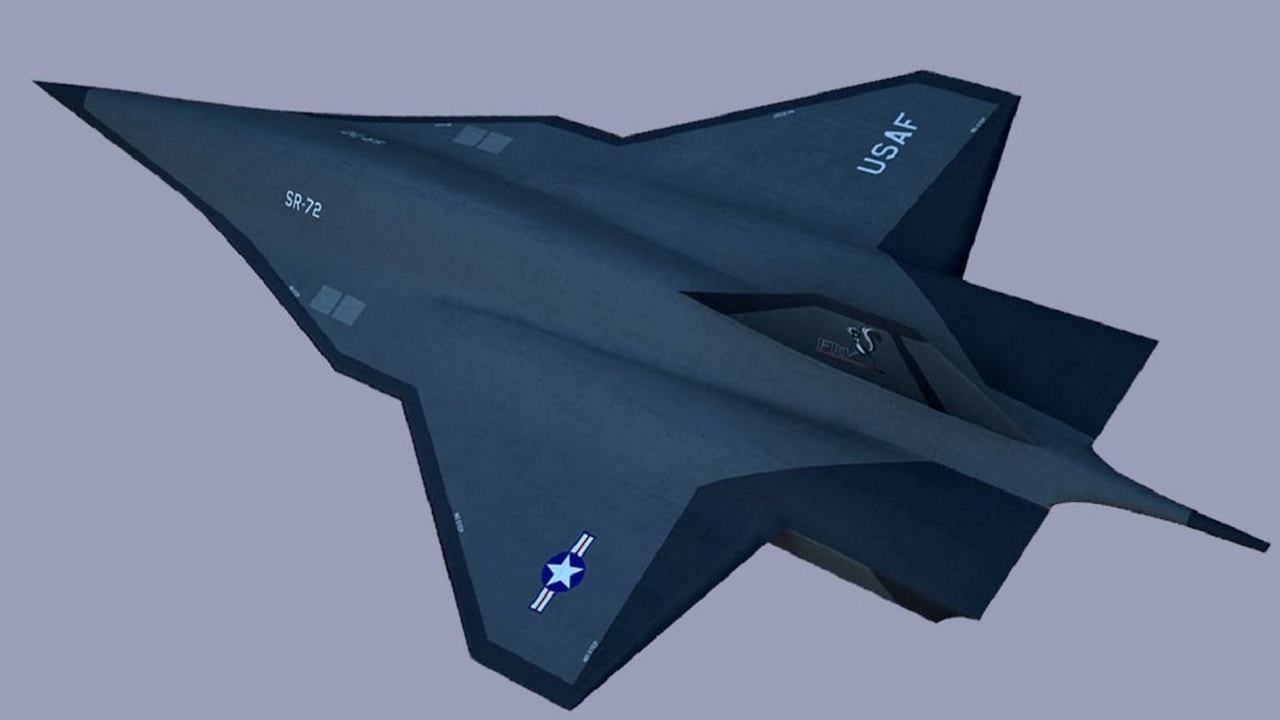
SR-72. Image Credit – Artist rendering.
The Propulsion Challenge
For the SR-72, the central technical challenge was always developing an engine capable of operating efficiently from takeoff through hypersonic flight.
Conventional jet engines cannot sustain Mach 6, while scramjets can operate at hypersonic speeds but generally cannot accelerate an aircraft from a standstill.
Lockheed therefore proposed a turbine-based combined cycle (TBCC) propulsion system that combines two propulsion regimes: a turbine engine would accelerate the aircraft through lower-speed flight.
In contrast, a ramjet/scramjet-based system would take over at higher speeds.
The transition between propulsion modes is particularly challenging.
Also, sustained Mach 6 flight creates enormous aerodynamic heating and materials problems.
These difficulties help to explain why reusable hypersonic aircraft remain substantially harder to develop than conventional supersonic aircraft.
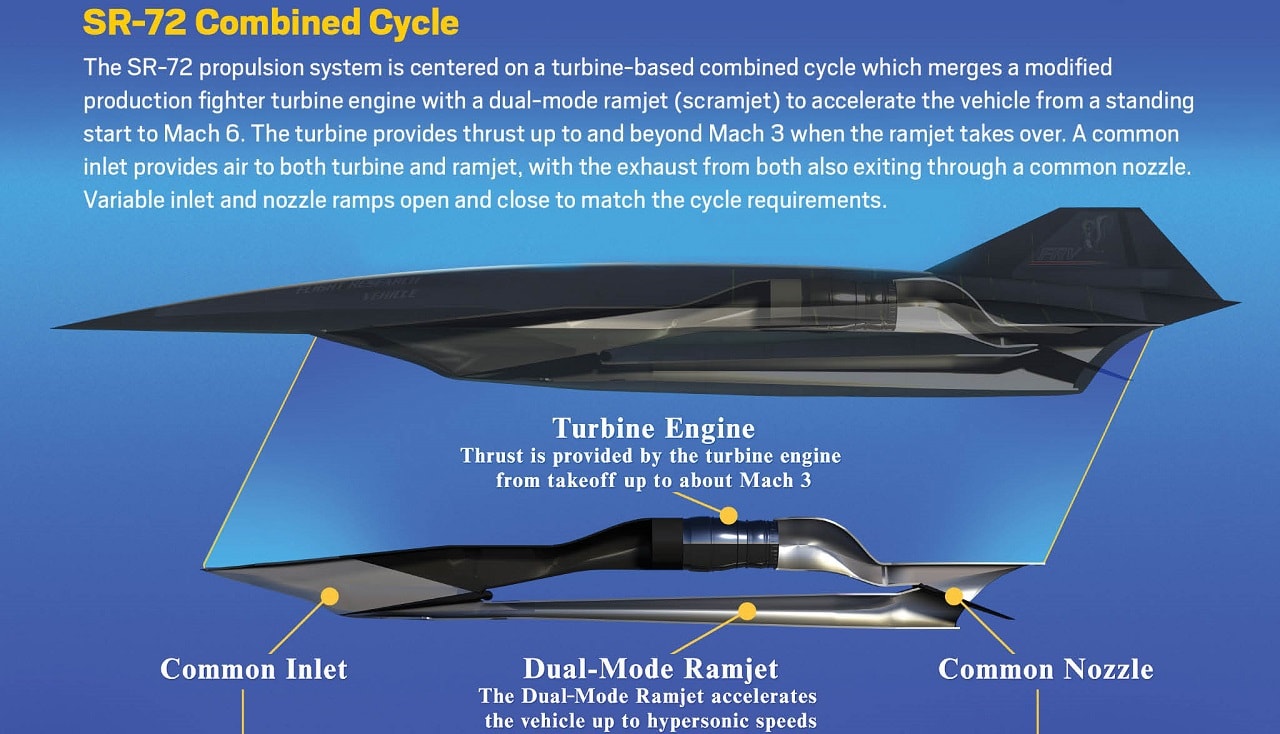
SR-72 Son of Blackbird. Image Credit: Creative Commons.
Timeline Blown
Lockheed Martin publicly discussed the SR-72 concept in 2013.
Early projections envisioned a possible flight demonstrator in the 2020s, with an operational aircraft potentially following in the 2030s.
In 2017, Lockheed officials discussed the possibility of developing a hypersonic demonstrator relatively quickly.
Those public projections, of course, have not resulted in a confirmed aircraft rollout or flight demonstration.
As of November 2026, no operational SR-72 has been publicly identified.
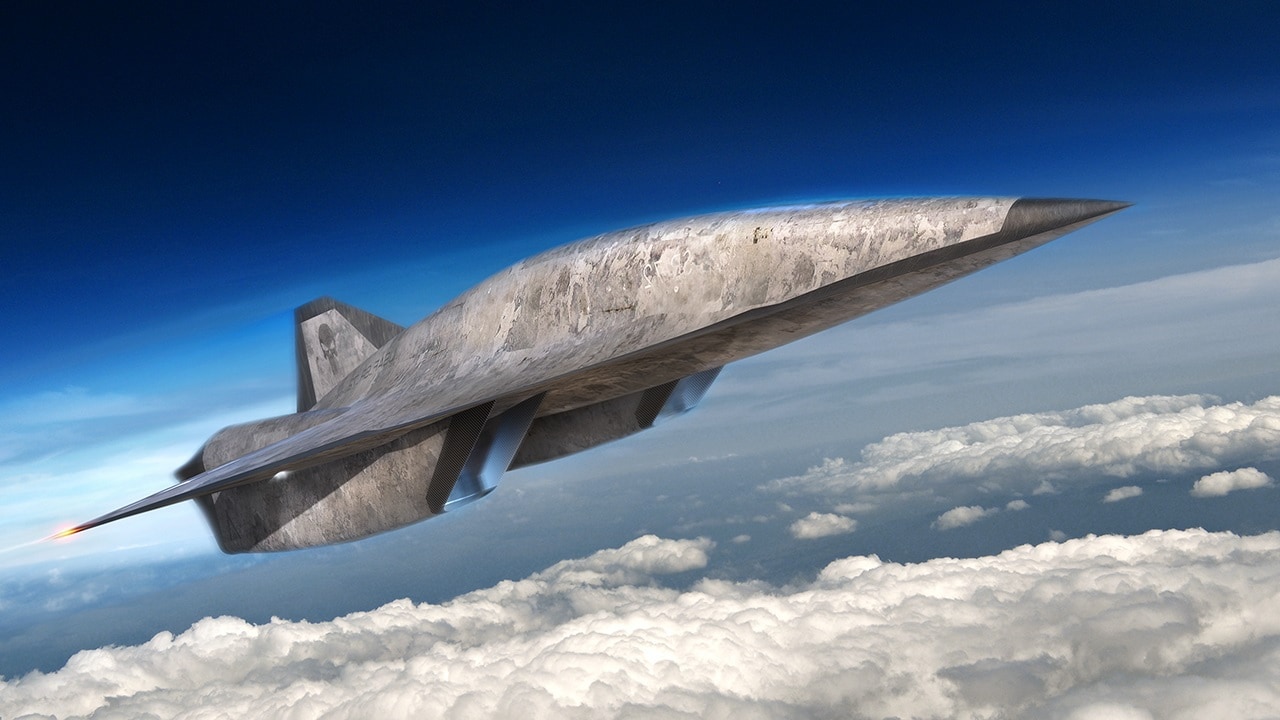
SR-72 artist rendering. Image Credit: Creative Commons.
There is also no confirmed production contract or announced service-entry date.
The lack of visible progress has fueled speculation that the program was canceled, indefinitely postponed, or absorbed into classified research.
Secret Development?
Lockheed Martin continues to participate in classified aerospace development.
Financial disclosures occasionally reference significant costs associated with classified aeronautics programs.
Some sources have suggested these programs could involve advanced hypersonic aircraft; however, no publicly established connection links those financial disclosures to the SR-72.
The US government has not confirmed the SR-72’s existence either.
Now, the absence of public information does not necessarily mean the program does not exist, especially given Skunk Works’ secretive history; the F-117, for example, operated for years before its existence was publicly acknowledged. However, simply put, we have no proof that the SR-72 exists right now.
The Darkstar Connection
Public interest in the SR-72 surged following the 2022 film Top Gun: Maverick. The film featured Darkstar, a fictional hypersonic reconnaissance aircraft.
Lockheed Martin Skunk Works collaborated on Darkstar’s design, giving the fictional aircraft a plausible aerospace appearance.
The Darkstar’s resemblance to SR-72 concept imagery helped fuel speculation about real classified aircraft.
However, Darkstar was a movie prop—not evidence of an operational SR-72. Meanwhile, the Pentagon continues to pursue hypersonic technologies for military applications.
Experimental aircraft, propulsion research, and hypersonic weapons remain important areas of development.
The SR-72 has neither been confirmed nor denied.
Its original development projections have long passed without confirmation of a flying aircraft.
Classified research may continue, but the connection to the SR-72 remains purely speculative.
For now, the Son of Blackbird is best understood as an ambitious hypersonic concept whose fate remains publicly unknown.
About the Author: Harrison Kass
Harrison Kass is a writer and attorney focused on national security, technology, and political culture. His work has appeared in Tablet, City Journal, The Hill, The Spectator, and The Cipher Brief. He holds a JD from the University of Oregon and a master’s in Global & Joint Program Studies from NYU—more at harrisonkass.com.