

Summary and Key Points: Canada’s fighter replacement has no slack left. The Royal Canadian Air Force bought 138 CF-18 Hornets and is down to 71, with five or six retiring each year and the last leaving service in 2032 or 2033. The F-35A force is not due to reach full operational capability until that same window.
The CF-18 Hornet Challenge for Canada
Canada’s fighter problem is a math problem. And the math isn’t getting any better. FlightGlobal’s Craig Hoyle wrote a compelling piece this week, describing a “knife-edge timeline” for the Royal Canadian Air Force. The last of the CF-18 Hornets will leave operational service in the 2032-2033 window.
Canada is still debating whether to buy 88 Lockheed Martin F-35As, as it originally contracted in January 2023. The aging Hornets are overdue for replacement, but Ottawa has yet to decide.
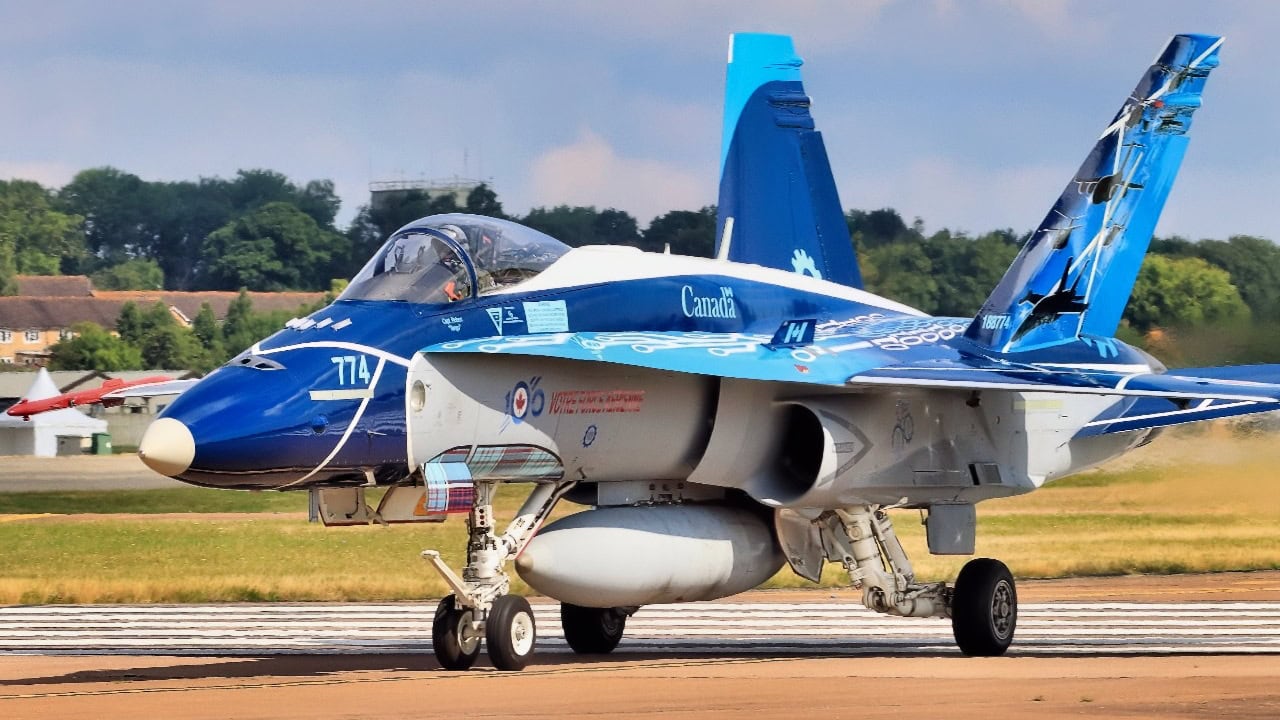
CF-18 Canada Air Force.
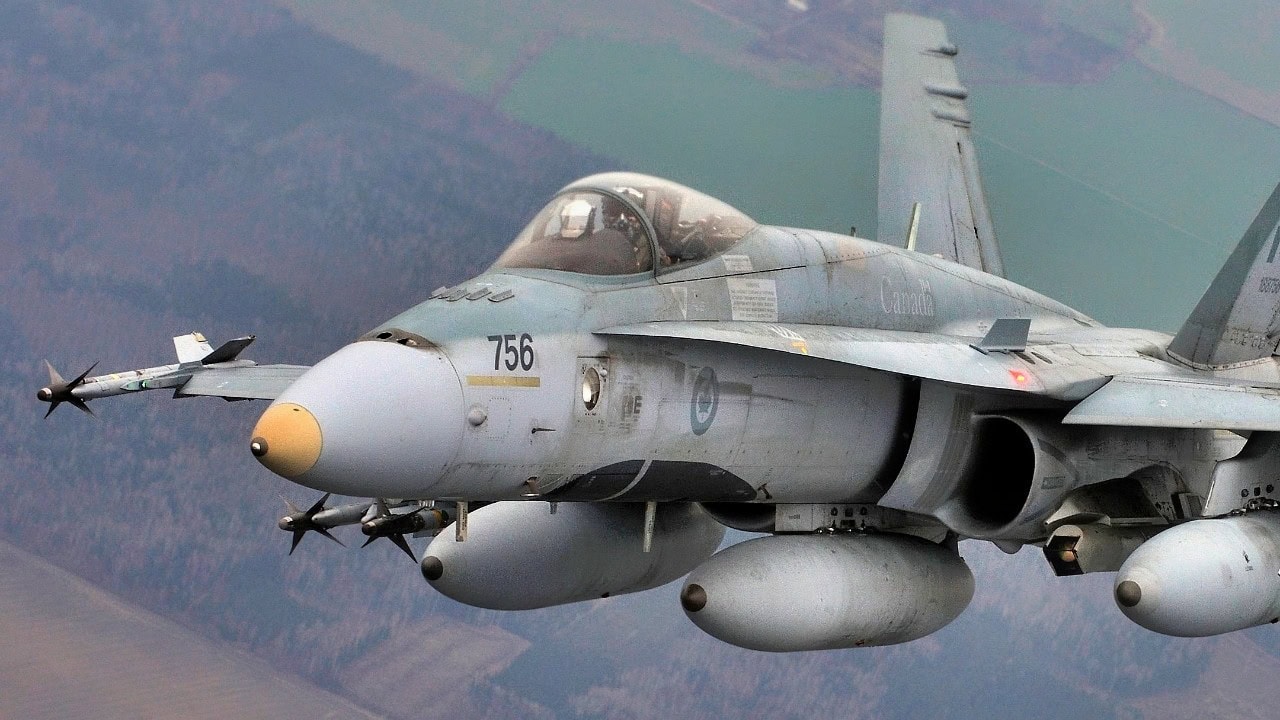
A CF-18 Hornet from the Canadian Air Task Force Lithuania flies over Lithuania on November 20, 2014 for the NATO Baltic Air Policing Block 36 during Operation REASSURANCE.
Prime Minister Mark Carney ordered a review of the F-35 buy in March 2025.
That review was supposed to wrap up by the end of that summer.
It has now stretched through another summer and fall.
Carney ran for office on an anti-Trump platform, and after the President said Canada should become the 51st state, a trade war began after Trump said Canada had taken advantage of the US for quite some time and levied tariffs against it.
Carney has said he wants the best choice for Canada and wants to strengthen national sovereignty, diversify supply chains, and explore deeper economic partnerships with international allies.
He wants less reliance on the US, and Saab has courted Ottawa, offering to build its aircraft in Canada.
Defense Minister David McGuinty stated in April that the government was simply being responsible, and told the Senate defense committee the same month that the review was still ongoing. Here we are in November 2026. Still no decision.
The Hornet Has Nothing Left To Give
The numbers in Hoyle’s reporting, drawn from a senior Canadian official speaking at the Defense iQ International Fighter Conference in Munich, are stark.
Canada bought 138 CF-18s in the 1980s.
It’s down to 71, and five or six more retire every year.
The official described airframes that are 40 to 45 years old, at the end of their fatigue life, and increasingly irrelevant against modern threats.
Ottawa already went the stopgap route once.
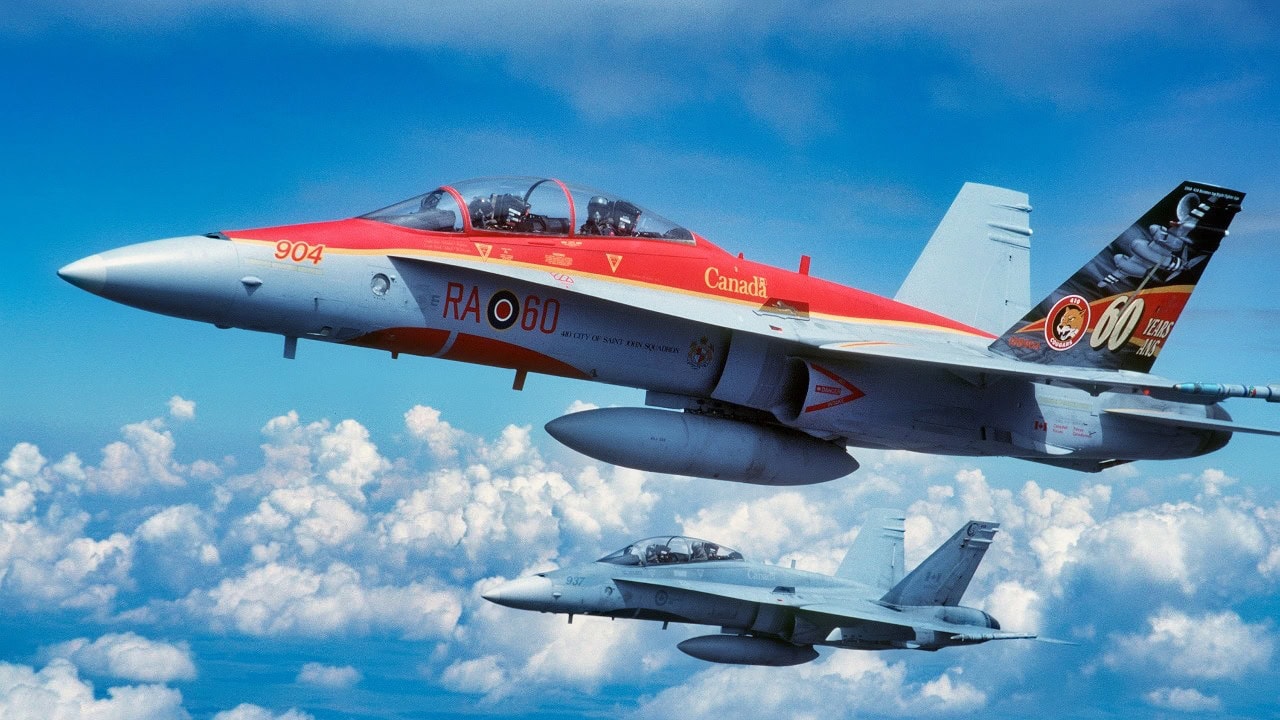
Two Canadian Forces, 410 Squadron CF-188B Multi-Role Fighters, one painted in special anniversary colors, flying over the Utah Test and Training Range (UTTR) for planned engagements during the Tiger Meet of the Americas. The Inaugural Tiger Meet of the Americas brought together flying units from throughout North America that have a Tiger or large cat as their unit symbol. The Tiger Meet of the Americas closely mirrors the North Atlantic Treaty Organization (NATO)/Europe Tiger Meet in its goal of fostering camaraderie, teamwork and tactics familiarization.
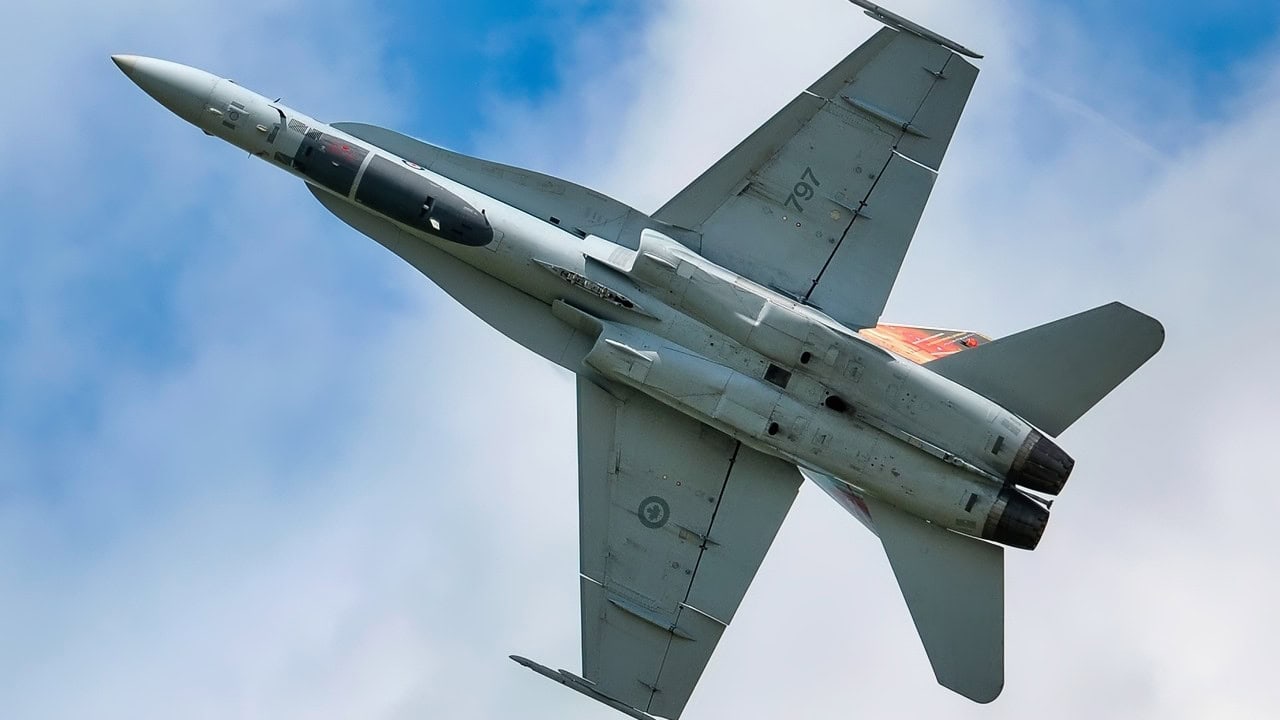
Canada CF-18 Hornet Fighter
It bought 18 used F/A-18s from Australia to keep squadrons flying while the replacement program dragged on, and those jets were nearing the end of their own airframe lives when they arrived.
Avionics were modernized on 88 CF-18A/Bs, and a Phase 2 upgrade was funded for 36 of them to bridge the gap to 2032. There is no Phase 3. There’s no more life to squeeze out.
What Canada Has Actually Bought
This is where it gets interesting. Most press reports have said Canada firmly committed to 16 F-35As. The official in Munich corrected the record: “We’re actually on record for 12 F-35s.”
That’s four each in production Lots 18, 19 and 20, plus long-lead commitments on another 18. Thirty jets out of 88 planned. That leaves 58 aircraft in limbo.
The first two Canadian jets, 35A001 and 35A002, were handed over at Luke AFB in Arizona on October 22 for pilot and maintainer training.
Canada’s first F-35A had made its maiden flight in Texas in September.
The first operational jets are due at Cold Lake in 2028, with initial operational capability for the lead squadron in 2029. Full operational capability lands in 2032 or 2033.
Look at those dates side by side. The Hornets are gone in 2032-2033. The F-35 force reaches FOC in 2032-2033. Canada’s own published schedule actually puts FOC after the CF-18’s retirement.
There is zero margin. Any slip in the decision, the contracts, or the infrastructure at Cold Lake and Bagotville, and Canada has a hole in its NORAD commitment.
The Gripen Pitch By Saab
So why hasn’t Ottawa signed? Politics.
The review grew out of the tariff fight with Washington and President Trump’s talk of Canada becoming the 51st state.
The Munich official was candid that the F-35 decision is wrapped up in the Canada-US trade talks.
Saab has been more than happy to step into that opening. Back in May, La Presse reported that a mixed fleet of roughly 30 F-35As and 60 Gripen Es had emerged as the review’s preferred outcome.
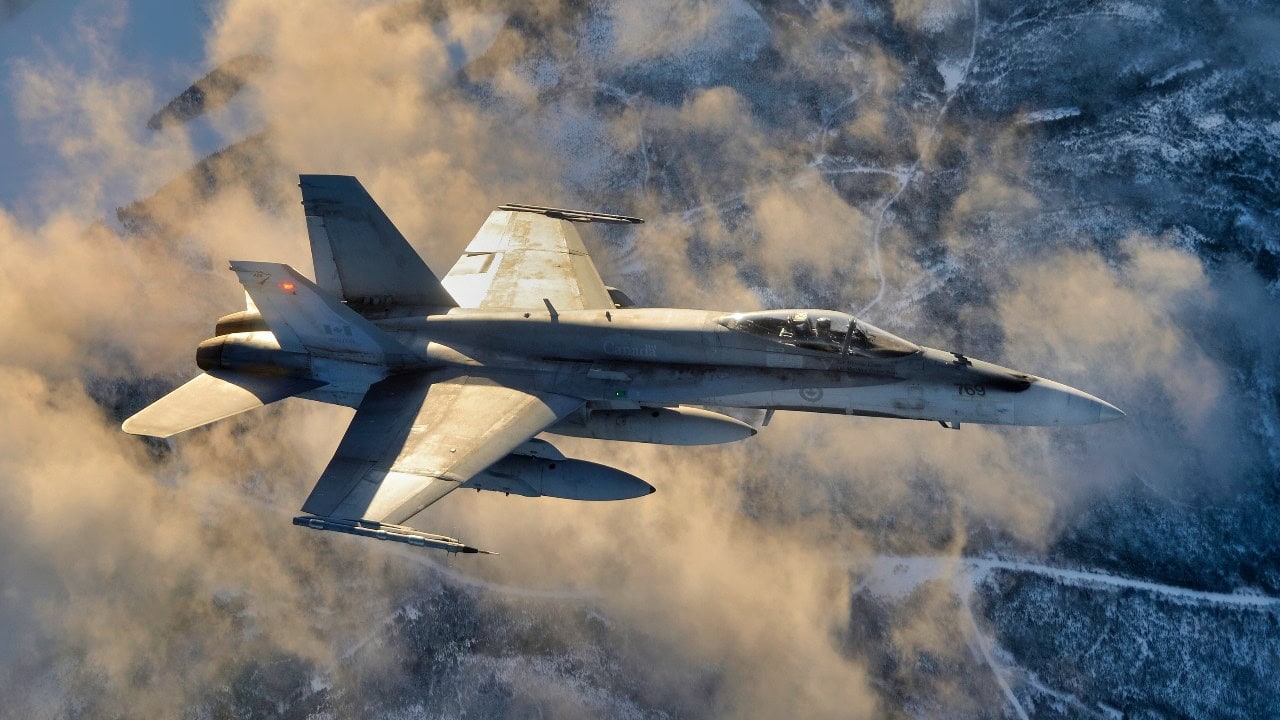
A Canadian CF-18 Hornet in flight during an air combat training exercise for Squadron 425 pilots from Bagotville.
On October 27, Saab rolled out an industrial package with CAE, IMP Aerospace & Defense, and Magellan Aerospace, including a Canadian final assembly line, all contingent on Ottawa buying the Gripen E. Saab has also offered a sovereign data center in Montreal to keep Canadian mission data at home.
Canadian Industry Minister Mélanie Joly back in January, tried to play Lockheed against Saab in an attempt to gain better economic benefits for Canada.
“We believe that we didn’t get enough when it comes to the F-35,” Joly said to the news media late last year.
“The industrial benefits are not enough. There needs to be more jobs created out of the F-35 contract. That’s clear to me and clear to this government,” she added.
Saab offered 12,600 jobs in a last-minute full-court press for Ottawa to ditch the F-35 for the Saab JAS-39 Gripen.
The Mixed Fleet Trade-Off Is Not A Great Idea
The mixed-fleet idea looks good on a spreadsheet and terrible on a flight line. The RCAF is an air force of roughly 12,000 people.
The official in Munich warned that inserting a second type into the middle of this transition would be extremely hard for the service to execute.
Two training pipelines.
Two logistics chains. Two sets of maintainers, simulators, and spares.
All while the Hornets drop out of the inventory at five or six a year.
Retired Lt. Gen. Alain Pelletier, who served as deputy commander of NORAD in Colorado Springs from 2020 to 2023, told the National Post that the Royal Canadian Air Force doesn’t have the pilots, technicians, or trainers to stand up a mixed fleet of Lockheed Martin F-35s and Saab JAS 39 Gripen-Es at the same time.
His bottom line was about as blunt as a former Hornet pilot gets. “You cannot duplicate people. You cannot clone people.”
The F-35 outperformed the Gripen E in every category of the original evaluation. Senior RCAF officers, including the operational commander of the Canadian NORAD Region, have said publicly that NORAD needs an aircraft with overmatch against adversaries.
Canada also just took observer status in the UK-Japan-Italy GCAP sixth-generation program, with a decision on joining expected after 12 to 18 months.
So the Gripen wouldn’t even be the long-term hedge.
It would be a third type somewhere down the line.
However, the frustration in Ottawa is real.
The trade fight with Washington is real, and the sovereignty concerns about U.S.-controlled sustainment and data aren’t imaginary.
But amid all the “sovereignty” concerns, the engine for the Gripen—designated RM16 in Swedish service—is a General Electric F414-GE-39E turbofan, an American engine.
The people who pay for indecision are rarely the ones making the decisions. Same story here. Canadian pilots and maintainers will absorb every month Ottawa waits.
Time Is The Only Thing Canada Can’t Buy
Ottawa can buy F-35s. It can buy Gripens. It can buy into GCAP. What it can’t buy is more time on 45-year-old airframes.
The Hornets have been holding the line since 1982. They’re almost out of runway.
About the Author: Steve Balestrieri
Steve Balestrieri is a National Security Columnist. He served as a US Army Special Forces NCO and Warrant Officer. In addition to writing on defense, he covers the NFL for PatsFans.com and is a member of the Pro Football Writers of America (PFWA). His work was regularly featured in many military publications.