

Summary and Key Points: Life aboard a US Navy destroyer is hard, and Tin-Can sailors love it anyway, writes a Navy veteran who hunted Soviet submarines from frigates. The worst duty is escorting a carrier strike group, a deployment of at least 6 months that can stretch to 10, in a ship that pitches on every axis and leaves sailors seasick for days. The best is a Show the Flag cruise such as UNITAS, with port calls across the Caribbean and Central and South America.
I Was a Member of the US Navy: Let Me Tell You About Life on a Destroyer
Life aboard a US Destroyer is not easy; it never has been.
No one ever promised it would be, or tried to make it so. But being a “Tin-Can Sailor” has always been something special.
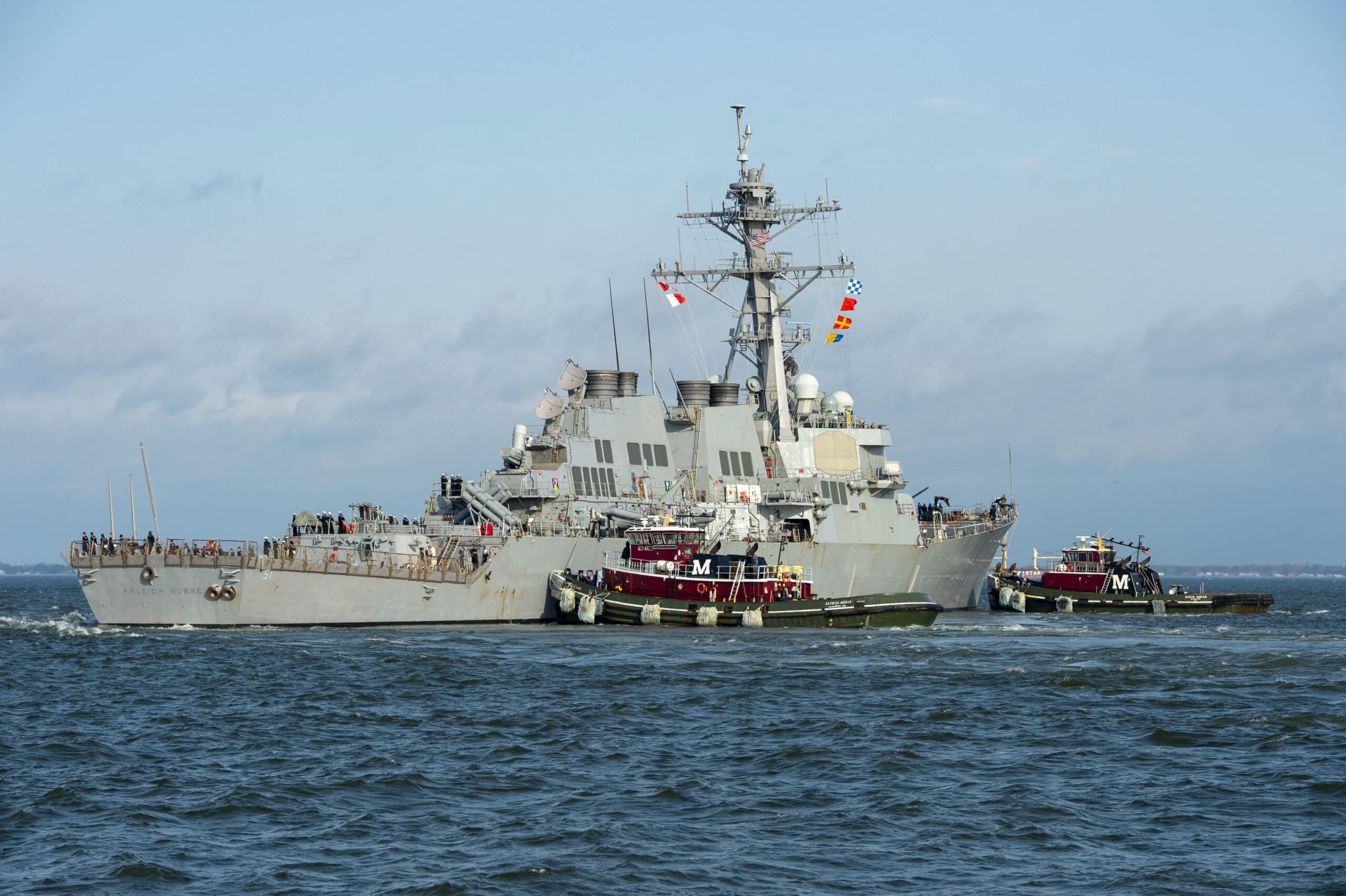
NORFOLK (Mar. 26, 2021) – A tugboat assists the guided-missile destroyer USS Arleigh Burke (DDG 51) in getting underway Mar. 26. Arleigh Burke will replace USS Donald Cook (DDG 75) as one of four forward deployed naval forces (FDNF) located in Spain. Arleigh Burke will join USS Ross (DDG 71), USS Roosevelt (DDG 80), and USS Porter (DDG 78) as the newest member of FDNF Rota. (U.S. Navy photo by Mass Communication Specialist 2nd Class Kris R. Lindstrom)
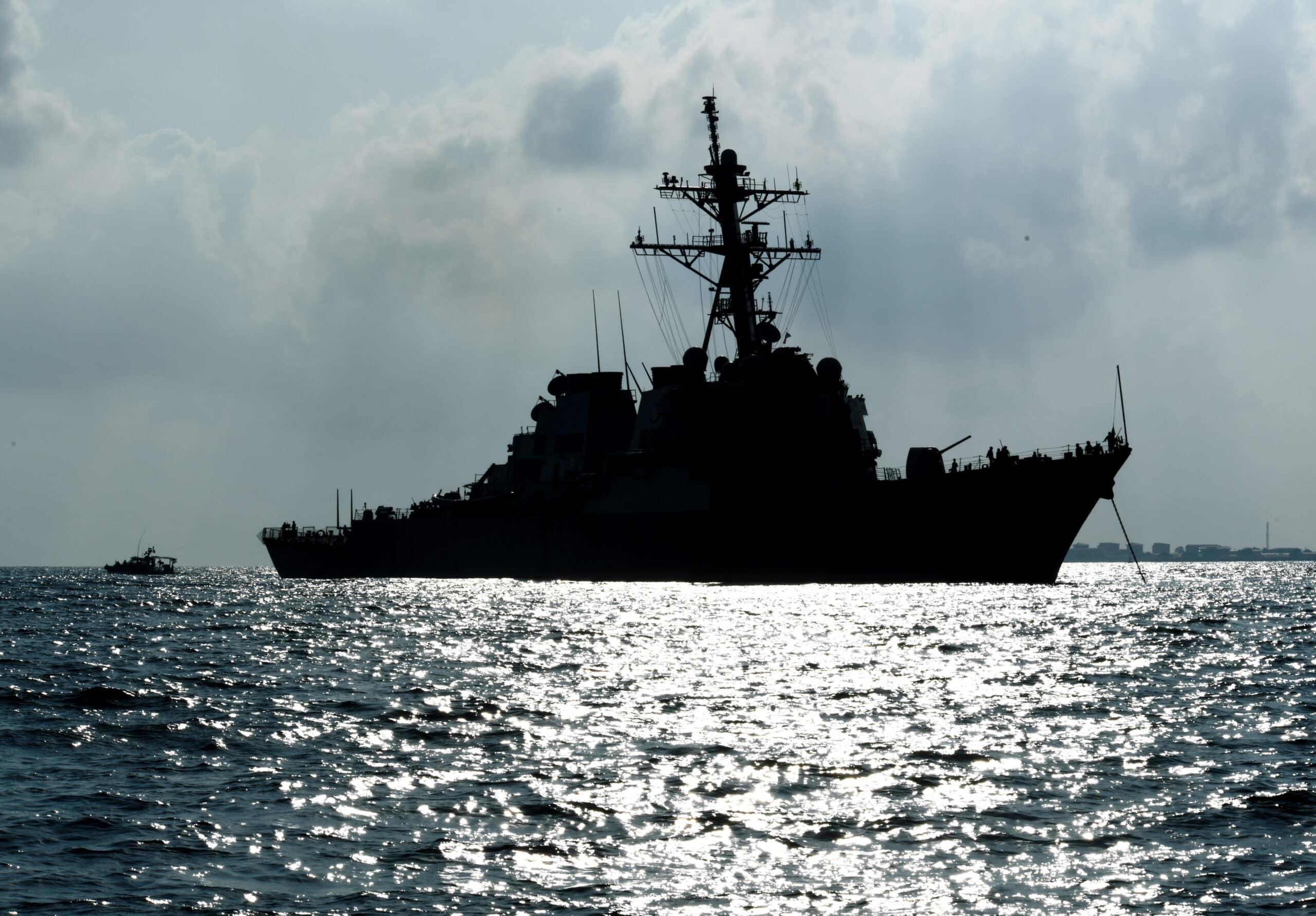
GULF OF TADJOURA (Mar. 13, 2021) USS Laboon (DDG 58), an Arleigh Burke class guided missile destroyer, is anchored in the Gulf of Tadjoura while Camp Lemonnier’s Expeditionary Medical Facility (EMF) team embarked the ship to
administer COVID 19 vaccines to the crew. (U.S. Navy photo by Mass
Communication Specialist 1st Class Randi Brown)
Destroyers are the real US Navy and still embody the dash and spirit of adventure that has called men to ‘go down to the sea in ships’ since the book of Psalms was written in the Bible.
Destroyers Embodied The True Spirit Of The Navy
While battleships of the past and today’s nuclear-powered aircraft carriers tend to get all the press and attention like the stars of a Hollywood movie, it is the destroyer behind the scenes that makes the magic possible.
They protect the carriers from air and submarine threats.
They patrol the world’s sea lanes to protect merchant shipping. They fight pirates and drug trafficking worldwide.
Destroyers enjoy more autonomy and freedom of movement than any other large combatant in the Navy, possibly except attack submarines (good luck getting the Silent Service to talk about).
So, what is life really like on a destroyer, and why do Tin-Can sailors love it so much? Well, it can be complicated and simple at the same time.
I think it comes down to a wide variety of missions, a certain freedom of action, tight crew unity, and the sense that you’re living in history.
The Grinding Toll Of Carrier Escort Duty On A Destroyer
When it comes to mission variety, the least desirable is escorting a Carrier Strike Group.
Your ship is looking at a deployment that will last at least 6 months and could stretch to 10.
During that time, you are bringing your air-defense and anti-submarine warfare capabilities to defend the carrier.
The destroyer will be assigned a place in a formation of other destroyers and a cruiser that has to be kept very carefully.
During that cruise, your ship may be “disaggregated” and sent to a port for repairs, provisions, and a couple of days of liberty ashore, but you never know when or if that is going to happen.
Wherever that carrier goes, you are going too. A carrier rides much better in rough seas than a destroyer does, and in heavy seas, your ship will move on every axis, up and down, side to side, and forward and back.
No matter how long you’ve been aboard, you are likely to be seasick and miserable for days.
The destroyer will reek of vomit, and you can count on seeing a Sea-Dog of a Chief Petty Officer holding a cup of coffee as you wretch over the railing for the 4th time. He will smile at you warmly and say, “Welcome to the Tin-Can Navy, son.”
UNITAS: The Ultimate Pleasure Cruise For A Destroyer
The very best cruise is known as a “Show the Flag” deployment.
During these cruises, the destroyer is a floating diplomat, traveling to foreign ports and staying for several days.
The pinnacle of these Show the Flag cruises for the Atlantic Fleet is the UNITAS, or Latin For Unity, exercise. This multinational exercise might take your destroyer to ports across the Caribbean, Central America, and South America.
Because of the Destroyer’s relatively small size and crew compared to an aircraft carrier, you have an All-Access Pass to ports of almost any size.
During my own period of service on Frigates, I’ve been to Mexico, Grenada, Curaçao, St Lucia, Nassau, Barbados, the US Virgin Islands, Panama, Trinidad, Jamaica, Puerto Rico, and almost Haiti.
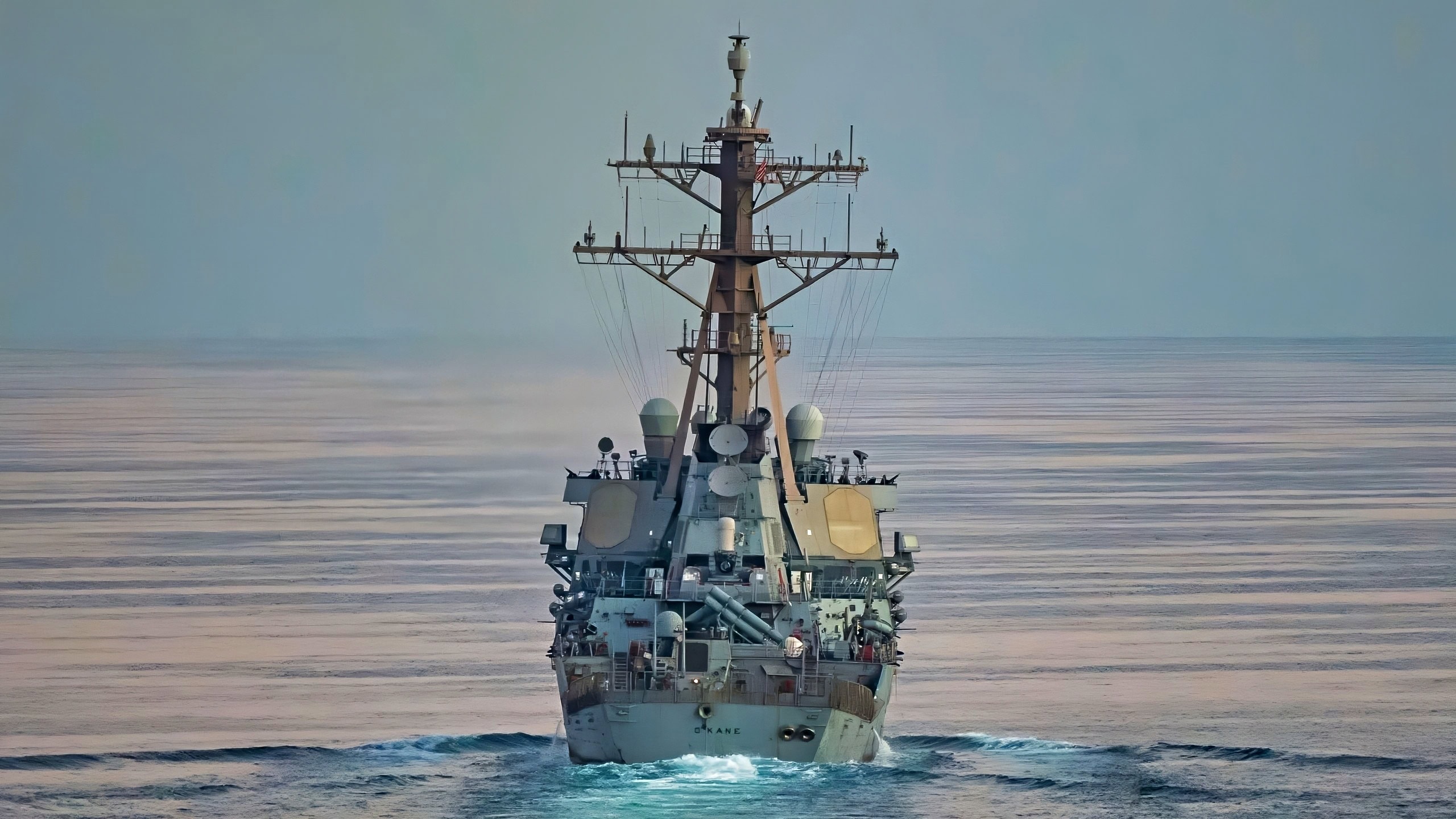
STRAIT OF HORMUZ (Nov. 12, 2021) Guided-missile destroyer USS O’Kane (DDG 77) performs a Strait of Hormuz transit with the amphibious assault ship USS Essex (LHD 2), Nov. 12. Essex and the 11th Marine Expeditionary Unit are deployed to the U.S. 5th Fleet area of operations in support of naval operations to ensure maritime stability and security in the Central Region, connecting the Mediterranean and the Pacific through the western Indian Ocean and three strategic choke points. (U.S. Navy photo by Mass Communication Specialist 1st Class Joe Rolfe)
That port call was canceled for reasons you can probably imagine, with no explanation.
When you enter these ports, the residents expect you and welcome you lavishly. When you come into port, the ship is dressed and flying her pennants and the US flag proudly.
The off-duty crew is in dress whites and manning the rails as “side boys.” On shore, crowds of civilians are waving at you.
Somehow, no matter where we went in the world, hundreds of people got their hands on American flags in various sizes and waved them.
In Curaçao, 50 elementary school kids greeted us at the pier with flags and flowers, singing God Bless America.
I felt a sense of pride in those moments that I cannot put into words here.
Before we got off the ship, we all got a detailed briefing on how to conduct ourselves ashore.
We represented the whole country, served as goodwill ambassadors, and would be judged by that standard. The normal routine of hurried repairs and taking on provisions in port was suspended.
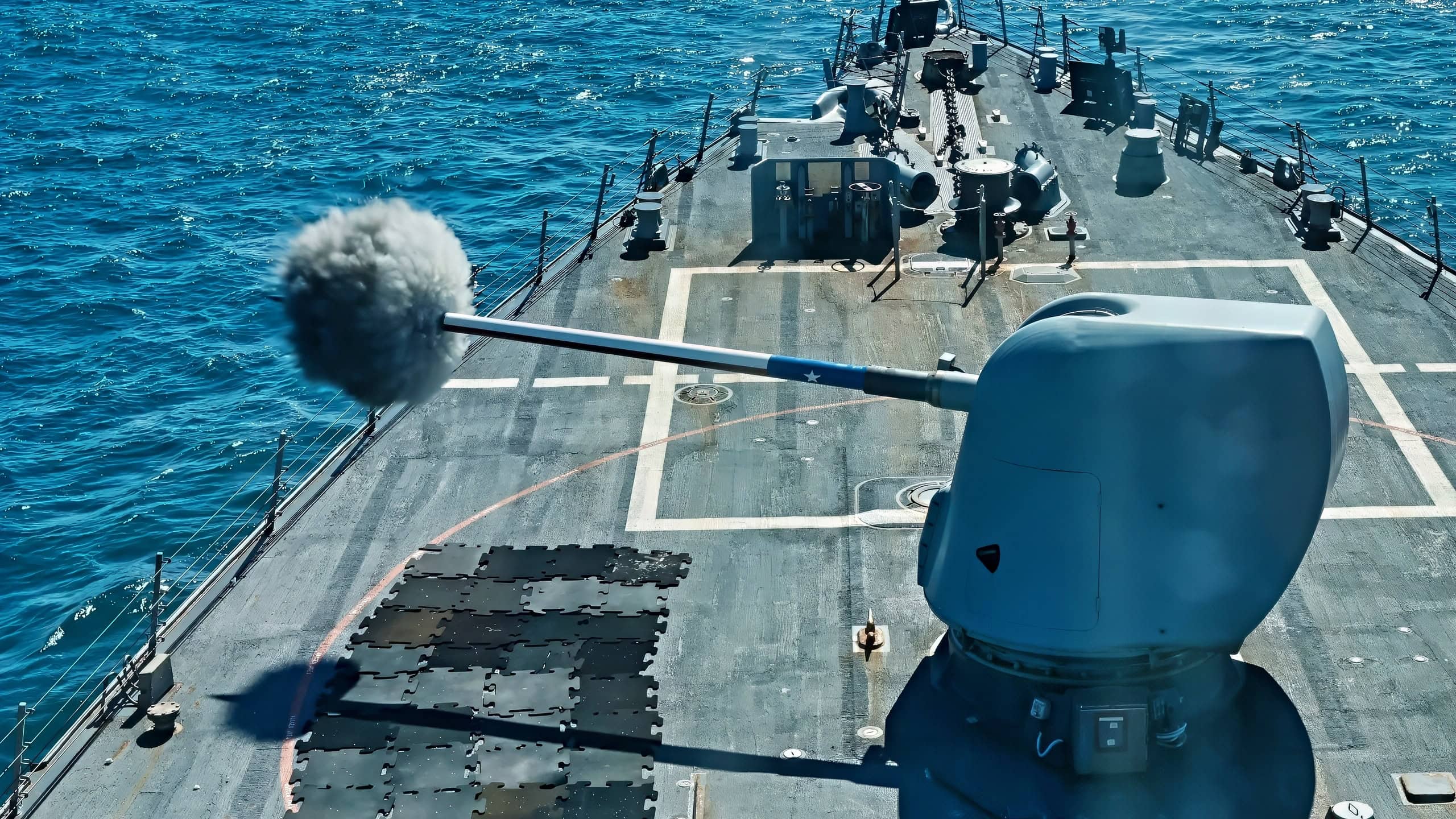
(Oct. 3, 2025) – Arleigh Burke-class guided-missile destroyer USS Gonzalez (DDG 66), fires the Mk45 5-inch gun system while underway as part of the Titans of the Sea Presidential Review. The Titans of the Sea Presidential Review is one of many events taking place throughout the country to showcase maritime capabilities as part of the U.S. Navy’s 250th birthday. America is a maritime nation. For 250 years, America’s Warfighting Navy has sailed the globe in defense of freedom. (U.S. Navy photo by Mass Communication Specialist Seaman Jayden Howard)
Instead, the ship hosted receptions for dignitaries and tours for civilians.
The crew played soccer or softball with local teams.
We also volunteered for cultural exchange meet-and-greets and community projects.
During these events, we signed autographs for little kids and took pictures with them and their families like Hollywood celebrities.
Generally, there was an 11 pm curfew to keep drinking under control in the evenings, and drinking was limited to a few bars that our own Shore Patrol could police.
After 3-5 days, you would head back out to sea for live-fire training exercises with the navy of one or more participating countries, then head for another port to repeat the cycle.
In the Navy, a sailor who had been on 3 or 4 UNITAS cruises had 100 stories about how much fun they were.
The rumor that their ship might be sent on a UNITAS cruise was enough to get some sailors to reenlist.
Destroyers: The Solitary Hunters And Protectors
I served on Fast Frigates, or FFs, and we primarily worked as solitary hunters of Soviet Submarines off the East Coast of the US, the Gulf of Mexico, and the Caribbean; destroyers also frequently operated as “freelancers,” especially in the Pacific because of their longer range.
That operational autonomy gives you a sense of freedom out there on the ocean.
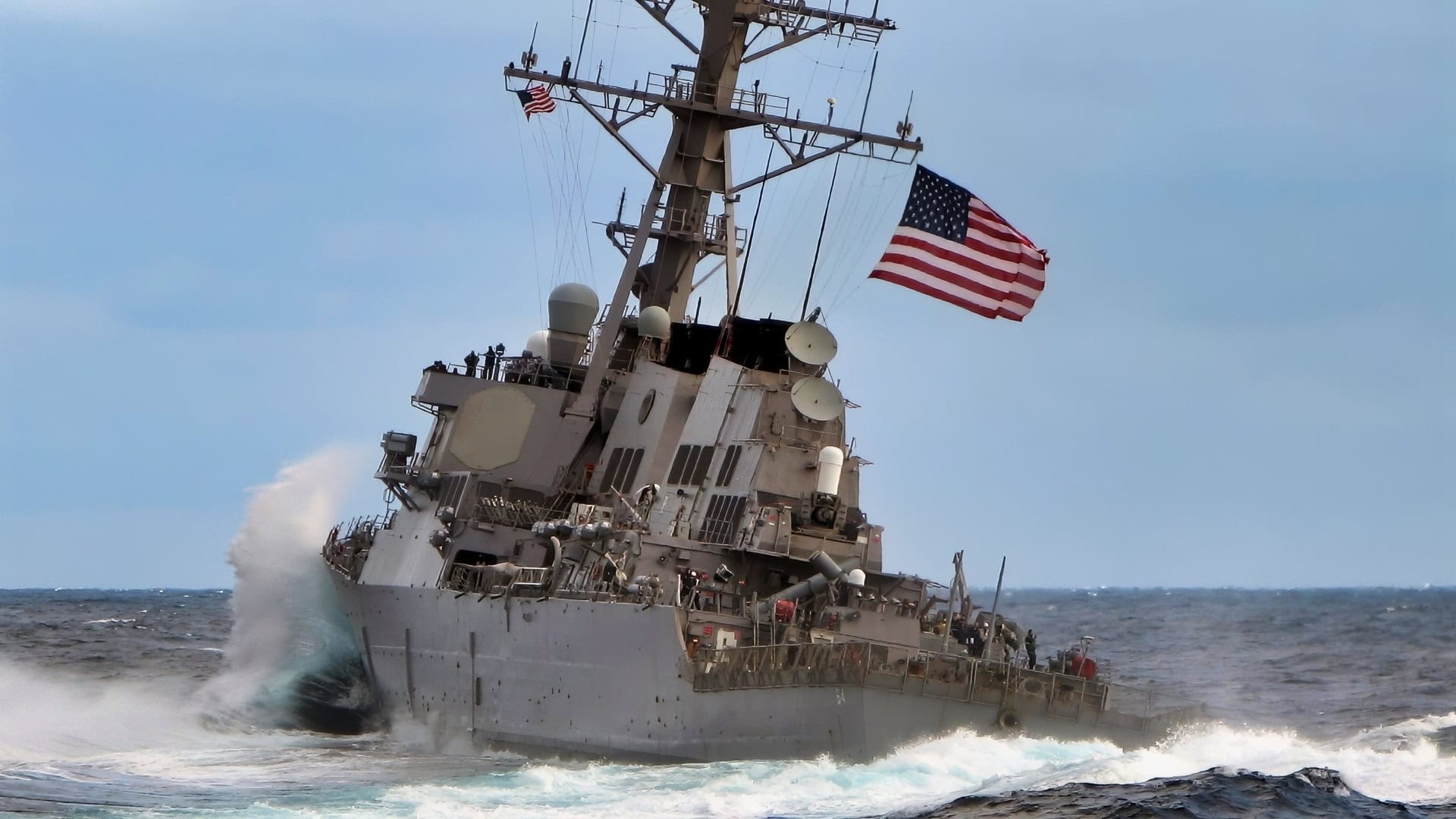
\MEDITTERANNEAN SEA (Jan. 16, 2010) Waves crash over the bow of the guided-missile destroyer USS Carney (DDG 64). Carney is part of the Eisenhower Carrier Strike Group and is deployed as part of an on-going rotation of forward-deployed forces to support maritime security operations in the U.S. 5th and 6th Fleet areas of responsibility. (U.S. Navy photo by Master at Arms Chief Chief Anthony J. Sganga/Released)
A destroyer skipper is given a lot of latitude in operating his ship; his orders will be to proceed to a certain patrol sector of the ocean and then nose around in it until new orders arrive.
You might get tasked to help a ship or civilian vessel in distress, or have a closer look at a ship participating in drug smuggling, or take off like a greyhound to find a Soviet submarine that one of our own subs has been shadowing for weeks.
That last one was fun, even if you didn’t find the submarine, which was sometimes the case.
The destroyer or frigate goes to Flight Quarters; a flurry of activity centers on the aft hangar deck, the helo launches, and darts off to hunt.
Imagine you are a Russian sub in the southern part of the Atlantic Ocean. You are 1,500 miles from the closest landmass in every direction.
You’re outside the shipping lanes, and your sonar hasn’t picked up any contacts for days. You feel completely alone in the ocean.
Suddenly, your sonar operator picks up the sound of a helicopter’s rotor blades beating the water’s surface and the ping of an active sonobuoy.
The first question that the Russian submarine captain asks himself is, “How did that US Navy helicopter find us way out here?”
The answer is, “We were sent to find you, and we just let you know it.”
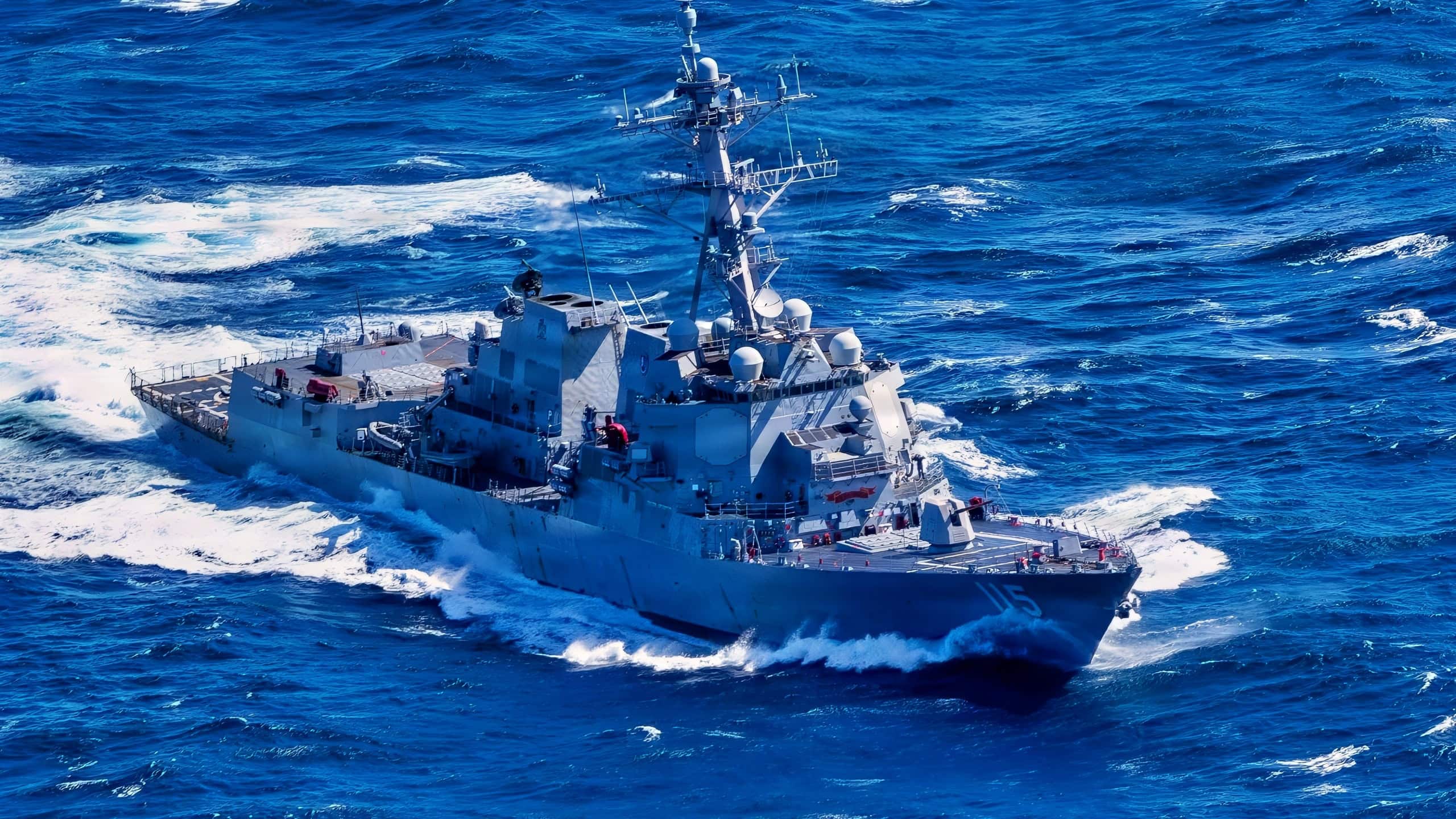
Navy Arleigh Burke-class guided-missile destroyer USS Rafael Peralta (DDG 115) transits the North Pacific Ocean, March 10, 2026. Rafael Peralta is forward-deployed and assigned to Destroyer Squadron (DESRON) 15, the Navy’s largest DESRON and the U.S. 7th Fleet’s principal surface force. (U.S. Navy photo by Mass Communication Specialist 1st Class Ryre Arciaga)
Battle Stations Drills Build Crew Cohesion Aboard A Destroyer
One of the best things about destroyer duty is the tight unity among the crew. Everyone is cross-trained to do several jobs.
Everyone is trained in damage control. Everyone has a battle station they are trained to get manned and ready in under 2 minutes.
You know your first battle station drill will come within hours of leaving port; it will be timed and must be under two minutes.
Those drills will continue day and night at random times until you meet the standard.
They are fun at first, then they come when you are eating or sleeping and become aggravating, then infuriating to the point that anger drives you to nearly break your neck trying to be on the time mark until you hear from the Skipper that it was well done.
That is not the only drill you will answer to.
You will also answer drills for fires in the engineering spaces or galley, flooding in a magazine, man overboard, and flight quarters.
These drills are for specially trained parts of the crew but still involve the whole ship and its operations.
All this drilling creates a tight, cohesive crew.
A destroyer might have a crew of just 250. After a while, you know every one of them.
You might be able to avoid someone you don’t like on the vast expanse of an aircraft carrier, but you can’t do that on a destroyer. Personality issues must be sorted out.
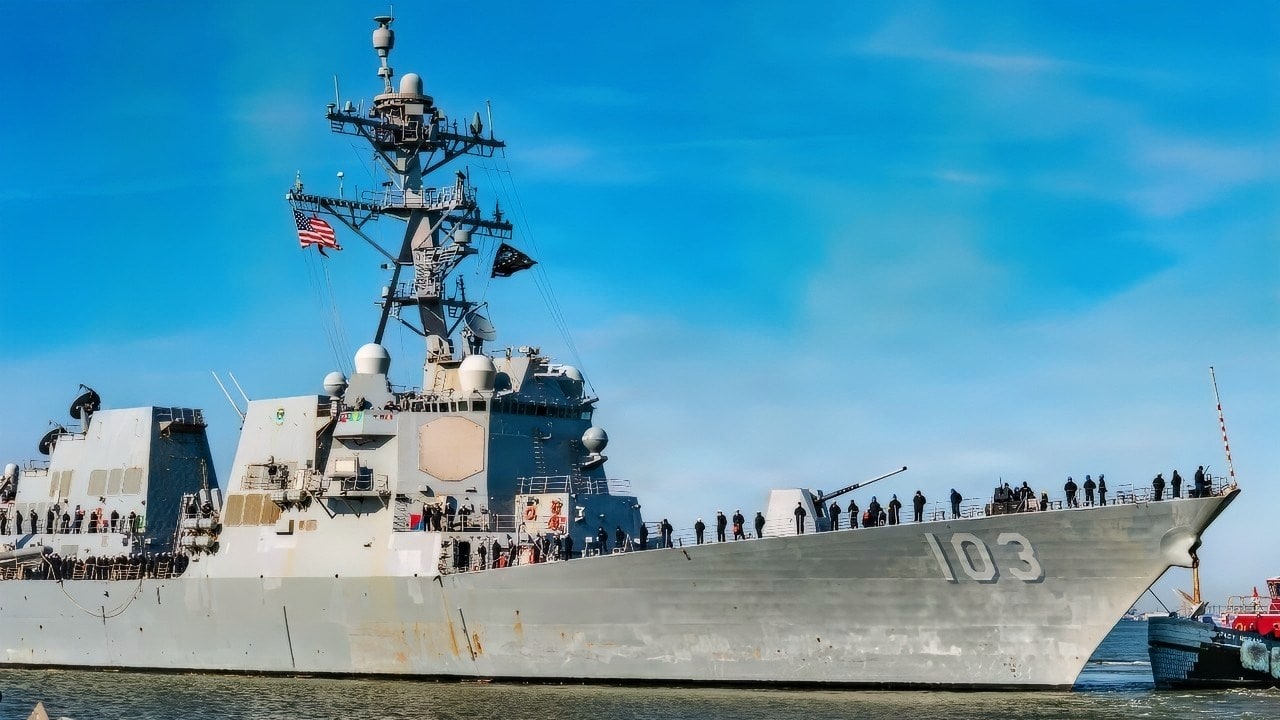
(Feb. 3, 2026) – The Arleigh Burke-class guided missile destroyer USS Truxtun (DDG 103) departed Naval Station Norfolk for a scheduled deployment on Feb. 3, 2026. The ship’s company includes approximately 300 Sailors, with an additional 26 embarked air wing personnel assigned to the “Valkyries” of Helicopter Maritime Strike Squadron 50. U.S. 2nd Fleet, reestablished in 2018 in response to the changing global security environment, develops and employs maritime ready forces to fight across multiple domains in the Atlantic and Arctic in order to ensure access, deter aggression and defend U.S., allied, and partner interests. (U.S. Navy photo by Mass Communication Specialist 2nd Class Derek Cole)
You live, eat, sleep, and work in a confined space; everyone has to try to get along.
He’s the weird part; you can be the nicest guy in the world, but if you suck at your job, you will have a reputation problem among the crew.
Conversely, you can be hard to get along with, but if you are an expert at your job, you earn respect and acceptance.
If you are both unpleasant and incompetent, people will work to make you better at your job; you better improve, or the skipper will find a way to get you off his ship.
A crew with a few toxic people in it can ruin it, and he knows that.
A Destroyer Captain Is The Crew’s Barometer
A destroyer’s entire atmosphere and reputation rest on the captain’s shoulders.
While the crew may give a ship life, he sets the tone and, more than anything else, the crew’s temperament.
I have seen two kinds of destroyer captains: those attached to the ship and those attached to the crew.
The ship-attached skippers were systems administrators, more aloof and detached, dour and taciturn.
Discipline was tight, and enlisted men did not speak to an officer unless the officer spoke to them first. I served on a ship like this.
My helicopter comprised a detachment aboard a frigate. As such, we were not considered ship’s company.
We had our own officer in charge; we stood no watches aboard ship or in port.
The captain had a reputation for rigid discipline.
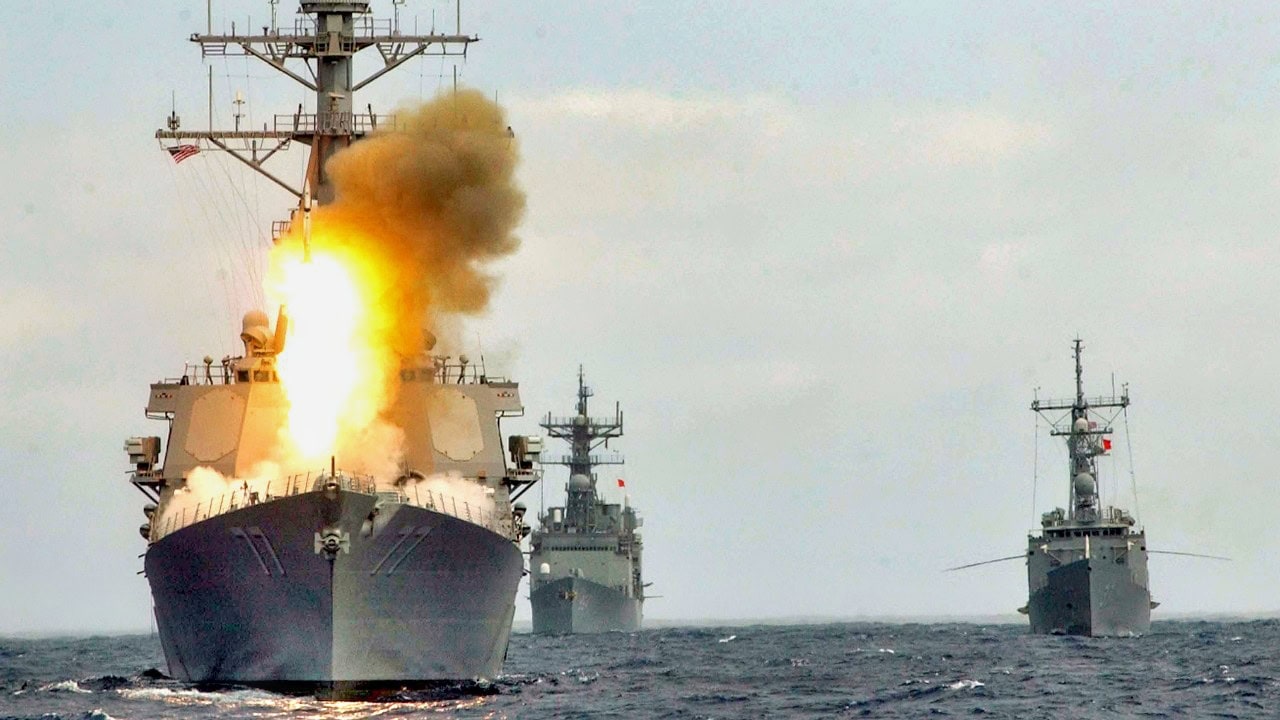
Pacific Missile Range Facility, Kauai, HI (Jul. 5, 2002) — Guided missile destroyer USS O’Kane (DDG 77) launches an SM-2 standard missile from its forward Vertical Launch System (VLS) during exercise ÒRim of the PacificÓ (RIMPAC) 2002. The guided missile frigate USS Crommelin (FFG 37) (right) and Spruance-class destroyer USS Paul F. Foster (DD 964) (center) follow in formation. RIMPAC 2002 is designed to improve tactical proficiency in a wide array of combined operations at sea, while building cooperation and fostering mutual understanding between participating nations. Countries participating this year are: Australia, Canada, Chile, Peru, Japan, the Republic of Korea and the United States. U.S. Navy photo by PhotographerÕs Mate 1st Class Chris Desmond. (RELEASED)
On our first night aboard, our OIC (Officer in Charge) met with the captain to discuss expectations.
He explained that in Naval aviation squadrons, a certain informality was observed between officers and enlisted ratings.
All military courtesies were observed, but enlisted men could address officers without first being spoken to.
He asked that the men of his detachment be warned for their first offense before being punished.
When we were advised of the arrangement, we were stunned.
I recall that crew as being rather sullen and resentful of their skipper.
By comparison, the crew-attentive skipper focused on the welfare of his crew.
He paid attention to their food and how much sleep they were getting.
He was on the 1MC every morning talking about what the ship would be doing that day, even warning that a fire drill would take place at some point during the day.
He praised in public and criticized in private.
The food was great on that ship, and the crew loved and respected the guy.
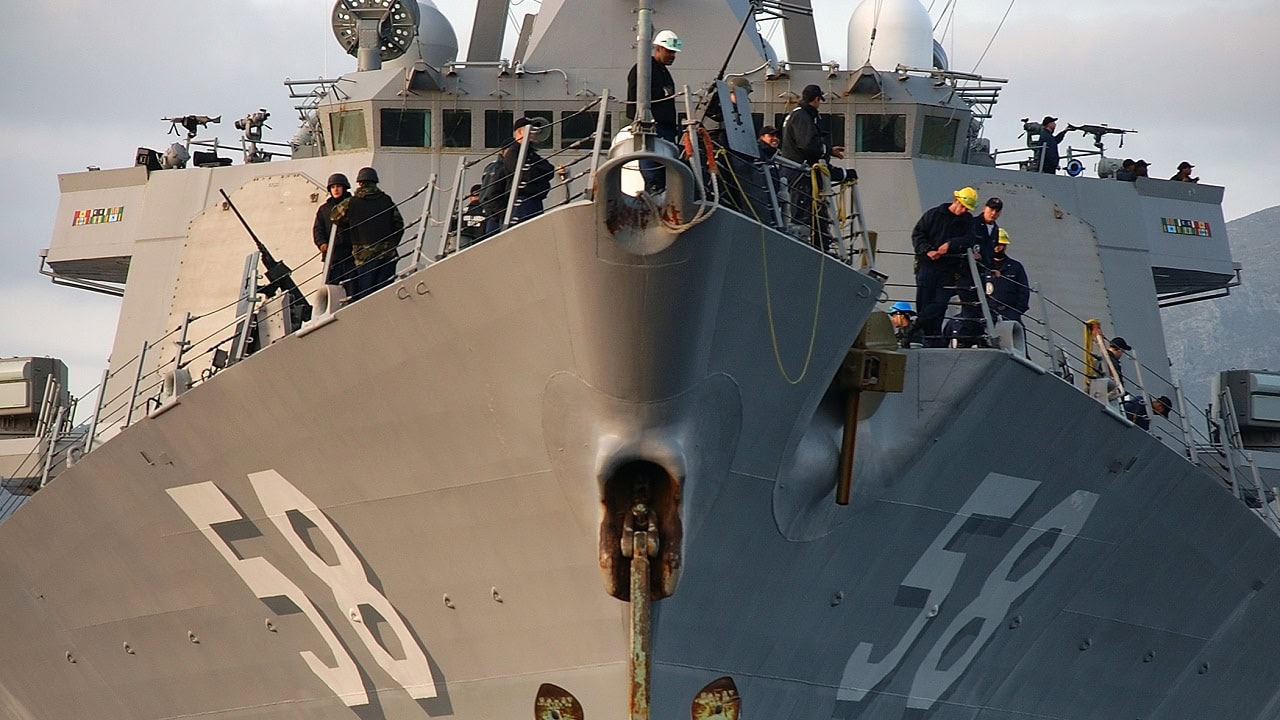
The guided missile destroyer USS Laboon arrives for a routine port visit to the island of Crete. Laboon is on a scheduled six-month deployment in support of Standing NATO Maritime Group (SNMG) 2 and is conducting operations in support of Operation Active Endeavor. Active Endeavor operates in the Mediterranean Sea and is designed to prevent the movement of terrorists or weapons of mass destruction as well as to enhance the security of shipping in general. U.S. Navy photo / Paul Farley.
I don’t know whether one ship would fight harder or better than the other, given the differences between these two kinds of captains, but I knew one crew would follow their skipper into Hell, while the other would have to be dragged along behind him.
Midrats and Morale: The Power of the Mess Deck
Life aboard a destroyer is much better with a great captain and a great cook.
In the Navy, it is said that “Food Is Moral.”
This is especially true on destroyers.
They lack the giant freezers on aircraft carriers and refrigeration for fresh fruit and vegetables, so after a few weeks at sea, the food starts coming out of cans unless the ship is replenished at sea or makes port.
Sustainment ships also have the problem of fresh fruit and vegetables rotting, so most of what they provide is frozen.
Administratively, a destroyer runs on a system of bell chimes to mark the passing of the watch, but sailors measure it by mealtimes for breakfast, lunch, dinner, and Midrats (served between 10 PM and 1 AM for night watch standers).
Ships have a food budget, and if the mess officer and chief mess specialist spend it well, the result can be a thing of wonder.
This includes steak and lobster, Italian and Chinese cuisine, soft-serve ice cream, and fresh-baked goods.
The difference between a plate of scrambled eggs and two Navy sausages versus a made-to-order omelet and fresh hot biscuits cannot be overstated in terms of crew morale.
A sailor facing a change of destroyers will first make some pointed inquiries: “How’s the skipper and how’s the chow?”
Walking On The Bulkheads And The Fight For A Good Night’s Sleep Aboard A Destroyer
In recent years, the Navy has seen destroyers adopt a watch system more in line with the crew’s 24-hour circadian rhythm.
It replaced the traditional rotating watch system that ruined your chance of ever getting a good night’s sleep at sea with a fixed schedule of 3 hrs. on, 9 hrs. off, or 6 on and 18 off.
The constant complaint of destroyer sailors suffering from chronic fatigue is no longer heard much.
They may be walking on the bulkheads in heavy seas or getting drenched on deck trying to secure something that broke loose in a storm, but they will get a good night’s sleep at least when it is done.
The Mystic Cord Tying Every Destroyer Sailor To 250 Years Of Navy History
So, what does it mean to live in history?
The US Navy began as small ships that sailed to far-off lands for 250 years.
In 1812, it fought the British Navy for snatching US citizens off merchant ships to serve under a different flag. It stopped the piracy and slavery of the Barbary Corsairs of Tripoli.
It sailed around the world as the Great White Fleet under President Teddy Roosevelt.
In WWII, destroyers sailed and fought in every ocean, from the subtropics of Fiji to the Arctic and Murmansk.
During the long span of the Cold War, destroyers stood at instant readiness to fight a Soviet Navy many times more powerful than the combined navies of all the Axis powers in WWII.
If you know that history and stand alone on the thrumming deck of a destroyer in the Atlantic or Pacific, you feel like you’re living through history itself.
You speak the same Navy language aboard ship that sailors spoke 250 years ago.
You endure many of the same hardships and happy times as sailors before you did.
You feel that mystic connection to US Navy sailors before you and to the history represented by your solitary destroyer, far out to sea, an American flag waving from its stern.
About the Author: Sean Spoonts
Sean Spoonts is the former Editor-In-Chief of SOFREP.com. He is a military analyst, writer, and commentator whose work has appeared in Newsweek, CS News, Ukrinform, and various military/veteran media networks and professional publications, including the Military Intelligence Professional Bulletin. He is a U.S. Navy veteran, having served as an Aviation Anti-Submarine Warfare Operator and Search and Rescue Helicopter Aircrewman.