
China's 29-Aircraft J-16-Led Patrol Turns Xi's Taiwan Promise Operational in 2026
 Marcus Chen
China's 29-Aircraft J-16-Led Patrol Turns Xi's Taiwan Promise Operational in 2026
Twenty-nine Chinese military aircraft, including J-16 fighters and unmanned aircraft, flew a joint combat-readiness patrol around Taiwan on November 12. The timing matters. On the same day, Xi Jinping said China's complete reunification with Taiwan would ‘certainly’ be achieved. The patrol was not an invasion rehearsal, but it was a practical demonstration of what Beijing means when it says the Taiwan issue is an active military problem rather than a historical slogan.
The patrol put hardware behind the speech
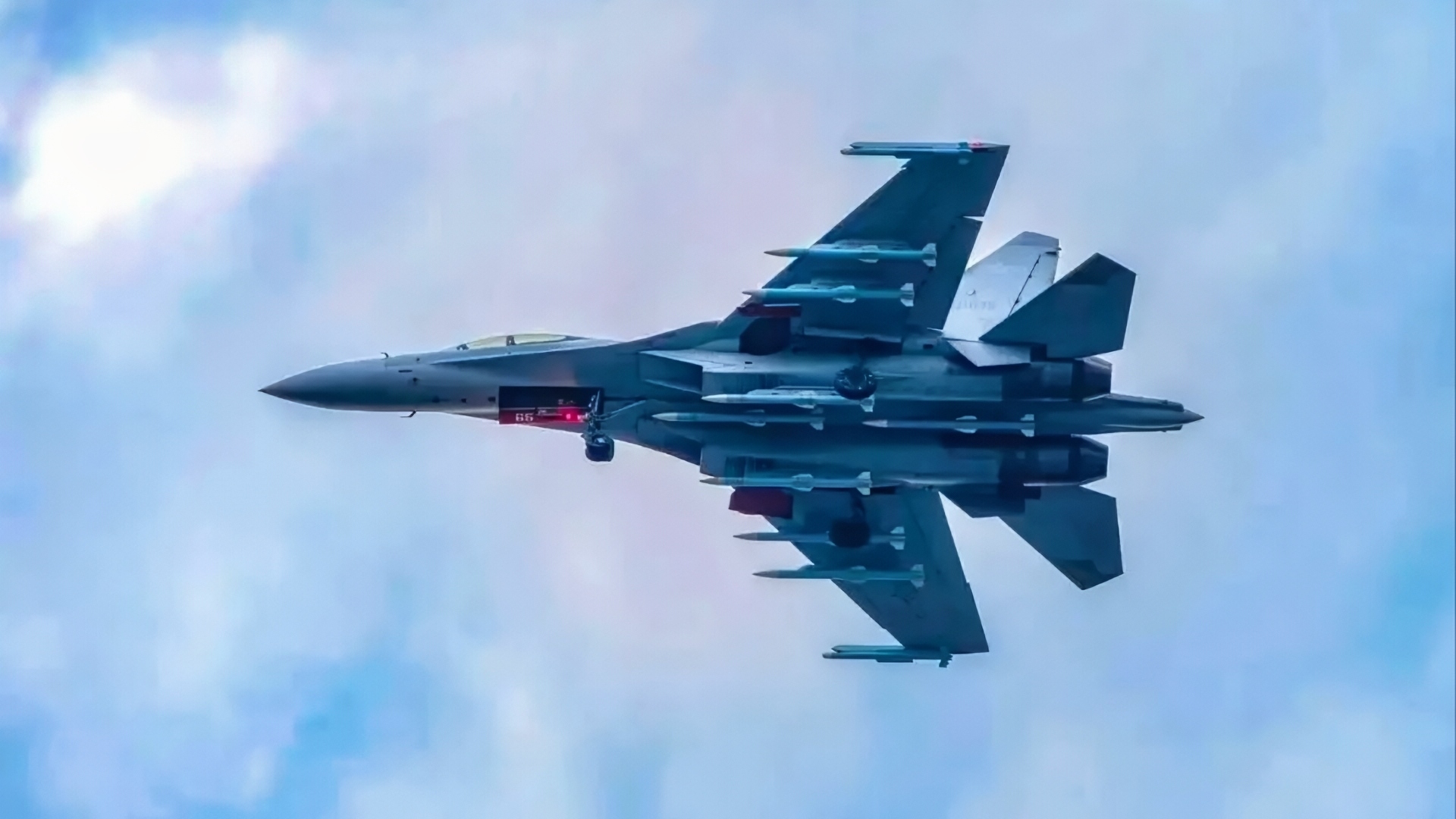
According to Al Jazeera, Taiwan's defense ministry detected J-16 multirole fighters and drones operating with Chinese naval forces. The J-16 is a two-seat, twin-engine strike aircraft derived from the Su-30 family. Its value is not simply the number of airframes in the sky. It can carry air-to-air weapons, anti-ship weapons and precision strike payloads while operating as part of a network that includes ground-based radar, airborne early-warning aircraft and surface ships.
Twenty-nine aircraft is a manageable number for Taiwan's air-defense system. It is not a force large enough to sustain a full air campaign by itself. The point is repetition. A patrol that can be launched whenever Beijing wants forces Taiwan to keep radars, command centers, fighters and missile batteries on alert. The cost is paid every day, before a crisis begins.
From pressure around the island to access beyond it
The more consequential development may be maritime. Separate reporting on the Liaoning carrier group described Chinese forces practicing the restriction of naval access in the western Pacific. That activity extends the operating problem beyond the Taiwan Strait. A Taiwan contingency would not be decided only by whether Chinese troops could cross the 130-kilometer strait. It would also depend on whether US and allied forces could move through the Philippine Sea, reinforce Taiwan, and keep fuel and ammunition flowing.
A carrier group does not need to defeat the US Navy in a fleet battle to impose costs. It needs to complicate access, force escorts to spread out, and create uncertainty about where aircraft and missiles can be launched. The Liaoning is an older ski-jump carrier with less aviation capacity and flexibility than a US nuclear-powered carrier. That limitation is real. So is the operational lesson: China is practicing how to use aircraft, warships and shore-based sensors together across the first island chain.
The geography favors a campaign of exhaustion
For Taiwan, the immediate burden is sortie management. Every Chinese patrol requires identification, tracking and, sometimes, an air response. Taiwan's F-16s and other fighters are capable platforms, but aircraft have finite engine hours, weapons stocks and maintenance cycles. A force that responds to every approach as if it were the start of a war will eventually consume readiness. A force that does not respond risks allowing the patrol pattern to become normal.
That is the central military advantage of gray-zone pressure. Beijing can vary the tempo without crossing the threshold that would automatically trigger US intervention. It can send a small number of aircraft, then a larger package; approach from different axes; or coordinate aircraft with naval activity east of Taiwan. None of these actions proves that an attack is imminent. Together, they improve the People's Liberation Army's understanding of Taiwan's reaction times, radar coverage and political decision-making.
The G7 warning is politically important but operationally thin
G7 foreign ministers said China's activity east of Taiwan threatened regional stability, while Taipei promised stronger self-defense. Those statements matter because they establish that Taiwan's security is not treated solely as an issue between Beijing and Taipei. They do not, however, put another missile battery on Taiwan, add a tanker to the Philippine Sea or shorten the time required to move US aircraft into the theater.
Beijing understands this gap. Xi can combine language about peaceful reunification with daily military activity that raises the cost of resisting it. The formula gives China diplomatic room while the PLA accumulates experience. Taiwan and the United States face the opposite problem: they must deter coercion without treating every patrol as the opening shot of a war.
What this means for Washington and Taipei
First, the response should be measured in endurance rather than headlines. Taiwan needs more distributed sensors, mobile air defenses, repair capacity and stockpiles that can survive the first days of a blockade or missile campaign. The objective is not to match China's aircraft count. It is to ensure that a 29-aircraft patrol cannot create a disproportionate readiness bill.
Second, the United States and Japan need to plan for the western Pacific outside the Taiwan Strait. Fuel, munitions, maintenance and communications are less visible than a carrier deck, but they determine whether a coalition can keep operating after the first week. A patrol that reaches east of Taiwan is a reminder that the decisive geography may begin after the Strait, where reinforcement routes become exposed.
Finally, Washington should be careful with ambiguity that becomes indecision. The reported pause in a $14 billion Taiwan weapons purchase has already made Beijing more confident that military pressure can be used as leverage in a broader negotiation. If the political signal is inconsistent, the PLA will read the operational signal for us.
China does not need to invade Taiwan tomorrow to change the military balance. It only needs to make every response more expensive, more frequent and less certain.
Xi's speech was political. The 29-aircraft patrol was operational. The danger is not that either event independently starts a war. It is that repeated patrols gradually make Chinese military access around Taiwan look routine. Once that becomes the baseline, Beijing will have gained leverage without firing a shot—and Taiwan's warning time will be shorter than the headlines suggest.
Sources
On November 12, 2026, 29 Chinese military aircraft, including J-16 fighters and drones, conducted a joint combat-readiness patrol around Taiwan. This action coincided with Xi Jinping's assertion of China's intent to achieve reunification with Taiwan. The patrol serves as a demonstration of China's military capabilities and intentions in the region.
- 29 Chinese military aircraft conducted a patrol around Taiwan on November 12, 2026.
- Xi Jinping stated that China's reunification with Taiwan would be achieved.
- The patrol included J-16 fighters and unmanned aircraft.
- Taiwan's defense ministry detected the Chinese aircraft during the patrol.
- The patrol is seen as a demonstration of China's military readiness regarding Taiwan.