
U.S. drone maker Powerus hits $130M in signed orders
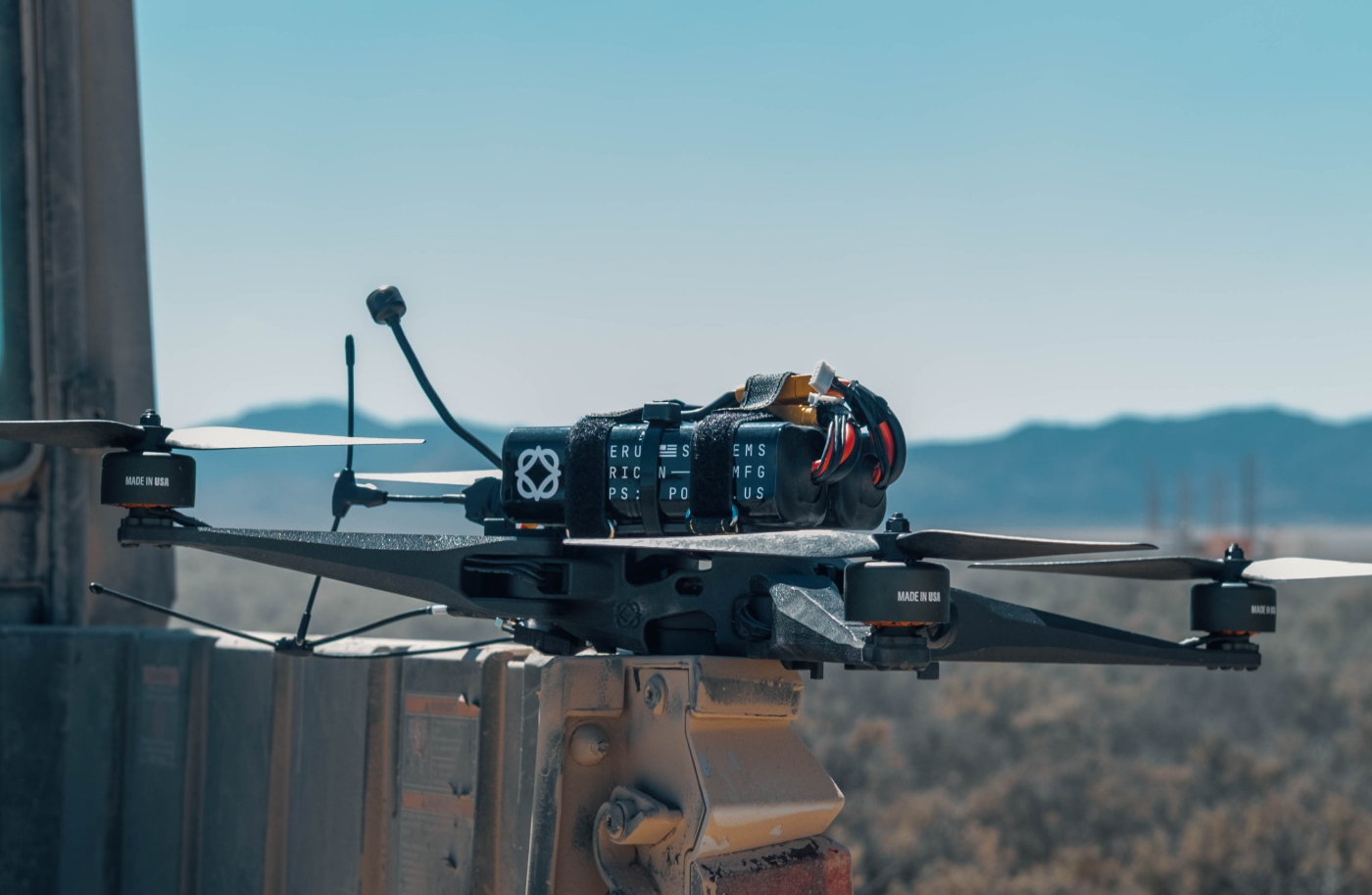
Shooting down a drone with a Patriot missile costs about $5.3 million, while an interceptor drone does the same job for about $15,000, according to a chart published this week by U.S. drone maker Powerus.
The company, which builds counter-drone interceptors and attack drones, shared the comparison on social media on Friday in its weekly newsletter, alongside news that its signed orders have reached $130 million.
The chart, drawn on a log scale, lines up published cost-per-shot figures for six weapons. After the Patriot PAC-3 MSE come the AMRAAM air-to-air missile at $1.37 million, the shoulder-fired Stinger at $480,000, the Coyote interceptor at $126,500 and the laser-guided APKWS II rocket at $24,900. The interceptor drone sits at the bottom, at about $15,000.
Powerus cites the Center for a New American Security, in fiscal 2025 dollars, and the U.S. Army’s fiscal 2027 budget request for the interceptor drone figure.
Powerus Corporation, which trades on Nasdaq under the ticker PUSA, said it had $130 million in executed purchase orders and sales contracts as of Nov. 5, a figure it disclosed in a filing that day. The company expects to recognize that revenue within the next 12 months.
Based in Rock Hill, South Carolina, Powerus went public on Oct. 1 through a merger with Aureus Greenway Holdings. Its Tandem Defense unit holds a U.S. Air Force contract worth up to $90 million for Group 1 aerial-denial drones, and the company has also received an order for 1,500 U.S.-built FPV attack drones from a defense prime contractor.
The newsletter pointed to three moves this month that favor cheap interceptors.
NATO opened a counter-drone catalogue on Nov. 5. Its procurement agency picked 16 systems from five companies, and allies can now “order from the catalogue with no further tender,” the company wrote. Only systems already in use with allied forces qualified, and NATO plans to reopen the competition every year.
In Poland, a U.S. Army air defense battery tested an interceptor drone launched from the Army’s SGT Stout air defense vehicle. Powerus quoted the Army’s stated goal of “cost-effective, lower-tier kinetic magazine depth,” meaning more cheap shots for vehicles troops already have.
And on Nov. 4, the Pentagon’s unmanned systems office said it had fielded more than 24,000 counter-drone systems to U.S. Central Command this year, along with more than 1,300 one-way attack drones and over 100 unmanned surface and underwater vessels, for about $782 million. The Pentagon called them “high-volume alternatives to legacy, multi-million-dollar exquisite munitions.”
U.S. military units can already buy tested counter-drone gear from the Pentagon’s own online marketplace, run by Joint Interagency Task Force 401.
Powerus said deliveries to Central Command will continue as the office expands fielding to the Pacific and Europe, ahead of a planned autonomous warfare command due by Oct. 1, 2027.
Content preview only. Full article available at source. View Full Article
Powerus Corporation announced $130 million in signed orders for drone systems, emphasizing the cost-effectiveness of its interceptor drones compared to traditional missile systems. The company highlighted recent NATO initiatives to streamline counter-drone procurement and reported on U.S. Army tests of interceptor drones in Poland. Additionally, the Pentagon has deployed over 24,000 counter-drone systems to U.S. Central Command this year, indicating a shift towards more affordable drone solutions in military operations.
- Powerus has $130 million in signed orders for drone systems as of Nov. 5, 2023.
- The cost of shooting down a drone with a Patriot missile is $5.3 million, while an interceptor drone costs about $15,000.
- NATO opened a counter-drone catalogue on Nov. 5, allowing allies to order from it without further tender.
- The U.S. Army tested an interceptor drone in Poland.
- The Pentagon has fielded over 24,000 counter-drone systems to U.S. Central Command this year.