
China's Aircraft Carrier Liaoning to Conduct 170 Takeoffs and Landings in the Pacific in 2026, Pressuring the Japan-U.S.-Philippines Defense Line
 Tanaka Takashi
Chinese Aircraft Carrier Liaoning Conducts 170 Takeoffs and Landings in the Pacific in 2026, Pressuring the Japan-U.S.-Philippines Defense Line
The figure of approximately 590 kilometers southwest of Miyako Island on May 28 was the most concerning point in this announcement. On June 1, the Ministry of Defense's Joint Staff Office announced that the Chinese Navy's aircraft carrier "Liaoning" conducted a total of about 170 takeoffs and landings of carrier-based fighter jets and helicopters over three days from May 26 to 28. The breakdown was approximately 80 on the 26th, about 50 on the 27th, and about 40 on the 28th. This should be viewed not merely as a long-range voyage but as training that continuously utilized the flight deck.
Composition of the Confirmed Carrier Group
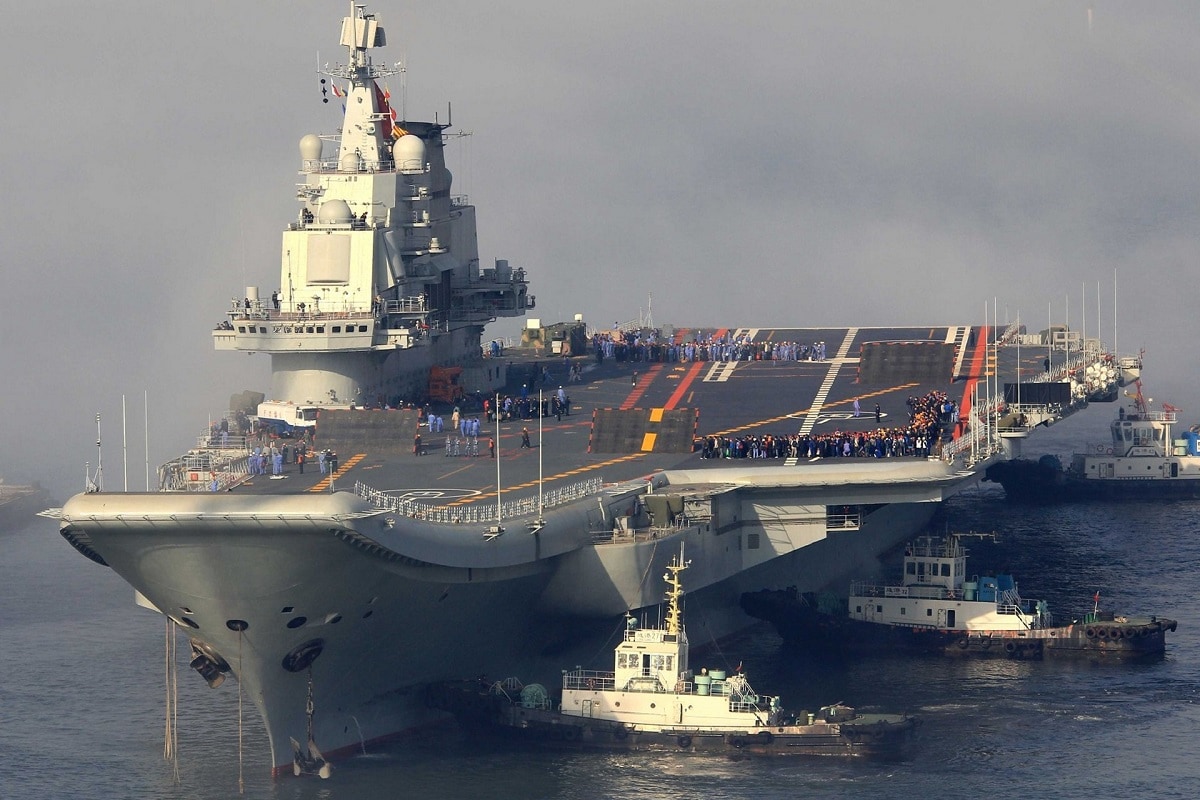
According to Joint Staff materials, on the 26th, the Liaoning, Renhai-class missile destroyer 104, and Jiangkai III-class frigate 545 were confirmed about 1,090 kilometers southwest of Okinotorishima. On the 27th, the Liaoning, 104, and Luyang III-class missile destroyer 124 were confirmed about 790 kilometers south of Miyako Island, and on the 28th, the Fuyu-class fast combat support ship 901 also joined about 590 kilometers southwest of Miyako Island. Subsequently, on the 29th, the Liaoning, 104, and 124 were reported to have advanced southeast in the waters east of the Philippines. The Japan Maritime Self-Defense Force conducted surveillance and information gathering using the escort ship "Asahi" from the 5th Surface Action Group.
This composition of vessels is closer to an organization testing the sustainability of a carrier strike group, albeit limited, rather than merely escorting an old training carrier. The Renhai-class is responsible for wide-area air defense and command functions, the Luyang III-class complements the core of air and anti-ship capabilities, and the 901-class supply ship supports long-term operations. It is also noteworthy that the participation of the Jiangkai III-class, specifically the new type 054B, has been confirmed. There may be ongoing experiments to incorporate escort ships responsible for anti-submarine and perimeter surveillance into the carrier group.
Interpreting the Number 170
The figure of 170 should not be overestimated when compared to the high-intensity operations of U.S. Navy aircraft carriers. The Liaoning uses a ski-jump method, which imposes limitations on the number of aircraft, weapon load, and launch weight. Nevertheless, the fact that it sustained 80, 50, and 40 takeoffs and landings over three consecutive days in the Pacific indicates that the flow of deck personnel, maintenance, control, and supply is moving closer to an operational phase from a training stage.
In my view, the issue is not that China "has an aircraft carrier," but that China is introducing repeatable flight operations into areas that Japan and the U.S. have managed through peacetime surveillance. The line connecting south of Miyako Island, southwest of Okinotorishima, and east of the Philippines crosses not only the Taiwan contingency but also the SLOC (Sea Lines of Communication) extending from the southwestern islands to Guam. If takeoffs and landings of carrier-based aircraft become routine here, it will constantly burden the Japan Maritime Self-Defense Force's patrol aircraft, escort ships, submarines, and Air Self-Defense Force's interception posture.
Pressure on Japan-Philippines Cooperation
This movement cannot be separated from the Japan-Philippines maritime boundary negotiations and the regional situation following U.S.-Philippines exercises. On June 1, the China Coast Guard announced that it conducted "law enforcement" patrols in the eastern waters of Taiwan in response to Japan and the Philippines starting discussions on maritime boundary delimitation. The simultaneous movement of naval vessels and Coast Guard ships on the same day may be coincidental, but there is a strong impression that Beijing is beginning to treat the area from east of Taiwan to east of Luzon as a single operational space.
Japan faces two challenges. First, tracking by individual ships like the escort ship Asahi alone cannot sufficiently grasp the carrier group's air operations, the presence of accompanying submarines, or electronic warfare activities. The speed of integrating P-1 patrol aircraft, satellites, and U.S. underwater acoustic information is being questioned. Second, the more Japan-Philippines cooperation progresses, the more China will likely respond not only around the Senkaku Islands but also in the eastern waters of Taiwan and the Philippine Sea. This is not a side effect of strengthening the alliance but friction that will inevitably arise when the alliance actually begins to take effect.
Blind Spots Japan Should Be Aware Of
The Liaoning is still not comparable to U.S. aircraft carriers. However, it is dangerous to underestimate it due to capability deficiencies. The Chinese Navy is not waiting for a perfect carrier force to move forward; it is collecting data while operating imperfect forces. What Japan should truly be wary of is not the flashy number of 170 itself, but the possibility that peacetime surveillance missions could unknowingly transform into a war of attrition before a crisis.
Sources
- Japan Joint Staff Office, June 1, 2026 press release on Liaoning movements
- USNI News, Chinese Carrier Strike Group Conducts 170 Sorties During Drills in Philippine Sea
- Nippon.com/Jiji Press, China carrier 170 takeoffs and landings
- China.org.cn/Xinhua, China Coast Guard patrol statement on Japan-Philippines delimitation talks
Chinese aircraft carrier Liaoning conducted approximately 170 flight operations in the Pacific from May 26 to 28, 2026, near Miyako Island and Okinotorishima. The carrier group included destroyers and frigates, demonstrating a structured naval operation. This activity pressures the Japan-United States-Philippines defense line and raises concerns about regional security dynamics.
- Chinese aircraft carrier Liaoning conducted approximately 170 takeoffs and landings from May 26 to 28, 2026.
- The carrier group included destroyers and frigates, indicating a structured naval operation.
- The operations were conducted near Miyako Island and Okinotorishima, affecting regional security dynamics.
- The Japanese Self-Defense Forces monitored the activities, indicating heightened military vigilance.
- China's actions are seen as a challenge to Japan and the Philippines' maritime security.