
China's JL-2 Test Put Luzon Under a 2026 Nuclear Flight Path
 Marcus Chen
China's JL-2 Test Put Luzon Under a 2026 Nuclear Flight Path
A Chinese submarine-launched ballistic missile crossed the northern edge of Luzon before falling into the South Pacific. That is the detail that matters. The launch was not just another line in a PLA Rocket Force or navy training calendar; it was a live demonstration that China's sea-based deterrent can use the waters around the first island chain as an operational firing lane.
USNI News reported that the People's Liberation Army Navy test fired a submarine-launched ballistic missile from the South China Sea at about noon on July 6, carrying a dummy warhead toward the Pacific. Beijing called it routine training and said it was not directed at a specific country. Taiwan's National Security Council secretary-general Joseph Wu identified the missile as a JL-2 and circulated a graphic showing a track over Luzon's northern coastline before impact between Nauru and Tonga.
If that identification is right, this was not a technological surprise. The JL-2 is the older missile carried by China's Type 094 ballistic missile submarines, and open-source range estimates put it around 7,000 kilometers. The newer JL-3, displayed last year, is the system that would give the PLAN a more comfortable patrol box. But the July 6 shot was still operationally useful. It told every planner in Manila, Tokyo, Canberra and Honolulu that China's undersea nuclear force is practicing routes through politically crowded water, not just firing into empty ocean on a chart.
The Flight Path Was the Message
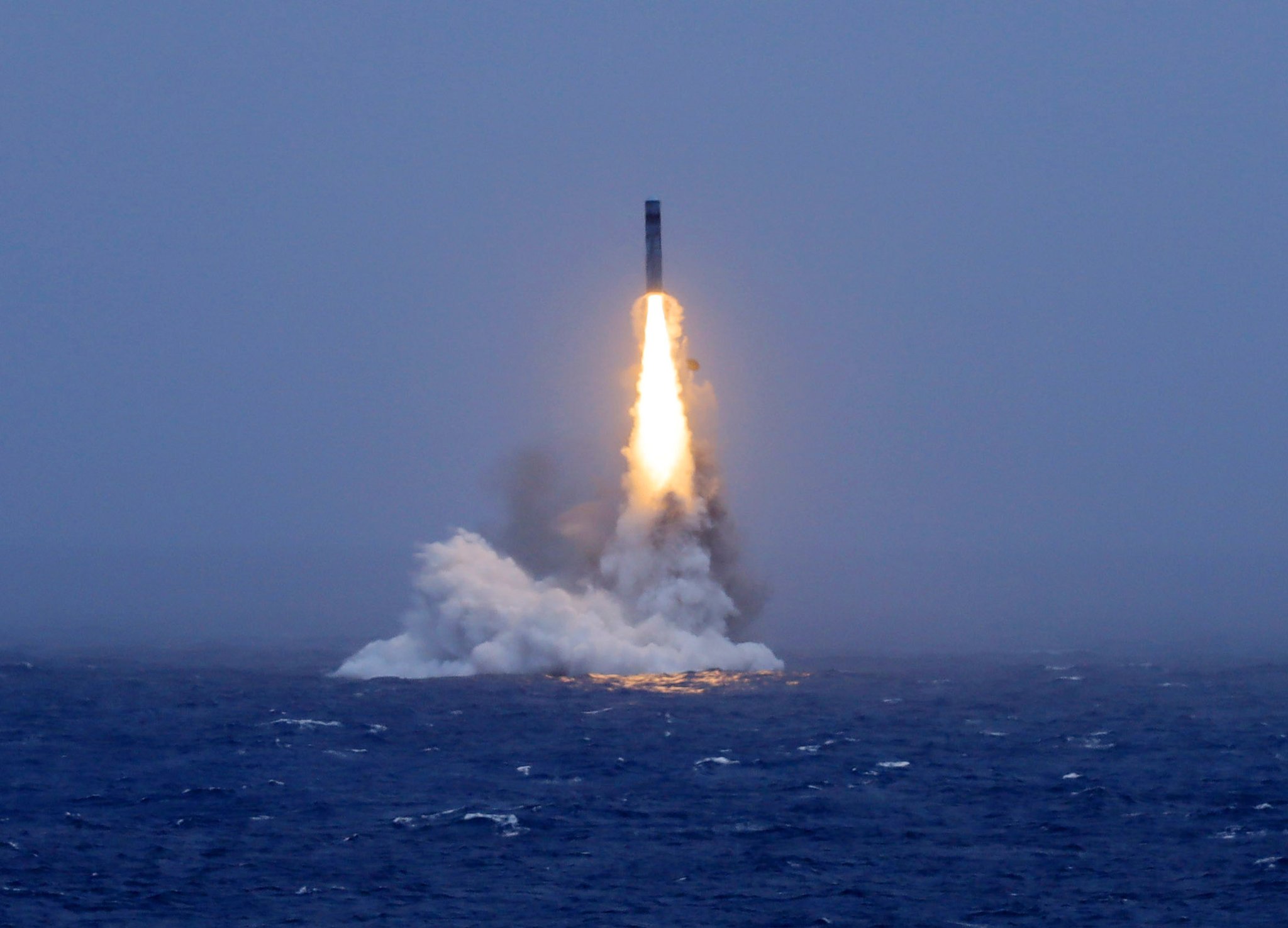
The geography is uncomfortable. A launch from the South China Sea to a splashdown area between Nauru and Tonga has to thread the same maritime and airspace environment that would define any Taiwan or Philippines crisis. Luzon is not a blank spot. It hosts Philippine bases that US forces can access under the Enhanced Defense Cooperation Agreement. It sits astride the Bashi Channel, the southern door between Taiwan and the wider Pacific. Anyone who has stood a watch on a destroyer in those waters understands the problem: there is no such thing as a clean firing lane in the first island chain.
Japan said Chinese hydrographic authorities warned that debris might fall south of Cape Shionomisaki, with part of the area including Japan's exclusive economic zone. The Japanese embassy in Beijing urged China to reconsider the launch and avoid passing over Japanese airspace. Australia said it had been informed the same day. New Zealand Foreign Minister Winston Peters said Wellington was told only hours before the test and called the launch inconsistent with stability and peace in the South Pacific.
New Zealand has no interest in China using the South Pacific as a testing site for missile capability, Peters said, according to RNZ.
That reaction matters because the South Pacific is not normally treated as the front line in US-China military competition. Beijing's 2024 intercontinental ballistic missile shot into waters near French Polynesia already broke a long quiet period; the Pentagon's 2025 China report said that DF-31B flew about 11,000 kilometers from northern Hainan. The July 2026 test makes the pattern harder to dismiss. China is normalizing long-range missile activity into Pacific waters where allied governments have thin air and maritime surveillance coverage and limited political appetite for becoming test-range neighbors.
The Submarine Force Is Still the Weak Link
China's problem is not missile range alone. It is survivable patrol geometry. USNI News noted that the PLAN operates six Type 094 nuclear-powered ballistic missile submarines and one Type 032 diesel-electric submarine used for missile testing. Six boats do not mean six submarines at sea. Maintenance, training, crew cycles and escort requirements reduce the number that can be on patrol at any moment. A ballistic missile submarine that has to move from bastions near Hainan through chokepoints covered by allied sensors is not enjoying the same sanctuary as an American Ohio or Columbia-class boat operating from the open Pacific.
That is why the over-Luzon track is important. It suggests China is rehearsing how to make the South China Sea a usable SSBN operating area while still demonstrating reach into the Pacific. The PLAN does not need its submarines to be invulnerable to change allied calculations. It only needs Washington and its partners to believe that finding, tracking and, in wartime, holding Chinese SSBNs at risk will require scarce attack submarines, P-8 patrol aircraft, seabed sensors and surface combatants that are also needed for sea control around Taiwan.
The math gets ugly fast. The US Navy has 50 attack submarines on paper, fewer available on any given day, and global commitments that do not pause for a Taiwan crisis. Japan has a strong diesel-electric submarine force, but it is optimized for the home island approaches. Australia is years away from nuclear-powered attack submarines under AUKUS. The Philippines is building maritime awareness from a low base. Against that network, even a noisy Type 094 can impose a surveillance bill.
The Russia Exercise Was Not Background Noise
The missile launch coincided with the start of the China-Russia Joint Sea 2026 exercise near Qingdao. China's Ministry of National Defense said the drills would run in July in nearby sea and airspace and that some forces would conduct a joint maritime patrol in the Pacific afterward. USNI News listed a Russian Pacific Fleet group including cruiser Varyag, corvette Rezkiy, submarine rescue ship Igor Belousov and Kilo-class attack submarine Ufa. The PLAN side included cruiser Anshan, destroyer Kaifeng, frigate Wuhu, oiler Kekexilihu, rescue ship Yangchenghu and a Yuan-class submarine.
Those are not random hulls. A submarine rescue ship and a Kilo-class boat sitting inside a bilateral drill package point to undersea operations becoming a normal part of China-Russia naval cooperation. Last year's drill included submarines for the first time, followed by a joint submarine patrol in the Sea of Japan. Since 2021, the two navies have also conducted joint patrols in the Western Pacific, including a 2023 patrol near Alaska and the Aleutians.
Beijing can say the SLBM test and the Qingdao exercise were separate events. Operationally, they feed the same allied problem: more Chinese and Russian undersea activity, more Pacific patrols, and more missile events that force regional governments to respond on short notice. That stretches command attention even when no war is imminent.
Allies Need Sensors More Than Speeches
The United States and its partners should treat the July 6 launch as a warning about undersea surveillance capacity, not as proof that China has solved sea-based deterrence. The Type 094 is still vulnerable. The JL-2 is not the end state. But the PLAN is practicing the part that counts: moving the nuclear mission into operational geography that overlaps with conventional crisis routes.
For Manila, the issue is not whether a Chinese missile was aimed at the Philippines. It was not. The issue is whether Luzon becomes a regular reference point in Chinese missile and submarine operations. For Tokyo, the concern is debris warnings and flight safety around Japanese approaches. For Wellington and Canberra, the question is whether the South Pacific becomes a recurring terminal area for great-power missile tests.
The answer cannot be another communique about concern. It has to be more P-8 hours, shared acoustic data, faster warning channels with Pacific island states, and a serious plan for tracking Chinese SSBN movements from the South China Sea into the Philippine Sea. Concepts do not trail submarines. Sensors do.
China did not prove on July 6 that its sea-based nuclear deterrent is mature. It proved something narrower and more useful: it can make everyone else spend resources proving where that deterrent is. That is the bill now landing across the first island chain.
China's People's Liberation Army Navy test fired a JL-2 submarine-launched ballistic missile from the South China Sea on July 6, 2026, which crossed over Luzon before landing in the South Pacific. This launch demonstrates China's capability to use the waters around the first island chain as an operational firing lane, raising concerns among regional allies about undersea surveillance and missile activity in politically sensitive areas.
- China conducted a test firing of the JL-2 missile from a submarine in the South China Sea.
- The missile crossed the northern edge of Luzon before landing in the South Pacific.
- The launch was described as routine training by China, but it has significant operational implications.
- The JL-2 missile has an estimated range of 7,000 kilometers and is carried by Type 094 submarines.
- The missile test coincided with the China-Russia Joint Sea 2026 exercise.