
China's July Pacific SLBM Test of the 094A Submarine Shakes Japan's Anti-Submarine Defense
 Tanaka Takashi
China's 094A Submarine's July Pacific SLBM Test Shakes Japan's Anti-Submarine Defense
On July 6, shortly after noon, a submarine-launched ballistic missile reportedly fired from a Chinese Navy strategic nuclear submarine flew approximately 7,300 kilometers into the Pacific from the South China Sea. The warhead is said to have fallen into waters near a nuclear-free zone in the South Pacific, outside Japan's exclusive economic zone. As someone who has observed anti-submarine operations in the Japan Maritime Self-Defense Force, it is noteworthy that this was not merely a long-range missile test, but the fact that the launch platform was submerged.
Maturity of Maritime Nuclear Deterrence Demonstrated by the 094A Class
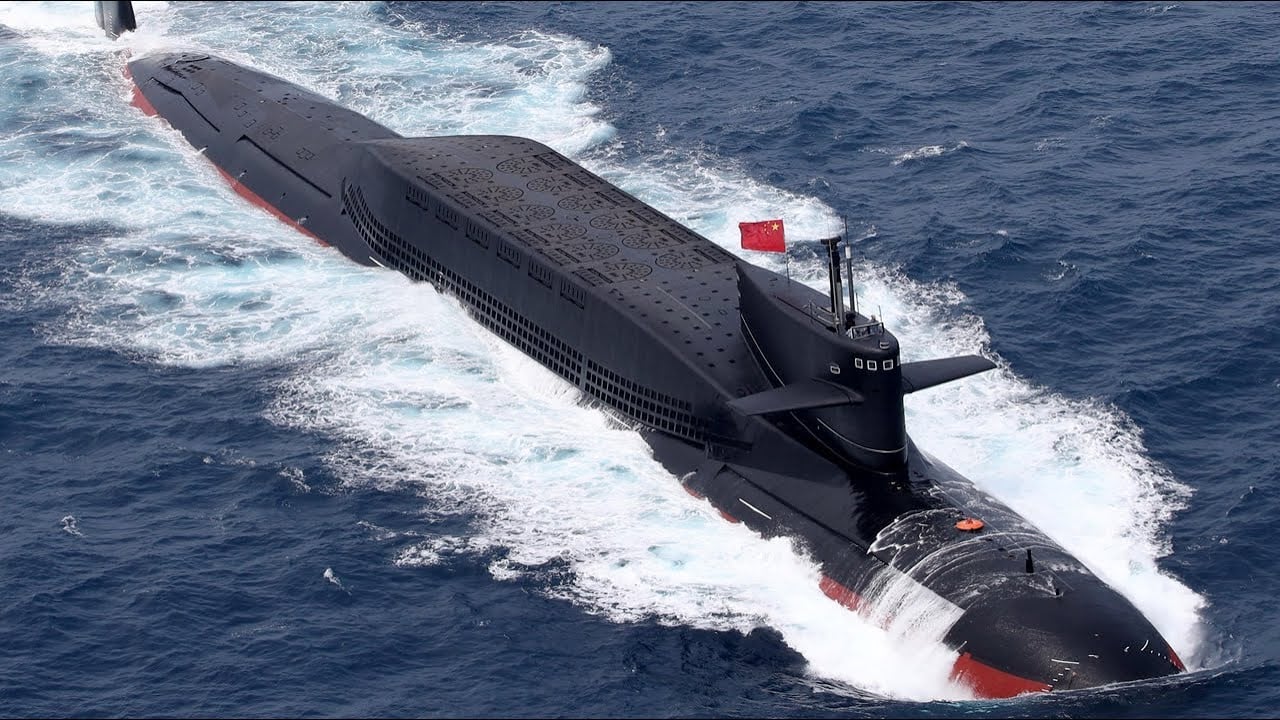
Naval News reports that experts believe the most likely launch platform was the 094A class ballistic missile submarine. The Chinese side explained that it was a routine training exercise and that they had notified relevant countries in advance. However, considering the flight distance of approximately 7,300 kilometers, the missile's fall into the Pacific, and the political timing of the test, it is reasonable to interpret that Beijing showcased its second-strike capability from the sea.
The 094 series is believed to still have challenges in terms of stealth compared to the strategic submarines of the U.S., U.K., and France. Therefore, China seems to be closer to a concept of maintaining launch capability while protecting its submarines in so-called bastion areas around the South China Sea and Bohai Sea, rather than freely operating in the open ocean. This test launch signifies that sufficient range can be secured even from within those bastions.
The Issue for Japan is Not Just Missile Defense
Defense News reports that this launch has raised concerns in Japan, Australia, New Zealand, the United States, and Pacific island nations. New Zealand criticized it as contrary to the spirit of the South Pacific Nuclear-Free Zone Treaty. For Japan, the issue is not limited to whether the impact point was outside its EEZ.
Ballistic missile defense tends to focus on post-launch interception. However, in the case of submarine launches, the upstream challenges are detection, tracking, and classification before launch. The question is how quickly P-1 patrol aircraft, escort ships, submarines, fixed acoustic monitoring, and U.S. wide-area ISR can be connected. This is more related to information sharing and rules of engagement than the performance of individual equipment.
Undersea Warfare in the Japan-U.S. Alliance Comes to the Fore Again
If China approaches continuous maritime nuclear deterrence, or CASD, the significance of the first island chain will change. Traditionally, the focus of discussion has been on how to deter the advancement of the Chinese surface fleet and aircraft carriers into the open ocean. In the future, a more nuanced issue will arise regarding how far to track strategic submarines and where to leave ambiguity from the perspective of strategic stability.
In my view, it is not simply a matter of Japan immediately strengthening its offensive anti-submarine posture. Rather, the danger lies in using the same terminology for peacetime detection activities, crisis monitoring, and wartime target allocation. Misidentification in the underwater domain is difficult to surface, and political judgments tend to be delayed.
This test launch demonstrated not only the range of China's missiles. It also indicates that the underwater timeline has begun to test the decision-making speed of Tokyo and Washington.
China's capabilities cannot yet be said to be on par with the established maritime nuclear deterrence of the U.S. and Russia. However, it is precisely during the period when capabilities are incomplete that the opposing country is more likely to misinterpret intentions. Japan's true challenge is not to find one more 094A class submarine, but to pre-determine what information to share within the alliance and what to elevate to the political level after it is found.
A Chinese Navy submarine launched a submarine-launched ballistic missile (SLBM) on July 6, 2023, which traveled approximately 7,300 kilometers into the Pacific Ocean. The missile reportedly landed near a nuclear-free zone in the South Pacific, raising concerns among Japan and other nations. This test demonstrates China's advancing nuclear deterrence capabilities and highlights the challenges of detecting and tracking such launches before they occur.
- A Chinese submarine launched a SLBM on July 6, 2023.
- The missile traveled approximately 7,300 kilometers into the Pacific Ocean.
- The launch site was likely a 094A class submarine.
- The missile landed outside Japan's exclusive economic zone.
- The test raised concerns among Japan, Australia, New Zealand, and the U.S.