
China's Liaoning Carrier Is Turning Training Voyages Into Pacific Presence
 Marcus Chen
China's Liaoning Carrier Is Turning Training Voyages Into Pacific Presence
China's 305-meter Liaoning aircraft carrier has made at least six long-range deployments since entering service in 2012. Its October 2026 voyage matters because it is no longer an exceptional demonstration. It is becoming a repeatable operating pattern: a carrier group leaves the near seas, works around Japan and the Philippines, and returns with data that can be used by newer ships.
That is the real development. Liaoning is not China's most capable carrier, and it would not be the first ship Beijing would send as a frontline reaction force. But a navy does not create sea control with one perfect platform. It creates it through cycles of training, logistics, flight operations, and presence. China is now accumulating those cycles in waters where the United States, Japan, Taiwan, and the Philippines have to watch.
The October Voyage Is a Fleet Laboratory
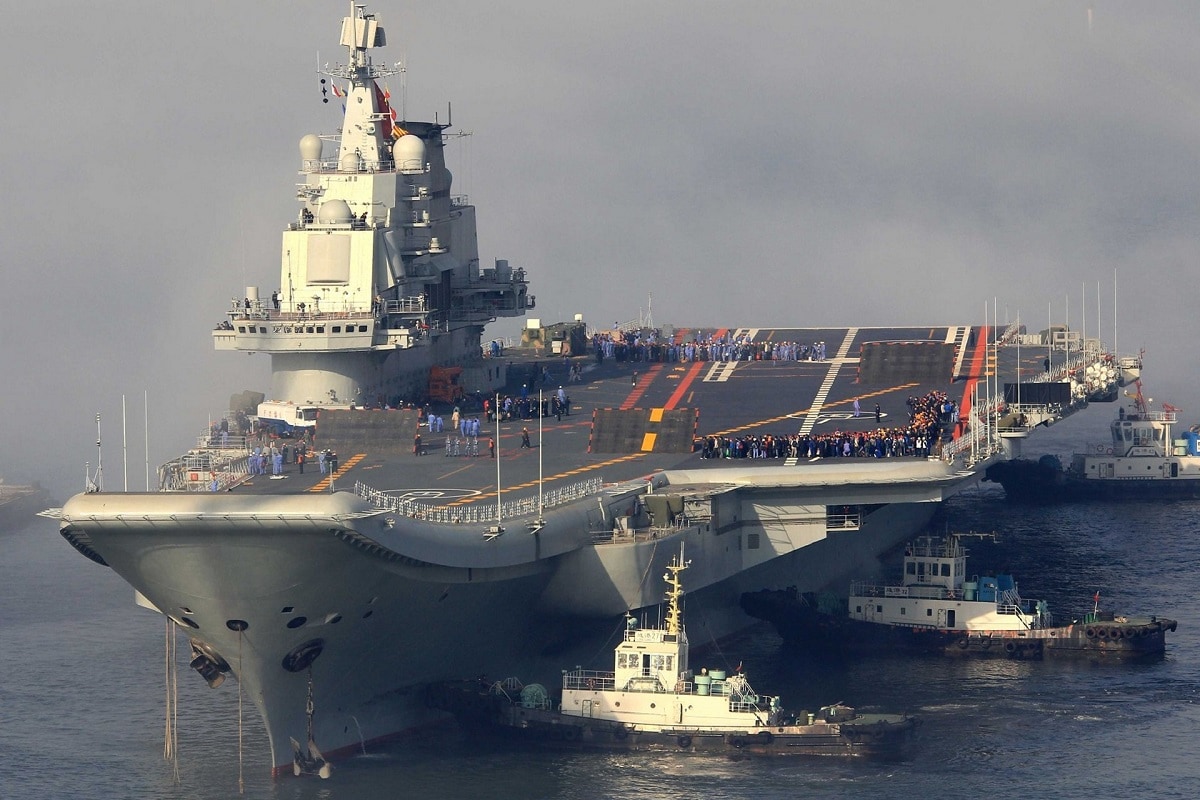
According to Defense News, the People's Liberation Army Navy sent Liaoning and its task group into the western Pacific on October 14 as part of an annual training plan. By October 23, the group had operated near Japan's southwestern islands and was heading toward the South China Sea near the Philippines. The reported escort package included two large destroyers and a guided-missile destroyer.
Liaoning uses a ski-jump and arrested-recovery configuration, commonly described as STOBAR. Its flight deck is about 305 meters long and up to 75 meters wide. Those dimensions sound impressive, but the operational constraint is more important than the hull length: a ski-jump carrier cannot launch aircraft with the same flexibility as a catapult carrier. Aircraft weight, fuel, and weapons compete for the same margin.
That limitation is exactly why the ship remains useful. Every long deployment gives Chinese deck crews, pilots, escorts, and replenishment units another chance to practice the mundane tasks that determine whether a carrier group can fight after the first day. Launch and recovery windows, maintenance at sea, communications, fuel management, and formation maneuvering are not learned from a pier.
Old Hull, New Lessons
Several analysts told Defense News that Liaoning's deployments are helping China develop the two newer carriers, Shandong and Fujian. Shandong is an improved STOBAR design, while Fujian uses electromagnetic catapults and represents a much larger jump in carrier aviation. The older ship can function as a testbed for procedures and technology without consuming the newest carrier in every training cycle.
This is an industrial advantage disguised as an operational one. A navy with three carriers can keep one ship in maintenance, one in local training, and one on a longer deployment more often than a navy with two. The number three is not sufficient for continuous global presence, but it changes the learning rate. China can generate more deck-landing qualifications, more escort repetitions, and more staff experience while its carrier force expands.
The distinction matters in a Taiwan contingency. Liaoning is unlikely to decide the opening exchange by itself. Its value is cumulative: it helps the PLAN build the command and control, air-defense, replenishment, and aviation routines needed to keep multiple naval groups moving. The carrier is a schoolhouse that happens to sail through contested geography.
Geography Turns Routine Into Pressure
The route is not politically neutral. Japan's defense ministry reported carrier aircraft operations roughly 250 kilometers south of Ishigaki Island, while the carrier group also moved toward the South China Sea. Defense News reported that aircraft launches and recoveries occurred in Japan's maritime exclusive economic zone, an unusual activity even if it is not automatically unlawful.
The timing added another layer. The voyage began shortly before the October 19 start of Keen Sword 27, the biennial U.S.-Japan exercise that included the Philippines. Beijing can describe its own activity as routine training and still gain operational benefits from placing a carrier group near the exercise geography. It forces Tokyo, Manila, Taipei, and U.S. commanders to spend intelligence, surveillance, and reconnaissance capacity tracking the formation.
The South China Sea leg also connects carrier training to the infrastructure China has built over two decades. Artificial islands, airfields, sensors, and maritime law-enforcement forces provide a network that can support or at least observe a carrier group. Reuters reported on October 20 that Chinese forces monitored USS Charleston near Sabina Shoal. That incident involved a littoral combat ship, not Liaoning, but the pattern is related: Beijing is normalizing layered maritime pressure across the same operating space.
What the United States Should Count
Washington should avoid counting carriers as if each hull equals an American carrier strike group. China's STOBAR carriers lack the launch flexibility and mature global support system of a U.S. nuclear carrier. Liaoning also faces the familiar constraints of sortie generation, airborne early warning, tanker support, and sustained logistics.
But dismissing the ship because it is not a Ford-class carrier would be a planning error. The relevant measure is not prestige; it is the number of days China can keep a coordinated formation at sea, how quickly it can replace aircraft and fuel, and how many other forces can exploit the surveillance picture generated by that formation. USNI News reported in October that China's carrier strike group had already moved through drills in the Philippine Sea before heading toward the South China Sea. Repeated movements create a baseline from which Beijing can later vary speed, route, composition, and behavior.
For Japan and the Philippines, the burden is immediate. They must monitor the carrier, protect their own maritime traffic, and rehearse responses without turning every deployment into a crisis. For the United States, the problem is capacity. A carrier group that must shadow every Chinese training voyage is spending scarce aircraft, submarines, and command attention before a conflict begins.
The Math Is Starting to Change
Liaoning is not a Taiwanese invasion fleet. It is not even China's best carrier. The important point is that China is converting a single carrier's occasional voyage into a fleet-learning system involving three carriers, escorts, shore infrastructure, and repeated access to the western Pacific.
That system will remain vulnerable. A carrier operating inside the first island chain would face submarines, land-based missiles, aircraft, and persistent sensors. But vulnerability is not the same as irrelevance. Every deployment makes the next one less experimental and gives Chinese commanders a better answer to the question that matters in war: how long can the formation keep operating after it is detected?
The United States and its allies should stop waiting for a dramatic carrier launch to signal a change. The change is already visible in the calendar. China is making far-seas carrier operations routine, and routine is how naval power becomes presence.
Sources
The People's Liberation Army Navy (PLAN) deployed the Liaoning aircraft carrier group to the western Pacific from October 14 to 23, 2026, conducting training exercises near Japan and the Philippines. This deployment included two large destroyers and a guided-missile destroyer, contributing to the operational capabilities of China's carrier fleet. The activities are part of a broader strategy to normalize naval presence in contested waters, enhancing China's maritime operational experience and pressure on regional adversaries.
- Liaoning carrier group deployed to the western Pacific as part of annual training.
- The group operated near Japan's southwestern islands and headed toward the South China Sea.
- The deployment included two large destroyers and a guided-missile destroyer.
- Liaoning's operations are contributing to the development of China's newer carriers, Shandong and Fujian.
- The carrier's activities are occurring in contested maritime zones, increasing regional tensions.