
China's Liaoning Carrier Sustains an Eight-Crossing Pacific Push in 2026
 Marcus Chen
China's Liaoning Carrier Sustains an Eight-Crossing Pacific Push in 2026
At least eight replenishment-ship crossings around Japan in roughly one month tell us more about China's carrier force than another video of a fighter launch. The Liaoning carrier group has not demonstrated sea control in the Pacific. It has demonstrated something more basic and, for US and Japanese planners, more useful: the ability to keep a carrier operating beyond the first island chain while its support ships repeatedly move through monitored chokepoints.
The logistics movement is the story
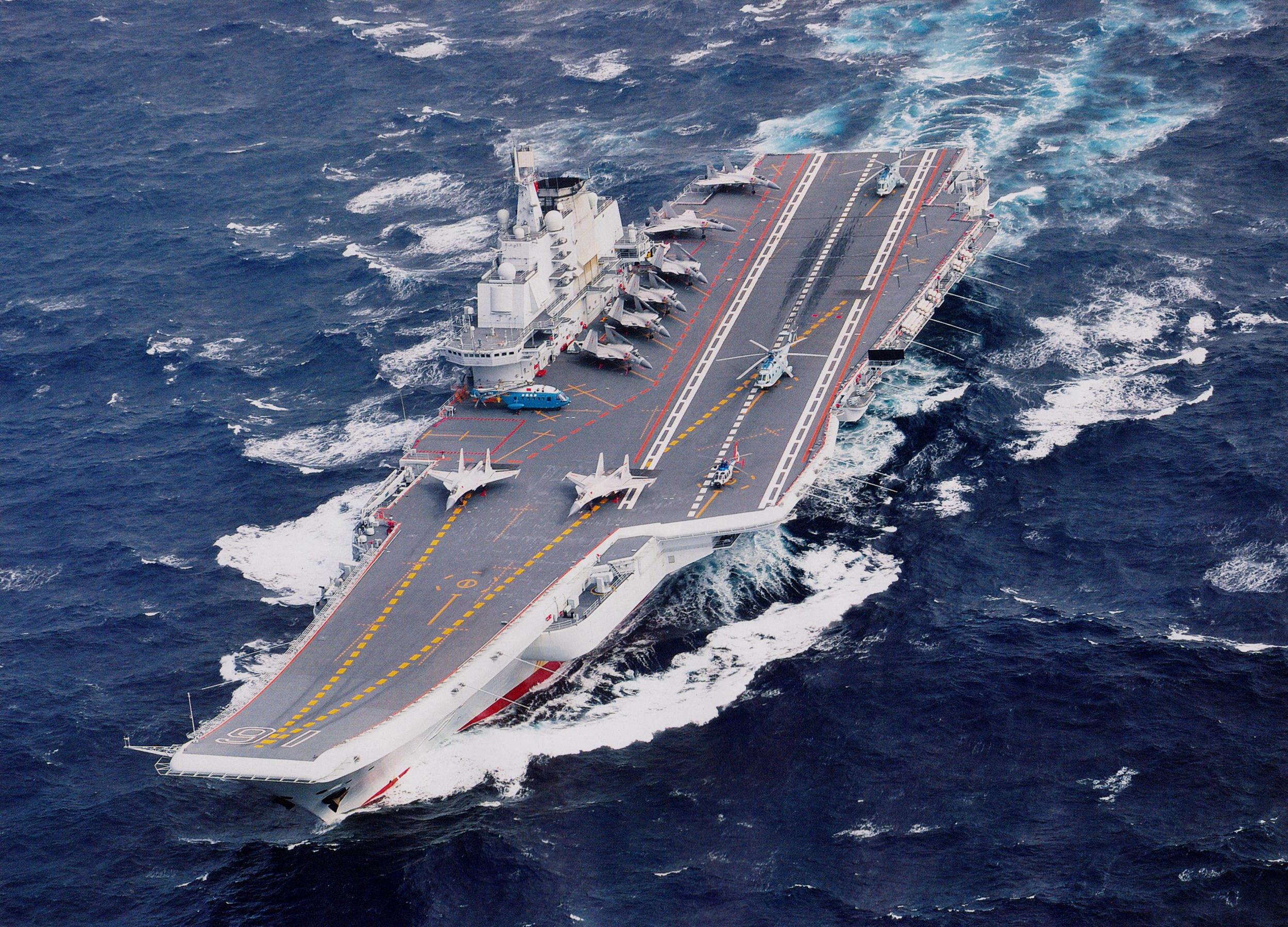
South China Morning Post reported that Chinese replenishment vessels made at least eight crossings through two major waterways around Japan between October 16 and November 18. The Liaoning itself transited the Miyako Strait into the Pacific on October 14. That sequence matters. A carrier can sail hundreds of miles on stored fuel and food; a carrier air wing cannot sustain a demanding tempo without aviation fuel, spare parts, weapons, and maintenance support.
Liaoning is a Type 001 carrier of roughly 60,000 tonnes with a ski-jump deck and arresting gear. Its STOBAR system limits launch weight compared with a US catapult carrier, but it can still operate J-15 fighters, helicopters, and other aircraft as a mobile air-defense and surveillance node. The constraint is not whether the ship can launch aircraft. It is how many sorties it can generate, for how many days, and how much protection its escorts and logistics train can provide.
Eight crossings do not equal eight combat missions
The crossings are evidence of a support architecture, not proof of an effective carrier strike group. Replenishment ships moving through the Miyako and other Japanese-adjacent waterways are observable, predictable, and vulnerable. In a conflict, the same routes would be covered by Japanese maritime patrol aircraft, submarines, surface combatants, and US intelligence assets. A tanker that can reach Liaoning in peacetime is not automatically a tanker that can reach it under missile and submarine threat.
That distinction is important because Beijing's carrier problem has always been persistence. China has built hulls quickly, but an operational carrier requires an entire ecosystem: trained deck crews, pilots who can maintain proficiency at sea, escorts with adequate air defense, replenishment ships, and a command network that can fuse satellite, aircraft, and shipborne sensors. The Liaoning deployment appears to be a live exercise in that ecosystem. It is also a public signal that the People's Liberation Army Navy is willing to normalize carrier activity east of Japan.
What the deployment changes for Japan and the United States
For Japan, the practical burden is surveillance. Every carrier movement through a narrow strait forces Tokyo to maintain a track, allocate aircraft and ships, and decide how much of its collection effort to reveal. The Liaoning does not need to attack Japan to impose costs. It only needs to create enough uncertainty about its next turn toward the Philippine Sea, the approaches to Taiwan, or the waters east of Okinawa.
For the United States, the deployment complicates the old assumption that Chinese naval power is concentrated close to the mainland. The carrier is still less capable than a US Ford- or Nimitz-class carrier in launch weight and sortie generation. But comparison with a single American carrier misses the operational problem. Liaoning can work with land-based Chinese aircraft, long-range anti-ship missiles, submarines, and a growing replenishment fleet. Its job may be to extend the sensor and air-defense envelope while shore-based forces hold the decisive weapons.
The timing also exposes an uncomfortable imbalance in Washington. On November 18, USNI News reported that Senate appropriators cut nearly $20 billion from the Navy's shipbuilding request. That decision is not a direct response to Liaoning's voyage, but the relationship is obvious: China is using a carrier deployment to exercise the connective tissue of a fleet while the United States is still fighting over the price and schedule of new hulls.
The real test is endurance under pressure
Beijing should not mistake visibility for dominance. Eight replenishment crossings around Japan are easy to count precisely because they were observed. A wartime carrier force would need to disperse, protect its tankers, repair damaged aircraft, and continue flying after its preferred routes were contested. Liaoning's ski-jump design, limited aircraft mix, and dependence on escorts remain real weaknesses.
But dismissing the deployment as a parade would be equally careless. The Chinese navy is learning how to move a carrier, support ships, and aircraft through the western Pacific as a connected formation. That is the part that cannot be measured by the carrier's tonnage alone. The next question is not whether Liaoning can reach the Pacific. It already has. The question is whether Japan and the United States can disrupt the logistics chain before the carrier group reaches the operating area. The math is moving in Beijing's favor when the support train is the thing doing the training.
Sources
- South China Morning Post, November 18, 2026, on Liaoning's Pacific deployment and replenishment-ship crossings.
- USNI News, November 18, 2026, on Senate appropriators cutting nearly $20 billion from the Navy shipbuilding request.
- South China Morning Post, November 17, 2026, on China's warplane buildup and the logistics and command questions surrounding combat readiness.
China's Liaoning carrier group conducted at least eight replenishment ship crossings around Japan between October 16 and November 18, 2026. The carrier transited the Miyako Strait into the Pacific on October 14. This deployment highlights the logistical capabilities of the People's Liberation Army Navy and signals a shift in naval operations east of Japan, despite the carrier's limitations in combat readiness.
- China's Liaoning carrier group made at least eight replenishment ship crossings around Japan.
- The Liaoning carrier transited the Miyako Strait into the Pacific on October 14, 2026.
- The carrier group has not demonstrated sea control but has shown the ability to operate beyond the first island chain.
- The logistics movement is crucial for sustaining carrier operations in the Pacific.
- The deployment signals a normalization of carrier activity by the People's Liberation Army Navy east of Japan.