
Summary and Key Points: China’s dominance in global manufacturing is being framed as the foundation of its military rise—less about breakthrough invention than the ability to scale advanced systems fast. The argument is that Beijing has already proven it can field fifth-generation fighters and will apply the same model to the Xi’an H-20 stealth bomber, a flying-wing design intended to give China a credible air leg of its nuclear triad.
-Skepticism in the West is portrayed as coping rather than analysis, as China can steal baseline ideas, iterate on them, and mass-produce.
-The payoff would be strategic reach into the Pacific—and a direct challenge to U.S. long-range strike dominance.
In 2 Words: Coming Soon…
The H-20 Is Coming: China Plans a Stealth Bomber Fleet the U.S. Can’t Match
With news that China’s industry is now responsible for around 50 percent of all global manufacturing, it is becoming clear that the new superpower on the block is Xi Jinping’s “communist” China.
As Beijing rapidly develops into a dominant global industrial dynamo, the country naturally seeks to pivot and become a fearsome military power as well.
China’s Manufacturing Colossus is the Real Superpower
Toward that end, China has endeavored to catch up with the American military and ultimately surpass it—if not through technological advancement, then certainly through the mass production of increasingly sophisticated defense goods.
China has already become a user of fifth-generation stealth warplanes in their Chengdu J-20 “Mighty Dragon” air superiority warplane and the J-35 multirole fighter (the former of which is a direct answer to America’s mighty F-22 Raptor and the latter is a counter to America’s F-35 multirole warplane).
Mass Production, Not Innovation Alone, is How Beijing Wins
More dangerously, Beijing can mass-produce these birds at a far more efficient clip than the Americans could ever hope to do. In fact, the closest an industrial-military power has come to the mass production capacity China currently possesses was the United States at the peak of the Second World War.
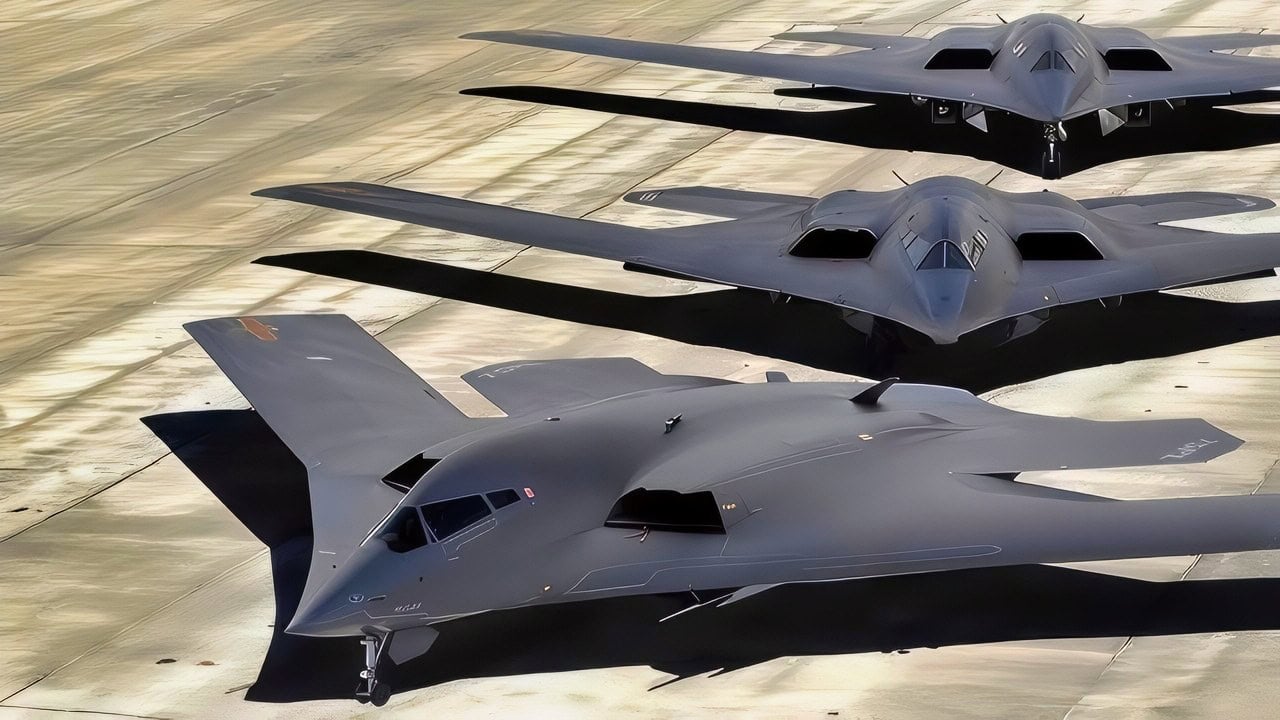
H-20 Bomber from YouTube Screenshot
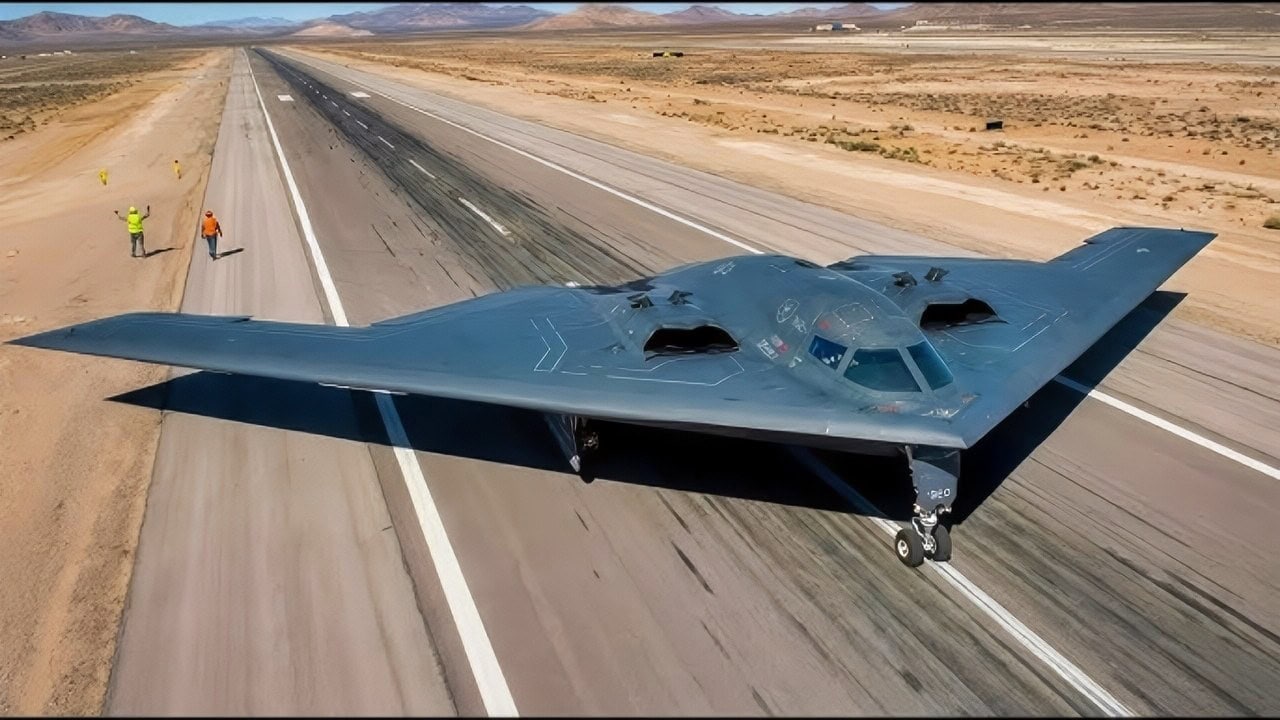
H-20 Stealth Bomber Will Look Like This B-2 Spirit. Image Credit: YouTube Screenshot.
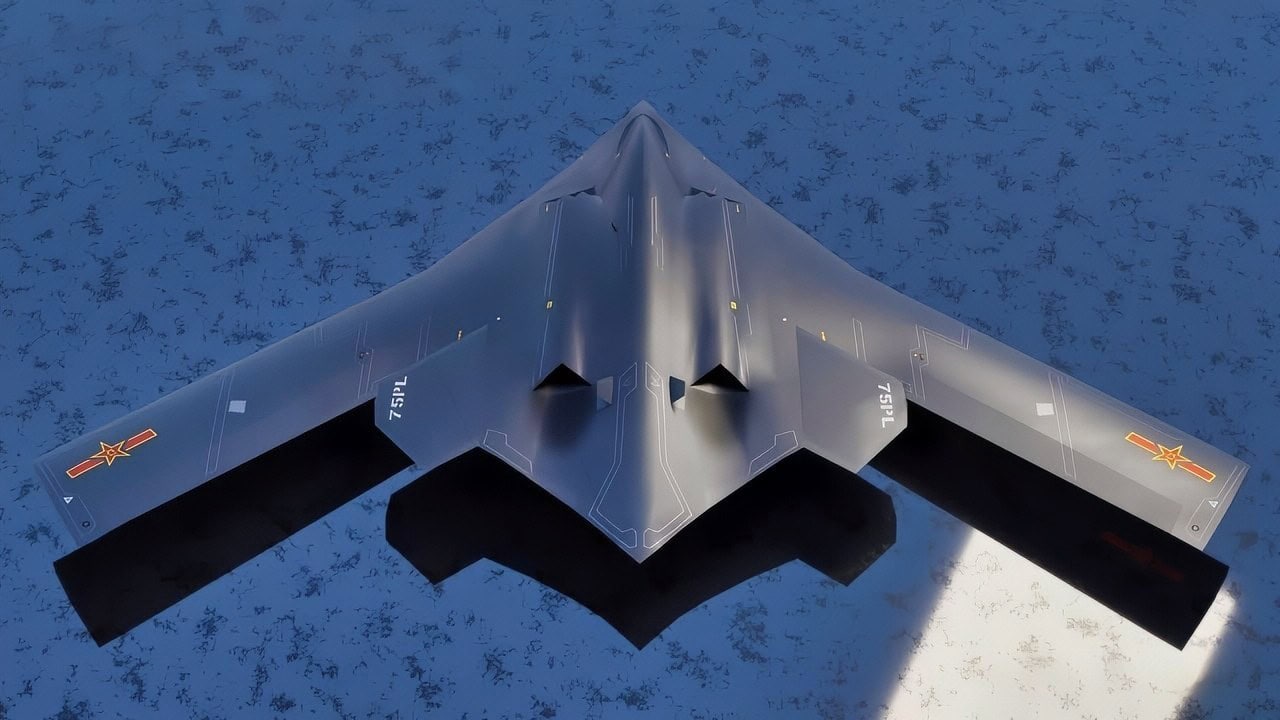
H-20 Bomber YouTube Screenshot Artist Rendering
Not since that time has the United States been able to mass-produce weapons, warships, and warplanes at that rate. Only China today can achieve this. More ominously, China is mass-producing at a rate that far surpasses the United States at the pinnacle of its industrial might.
Another area in which the Chinese seek to catch up—and eventually surpass—the Americans is the long-range, nuclear-capable stealth bomber. The United States has three systems in this arena.
The Myth of Chinese “Incompetence” is a Western Coping Strategy
The first is the semi-retired F-117A Nighthawk, the B-2 Spirit (which famously buzzed Iran’s suspected nuclear weapons facilities last summer), and the still under development B-21 Raider. That last one would be America’s coup de grace in terms of long-range stealth bombs. Sadly, Uncle Sam just can’t mass-produce at the rate that China can.
China, on the other hand, has been developing their Xi’an H-20 long-range strategic stealth bomber. Its body looks eerily similar to the American B-2 Spirit (which will eventually be phased out and replaced by the aforementioned B-21).
Some have asserted that China pilfered the US designs for the B-2 and possibly the B-21 and used them at least as the basis for the H-20. This might very well be true. It also doesn’t matter.
Currently, the United States has 19 B-2 Spirits in its arsenal and there are at least two demonstrators of the B-21. Beijing plans to have the H-20 in their air fleet by the 2030s. Of course, stealth technology is not an easy technology to master. Further, maintaining such a complex bird is a costly and complex endeavor.
Add in China’s ongoing problems with their nascent indigenously made engines for their warplanes and bombers, and some in the West are hopeful that China’s ambitions to counter America’s dominance in long-range stealth bombers will never materialize.
This is more of a sad coping mechanism on the part of the Western defense establishment than it is either hope or a conclusion grounded in reality.
China’s advanced mass-production capacity ensures that it can likely meet the deadlines Beijing has set for developing and deploying the H-20. China is a land that went from being an agrarian backwater ruled by a vicious cult of personality (like a giant North Korea) in the 1970s to being the second-largest economy in gross domestic product (GDP) terms and the largest economy in Purchasing Power Parity (PPP).
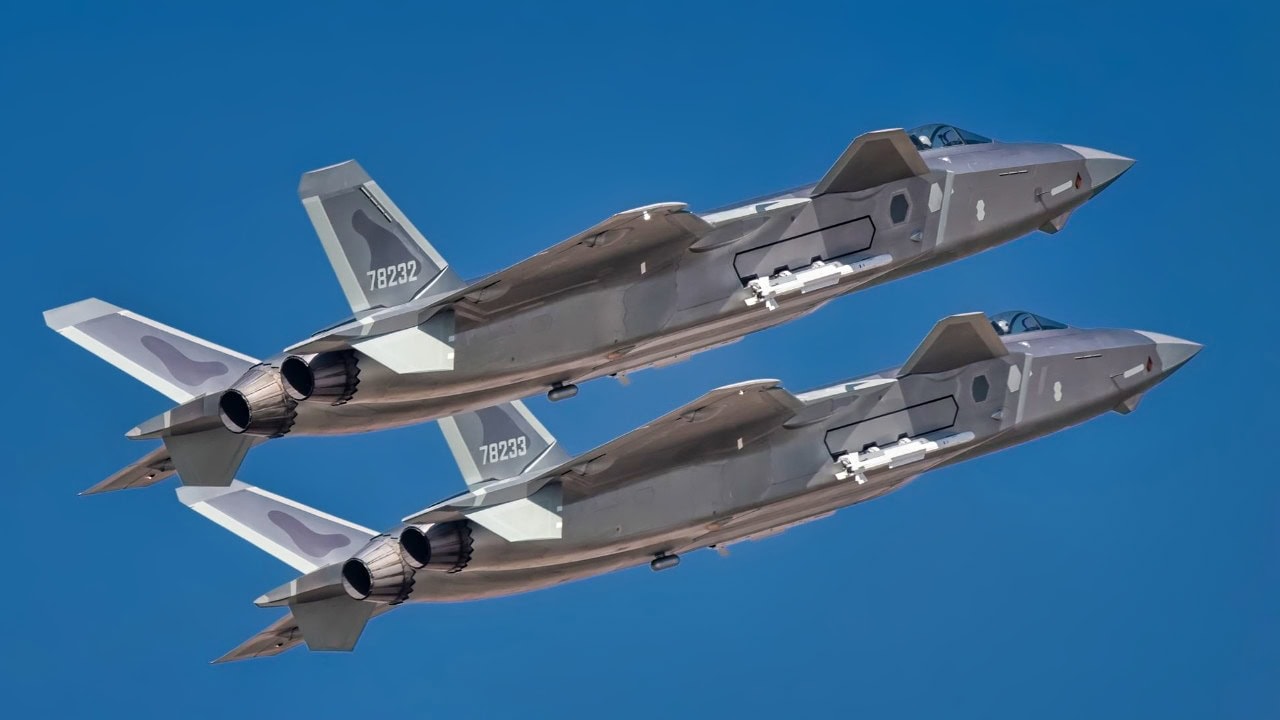
J-20 Mighty Dragon. Image Credit: Creative Commons
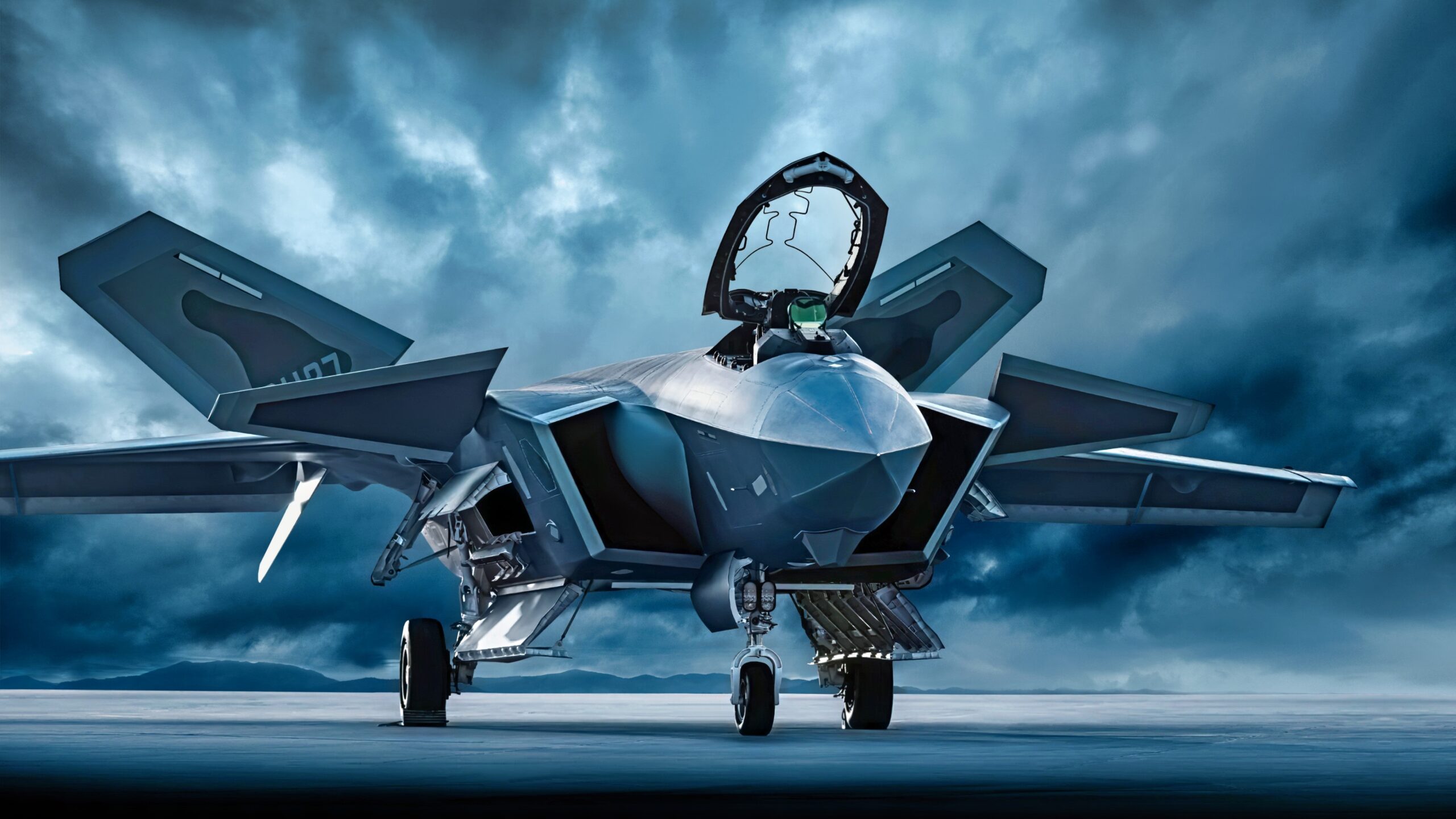
J-20 Fighter 2025 Artist Rendition. Image Credit: Creative Commons.
What’s more, China has a dynamic and uniquely sophisticated high-tech sector that continues growing by leaps-and-bounds. Do they steal? Sure. Espionage is baked into the cake over there.
However, they tend to steal baseline designs and then innovate—and mass-produce—from there. The theft is lower because they can’t build it themselves and higher because it’s cheaper and more efficient to steal.
To argue, as many in Washington do, that China will be unable to field the H-20 within a reliable timeframe is absurd. Yet it is a belief that has been embraced by some of the most well-connected think tankers in the nation’s (dying) capital.
Mind you, similar claims were made by the think tank set about the J-20 about a decade ago. At that time, they argued that the underlying technology in the J-20 was both pilfered by China from the United States (that’s probably true) and that the system was nowhere near as good as the American alternative.
As China struggled to transition from the Russian-made engines they were using to their domestically produced ones, the same voices in the West mocked China.
Today, the J-20 is one of the world’s most advanced warplanes. Indeed, a few years back, it was discovered that a J-20 pilot had penetrated Taiwan’s US-provided air defense network and flown directly over the island without ever being intercepted, let alone noticed.
Inside the Xi’an H-20: Range, Payload, and Strategic Reach
The Xi’an H-20 is clearly following a similar path of development—and the West, rather than taking bold steps to up their own defense industrial game, is hectoring from the sidelines.
Here’s why China cannot afford to allow the Xi’an H-20 to fail or not live up to expectations. For starters, it’s a prestige thing. Talk to anyone from Mainland China today. Their cultural self-confidence and national pride are immense. It’s reminiscent of how Americans felt about their own country from the 1950s-60s.
Prestige is a compelling reason why Chinese leaders will not allow the H-20 to die. It’s a symbol of having caught up with the Americans.
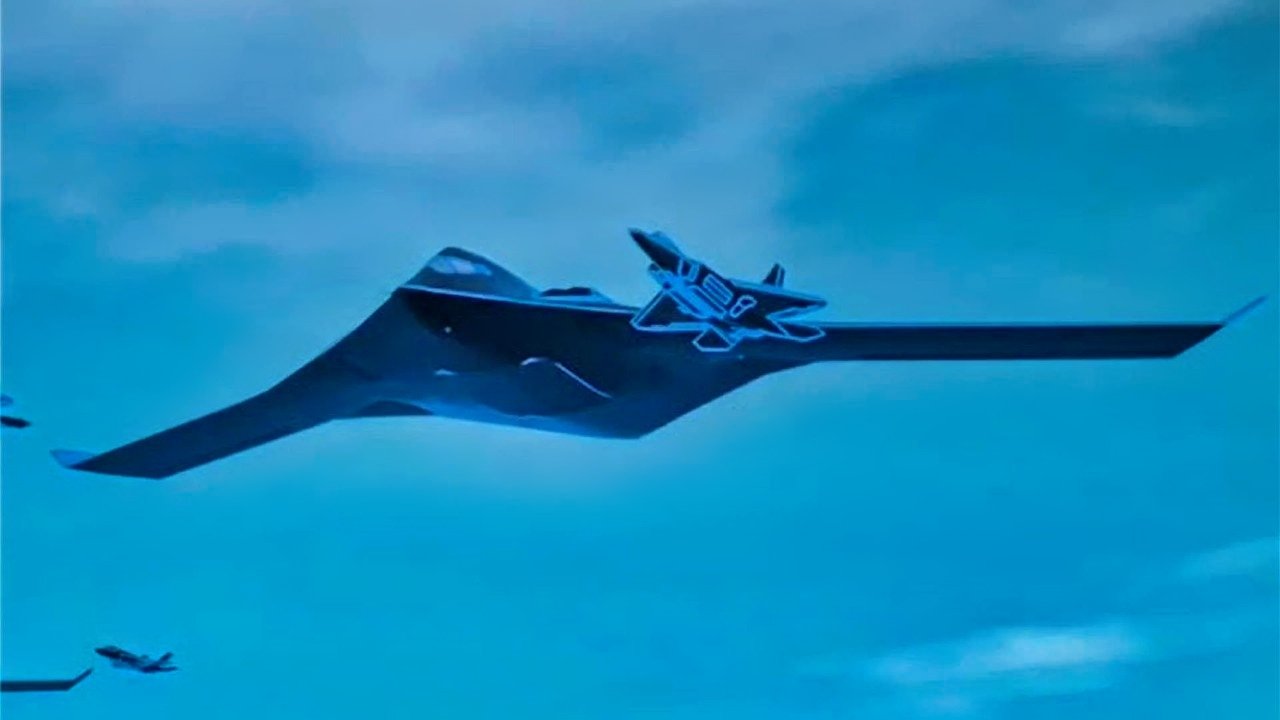
H-20 Bomber Image. Image Credit X Screeenshot.
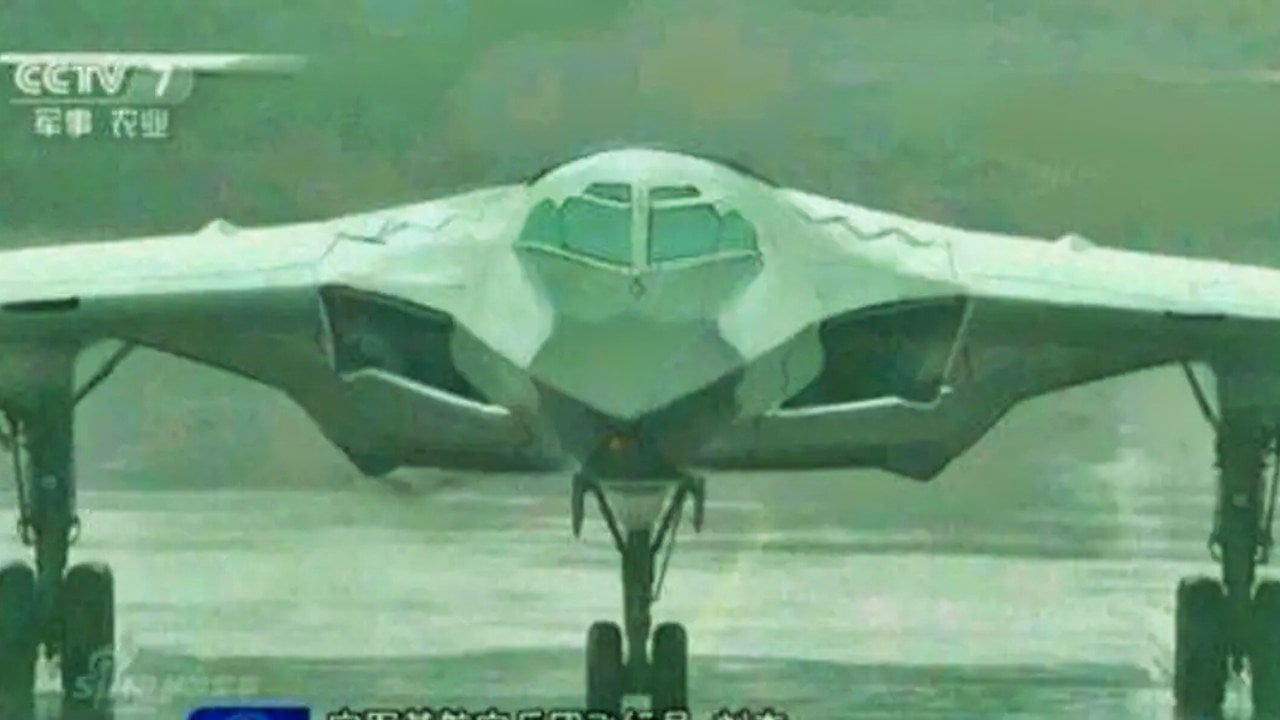
Image Credit of H-20 Bomber: Creative Commons.
As for the H-20 itself, it is a blended flying-wing design that is almost identical to the B-2.
It has an estimated range, at least according to many reports, of more than 10,000 kilometers at subsonic cruising speeds—meaning that this bird can reliably strike into the Second Island Chain. Internal bays could allow for the H-20 to carry 20-45 tons of ordnance.
Most importantly, beside nuclear weapons, the H-20 likely will carry China’s hypersonic cruise missile, which is far more advanced than what the Americans have today (though the Americans are working overtime to catch up to both China and Russia in this domain).
H-20, like their American rivals, utilize low-observable features, such as buried engines and radar-absorbent materials. American pundits have asserted that this aspect alone of the H-20 will make it difficult for the Chinese to duplicate. But China is a world leader in the development and mass production of metamaterials and other advanced engineering materials. No one in Washington can explain why they hold this belief.
They’re all just reading from the same inaccurate song sheet because American industry cannot actually counter anything that China is producing.
The Air Leg of China’s Nuclear Triad is Finally Arriving
Lastly, China requires this plane because they need to shore up its nuclear triad (a land, sea, and air nuclear deterrent). The air-based leg of China’s nuclear triad has been sorely lacking.
The H-20 remedies that.
Between the national prestige factor and the baseline strategic requirements that compel the development of the H-20, anyone in the West telling themselves (and the public) that the H-20 will never make it off the drawing board is, frankly, a fool.
A nation that accounts for 50 percent of the world’s manufacturing doesn’t abandon complex projects merely because they are difficult, and it has never attempted such a project before.
The Real Crisis Beyond the H-20: America No Longer Builds Things
That country will, in my opinion and looking at the evidence, mass-produce its way through the project and emerge with a fleet of H-20s that, by 2035, will be 2.63 times larger than the US B-2 Spirit fleet and 12.5 times larger than the B-21 Raider fleet. Others have made similar calls.
As my former Asia Times editor, David P. Goldman, used to remind me: Don’t worry about what China does wrong. Worry about what they do right. I’d add that we should be worried about how America isn’t mass-producing anything other than financial products, too.
About the Author: Brandon J. Weichert
Brandon J. Weichert is the Senior National Security Editor at 19FortyFive.com. He was previously the senior national security editor at The National Interest. Weichert is the host of The National Security Hour on iHeartRadio, where he discusses national security policy every Wednesday at 8pm Eastern. He hosts a companion show on Rumble entitled “National Security Talk.” Weichert consults regularly with various government institutions and private organizations on geopolitical issues. His writings have appeared in numerous publications, among them Popular Mechanics, National Review, MSN, and The American Spectator. And his books include Winning Space: How America Remains a Superpower, Biohacked: China’s Race to Control Life, and The Shadow War: Iran’s Quest for Supremacy. Weichert’s newest book, A Disaster of Our Own Making: How the West Lost Ukraine, is available for purchase wherever books are sold. He can be followed via Twitter/X @WeTheBrandon.