
China's Scarborough Shoal Patrols Are Testing Southeast Asia's 2026 Defense Line
 Marcus Chen
China's Scarborough Shoal Patrols Are Testing Southeast Asia's 2026 Defense Line
China has turned another patrol around Scarborough Shoal into a test of Southeast Asia's ability to absorb pressure without turning every encounter into a crisis. Reuters reported on October 30 that Chinese forces conducted combat-readiness patrols around the disputed shoal, while The Diplomat reported that Australia's defense chief said China's military buildup is creating pressure across Southeast Asia. Those are not separate stories. The patrol is the operational expression of the buildup.
The Shoal Is the Test Case
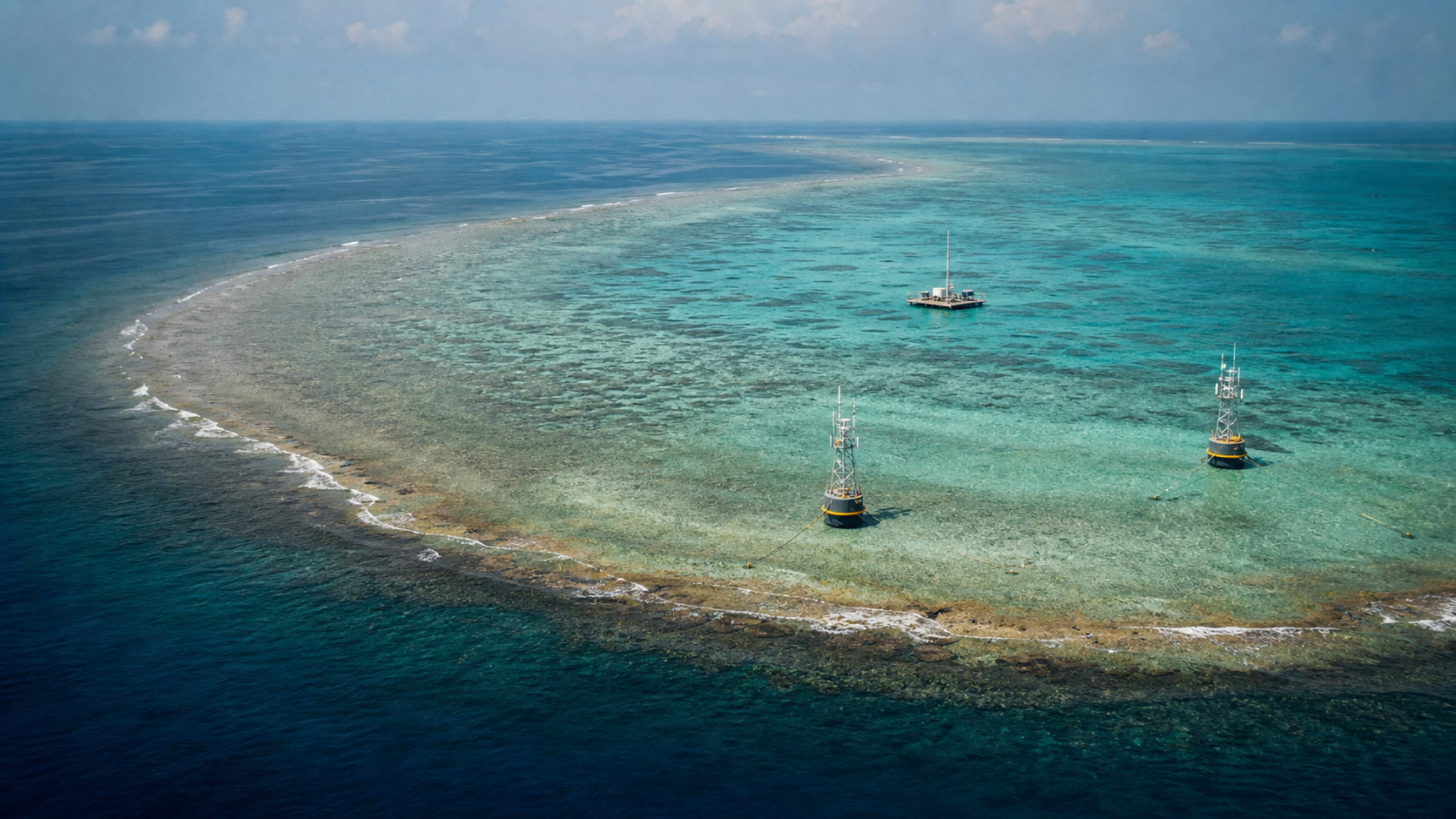
Scarborough Shoal sits roughly 120 nautical miles from the Philippine island of Luzon and more than 500 nautical miles from China's Hainan Island. Geography gives Manila the shorter line of sight, but it does not automatically give the Philippines control. The shoal is a reef and fishing ground, not a conventional military base. That makes it ideal for coercion: coast guard cutters, maritime militia, aircraft and naval units can appear as a layered presence without crossing the unmistakable threshold of an attack.
The latest patrol matters because Beijing is pairing law-enforcement pressure with military signaling. A coast guard ship can challenge Philippine vessels under a civilian label; a nearby navy or air force detachment changes the escalation calculation. The point is not necessarily to seize the shoal this week. It is to make routine Philippine access costly, uncertain and politically exhausting.
Numbers Favor the Patrol State
The Philippines can contest an encounter with patrol craft, aircraft and allied support, but it cannot maintain a permanent high-end screen around every feature it claims. China can rotate coast guard ships from a much larger fleet, support them with the People's Liberation Army Navy, and sustain operations from bases in the South China Sea and the mainland. That is a force-generation problem, not simply a ship-versus-ship problem.
For Manila, the relevant metric is not whether a Philippine frigate is more capable than a Chinese coast guard cutter. It is how many days the Philippines can keep hulls, crews, surveillance aircraft and legal teams on station before the patrol becomes an exceptional deployment. China wins when an extraordinary Philippine response meets an ordinary Chinese schedule.
The same logic explains why the issue has spread beyond Manila. At the ASEAN defense ministers' meeting in Cebu, Beijing accused the Philippines of obstructing Chinese attendance, according to The Diplomat. The diplomatic argument and the patrol reinforce each other: pressure at sea narrows the room for regional diplomacy, while diplomatic friction makes coordinated maritime responses harder.
Washington's Answer Has a Logistics Problem
The United States has strengthened access, exercises and maritime awareness with the Philippines. Japan is also becoming part of Manila's answer, and Philippine reporting says additional U.S. defense funding and a Japanese warship are expected. Those steps improve the balance, but they do not create a standing multinational force at Scarborough Shoal.
Access is not presence. A rotational deployment can provide sensors, missiles or a political signal, but a patrol dispute is won hour by hour by the ship that arrives, stays and documents the encounter. A destroyer is a powerful deterrent, yet sending one to every gray-zone incident would be expensive and escalatory. Sending none teaches Beijing that the alliance is strongest in exercises and weakest during the unglamorous repetition of maritime harassment.
The U.S. Marine Corps' Landing Ship Medium program shows the broader challenge. USNI News reported October 30 that Hanwha Philly Shipyard received a $269 million contract for one vessel, with options for three more. The platform is intended to move Marines and equipment among dispersed islands. That is useful for a crisis, but one ship is not a South China Sea presence, and a small number of new hulls cannot immediately compensate for the time required to build crews, maintenance capacity and ammunition stocks.
Australia's Warning Is Also a Readiness Test
Australia's defense leadership is right to describe Chinese military growth as pressure, but the warning should be read as a question about allied readiness. Southeast Asian states do not need another declaration that the region matters. They need persistent maritime domain awareness, interoperable rules for coast guard encounters, and enough affordable ships and aircraft to keep coercion visible.
That points toward a less glamorous force mix: unmanned surveillance, shore-based anti-ship missiles, repair ships, small patrol vessels and shared data links. A Philippine crew armed with a reliable picture of the shoal can make a patrol politically expensive even when it cannot physically remove a larger cutter. The objective is sea denial and evidence, not a symbolic race to put the biggest warship closest to the reef.
There is also a political limit. Southeast Asian governments will cooperate with Washington, Tokyo and Canberra when cooperation protects their room to maneuver. They will resist arrangements that turn every maritime incident into a referendum on choosing sides. The United States therefore needs to offer usable capacity without demanding theatrical alignment.
Beijing Is Winning the Tempo
China's advantage around Scarborough Shoal is tempo. It can alternate coast guard patrols, military exercises, diplomatic complaints and administrative claims faster than the Philippines or its partners can build a consensus response. That does not mean Beijing has uncontested control. It means the burden of proof and persistence sits with the smaller claimant.
The answer is not to treat every patrol as the opening shot of a war. It is to stop treating repeated patrols as isolated incidents. If China can normalize a military-backed coast guard presence while Manila must continually decide whether to escalate, the balance has already shifted. Southeast Asia's 2026 defense line will be determined less by the number of warships in port than by who can sustain a visible presence at the reef tomorrow morning.
Sources
Chinese forces conducted combat-readiness patrols around Scarborough Shoal on October 30, 2026, exerting pressure on the Philippines and Southeast Asia. This military activity is part of a broader buildup that complicates regional diplomatic efforts and challenges the Philippines' ability to respond effectively. The U.S. and Japan are enhancing military cooperation with the Philippines to address these challenges.
- China conducted combat-readiness patrols around Scarborough Shoal.
- The patrols are part of a broader military buildup in Southeast Asia.
- The Philippines faces challenges in maintaining a permanent military presence in the area.
- The U.S. and Japan are increasing their military cooperation with the Philippines.
- China's advantage lies in its ability to sustain a visible presence at Scarborough Shoal.