
China's Y-9 and BZK-005 to Fly Simultaneously in 2026, Testing Japan's Intelligence Gathering System
 Tanaka Takashi
China's Y-9 and BZK-005 Conduct Simultaneous Flights in 2026, Testing Japan's Intelligence Gathering Capabilities
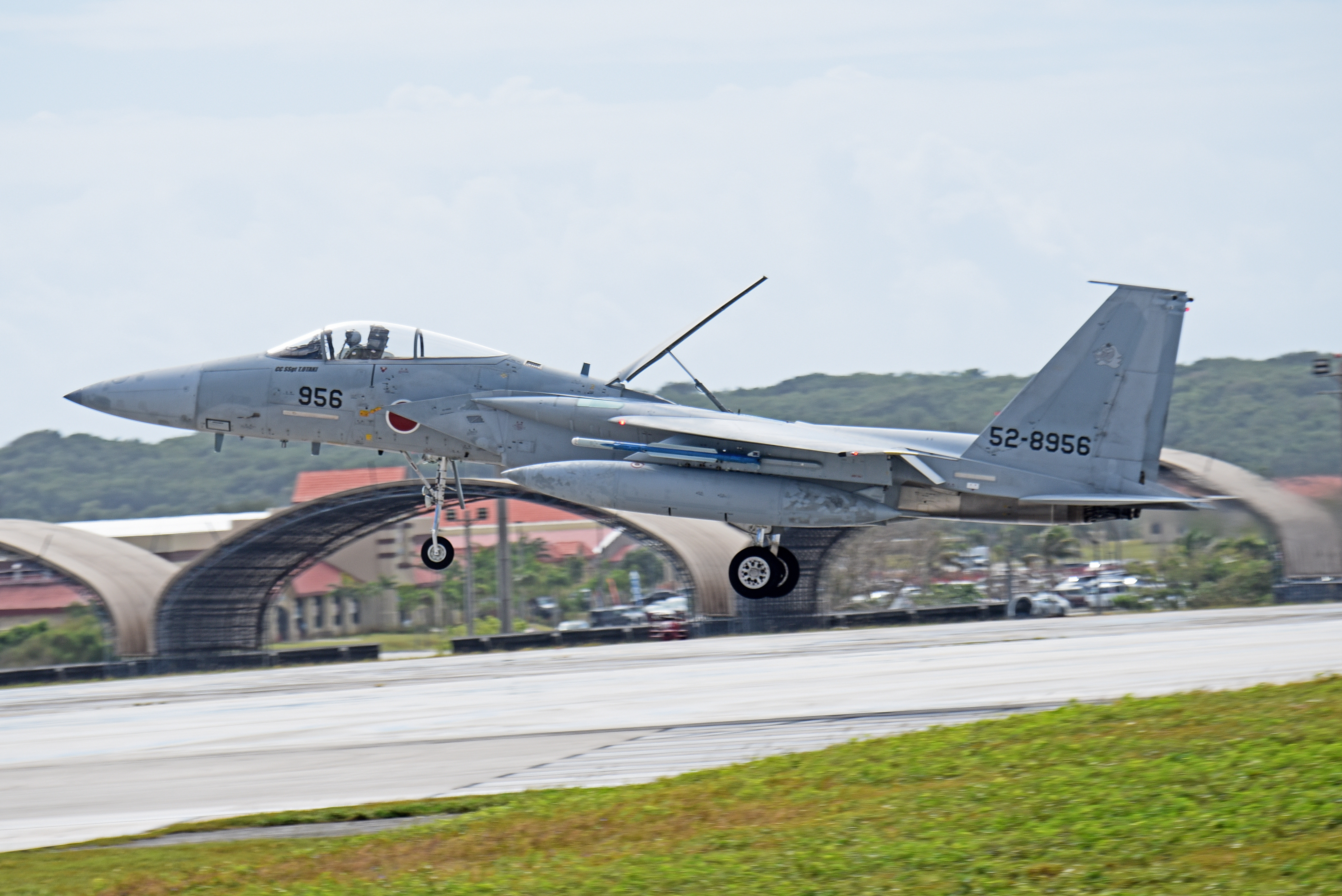
On November 2, the Ministry of Defense's Joint Staff Office announced that from the morning to the afternoon of October 28, one Y-9 intelligence-gathering aircraft, one Y-9 patrol aircraft, and one BZK-005 reconnaissance drone of the Chinese military were confirmed over the East China Sea and the Pacific Ocean, prompting a scramble by the Japan Air Self-Defense Force's fighter jets. While the released materials do not clarify the details of the flight paths, the fact that three different sensor platforms operated on the same day should not be dismissed as mere proximity flights.
What the Combination of Three Aircraft Indicates
The Y-9 intelligence-gathering aircraft primarily collects communication and electronic signal information, while the Y-9 patrol aircraft is suitable for wide-area surveillance and maritime patrol. The BZK-005 serves as a long-endurance reconnaissance drone that complements the information gathered by manned aircraft. In other words, this configuration can be interpreted as overlapping activities for understanding the electromagnetic environment, monitoring air and sea areas, and conducting sustained observations all on the same operational day. Although the number of aircraft is only three, the combination of capabilities is rational.
Burden on Southwest Air Defense
As Chinese aircraft activities expand from the East China Sea into the Pacific, the Air Self-Defense Force must not only confirm proximity but also assess flight intentions, track via data links, and share information simultaneously with Maritime Self-Defense Force vessels and U.S. forces. This is not merely an issue of a single scramble; it is a problem that continuously depletes the readiness aircraft in the southwest region, including Naha, as well as air refueling and maintenance personnel.
The flexible aircraft dispersal operations and mutual use of facilities confirmed during the Japan-U.S. defense ministerial talks in October will be part of the response to such activities. However, dispersal will not function merely by increasing the number of bases. Without the accompanying speed of sharing identification information, runway recovery, and forward stockpiling of fuel and parts, the broadening of surveillance will directly increase the burden on the Self-Defense Forces.
Separating Capability from Intent
From this announcement alone, it cannot be said that the Chinese side immediately indicated an intention to transition to operational actions. Rather, it is highly likely that this is an activity to gauge the response time during peacetime and Japan's tracking procedures. However, if the capability to combine intelligence-gathering aircraft, patrol aircraft, and unmanned reconnaissance aircraft becomes normalized, it will allow for a smooth transition to a maritime and aerial surveillance network in times of crisis. What Japan needs is not to compete in the number of scrambles but to shorten the time to detect before contact and to convert shared information between Japan and the U.S. into decision-making. The often-overlooked weakness is not the performance of the aircraft but the delay of political judgment compared to the sensors on the ground.
Main Sources of Information
- Ministry of Defense Joint Staff Office "Chinese Military Activities" November 2, 2026
- Ministry of Defense "Japan-U.S. Defense Ministerial Meeting (Summary)" October 2026
- USNI News "Japan's 2026 Defense White Paper" October 27, 2026
On October 28, 2026, the Chinese military conducted a simultaneous flight of a Y-9 reconnaissance aircraft, a Y-9 patrol aircraft, and a BZK-005 reconnaissance drone over the East China Sea and Pacific Ocean. This prompted the Japanese Air Self-Defense Force to scramble fighter jets in response. The operation is interpreted as a test of Japan's information gathering and response capabilities.
- Chinese military deployed Y-9 reconnaissance and patrol aircraft along with BZK-005 drone.
- Japanese Air Self-Defense Force scrambled fighters in response.
- The operation occurred over the East China Sea and Pacific Ocean on October 28, 2026.
- The combination of aircraft indicates a coordinated intelligence-gathering effort.
- The activities are seen as a test of Japan's response capabilities.