
Saudi Arabia and the United States Strengthen Defense Cooperation in 2026 Amid Rising Regional Tensions
 Ahmed Al-Rashid
Saudi Arabia and the United States Strengthen Defense Cooperation in 2026 Amid Rising Regional Tensions
On November 2, 2026, Saudi Arabia and the United States discussed expanding defense cooperation as tensions widen from the Gulf to the Red Sea. The news is not an announcement of a new arms deal, but it reveals that Riyadh is rearranging its deterrence mechanism around operational integration with Washington, rather than purchasing an additional platform to add to a long list of equipment.
What Happened in Riyadh and Washington
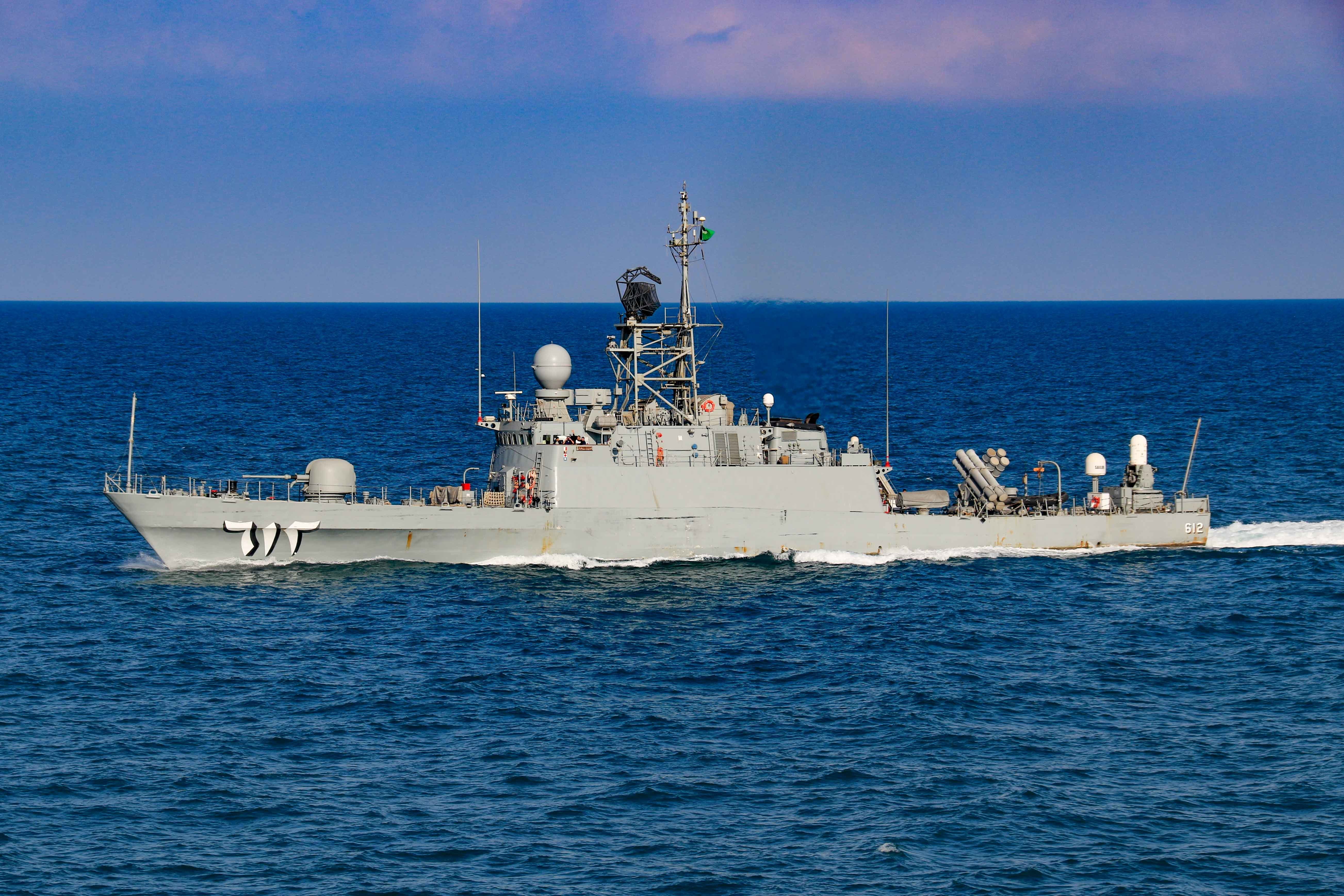
The Jerusalem Post reported that both sides discussed defense cooperation in light of regional tensions. This coincided with American statements about communications with Iran and the possibility of reaching an agreement, along with reports of Saudi Defense Minister Prince Khalid bin Salman moving diplomatically with Asian partners and condemning Houthi attacks. These signals place Saudi-American cooperation within a broader equation of protecting facilities or intercepting missiles: it is an attempt to manage escalation while keeping negotiation channels open.
Practically, enhanced cooperation could include early warning exchanges, linking command centers, coordinating air and missile defense, and protecting energy infrastructure and ports. Saudi Arabia has possessed Patriot and THAAD systems, F-15 aircraft, and reconnaissance systems for years, but the value of this equipment depends on a command and control network, missile stockpiles, maintenance teams, and joint training capable of operating under the pressure of a simultaneous attack.
The Issue Is Not the Number of Systems
The Gulf has been accustomed to measuring power by the value of contracts. However, a missile or aircraft does not become a combat capability merely by arriving at an airbase. Military capability is a triangle of equipment, training, and institutions. Washington provides a crucial part of the triangle, especially in space reconnaissance, long-range command, intercept munitions, and air battle management expertise. Saudi Arabia is improving in training and localization, but it still relies on American support in irreplaceable areas.
This reliance is not a flaw in itself. Every effective alliance is based on a distribution of roles. The flaw is for a country to purchase multiple Western systems and then manage them as separate islands, making it impossible to convert spending into a unified air picture. In my view, the real test of any new understanding will be the speed of information transfer from radar to decision-making center and then to the appropriate battery or aircraft, not the number of images at signing ceremonies.
Why Washington Is Returning to the Center of Calculations
Riyadh is trying to diversify its partners, from Turkey and Pakistan to South Korea and France, while pushing for local manufacturing under Vision 2030. This path is beneficial for reducing the risks of reliance on a single supplier, but it does not immediately produce an alternative to the American umbrella. Industrial diversification requires knowledge transfer, supply chains, software rights, and a workforce capable of maintaining systems for decades.
Washington, for its part, does not want to appear as if it is returning to the Gulf only when a crisis erupts. Therefore, defense cooperation carries a political message as much as it carries military value. For Saudi Arabia, it is a guarantee that the protection of navigation and energy is not solely a local responsibility when facilities come under complex attack. For the United States, it is a means to keep the Gulf security architecture linked to American systems even as Riyadh speaks of decision-making independence and expanding its relations with Beijing and Moscow.
Deterrence Between De-escalation and War Readiness
It may seem strange that defense talks coincide with signals of a potential deal with Iran, but this is the logic of modern deterrence. Negotiation becomes more serious when one party has the ability to protect its interests if dialogue fails. However, increased military cooperation may be interpreted in Tehran as a prelude to escalation, especially if coupled with American deployments or naval movements in the Gulf. Therefore, Riyadh needs a clear distinction between defending its territory and engaging in an optional war that does not serve its interests.
Power that cannot operate without its owner is not independence, and power that does not deter the adversary is not a successful alliance.
In conclusion, the meeting on November 2 does not mean that Saudi Arabia has abandoned its project to diversify its sources of arms, nor does it mean that the United States has regained a monopoly on Gulf security. It is a mutual acknowledgment of the limits of alternatives at a moment of pressure. Washington cannot manage the region from the air alone, and Riyadh cannot convert its large stockpile of systems into integrated defense without a partner providing the network, standards, and training. The contradiction remains between Saudi ambition for decision-making independence and the practical need for an American umbrella; this time, it will not be resolved by the value of the contract, but by the ability of forces to operate when communications are cut off and the attack begins.
Sources
Saudi Arabia and the United States enhanced defense cooperation on November 2, 2026, amid escalating regional tensions. The discussions focused on operational integration and managing threats from the Gulf to the Red Sea. Saudi Arabia is diversifying its defense partnerships while relying on U.S. support for critical military capabilities, reflecting a complex balance between independence and reliance on American military infrastructure.
- Saudi Arabia and the U.S. discussed expanding defense cooperation on November 2, 2026.
- The cooperation aims to manage regional tensions from the Gulf to the Red Sea.
- Saudi Arabia is diversifying its defense partnerships while maintaining ties with the U.S.
- The U.S. provides critical support in reconnaissance and air defense capabilities.
- The meeting reflects a mutual recognition of the limits of alternatives in a pressured moment.