
Conflict Enters Day 11, Trump Signals "Ceasefire," US and Russian Leaders Hold Phone Call
The military strikes by the United States and Israel against Iran entered their 11th day on the 10th. Russian President Putin had a phone call with U.S. President Trump on the 9th at Trump's request, focusing on international issues such as the situation in Iran and Ukraine. On the same day, Trump stated that he would lift some oil-related sanctions to stabilize oil prices. He also mentioned that the conflict with Iran would "soon" come to an end.
Trump Signals a "Ceasefire"
During a press conference on the 9th, Trump stated that due to the market turmoil caused by the U.S. and Israeli attacks on Iran, he would lift some oil-related sanctions to stabilize oil prices.
Trump also said that the conflict with Iran would "soon" come to an end, but it "would not" end this week.
Putin Discusses the Situation in Iran with Trump
Russian presidential aide Ushakov stated on the evening of the 9th that Putin had a phone call with Trump at Trump's request, focusing on international issues such as the situation in Iran and Ukraine. Putin proposed some suggestions for quickly ending the conflict surrounding Iran through political and diplomatic means.
According to information released by the Kremlin's website, the call lasted about an hour. Ushakov said that regarding the quick resolution of the "conflict in Iran" through political and diplomatic means, Putin "expressed several ideas," including considering communication involving leaders from multiple Gulf countries, Iranian President Pezeshkian, and other national leaders. Trump provided Putin with his assessment of the recent situation "against the backdrop of ongoing U.S.-Israeli actions." "Both sides had a concrete and beneficial exchange on this topic."
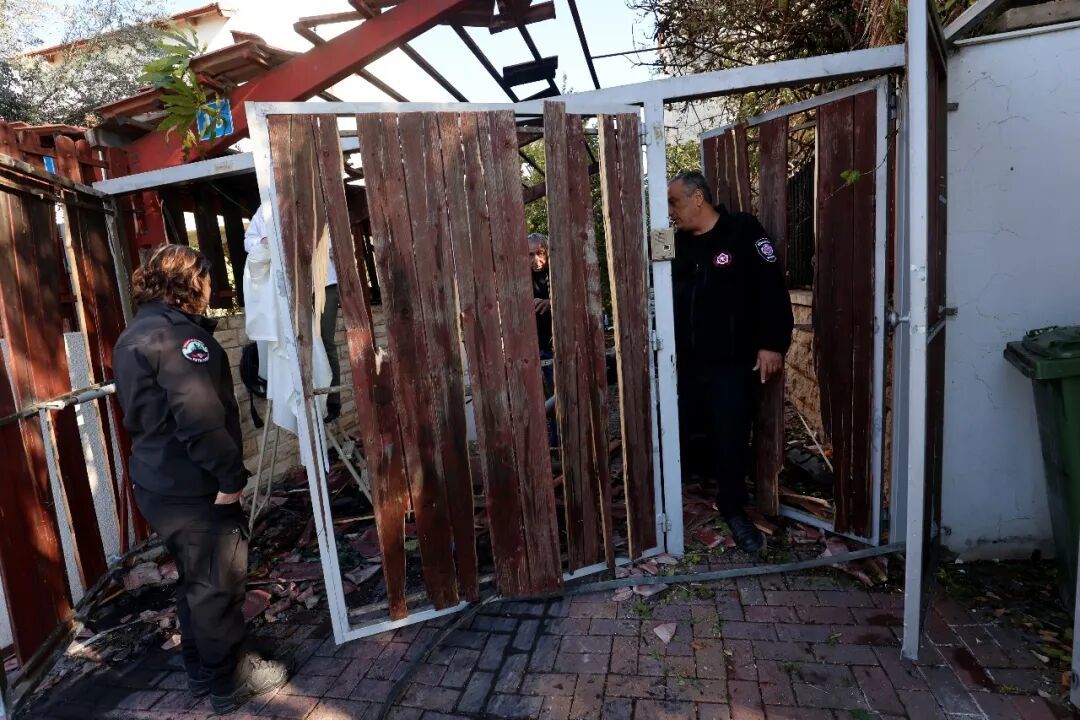
This is a site of an attack photographed on March 9 in the central Israeli city of Rishon Lezion. On that day, Iran launched the 31st wave of its "Real Commitment-4" offensive, using powerful super-heavy missiles to strike the U.S. and Israel. Xinhua News Agency (Photo by Gil Cohen-Magen)
Ushakov stated that Trump reiterated his hope for an early ceasefire in the Russia-Ukraine conflict to achieve a long-term solution to the Ukraine issue.
Additionally, the leaders of Russia and the U.S. discussed the situation in Venezuela from the perspective of the global oil market.
This was the first phone conversation between the U.S. and Russian presidents since the large-scale military operation launched by the U.S. and Israel against Iran on February 28. During a phone call with Pezeshkian on the 6th, Putin stated that Russia's principled position on this conflict is that military actions must be stopped immediately, and that issues in Iran and the Middle East should not be resolved by force, but should return to a path of political and diplomatic resolution as soon as possible.
International Oil Prices Continue to Rise Significantly
International oil prices rose significantly on the 9th.
As of the close of trading that day, the price of light crude oil futures for April delivery on the New York Mercantile Exchange rose by $3.87, closing at $94.77 per barrel, an increase of 4.26%; the price of Brent crude oil futures for May delivery rose by $6.27, closing at $98.96 per barrel, an increase of 6.76%.
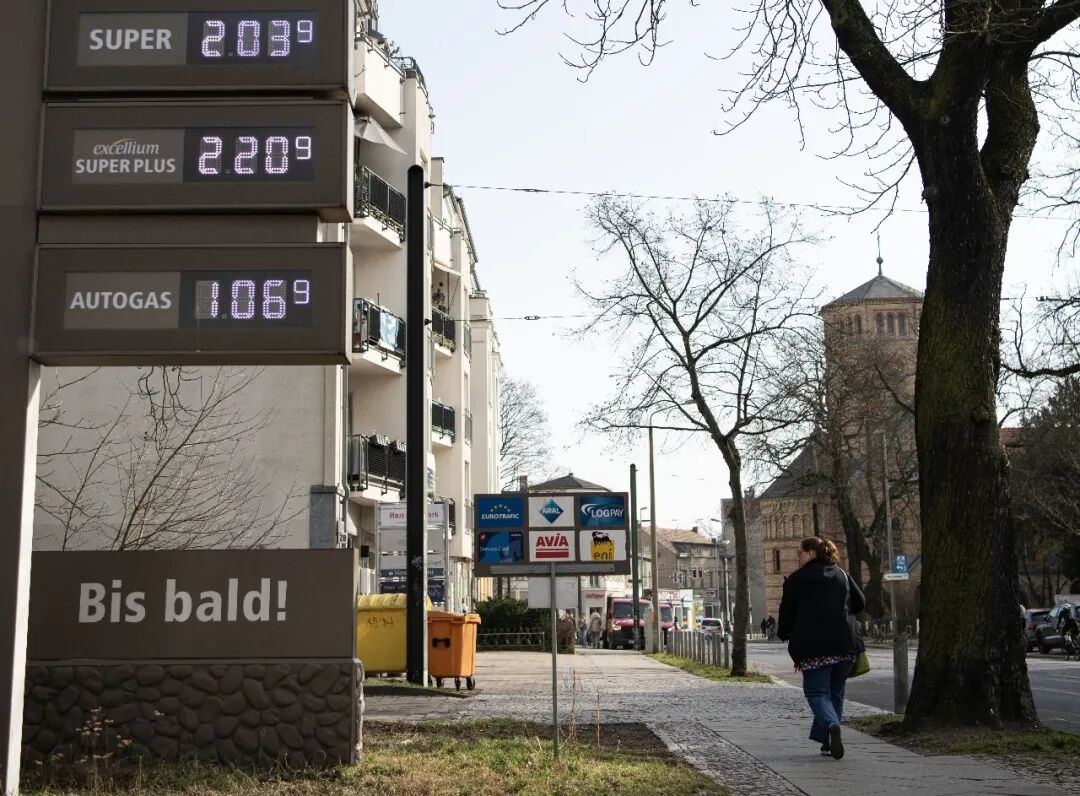
On March 9, a woman passes by a gas station price board in Berlin, the capital of Germany. Since the U.S. and Israel launched military strikes against Iran, the volatility in the international energy market has intensified, leading to a significant rise in domestic retail oil prices in Germany. Xinhua News Agency reporter Zhang Haofu
On the 9th, finance ministers from the G7 countries held a video conference with the International Energy Agency to discuss the joint release of strategic oil reserves if necessary, to alleviate the surge in crude oil prices caused by the conflict in the Middle East. French Minister of Economy and Finance Bruno Le Maire stated that the participants believe that there is currently no supply shortage, and "it is not yet time to take action."
According to French media reports, G7 leaders may make a final decision later this week on whether to use strategic oil reserves.
Macron: Troops May Be Deployed to the Strait of Hormuz
According to Cypriot media, French President Macron stated on the 9th that France will maintain its military presence in the Mediterranean and the Red Sea, including the deployment of aircraft carriers and other warships, with the potential deployment area possibly including the Strait of Hormuz, to ensure the safety of regional shipping and European interests.
The Cypriot newspaper "Liberty" reported that Macron, at the Paphos Air Base in southwestern Cyprus, stated, "An attack on Cyprus is an attack on Europe," and that France will continue to cooperate with partner countries to ensure the safety of European citizens and the freedom of navigation in international waterways, emphasizing that the related actions will remain defensive in nature.
On the same day, Macron arrived in Cyprus for a trilateral meeting with Greek Prime Minister Mitsotakis and Cypriot President Christodoulides.
Iranian Official: Security in the Strait of Hormuz
Still "Unlikely to Achieve"
The Secretary of Iran's Supreme National Security Council, Larijani, stated on the 9th that as long as the U.S. and Israel continue military strikes against Iran, security in the Strait of Hormuz cannot be restored.
Larijani commented on social media regarding President Macron's remarks about the Strait of Hormuz, saying, "In the flames of war ignited by the U.S. and Israel, any security in the Strait of Hormuz is unlikely to be achieved," especially in light of certain aspects that are further fueling the escalation of this war.
A senior officer of the Iranian Islamic Revolutionary Guard Corps recently stated that Iran has "not closed" the Strait of Hormuz, but any vessels belonging to the U.S. or Israel will become targets for Iranian strikes.
Intense Bombardment in Tehran
After midnight on the 10th, intense explosions were heard again in the urban area of Tehran, with Xinhua reporters on the scene hearing the strong roar of warplanes, and the bombardment lasted for about five minutes.
The Israel Defense Forces issued a statement on the evening of the 9th, stating that the Israeli military had carried out airstrikes on a "drone headquarters" of the Iranian Islamic Revolutionary Guard Corps.
The statement said that the Israeli military conducted a new round of airstrikes on dozens of infrastructure targets in multiple areas within Iran, including a "central headquarters" for drones of the Iranian Islamic Revolutionary Guard Corps. The Israeli military claimed that drones had previously been launched from there towards Israel and that more drones were stored there.
The Israeli military stated that it is intensifying efforts to strike Iran's ballistic missile production infrastructure, further weakening Iran's launch and defense capabilities.
The Iranian side has not yet confirmed the reports of the Israeli military airstrikes.
U.S. and Israeli forces continued military strikes against Iran, marking the 11th day of conflict. President Trump announced plans to lift some oil sanctions to stabilize prices and discussed the situation with President Putin. Israel conducted airstrikes targeting Iranian Revolutionary Guard Corps facilities in Tehran. France is considering military deployment in the Hormuz Strait to ensure regional security.
- U.S. and Israel have been conducting military strikes against Iran for 11 days.
- Trump indicated he would lift some oil-related sanctions to stabilize oil prices.
- Putin and Trump discussed the situation in Iran and Ukraine during a phone call.
- Israel conducted airstrikes on Iranian Revolutionary Guard Corps targets in Tehran.
- France is considering deploying military forces to the Hormuz Strait.