
Constantly creating security anxiety to cover up the true intentions of military expansion, Japanese officials actually claim they want to build nuclear submarines again.
[Global Times Report, Journalists Guo Yuandan and Liu Yang] According to Japanese media reports, Japanese Defense Minister Koizumi Shinjiro recently hinted again that Japan "does not rule out" the possession of nuclear-powered submarines, claiming that in the discussions and research related to the revision of the "Three Security Documents," "no options will be ruled out." This is not the first time a senior Japanese official has made a similar statement. Military experts interviewed by the Global Times criticized Japan for exaggerating the "China threat theory" as an excuse to break the "Three Non-Nuclear Principles," warning that Japan's actions will disrupt regional strategic balance and seriously threaten peace and stability.
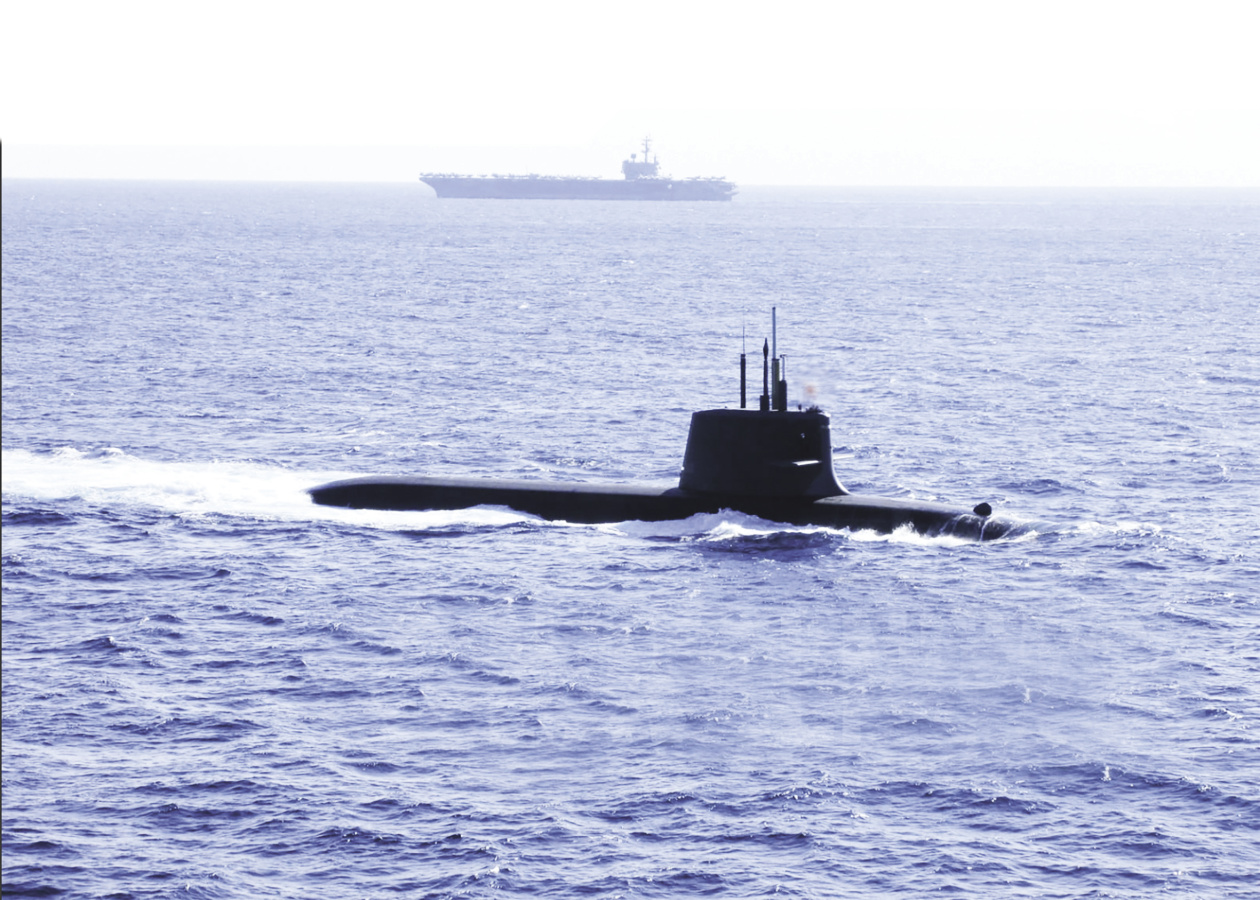
Japan's hype of the "China threat theory" as an excuse to break the "Three Non-Nuclear Principles"
In July this year, Koizumi criticized those who oppose discussing the revision of the "Three Non-Nuclear Principles" on the online program "Commentary TV," arguing that they are too concerned about the reactions of neighboring countries and place Japan's own security in a secondary position.
Nikkei News reported that the measures aim to address the so-called continuous enhancement of China's nuclear strike capabilities, including the development of submarine-launched ballistic missile (SLBM) capabilities. The report also claimed that calls within Japan to re-examine the "Three Non-Nuclear Principles" may be rising.
In response, military expert Zhang Junsha, in an interview with the Global Times, refuted that Japan is trying to use the exaggeration of the "China threat theory" as an excuse to break the "Three Non-Nuclear Principles," but this claim is completely unfounded. "First, China has always adhered to a self-defense nuclear strategy and insists on not being the first to use nuclear weapons, making it the only nuclear power to make this commitment. As long as China is not attacked, it will not use nuclear weapons, which are only for nuclear retaliation and second-strike. If there are no malicious intentions towards China, there is no need to worry about China's nuclear weapons. Second, China's nuclear forces are maintained at the minimum level necessary for national security, and compared to countries like the United States, there is a multiple gap in both the number of nuclear warheads and overall nuclear capabilities, which are not even in the same category. Therefore, Japan's excuse of using China is completely baseless."
In addition to exaggerating the external strategic threats it faces and using China as a "shield," another excuse from Tokyo is that relying solely on the U.S. nuclear umbrella is insufficient to address the changing regional security challenges. Currently, Japan mainly relies on the extended nuclear deterrence provided by the United States, commonly known as the "nuclear umbrella."
"These reasons are merely excuses," Zhang Junsha pointed out, stating that the real purpose is to achieve Japan's "absolute security" and "national normalization." "The so-called 'normal country' refers to Japan becoming a country capable of waging war again, which is a goal pursued by some Japanese politicians and is their usual tactic—creating a sense of threat and insecurity to cover up their true intentions of promoting 're-militarization' and expanding offensive military capabilities. The essence of national normalization is to free Japan from U.S. control, reshape independent national defense sovereignty, and achieve 'strategic autonomy.'
How high is the technical threshold for Japan's nuclear submarine ambitions?
Recently, a U.S. Navy official told Kyodo News that Japan already has nuclear power plants, and there are technical similarities between nuclear power plants and nuclear-powered submarines.
In this regard, military issues expert Song Zhongping, in an interview with the Global Times, stated that Japan's development of nuclear submarines is not without obstacles and faces two major technical challenges. First, Japan currently does have the technical foundation for the small nuclear reactors required for nuclear submarines, but so far, the nuclear reactors it has developed are mainly used in nuclear power plants. There are significant differences between power plant reactors and submarine reactors. "Therefore, Japan still needs to make practical breakthroughs in adapting reactors for submarine use." Second, all existing Japanese nuclear reactors are large nuclear power plant reactors, and how to miniaturize them to fit submarines or vessels is another technical hurdle that needs to be overcome.
Military expert Zhang Junsha expressed a similar view. He said that Japan currently lacks experience in developing military nuclear reactors and does not have ready-made onboard nuclear power devices. There is a serious lack of accumulation in core technologies such as reactor miniaturization, nuclear fuel cycle, and spent fuel treatment. This is a significant technical barrier for Japan's development of nuclear submarines.
"Nevertheless, Japan's development of nuclear submarines is still mainly constrained by funding and time. Japan has the potential to manufacture nuclear submarines, which would pose a significant threat," Song Zhongping emphasized.
However, Chinese military expert Shi Hong, in an interview with the Global Times, stated that the statements from Japanese officials are more of a probe, especially to test the reactions of neighboring countries. Shi Hong believes that Japan is a "nuclear threshold" country, and if there are no restrictions on its development of military nuclear technology, it could quickly cross this threshold. But this does not mean that Japan can easily develop the nuclear reactors used for nuclear submarines.
Threatening regional security
As for submarine platforms, Shi Hong believes that Japan's existing large diesel-electric attack submarines have a displacement of 4,000 tons, while the French Navy's "Rubis" class nuclear submarines are less than 3,000 tons. If Japan were to scale up its existing submarine platforms to develop nuclear-powered submarines, it would be relatively easy to achieve. Of course, this depends on the attitude of the United States, and whether the U.S. will allow Japan to develop such military nuclear technology remains to be seen.
Song Zhongping stated that if Japan achieves breakthroughs in using nuclear reactors for submarines in the future, it may enlarge the size of the "Soryu" class and "Taigei" class submarines, converting them into nuclear-powered submarines, which is the most likely path.
Zhang Junsha further analyzed that according to public reports, its nuclear submarines will be equipped with vertical launch systems for missiles, capable of carrying "Tomahawk" long-range cruise missiles, hypersonic glide missiles, and other weapons, possessing the capability for long-range precision strikes against other countries' land-based deep strategic targets and maritime mobile formations, even preemptive strikes. "The development of nuclear submarines will significantly enhance Japan's oceanic mobility and sustained stealth combat capabilities, expand its underwater operational radius, directly threaten the security of neighboring countries, including land targets and maritime strategic passage security, and will disrupt the regional strategic balance, intensifying the arms race and military confrontation in the Asia-Pacific region," Zhang Junsha said.
"If Japan possesses attack-type nuclear submarines, their offensive capabilities will far exceed those of its existing submarines, inevitably having a significant impact on other countries; if it further possesses strategic missile nuclear submarines, it will undoubtedly disrupt the regional power balance," Song Zhongping said. Given Japan's lack of reflection on its historical issues as a defeated nation in World War II, if it possesses nuclear submarines, it will lead to an imbalance of power and pose significant risks to world peace and stability.
Zhang Junsha believes that nuclear submarines are typical offensive strategic weapons for ocean warfare, which contradicts Japan's post-war system of "defensive defense" and seriously violates documents with international legal effect, such as the "Potsdam Declaration." This move will disrupt the existing regional strategic balance, trigger chain reactions from neighboring countries, and lead East Asia into a security dilemma, severely undermining regional peace and stability. In addition, Japan's development of nuclear submarines will also severely impact the nuclear non-proliferation system, trigger nuclear safety risks, undermine the global nuclear non-proliferation mechanism, provoke strong countermeasures from neighboring countries, and may bring potential threats of nuclear leakage and nuclear proliferation, resulting in destructive consequences for the region and even the world.
Japanese Defense Minister Koizumi Shinjiro indicated that Japan may pursue the development of nuclear-powered submarines amid discussions to revise its security policies. This statement reflects Japan's concerns over China's military capabilities and has sparked warnings from military experts about the potential disruption to regional stability. The call to reconsider Japan's non-nuclear principles is gaining traction domestically, raising alarms about the implications for regional security.
- Japan's Defense Minister stated that nuclear submarines are a possibility.
- There is a growing domestic call in Japan to reconsider its non-nuclear principles.
- Military experts warn that Japan's actions could disrupt regional stability.
- Japan's current reliance on U.S. nuclear deterrence is deemed insufficient.
- Japan's potential nuclear submarine development poses a significant threat to regional security.