
CSTO Confirms Nuclear Guarantees to Allies — Moscow's Rhetoric and the Limits of Extended Deterrence
 S.W
S.WCSTO Confirms Nuclear Guarantees to Allies — Moscow's Rhetoric and the Limits of Extended Deterrence
On August 3, 2026, Russia's permanent representative to the CSTO, Viktor Vasilyev, made a statement that was immediately dubbed by the Western press as the "expansion of Moscow's nuclear umbrella." In an interview with RIA Novosti, Vasilyev confirmed that the documents developing the CSTO Collective Security Strategy, as well as the Russian military doctrine, allow for the possibility of using nuclear weapons, including to protect allies in the event of an attack. The wording was carefully calibrated — no mention of guarantees, no hint of automatism, but the very fact of publicly articulating this option deserves careful analysis.
Not News, But a Signal
Strictly speaking, Vasilyev did not say anything fundamentally new. The possibility of using nuclear weapons to protect CSTO allies has existed in Russian doctrinal documents at least since the update of the "Fundamentals of State Policy in the Field of Nuclear Deterrence" in 2020, and was subsequently confirmed in the 2024 edition. The novelty lies in the public emphasis on this option right now, in August 2026, against the backdrop of three parallel processes: Macron's French doctrine of "advanced nuclear deterrence" (March 2026), Finland's removal of legislative restrictions on the import and storage of nuclear weapons (June 2026), and the stagnation of Russia's offensive in Ukraine with record monthly losses — 42,860 personnel just in July, according to the Ukrainian General Staff.
Coincidence? Unlikely. This is precisely the situation that Soviet military thought referred to as "demonstrating resolve through doctrinal communication." Vasilyev's statement is neither a legal document nor an operational order. It is a strategic signal addressed simultaneously to three audiences: Western capitals (a reminder of the existence of the Russian nuclear option), CSTO member states (confirmation of commitments amid growing doubts about their reliability), and the internal Russian audience (demonstrating that Moscow is not isolated).
Anatomy of the CSTO Nuclear Umbrella
Here, it is necessary to separate the doctrinal level from the operational one. A recent report by the PIR Center (June 2026), prepared by Ilya Subbotin under the guidance of Vladimir Orlov, contains perhaps the most sober assessment to date: Russia provides two "nuclear umbrellas" — one to CSTO states at the doctrinal level, and an additional one to Belarus, which has a developed practical dimension. The key conclusion of the report: the Russian nuclear umbrella over Belarus is the "most credible" in terms of the likelihood of actual application of nuclear guarantees in the event of a conflict.
But what about the other CSTO members — Kazakhstan, Kyrgyzstan, Tajikistan, Armenia? The picture here is significantly different. Unlike Belarus, where tactical nuclear weapons are already deployed and joint exercises with the Iskander-M systems have been conducted, no other CSTO country has Russian nuclear weapons on its territory, regular joint nuclear exercises, or integrated combat management systems. The doctrinal statement exists in a vacuum of operational reality.
Historical Parallel and Its Limits
Russian rhetoric about the CSTO nuclear umbrella inevitably invites comparisons with NATO's extended nuclear deterrence, where American nuclear guarantees are backed by the physical presence of tactical nuclear weapons on the territory of five non-nuclear allies (Belgium, Germany, Italy, the Netherlands, Turkey) and the participation of these states in Nuclear Sharing mechanisms. The PIR Center rightly notes: the formats of the American umbrella are "more inclusive" and imply significant — and growing — involvement of non-nuclear Washington allies in nuclear planning.
In the CSTO, there is nothing similar and there never has been. The organization, created in 2002 as a post-Soviet response to NATO's expansion, has not developed mechanisms for collective nuclear planning. Its Collective Rapid Reaction Forces (CRRF), formed in 2009, are a purely conventional tool designed to counter limited border threats and terrorist incubators in Central Asia, but not for operations in conditions of nuclear escalation. Moreover, Armenia itself — a formal CSTO member — has effectively frozen its participation in the organization since 2023, and its Prime Minister has publicly questioned the value of Russian security guarantees after Moscow did not intervene in the 2023 Nagorno-Karabakh conflict. It is hard to imagine that Vasilyev's statement will change this calculation.
May Exercises as a Material Background
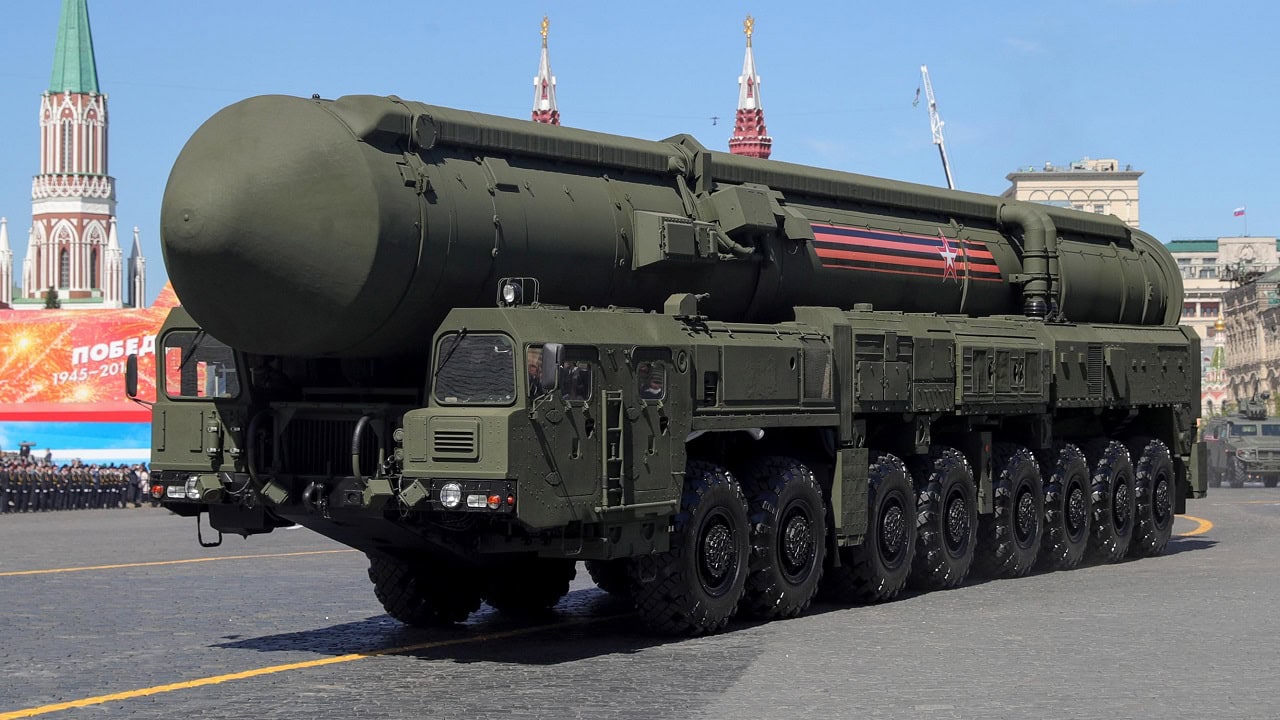
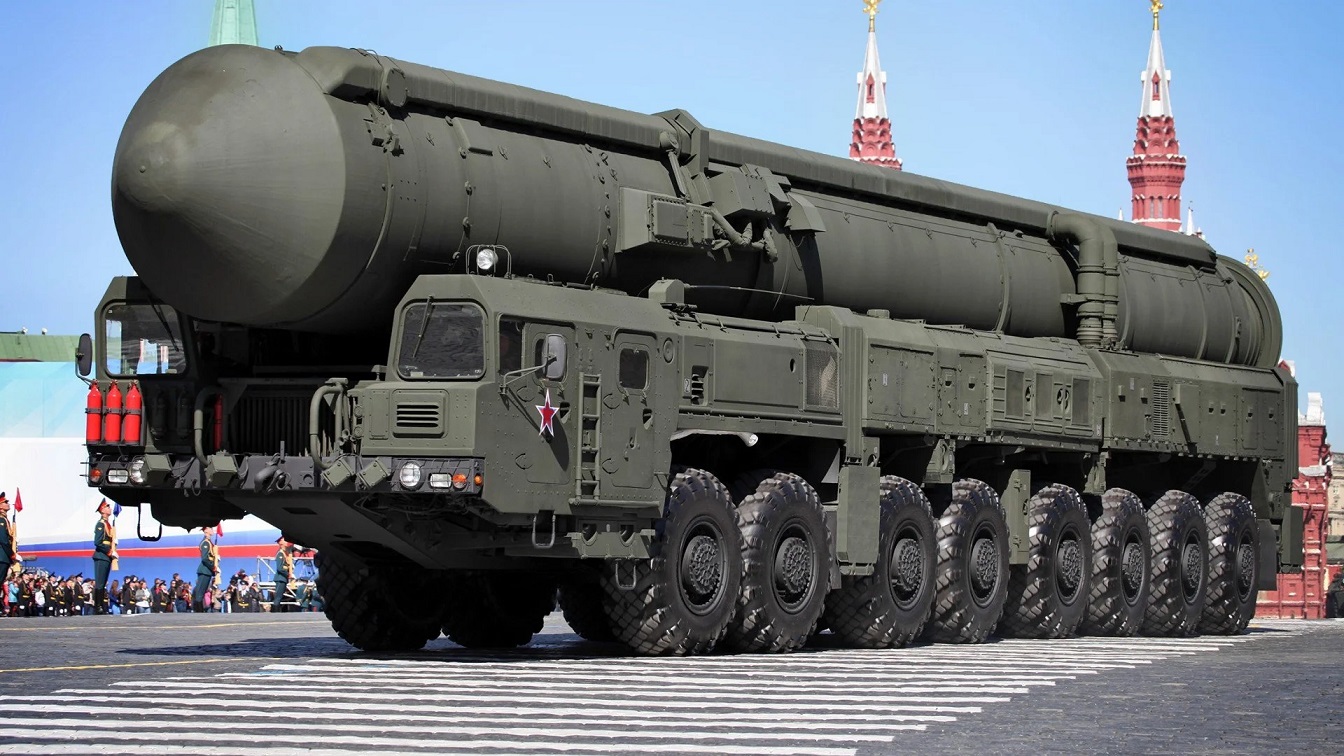
Doctrinal rhetoric, however, does not exist in complete isolation from the material base. In May 2026, Russia conducted large-scale nuclear exercises involving about 64,000 servicemen. During the maneuvers, a test launch of the Yars intercontinental ballistic missile was carried out from the Plesetsk Cosmodrome, a launch of the Zircon hypersonic missile from a frigate in the Barents Sea, and a launch of the Sineva ballistic missile from a submarine. The exercises also involved a Borei-class nuclear submarine, an Il-38 anti-submarine aircraft, and a MiG-31 with the Kinzhal hypersonic system. This was the largest demonstration of the Russian nuclear triad since 2022.
But even this impressive arsenal does not resolve the fundamental problem of extended deterrence: the readiness to use nuclear weapons to defend one's own territory is one thing; the readiness to do so to protect Dushanbe or Bishkek is quite another. The difference is not in the number of warheads, but in the political risk. And here we return to the central paradox of Vasilyev's statement: it serves as a signal of uncertainty — the adversary cannot be sure that Moscow will not use nuclear weapons in the event of an attack on a CSTO ally — but this uncertainty works both ways, including for the allies themselves.
What’s Next
The most likely scenario: Vasilyev's statement will remain exactly what it is — an element of strategic communication, rather than a harbinger of real change in the operational architecture of the CSTO. Belarus will remain the only CSTO state with a practical dimension of Russian nuclear guarantees. For the other members of the organization, Moscow's nuclear umbrella will continue to exist in that gray area between doctrinal promise and operational fiction, which is so familiar to anyone who has studied Soviet and post-Soviet military diplomacy.
However, it would be a mistake to completely ignore this signal. It fits into the broader picture of the nuclear escalation dynamics of 2026, where the French "advanced" doctrine, Finland's lifting of restrictions, and Russia's May exercises form a spiral of mutual demonstrations, each of which raises the overall level of strategic instability. In this spiral, the CSTO statement is not the loudest, but a characteristic episode. A case where it is important not so much what is said, but when and to whom it is said.
The Russian nuclear umbrella over the CSTO is more of a political declaration than a military-technical reality. But in nuclear strategy, even declarations matter — especially when they are made publicly and addressed to multiple audiences simultaneously.
On August 3, 2026, Russia confirmed its nuclear guarantees to CSTO allies, emphasizing the potential use of nuclear weapons for their defense. This statement, made by Russia's representative, follows significant military exercises involving 64,000 troops and highlights Belarus as the only CSTO member with practical nuclear assurances. The announcement serves as a strategic signal to Western capitals, CSTO member states, and the domestic audience, amidst ongoing military challenges in Ukraine.
- Russia's representative confirmed nuclear guarantees to CSTO allies.
- The statement emphasizes the potential use of nuclear weapons for ally defense.
- 64,000 troops participated in recent nuclear exercises.
- Belarus is highlighted as the only CSTO member with practical nuclear guarantees.
- The statement serves as a strategic signal to multiple audiences.