
Death toll in Kyiv residential building rises to 24: Escalation spiral after the largest two-day airstrikes by Russian forces
 Dmitri Volkov
Death Toll in Kyiv Residential Building Rises to 24: Escalation Spiral Following Russia's Largest Two-Day Airstrike
Judgment: This should be published as an independent follow-up report. The reason is that this is not just an update on casualties from the previous round of "large-scale drone/missile attacks," but three new intelligence variables have emerged: the death toll in the Kyiv residential building has risen to at least 24, Ukraine has publicly listed long-range strikes against Russian energy and military targets as a retaliation option, and the Russian Ryazan oil refinery has been struck by drones. These factors collectively indicate that the battlefield is transforming from a single airstrike event into an escalation chain of "urban strikes—deep retaliations—pressured negotiation windows."
Casualty Update: Kyiv Enters Day of Mourning, Death Toll in Residential Building Rises to 24
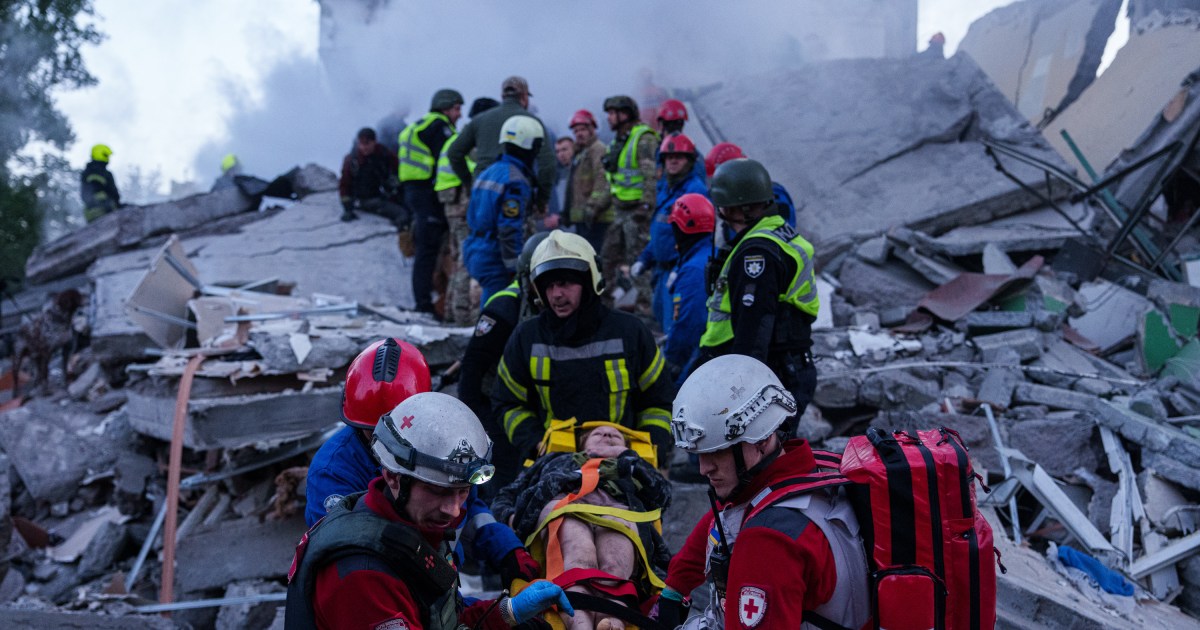
On May 15, both Reuters and Al Jazeera reported that Ukrainian President Zelensky condemned the Russian missile strike on a Kyiv residential building, with the related death toll rising to at least 24. Al Jazeera stated that the attack occurred on a nine-story residential building in the Darnytskyi district of Kyiv, with three children among the deceased; Kyiv entered a state of mourning that day.
This casualty update has a significant political amplification effect. Russia has previously characterized large-scale strikes as targeting military, energy, or logistical facilities, but the collapse of a residential building and the deaths of children will make it easier for the Ukrainian government to define the event domestically and internationally as a "punitive strike against civilian cities," thereby garnering additional support for air defense systems, long-range strike authorizations, and sanctions against Russian energy.
Scale of Airstrikes: Number of Drones Reaches Highest Level Since War Began
Al Jazeera quoted the Ukrainian Air Force stating that the attacks from the night of May 14 to May 15 were among the largest aerial assaults since the outbreak of the war. The Ukrainian side claimed that in just one round of nighttime attacks, Russia launched 675 attack drones and 56 missiles, with air defense forces claiming to have intercepted 652 drones and 41 missiles. Zelensky also stated that since midnight on Wednesday, Russia has used over 1,560 drones against Ukrainian cities and communities.
CNN described it on May 14 as "the largest sustained drone attack since the war began." The AP headline on the same day pointed out that despite recent signals of possible peace from Trump and Putin, Russia still launched about 800 drones at Ukraine. Reuters on May 14 also referred to this round of attacks as the most intense wartime drone assault by Russia against Ukraine in two days.
These numbers indicate that Russia is combining the use of cheap drones, cruise missiles, and ballistic missiles, not only to breach Ukrainian air defenses but also to deplete their interceptor missile stockpiles, slow down the pace of power and railway repairs, and force Kyiv to concentrate more air defense resources on the capital and critical infrastructure areas.
Ukrainian Long-Range Retaliation: Ryazan Oil Refinery and Russian Deep Targets Struck
Ukraine's response has moved beyond the symbolic retaliation phase. Reuters reported on May 15 that Ukrainian drones struck the Russian Ryazan oil refinery; according to the governor of Ryazan, the Ukrainian drone attack on the city resulted in four deaths. Al Jazeera also reported that Ukraine launched a large-scale long-range drone attack on Friday, targeting energy and military infrastructure in multiple locations in Russia, with the Ryazan oil refinery being one of the major refining facilities within Russian territory.
This indicates that Ukraine's logic of deep strikes is becoming clearer: when Russia uses drones and missiles to pressure Ukrainian cities, Kyiv will continue to target Russian oil processing, military production, and logistical nodes to create pressure on fuel supply, insurance, and maintenance costs, and force Moscow to disperse air defense systems to protect critical domestic facilities.
Impact on Ceasefire and Negotiation Windows: More Like "Pressure Before Negotiation" Rather Than De-escalation in the Short Term
From a diplomatic rhythm perspective, this round of airstrikes directly undermines any short-term ceasefire narrative. Al Jazeera reported that Trump stated that the attack on the Kyiv residential building could delay peace efforts; Zelensky claimed that Russia has no intention of ending the war. Although the three-day ceasefire and prisoner exchange arrangement promoted by the U.S. previously released limited signals of easing, after the attacks, both sides are using long-range strikes to demonstrate their continued capacity for escalation.
Militarily, Russia may attempt to create psychological pressure and deplete air defense resources with a high-frequency drone offensive before negotiations; Ukraine, on the other hand, is proving through strikes on refineries and military facilities that any attacks on cities will translate into costs for Russia's domestic energy and military industry. This means that the negotiation window has not completely closed, but in the short term, it is more likely to enter a dangerous phase of "fighting while talking, and escalating while negotiating."
Intelligence Assessment
- Nature of the Event: A significant follow-up escalation after Russia's largest two-day airstrike, expanding from casualty events to cross-border energy warfare and pressured diplomatic windows.
- Military Signals: The Russian military's drone stockpile and launch rhythm still demonstrate high-intensity sustained capability; the Ukrainian military's long-range drone system continues to threaten Russian refining and military networks.
- Political Impact: Civilian casualties in Kyiv will enhance Ukraine's narrative for seeking support for air defense, long-range strikes, and sanctions.
- Future Observation Points: Whether Russia continues to implement sustained suppression with over 1,000 drones; whether Ukraine increases the frequency of strikes on refineries, munitions factories, airports, and command nodes; whether the U.S. and Europe re-link this attack to ceasefire negotiation conditions.
Source Verification
- Reuters, May 15, 2026: Zelenskiy condemns Russia after deadly Kyiv missile strike kills 24; Ukrainian drones hit oil refinery in Russia's Ryazan, Ukraine says; Ukrainian drones kill four in Russian city of Ryazan, governor says.
- Reuters, May 14, 2026: Russia pounds Ukraine in heaviest wartime drone attack over two days.
- AP, May 14, 2026: Russia fires 800 drones at Ukraine despite recent talk by Putin and Trump of possible peace.
- CNN, May 14, 2026: Russia hammers Ukraine in biggest prolonged drone attack since war began.
- Al Jazeera, May 14-15, 2026: Russia launches hundreds more drones at Ukraine, killing 10 people; Zelenskyy vows response after Russian strike kills 24 in Kyiv.
Russian forces conducted a large-scale airstrike on a residential building in Kyiv on May 14-15, 2026, killing at least 24 people, including children. In response, Ukraine launched drone strikes targeting Russian infrastructure, including an oil refinery in Ryazan, resulting in additional casualties. This escalation marks a significant increase in military operations and complicates ongoing diplomatic efforts for peace negotiations.
- 24 people killed in Kyiv residential building due to Russian missile strike, including 3 children.
- Ukraine launched a retaliatory drone strike on Ryazan oil refinery, killing 4.
- The airstrike involved the largest number of drones and missiles since the war began, with 675 drones and 56 missiles launched.
- Ukrainian President Zelensky condemned the attacks and called for increased support for air defense.
- The situation indicates an escalation in military operations and potential impacts on diplomatic negotiations.