

Summary and Key Points: Expert Isaac Seitz traces “The Sergeant is the Army,” the quote attributed to Dwight D. Eisenhower, back to the career that shaped it. A 1915 West Point graduate of “the class the stars fell on,” Eisenhower ran the Army’s first tank school at Camp Colt in 1917, learned strategy from Fox Conner, served as Douglas MacArthur’s chief of staff, then, under George C. Marshall, commanded Operation Torch, D-Day, the Bulge, and NATO as its first Supreme Allied Commander.
Dwight D. Eisenhower Deserves His Place in History
“The Sergeant is the Army.” This quote is often attributed to General/President Dwight D. Eisenhower, who believed that wise and strong leadership was the cornerstone of an effective army.
Despite never serving on the front lines or participating in actual combat, Eisenhower was a gifted leader who excelled at logistical and strategic coordination.
It was these traits that enabled him to coordinate the entire Allied campaign on the Western Front and set the Allies up for victory.
However, these talents did not develop overnight; they were the result of rigorous study and mentorship, all of which shaped Eisenhower into the strong leader he was.
Early Military Career
Eisenhower’s path began at the US Military Academy at West Point, where he enrolled in 1911. Although he was not at the top of his class academically, he gained a reputation as a solid student with a strong aptitude for mathematics and engineering.
His true talents lay in athletics: he excelled in football, baseball, and boxing until knee injuries ended his hopes of a career in sports.
Those experiences helped him develop a team-oriented, cooperative leadership style that would prove essential decades later when he commanded coalition armies during World War II.
Eisenhower graduated in 1915 with a commission as a second lieutenant, becoming part of a legendary cohort known as “the class the stars fell on” because so many of its members went on to become generals.
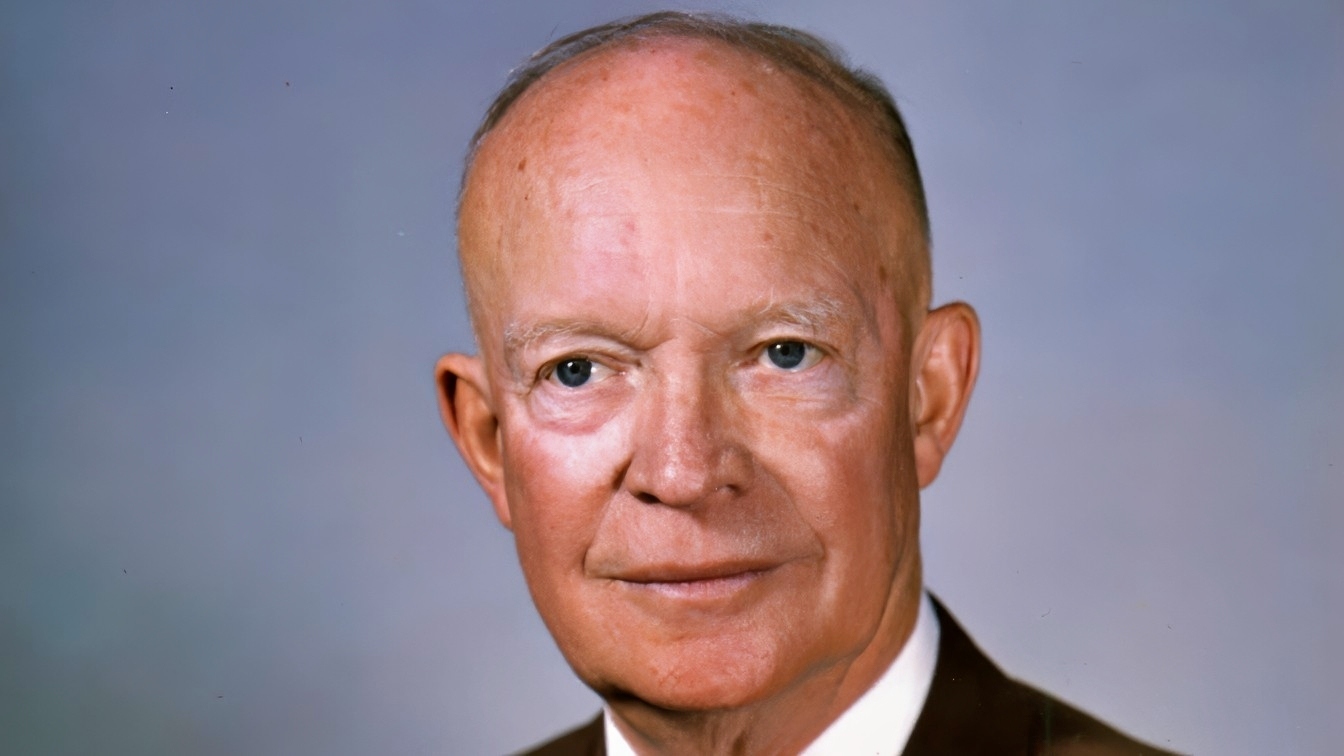
Dwight D. Eisenhower Official White House Photo
When the United States entered World War I in 1917, Eisenhower hoped for a combat role in Europe.
Instead, the Army assigned him to training commands within the United States, largely because of his strong organizational capabilities.
He was sent to Camp Colt in Gettysburg, Pennsylvania, where he oversaw the Army’s first tank training school.
Although he never reached the Western Front, Eisenhower demonstrated exceptional administrative and logistical ability, earning commendations and recognition within the Army’s leadership.
His work with tanks also placed him among a small group of officers thinking seriously about mechanized warfare.
Interwar Period: The Formation of a Great Leader
The interwar years proved crucial to Eisenhower’s development as a strategist and future commander. During the 1920s and 1930s, he served under several senior officers who profoundly shaped his understanding of military operations.
One of the earliest was General Fox Conner, whom Eisenhower met while stationed in the Panama Canal Zone.
Conner recognized Eisenhower’s intellect and mentored him in military history, strategy, and coalition warfare. The lessons Eisenhower absorbed during this period gave him a conceptual foundation for the massive multinational operations he would one day lead.
His longest and most challenging mentorship came from General Douglas MacArthur.
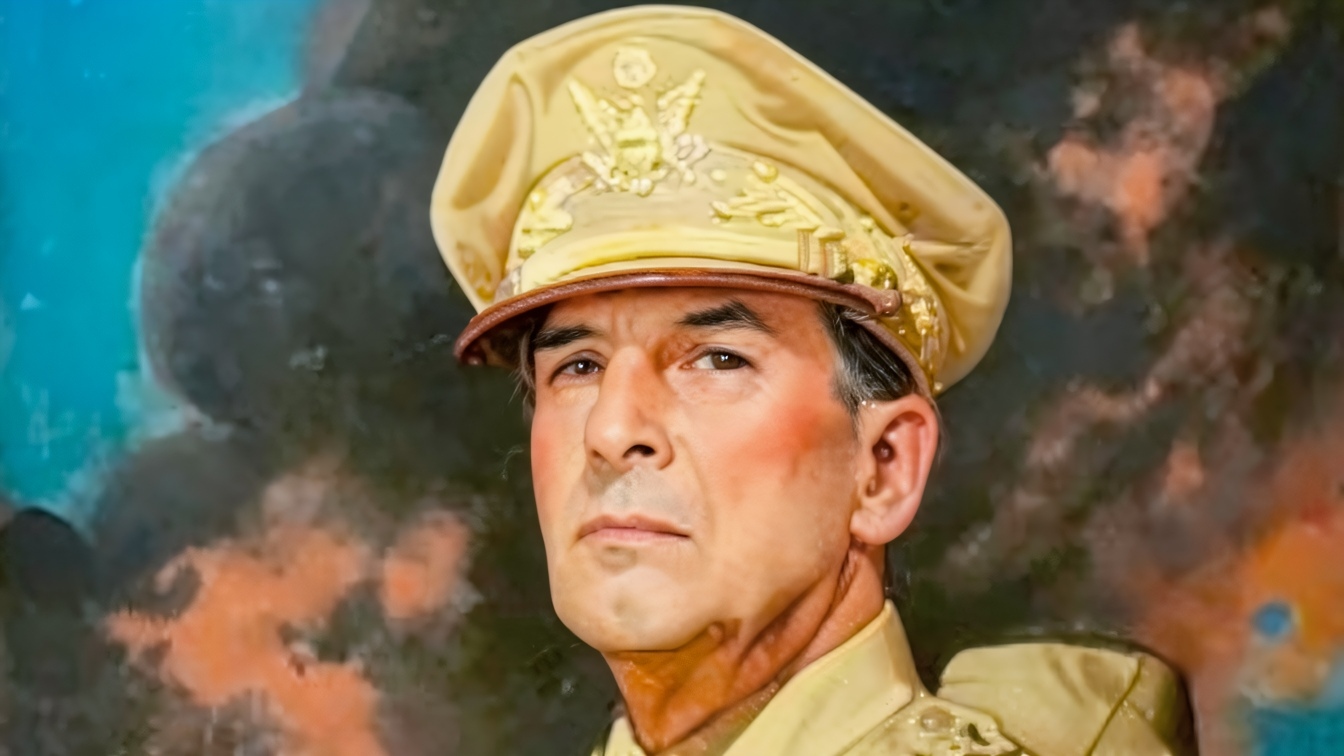
Watercolor Painting of Douglas MacArthur Colorized and Brightened via Banana Nano
From 1930 to 1935, Eisenhower served as MacArthur’s chief of staff, managing operations and logistics for the Army’s top-ranking officer. He then accompanied MacArthur to the Philippines, where they worked to build a new Philippine Army. Although Eisenhower and MacArthur often clashed, the experience gave Eisenhower invaluable exposure to high-level planning, inter-service coordination, and international military development.
WWII: Trial by Fire
The attack on Pearl Harbor in 1941 thrust the United States into global war, and General George C. Marshall, the Army Chief of Staff, immediately called Eisenhower to Washington. Marshall valued clear thinking, honesty, and organizational brilliance, all of which Eisenhower possessed in abundance.
Within months, Eisenhower was promoted to brigadier general and given responsibility for planning operations against Germany.
In June 1942, he became Commanding General of the European Theater of Operations.
Eisenhower’s first major test as a commander came with Operation Torch, the Allied invasion of North Africa in November 1942.
This campaign demanded not only strategic planning but also careful negotiation with British generals, French authorities, and political leaders in both London and Washington.
Along the way, Eisenhower faced many challenges, including inexperience among American troops and stiff German resistance.
Nonetheless, he demonstrated sound judgment, a quick learning ability, and a gift for coalition leadership.
D-Day: On the Road to Victory
Eisenhower’s success in North Africa and Italy led to his appointment as Supreme Commander of the Allied Expeditionary Force in December 1943.
This role placed him in charge of planning and executing Operation Overlord. D-Day, launched on June 6, 1944, was the largest amphibious assault in history, involving thousands of ships, aircraft, and landing craft, as well as hundreds of thousands of soldiers from multiple nations.
Eisenhower coordinated every aspect of the operation, from logistical planning to deception strategies that misled German intelligence.
Despite the risks and heavy casualties, particularly at Omaha Beach, the invasion succeeded, establishing a critical foothold for the liberation of Western Europe.
After Normandy, Eisenhower directed Allied forces in the long campaign across France and Belgium, and into Germany.
In December 1944, the Germans launched a massive counterattack, initially shocking Eisenhower and many other Allied leaders, creating a bulge in the front lines.
Eisenhower’s calm leadership and his trust in other generals, such as George S. Patton, helped blunt the German attack and preserve the Allied advance.
In May 1945, he accepted Germany’s unconditional surrender at Reims, bringing the war in Europe to an end.
Post-War Career
Following World War II, Eisenhower served as military governor in Germany before returning to Washington as Army Chief of Staff.
In this role, he managed the difficult postwar demobilization while overseeing the Army’s restructuring for a new era defined by the emerging Cold War.
In 1950, he became NATO’s first Supreme Allied Commander Europe, tasked with organizing a multinational defense force against potential Soviet aggression.
His coalition-warfare experience made him ideally suited for the role, and he helped lay the groundwork for NATO’s long-term structure.
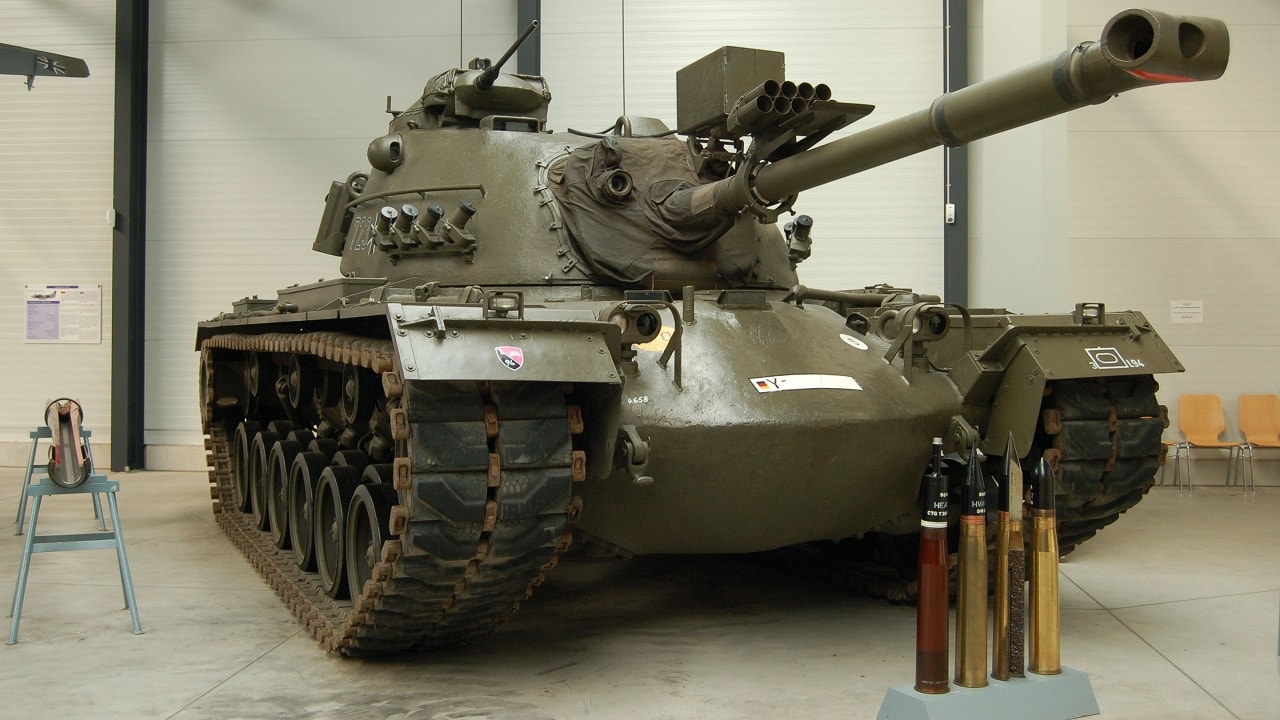
M48 Patton Tank. Image Credit: Creative Commons.
Eisenhower retired from active military service in 1952, shortly before launching his successful presidential campaign.
His military career had spanned more than four decades, taking him from a young lieutenant on the Great Plains to the leader of the most powerful military coalition in history.
About the Author: Isaac Seitz
Isaac Seitz, a Defense Columnist, graduated from Patrick Henry College’s Strategic Intelligence and National Security program. He has also studied Russian at Middlebury Language Schools and has worked as an intelligence Analyst in the private sector.