

Summary and Key Points: George C. Marshall moved 600,000 American troops during the Meuse-Argonne Offensive; then, from 1939 to 1945, he served as Chief of Staff of the United States Army while Dwight D. Eisenhower ran the war in Europe and Marshall ran the machine in Washington. Winston Churchill called him the organizer of victory. After the war, as Secretary of State from 1947 to 1949, he wrote the European Recovery Program (the Marshall Plan), and in 1953 he received the Nobel Peace Prize.
George C. Marshall Was One Great American
“When a thing is done, it’s done. Don’t look back. Look forward to your next objective.” – General George C. Marshall
Many of his peers called him the “Greatest Living American.” George C. Marshall embodied many of the aspects that made some of America’s Founding Fathers popular.
That quote above captures the mentality that drove Marshall to become America’s five-star warrior-leader. He was not a neurotic or anxious person by nature.
Humble Beginnings
A man from the blue-collar town of Uniontown, Pennsylvania, George C. Marshall made his imprint on the world at the turn of the twentieth century.
In 1901, Marshall graduated from the Virginia Military Institute (VMI) and was commissioned as a second lieutenant in the United States Army a year thereafter.
He served in the Philippines and various domestic posts.
When the First World War erupted, Marshall became a key planner for the American Expeditionary Forces.
Because of his vision, leadership, and organizational prowess (remember, logistics win wars), Marshall helped to move 600,000 American troops during the Meuse-Argonne Offensive.
That experience and unique skill set quickly elevated Marshall in the Army.
When the Second World War erupted, it was likely one of the qualities that had endeared a rising Dwight D. Eisenhower to Marshall, too.
He saw himself in Ike.
The two men had a close relationship and mutual respect throughout the war, which translated into a vital working relationship: Eisenhower was the chief architect of grand strategy in Europe, while Marshall managed affairs in Washington.
Rise to Prominence
From 1939 to 1945, Marshall was the Chief of Staff of the United States Army.
In that role, he directly advised President Franklin D. Roosevelt through some of the tensest, darkest periods of America’s experience in World War II.
During his time in that position, and perhaps most importantly for the war’s outcome, Marshall earned his reputation as a serious force builder.
Under his command, the Army experienced its greatest wartime mobilization.
It was one of the most consistently impressive logistical feats, moving so many Americans around the world to fight and, tragically, die in the killing fields of WWII.
But Marshall was key to moving metal and men to the distant places where they were most needed.
Marveling at Marshall was easy, and it wasn’t only his fellow Americans who held him in such high esteem.
Allied leaders, such as the iconic Sir Winston Churchill, dubbed Marshall the “organizer of victory.” One cannot underestimate how essential Marshall was to America’s successful war effort.
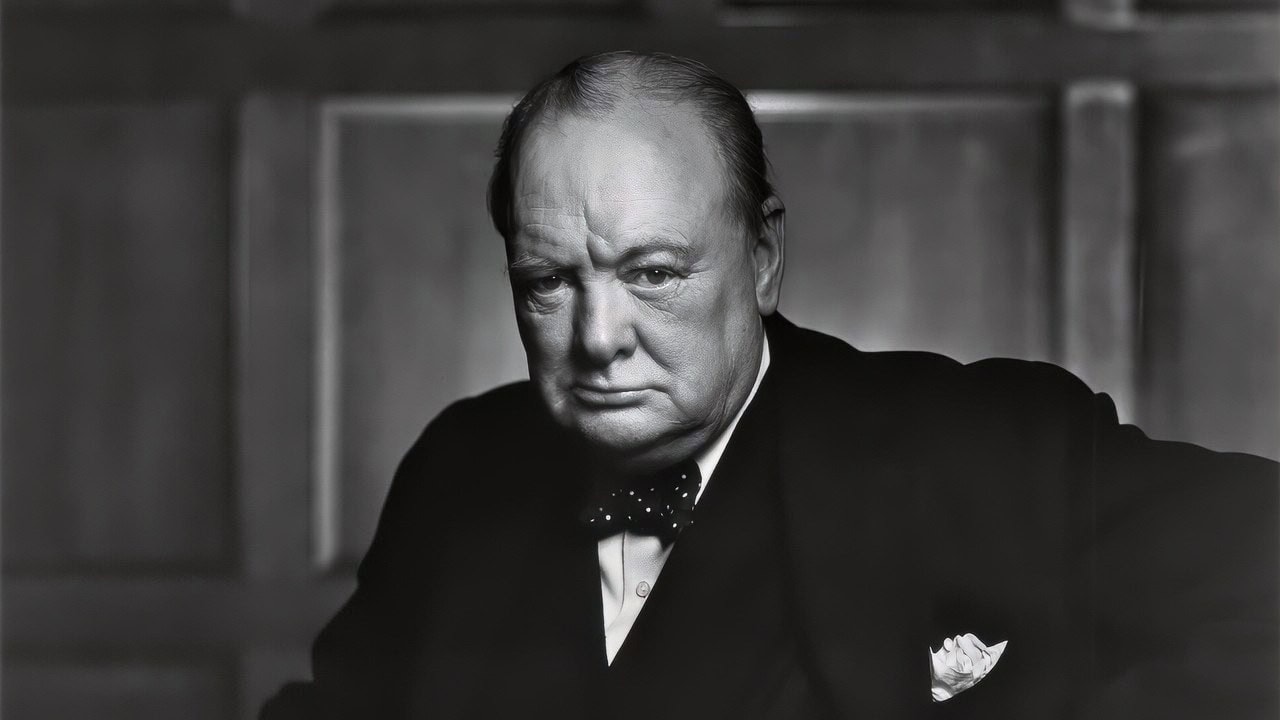
Sir Winston Churchill. Image Credit: Creative Commons.
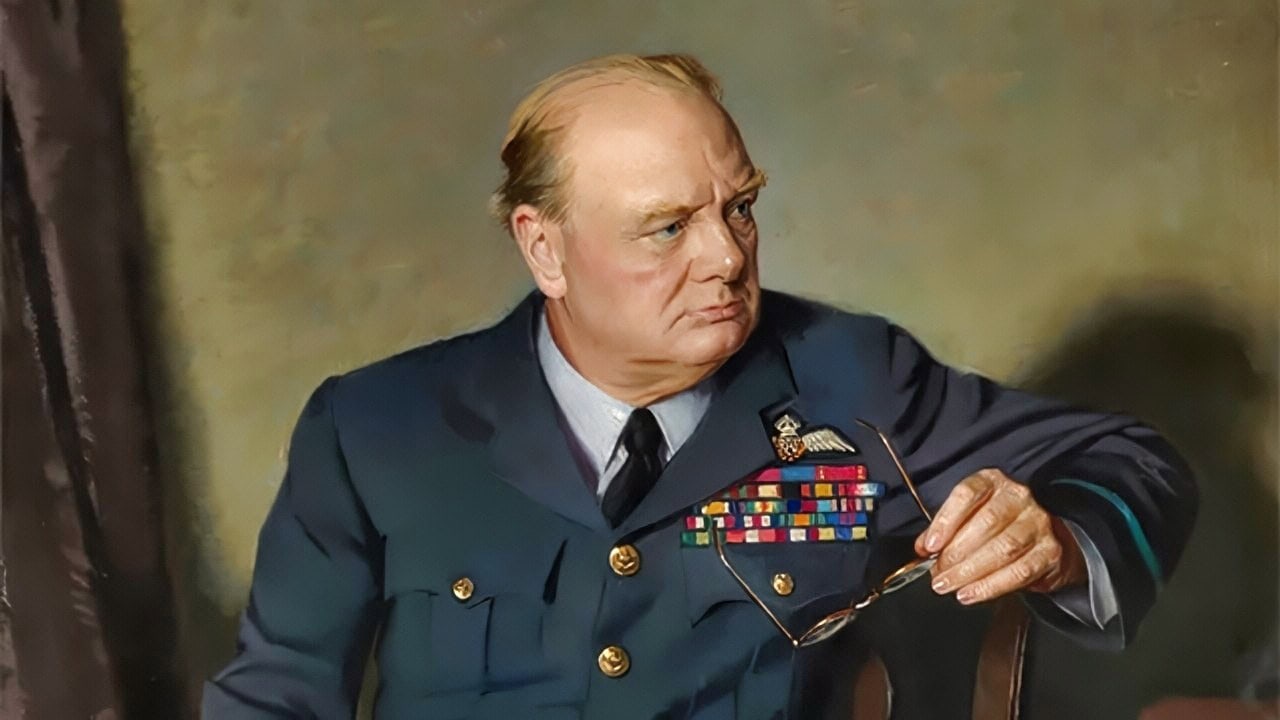
Winston Churchill Portrait. Image Credit: Creative Commons.
At the same time, Patton got all the headlines.
MacArthur’s decisive actions in the Pacific are renowned. Marshall made America’s global force machine work. Indeed, in an age without thinking machines, Marshall was his own supercomputer.
After the war, Marshall became what so many dream of being but often fail to achieve.
He became an elder statesman, helping America navigate the chaotic postwar environment and ensuring that the United States did not retreat in the face of another rising threat, this time from the Soviet Union.
First, Marshall brought his organizational talent to bear as the Secretary of State from 1947 to 1949. In that role, Marshall crafted the European Recovery Program.
The Architect of the Cold War In Europe
Today, it’s better known as the Marshall Plan.
This is the program that essentially bailed out ailing postwar Europe and allowed for the continent to recover from the destruction of WWII.
Without this plan, the Soviets would likely have marched in, communism would have taken root among the desperate multitudes of postwar European societies, and the whole world today would be a fundamentally different–darker–place.
The importance of the Marshall Plan for America’s role in leading the tired world in the Cold War cannot be overstated. It is, in fact, one of the pillars of America’s Cold War-winning strategy.
It provided the momentum for European societies to recover; it helped increase America’s postwar reach and prestige; and it served as a vital check on the ideological excesses of communism.
No one but the “Greatest Living American” could have pulled off what was, at the time, a politically unpopular move.
For his efforts, Marshall was awarded the Nobel Peace Prize in 1953.
But his service as a senior postwar statesman didn’t end there. President Harry S. Truman once again called on him to serve as Secretary of Defense from 1950 to 1951, this time during the Korean War.
After his yearlong stint at the Pentagon, Marshall hung it up.
He had given everything he could to the United States.
A lifetime of epic service is what he will be remembered for.
And, as the quote said, he never looked back.
He always pressed forward.
About the author: Brandon J. Weichert
Brandon J. Weichert is the Senior National Security Editor at 19FortyFive.com. He also manages The Weichert Brief on Substack. Weichert also hosts “National Security Talk” on Rumble. He is the author of four bestselling national security books, most recently A Disaster of Our Own Making: How the West Lost Ukraine (Encounter Books). Follow him via Twitter/X @WeTheBrandon.