

“Courage is fear holding on a minute longer,” General George S. Patton once said. Or at least, it’s a quote that is widely attributed to him. The words appear in many modern collections of Patton quotations, but those sources don’t identify an original speech or diary entry in which he used them. So, to be clear, these words are attributed to Patton and reflect his attitude — but it’s unclear exactly where they came from.
Nonetheless, the words reflect the image that Patton spent his life cultivating: that courage did not require the absence of fear but the determination to keep going even while afraid.
Few episodes illustrate that idea better than his response to the German offensive that became known as the Battle of the Bulge.
Who Was George S. Patton?
George Smith Patton Jr. was born in California on November 11, 1885.
He graduated from the United States Military Academy at West Point in 1909, and he competed in the modern pentathlon at the 1912 Olympic Games.
He later served under General John J. Pershing during the U.S. expedition into Mexico.
During World War I, Patton became one of the U.S. Army’s early tank officers.
He commanded armored forces during the Meuse-Argonne Offensive and was wounded while directing tanks in combat.
According to the United States Army, he maintained his interest in armored warfare during the interwar years, even after returning to the cavalry.
Then, during World War II, he commanded American forces in North Africa and led the Seventh Army during the invasion of Sicily.
His aggressive style produced results, but his temper would also cause controversy throughout his life.
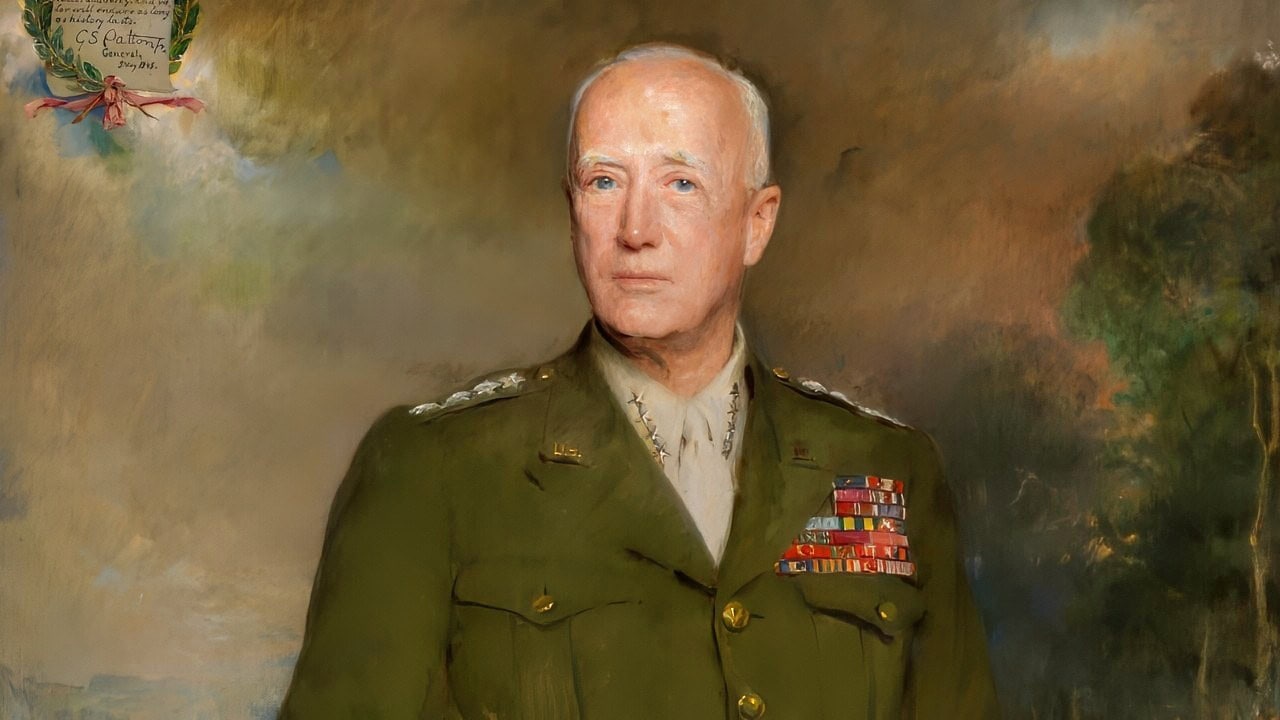
U.S. Army General George Patton. Image Credit: Creative Commons.
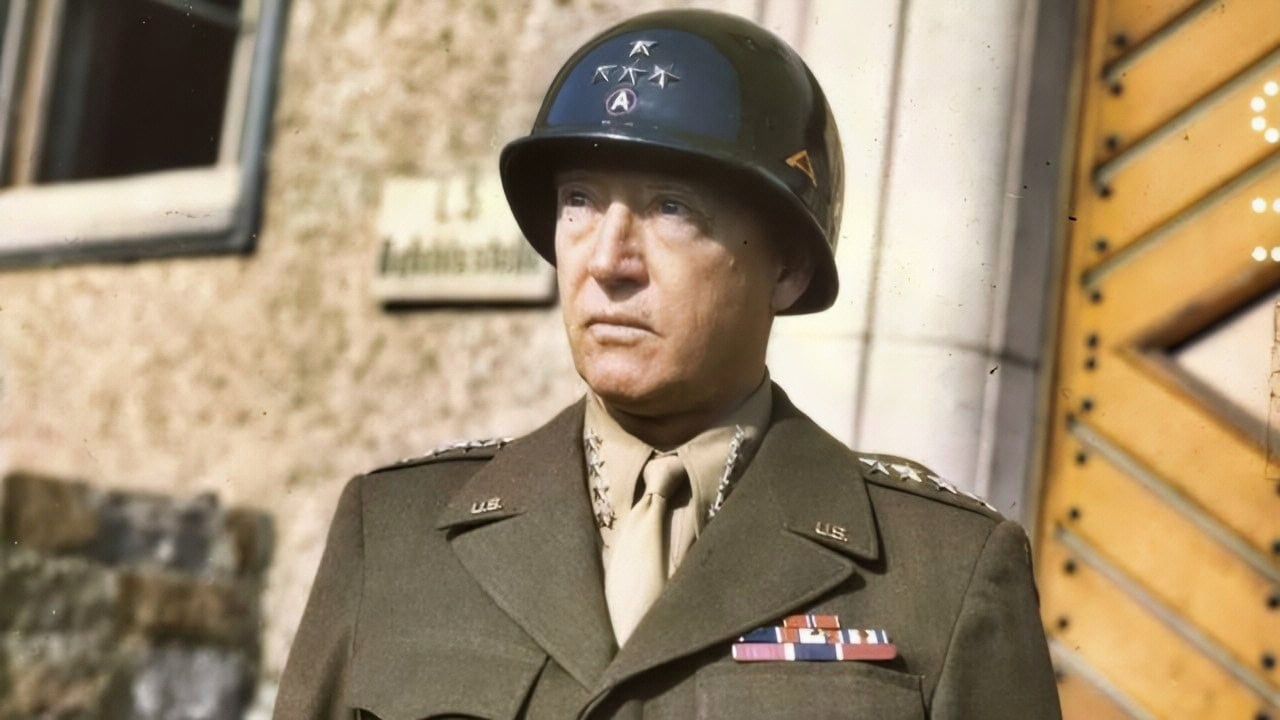
General George Patton U.S. Army Photo
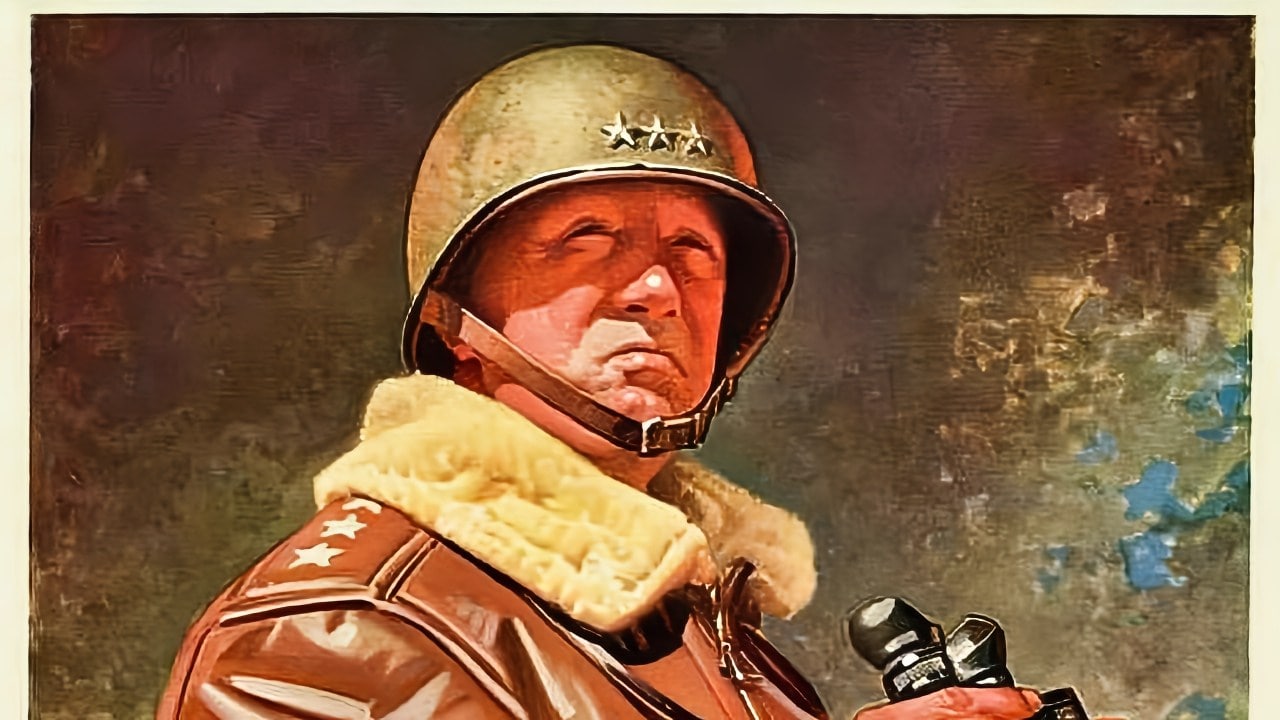
General George Patton. Image Credit: Creative Commons.
He was temporarily relieved of any combat command following infamous incidents in 1943, when he slapped two hospitalized soldiers who were suffering from combat exhaustion.
In 1944, Patton led the Third Army across France following the Allied breakout in Normandy.
Hitler Launches Final Offensive
On December 16, 1944, German forces attacked through the densely forested Ardennes region of Belgium and Luxembourg.
Adolf Hitler intended to split the American and British armies, cross the Meuse River, and capture the strategically important Belgian port of Antwerp.
The attack did achieve surprise, too.
Poor weather limited Allied aerial reconnaissance and air support, while inexperienced or depleted American formations were still holding parts of what Allied commanders had considered a relatively quiet front.
Then, the German advance created a “bulge” in the Allied line. The American units were overrun and isolated, and German troops began to capture key roads and towns.
The Battle of the Bulge, as it came to be known, ultimately lasted 41 days.
It involved more than 700,000 Allied troops.
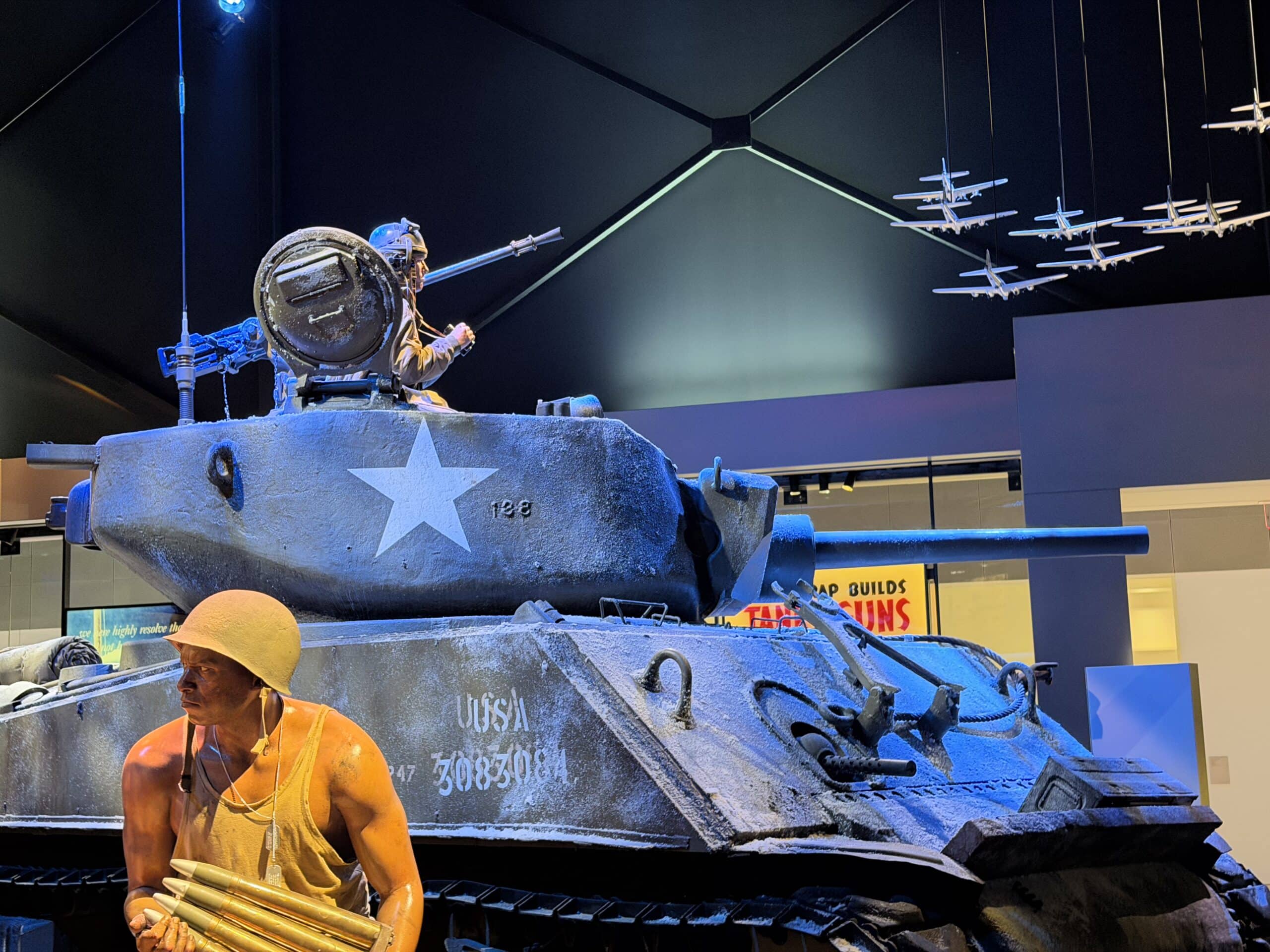
M4 Sherman. 19FortyFive Image.
One of the most important objectives of the battle was controlling Bastogne, where several major roads converged.
American forces, including the 101st Airborne Division, defended the town after the German troops surrounded it.
Patton Prepared to Turn North
Meanwhile, Patton’s Third Army was fighting farther south in the Saar region.
As the German attacks began, the Third Army was preparing to continue advancing east toward Germany — not to turn north into Luxembourg and Belgium— during one of the coldest winters in recent European history.
Patton saw that the situation might, however, require it — and when he met General Omar Bradley in Luxembourg on December 18, he ordered his staff to map out several possible plans.
The next day, senior Allied commanders met at Verdun, France. Supreme Allied Commander General Dwight D. Eisenhower asked how quickly Patton could attack north, and Patton said he could begin with three divisions within 48 hours.
Patton was more confident than some commanders, but he had a plan.
Patton’s staff had already prepared three divisions, which allowed him to begin moving the 4th Armored, 80th Infantry, and 26th Infantry divisions north.
The Third Army disengaged units facing east and turned them 90 degrees, moving soldiers and tanks over congested winter roads. On December 22, Patton’s attack began.
Patton’s Forces Reach Bastogne
The advance ultimately proved slower than Patton had expected.
A combination of winter conditions, poor visibility, and German resistance stood between the Third Army and Bastogne, where the defenders were still holding on to a shrinking perimeter.
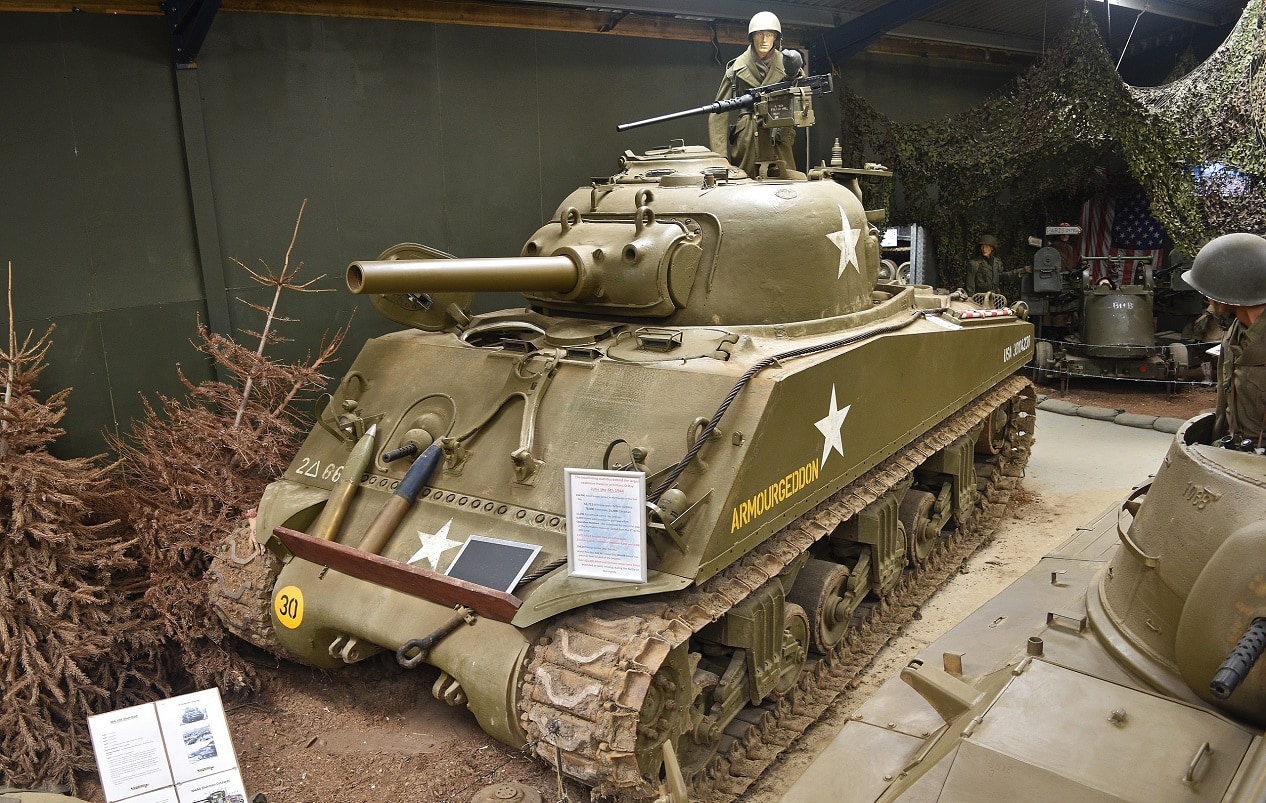
M4 Sherman Tank.
On December 26, some of the 4th Armored Division finally broke through those lines, however.
Tanks from Lieutenant Colonel Creighton Abrams’s 37th Tank Battalion, accompanied by infantry, reached the American lines and opened a corridor into Bastogne.
Supplies could enter and wounded troops could be evacuated, though German attacks continued and the battle lasted until January 25, 1945.
Patton didn’t win the battle alone, and the defenders in Bastogne had already denied the Germans control of the town – but it was his decision to turn the army north under extreme pressure that helped guarantee the win.
About the Author: Jack Buckby
Jack Buckby is a British researcher and analyst specializing in defense and national security, based in New York. His work focuses on military capability, procurement, and strategic competition, and he produces and edits analysis for policy and defense audiences. He brings extensive editorial experience, with a career output spanning over 1,000 articles at 19FortyFive, and has previously authored books and papers on extremism and deradicalization.