

Summary and Key Points: Military expert Harrison Kass takes James Mattis’s line, “I don’t lose any sleep at night over the potential for failure. I can’t even spell the word,” into the career behind it: enlistment in 1969, commission in 1972, four stars, the nicknames Mad Dog, Chaos and Warrior Monk, the 1st Marine Division’s 2003 drive north from Kuwait through Nasiriyah and Kut, Fallujah and Operation Vigilant Resolve in 2004, and an Iraq War that won fast and then failed.
James ‘Mad Dog’ Mattis Made Military History Time and Time Again
Retired Marine General James Mattis developed a reputation as one of the most aggressive and intellectually serious commanders of his generation.
Known as “Mad Dog,” Mattis became famous for his blunt statements about warfare and leadership.
One remark about his views on failure stands out: “I don’t lose any sleep at night over the potential for failure,” Mattis said. “I can’t even spell the word.” I suspect Mattis can spell ‘failure,’ but the sentiment reflects Mattis’s emphasis on confidence, preparation, and perseverance under pressure—traits he would demonstrate in his career, in Iraq, for example, where Mattis led Marines through rapid offensive operations, urban combat, and difficult decisions involving both military objectives and civilian casualties.
James Mattis’s Background
Mattis enlisted in the Marine Corps Reserve in 1969 and then received his commission in 1972.
He spent more than four decades in the service and eventually became a four-star general.
Along the way, he developed a reputation for extensive reading on military history, demanding standards of discipline and preparedness, aggressive battlefield leadership, and direct communication.
Mattis is best known by his nickname “Mad Dog,” but he prefers another callsign: “Chaos.” Mattis also earned the nickname “Warrior Monk” because he was unmarried and intellectually devoted to military affairs.
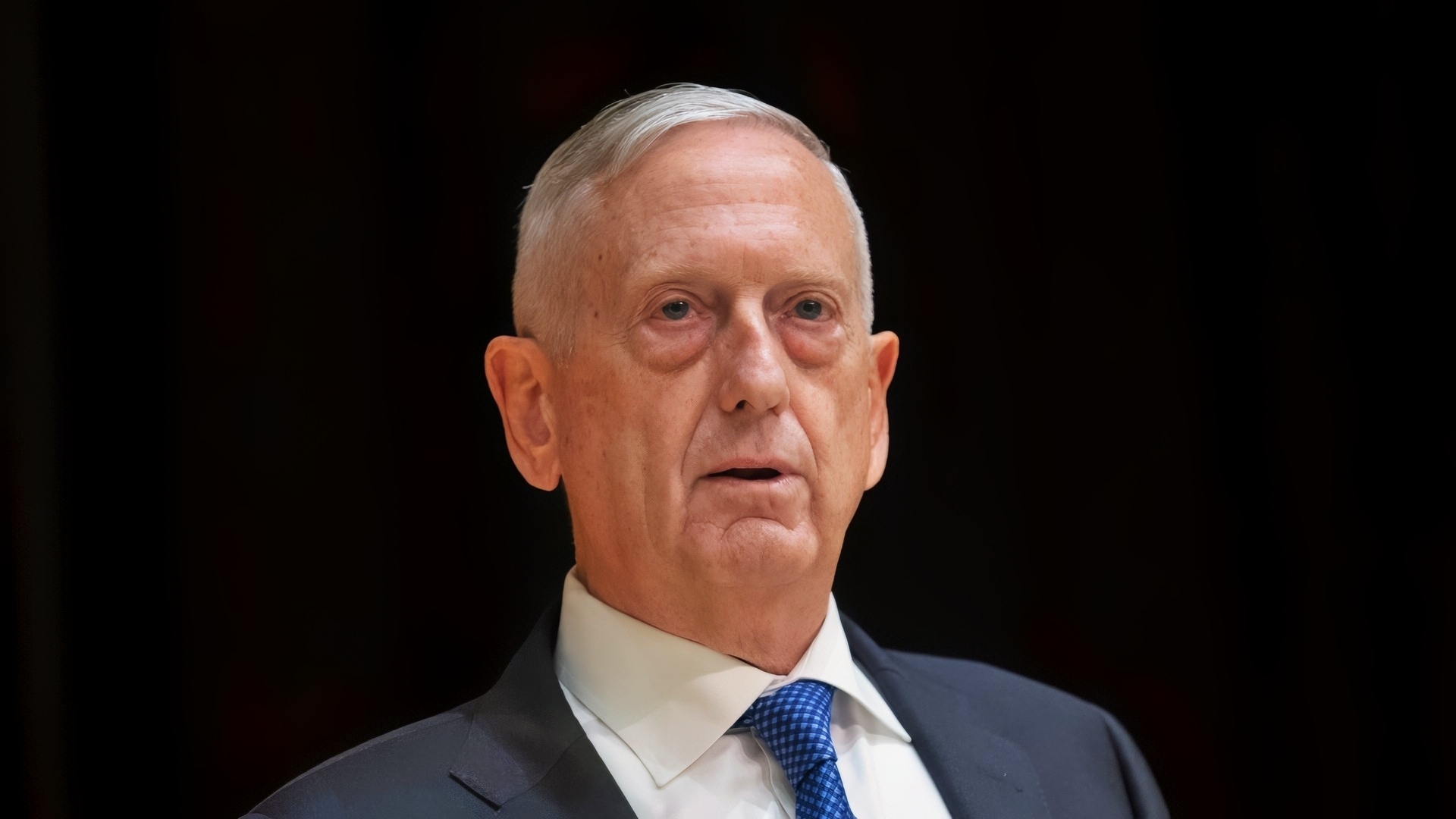
Retired Gen. and former Secretary of Defense, James Mattis, talks about his book tour at Little Hall on Marine Corps Base Quantico, Sept. 25, 2019. Mattis talks about how to improve leadership skills to the audience by making his message personal through bringing up stories about his past Marine Corps career. (U.S. Marine Corps photo by Lance Cpl. Piper A. Ballantine)
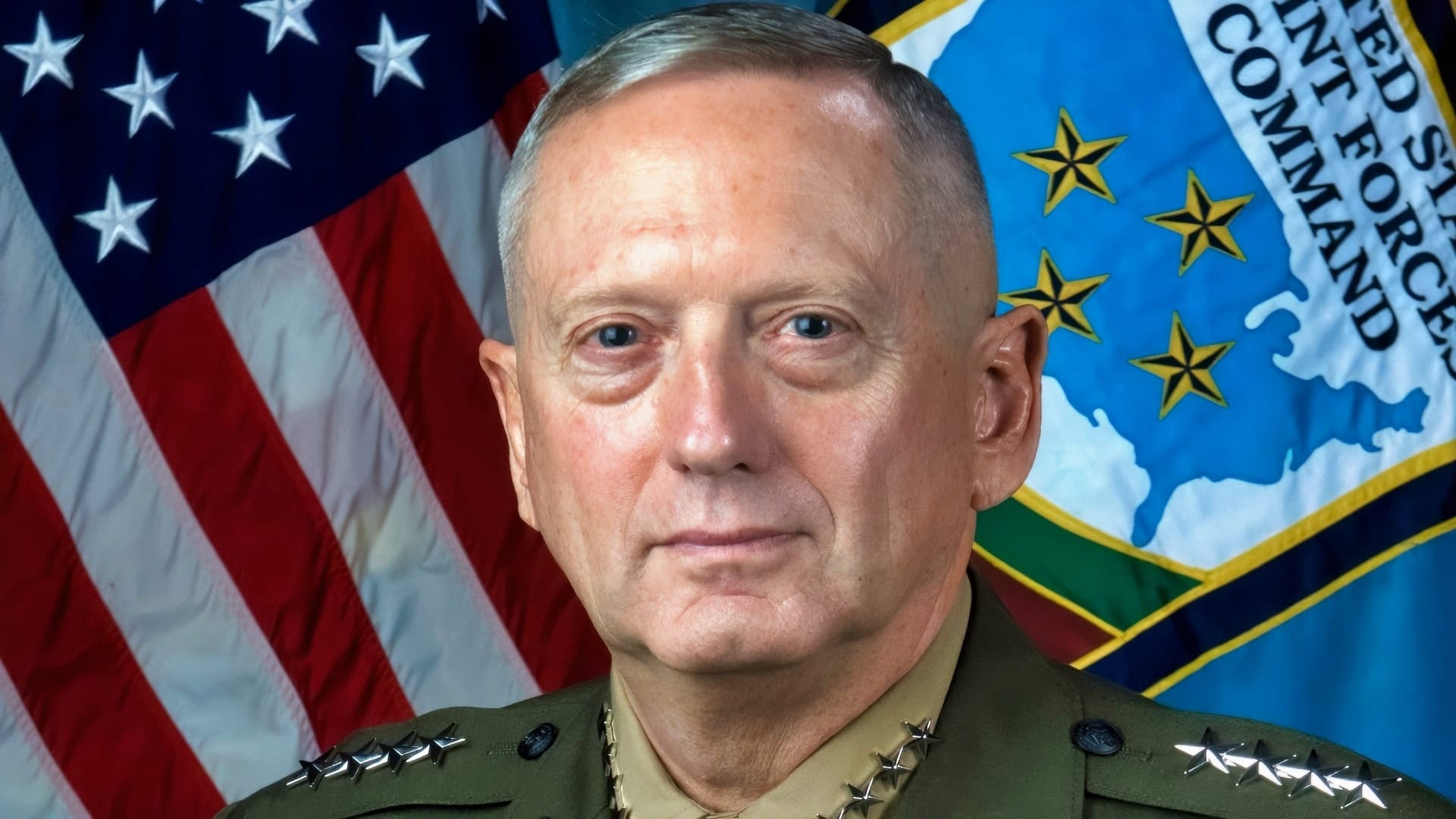
James Mattis US Marines Photo
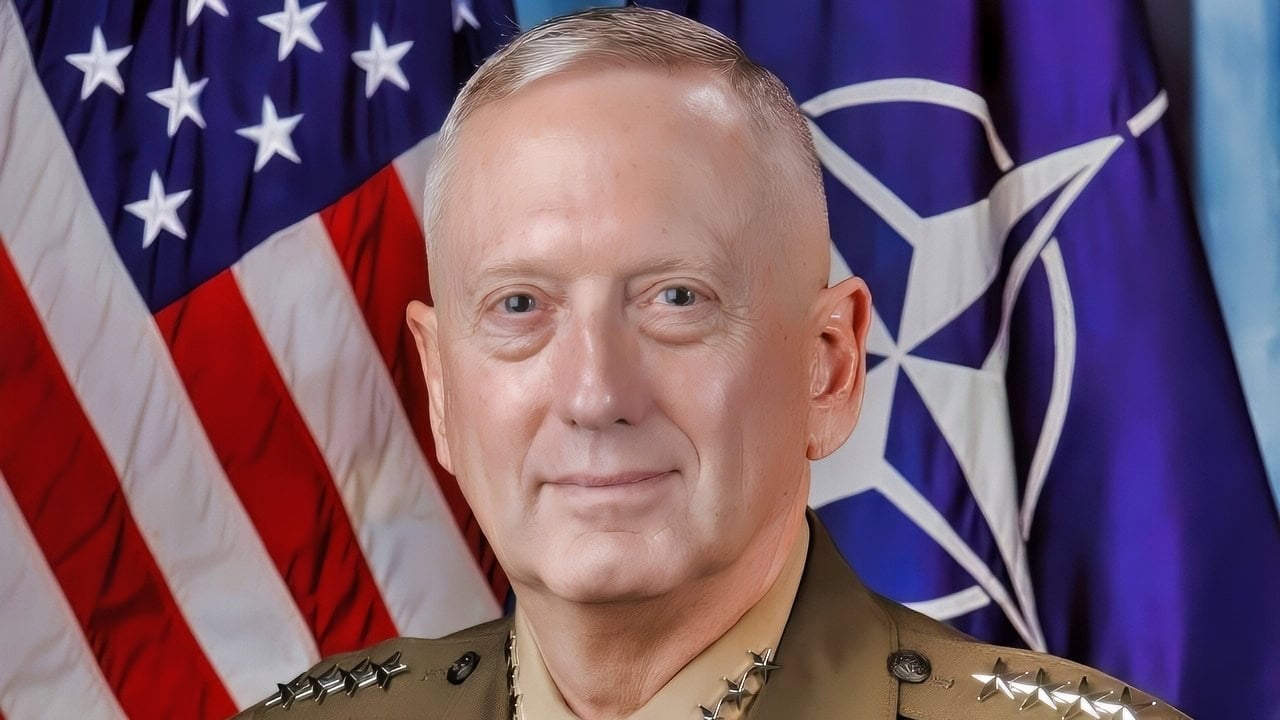
Jim Mattis Creative Commons Photo
Before Iraq, Mattis commanded the 1st Marine Expeditionary Brigade and subsequently led Task Force 58 during the opening stages of the Afghanistan war.
In 2002, Mattis assumed command of the 1st Marine Division, which he would lead into Iraq.
The 2003 Invasion
During the 2003 invasion of Iraq, Mattis commanded the 1st Marine Division under I Marine Expeditionary Force.
Mattis’s Marines advanced north from Kuwait as part of the American-led campaign to overthrow Saddam Hussein.
During the campaign, Mattis’s division was confronted with long supply lines, harsh desert conditions, Iraqi regular military forces, and irregular fighters employing ambushes and unconventional tactics, as well as the general uncertainty that comes from advancing through hostile territory.
Mattis emphasized speed, initiative, and maintaining offensive momentum.
His division fought through areas like Nasiriyah and Kut, helping the coalition advance toward Baghdad.
The campaign demonstrated Mattis’s willingness to accept operational risk rather than surrender the initiative.
However, the invasion also showed how dangerous battlefield uncertainty could be, with American forces suffering casualties, encountering unexpectedly difficult resistance, and facing logistical problems.
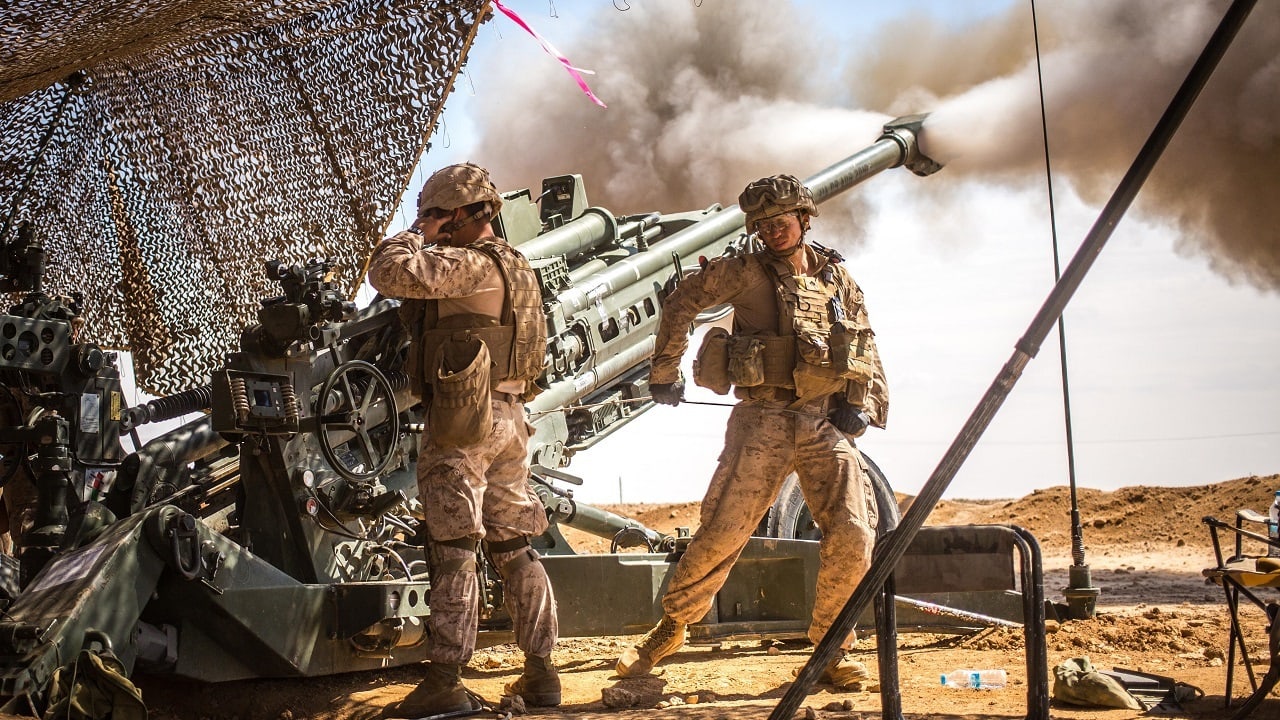
SYRIA – U.S. Marines with the 11th Marine Expeditionary Unit fire an M777 Howitzer during a fire mission in northern Syria as part of Operation Inherent Resolve, Mar. 24, 2017. The unit provided 24/7 support in all weather conditions to allow for troop movements, to include terrain denial and the subduing of enemy forces. More than 60 regional and international nations have joined together to enable partnered forces to defeat ISIS and restore stability and security. CJTF-OIR is the global Coalition to defeat ISIS in Iraq and Syria. (Note: these weapons are similar to those being sent to Ukraine).
Fallujah
Mattis returned to Iraq in 2004 as commander of the 1st Marine Division, during the growing Iraqi insurgency.
One of the most consequential episodes of his command involved Fallujah, a center of insurgent activity west of Baghdad.
In March 2004, four American security contractors were killed in Fallujah, and their bodies were publicly mutilated.
The killings prompted intense pressure for a military response, and Mattis’s Marines then participated in Operation Vigilant Resolve, the first major American assault on Fallujah, in April 2004.
The urban fighting that followed proved difficult, with insurgents operating among civilian neighborhoods, setting up ambushes and fortified positions,s and instigating close-quarters combat.
Civilian casualties and humanitarian concerns created political pressures, forcing American commanders to balance military objectives against broader strategic consequences under the scrutiny of a concerned public.
Political and diplomatic concerns ultimately halted the operation, and control of the city was later transferred to the Fallujah Brigade.
This Iraqi force would later fail to establish enduring security in the city.
Leadership Philosophy
Mattis believed commanders had a responsibility to project confidence—especially when subordinates faced uncertainty and danger.
His leadership philosophy consistently emphasized several principles: preparation, initiative, discipline, trust, and responsibility.
Mattis also emphasized the importance of treating Iraqi civilians with respect, recognizing that indiscriminate violence would undermine the broader reasons for being in-country.
So Mattis took a more complex approach than his aggressive public persona might have suggested.
Iraq’s Legacy
The Iraq War was ultimately a failure.
American forces rapidly defeated Hussein’s conventional military, yes, earning a quick tactical victory.
But the insurgency and political instability that followed proved that battlefield victories don’t necessarily produce lasting strategic victories.
Mattis approached the conflict with a determination that would become his trademark.
About the Author: Harrison Kass
Harrison Kass is a writer and attorney focused on national security, technology, and political culture. His work has appeared in Tablet, City Journal, The Hill, The Spectator, and The Cipher Brief. He holds a JD from the University of Oregon and a master’s in Global & Joint Program Studies from NYU—more at harrisonkass.com.