
Di, Solhan and Séguénéga hit — 22 dead expose the VDP failure of Burkina Faso
 Marie Dubois
Di, Solhan, and Séguénéga hit — 22 dead expose the VDP flaw in Burkina Faso
Di, north of Dédougou, was struck on Saturday morning. According to security sources cited by AFP and reported on July 8 by The Defense Post, at least fourteen soldiers and seven Volunteers for the Defense of the Homeland (VDP) were killed at a local base. Other deaths were reported in Solhan, further east, and a third military post was targeted on Sunday in Séguénéga, near Kaya. The consolidated toll speaks of at least twenty-two dead, but it remains incomplete.
This is not just another attack in a country already saturated with violence. It is a three-point sequence, along different axes, that forces Ouagadougou to examine what its territorial defense system can actually withstand. Di looks towards the Boucle du Mouhoun. Solhan belongs to that dark memory of northern Burkina Faso where massacres have already changed the relationship between the state and the villages. Séguénéga closes the door to Kaya, a city of retreat, resupply, and command for part of the central-north.
Three strikes to stretch the response
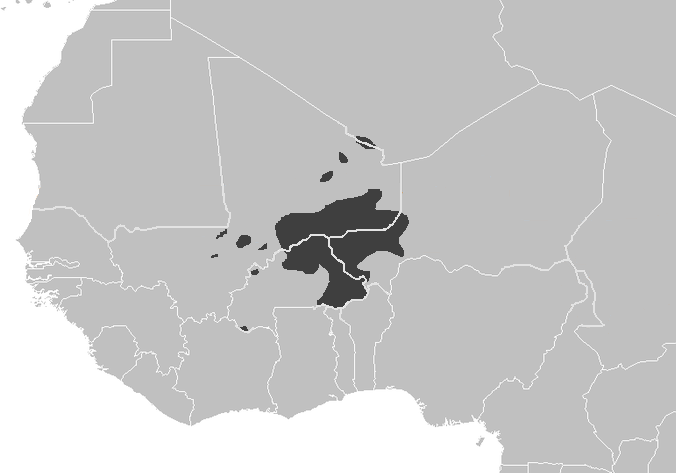
The mechanics are well-known on the ground: strike a post, provoke a reaction, then force the command to choose between pursuit, protection of survivors, and securing neighboring villages. Here, the difficulty comes from dispersion. Di and Dédougou are far from the areas that official statements like to present as the only fronts of jihad. Séguénéga, near Kaya, reminds us that the threat is not confined to the desert or border fringes.
The Group for Support of Islam and Muslims (JNIM, affiliated with Al-Qaeda) claimed on Monday several attacks against Burkinabè army positions and asserted that it had killed several soldiers. The claim should be read with caution: it confirms the political and media intent of the group, not necessarily every tactical detail. On the other side, a police source claims that the response coordinated by the high command neutralized "several dozen" fighters and recovered equipment. Again, it is impossible to verify independently.
But the most important thing is not the exact number. It is the form of the operation.
The vulnerability of the VDP becomes structural
Since 2022, Captain Ibrahim Traoré has made popular mobilization a pillar of his war. The VDP provide depth to the system, hold points that the regular army cannot occupy permanently, and provide local intelligence. On a staff map, it is appealing. In an isolated village, it is harder: these men live near their families, know the paths, but also become easy targets when the adversary wants to punish a community.
Human Rights Watch has already documented this logic in northern Burkina Faso: JNIM does not only strike armed posts, it also targets communities suspected of supporting the VDP. Kidnappings, arson of homes, and destruction of telecom antennas serve to sever the link between village, militia, and command. It is not as spectacular as a city takeover, but it is often more effective. One does not control a territory solely with a flag; one controls it by deciding who can speak, move, and sleep without fear.
In Di, the simultaneous death of soldiers and volunteers shows the operational fusion between the army and the auxiliaries. This fusion gives mass. It also creates a fragility: when JNIM succeeds in an attack, it can present the blow as a defeat for the state and as a warning to armed civilians. From experience, it is precisely this message that weighs on local recruitment.
The political timing is bad for Ouagadougou
These attacks come at a time when the relationship with Paris has reached a breaking point. Le Monde, citing AFP, reported that France had withdrawn all its diplomats from Ouagadougou after the Burkinabè decision to sever diplomatic relations. Traoré's government accuses Paris of hostile activism and of supporting jihadists; France describes these accusations as unfounded. This verbal theater matters, but it does not replace a logistics chain.
Since the departure of French forces, Ouagadougou has bet on new partners, including Russia, Turkey, and Iran, and on the Alliance of Sahel States (AES) with Mali and Niger. In January 2025, the three juntas promised a joint force of 5,000 men with ground, air, intelligence, and coordination capabilities. The problem is simple: a joint force can help on a border; it cannot be everywhere, from Di to Solhan, from Séguénéga to Sirba, if each state already lacks mobile troops.
Last week, the Burkinabè high command claimed to have killed more than 400 "terrorists" after coordinated attacks in the regions of Sirba and Sebba. Even if part of this toll is accurate, the current sequence shows that the announced attrition does not yet disrupt the adversary sustainably. Jihadist groups absorb losses when they maintain sanctuaries, mobility, and recruitment capacity. It is brutal, but it is the rule in this theater of operations.
The operational danger of the coming days
The temptation for Ouagadougou will be to respond with large columns and announcements of sweeps. There will likely be strikes, patrols, and arrests. The risk is known: in areas where human intelligence is damaged, a reaction that is too broad can push hesitant villages towards silence, or even towards accommodation with JNIM. The Burkinabè army needs to restore the initiative without turning every suspicious locality into a political target.
The point to watch is therefore not just the number of dead claimed or denied. One must look at the secondary roads around Kaya, the pressure on isolated VDP posts, and telecommunications in rural municipalities. If the antennas fall, if the markets close, if civilian convoys avoid certain stretches, then the attack in Di will not have been an isolated episode. It will have been a successful test of depth.
Burkina Faso does not lose because a post falls. It loses when its surviving posts cease to believe that the next reinforcement will arrive in time.
Multiple attacks on military posts in Burkina Faso resulted in at least 22 fatalities, including 14 soldiers and 7 Volunteers for the Defense of the Homeland (VDP). The attacks occurred in Di, Solhan, and Séguénéga, with the JNIM group claiming responsibility. This series of assaults underscores the operational vulnerabilities faced by the Burkinabè Armed Forces and the VDP amid ongoing violence in the region.
- At least 22 fatalities reported from attacks in Di, Solhan, and Séguénéga.
- The JNIM group claimed responsibility for the attacks.
- The attacks highlight vulnerabilities in the VDP and military operations in Burkina Faso.
- The situation reflects ongoing tensions and operational challenges for the Burkinabè military.