
Diverse Forms of "Group" - Who Are the "Mix and Match" Partners of the J-16?
At the beginning of the new year, with the tower's command issued, several J-16 fighter jets took off in succession, marking the official start of a practical training exercise that integrates target reconnaissance, coordinated penetration, and joint strikes across multiple subjects.
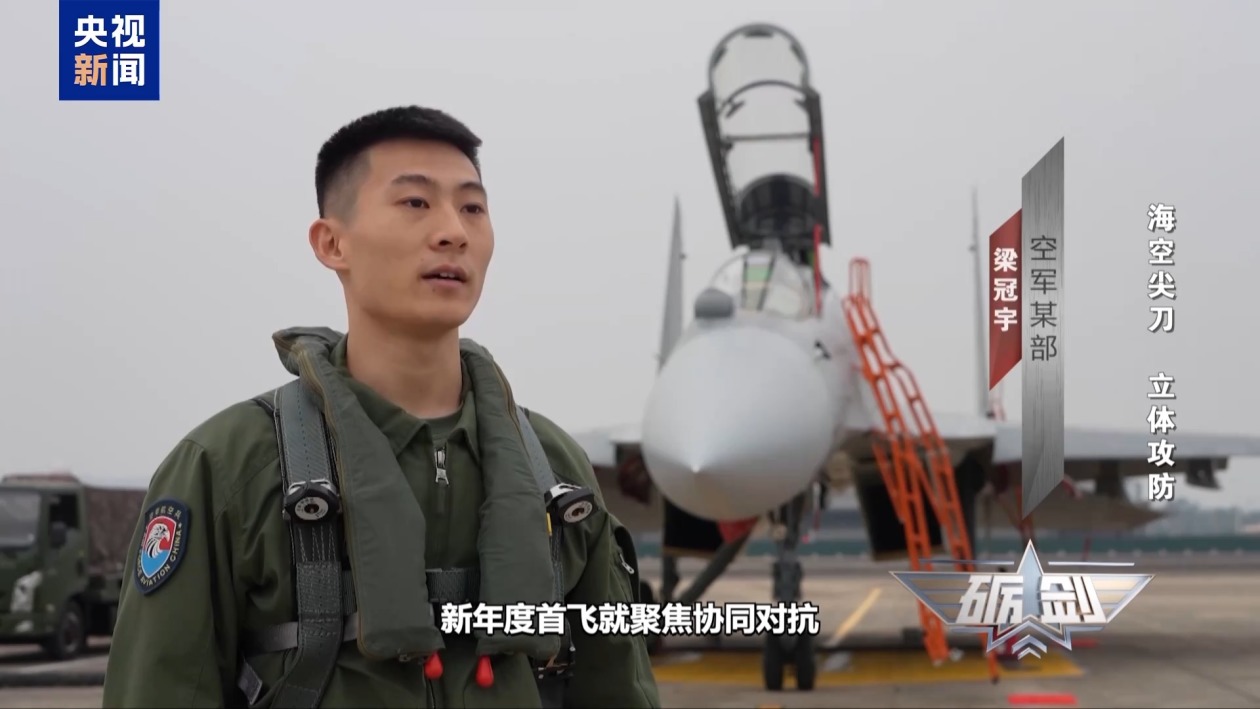
Air Force Unit Liang Guanyu: The first flight of the new year focuses on coordinated confrontation, allowing us to deeply experience the systemic power of "clenching fingers into a fist."
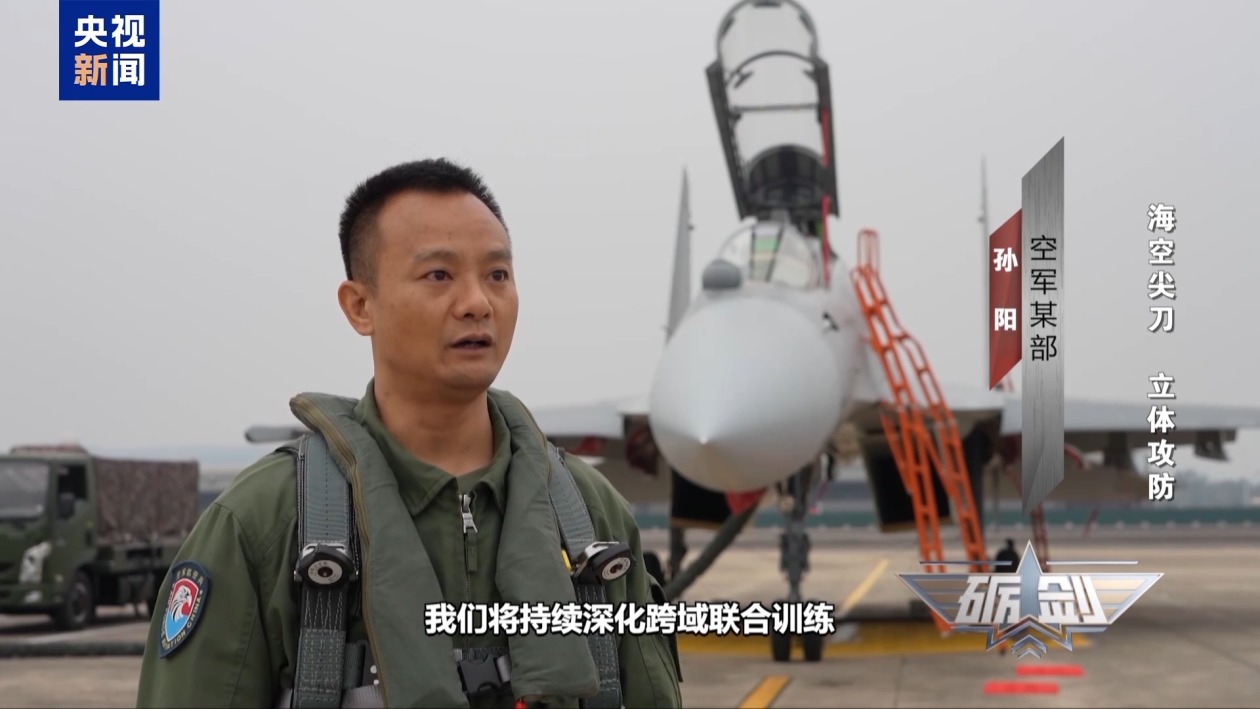
Air Force Unit Sun Yang: We will continue to deepen cross-domain joint training, regularly conduct multi-element and multi-subject coordinated confrontation exercises, continuously optimize coordination processes, innovate tactics and methods, and focus on unblocking system links to enhance joint combat capabilities.
This training breaks the traditional single aircraft type training model, with J-16 fighter jet formations establishing data links with neighboring unit J-10 fighter jet formations, relying on an integrated command platform to achieve real-time situational sharing.
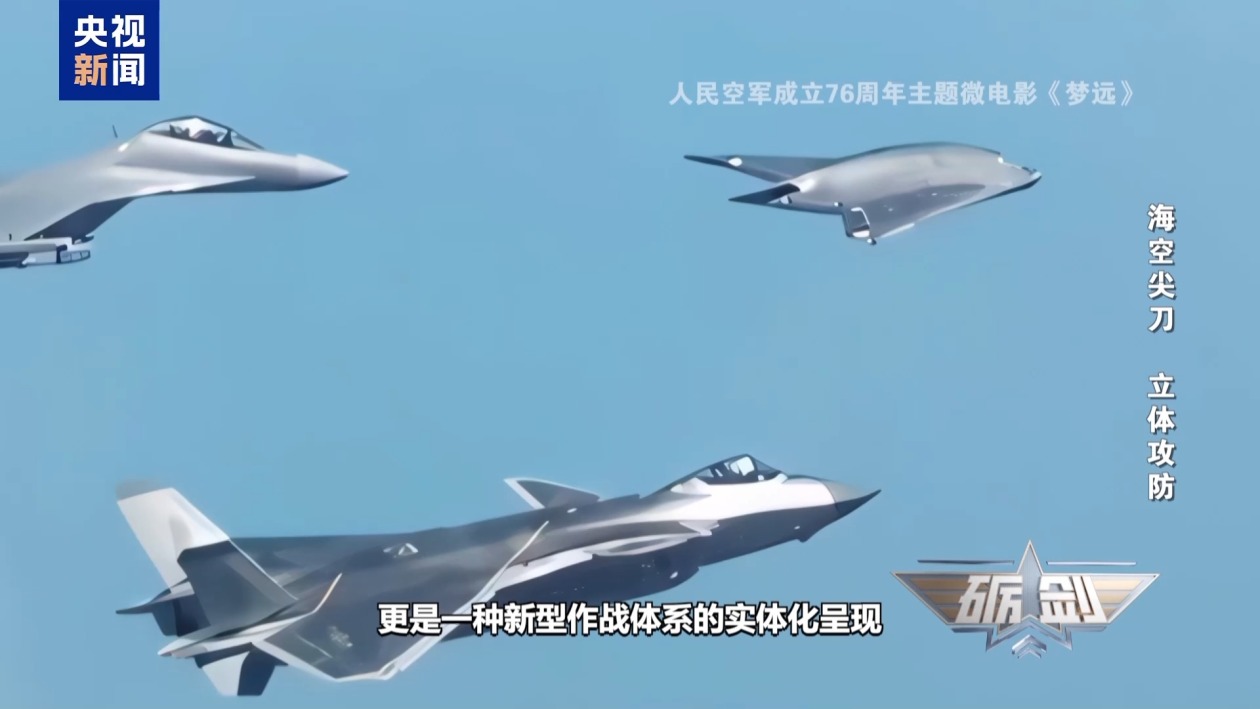
In the footage, the scene of J-16D flying in formation with the stealth drone Wing Loong-11 and the stealth fighter J-20 is publicly displayed for the first time. This is not just a simple visual shock, but a tangible presentation of a new type of combat system.
Unlike the previous aerial "Three Musketeers" of J-10, J-16, and J-20, the "Three Musketeers" have a new combination.
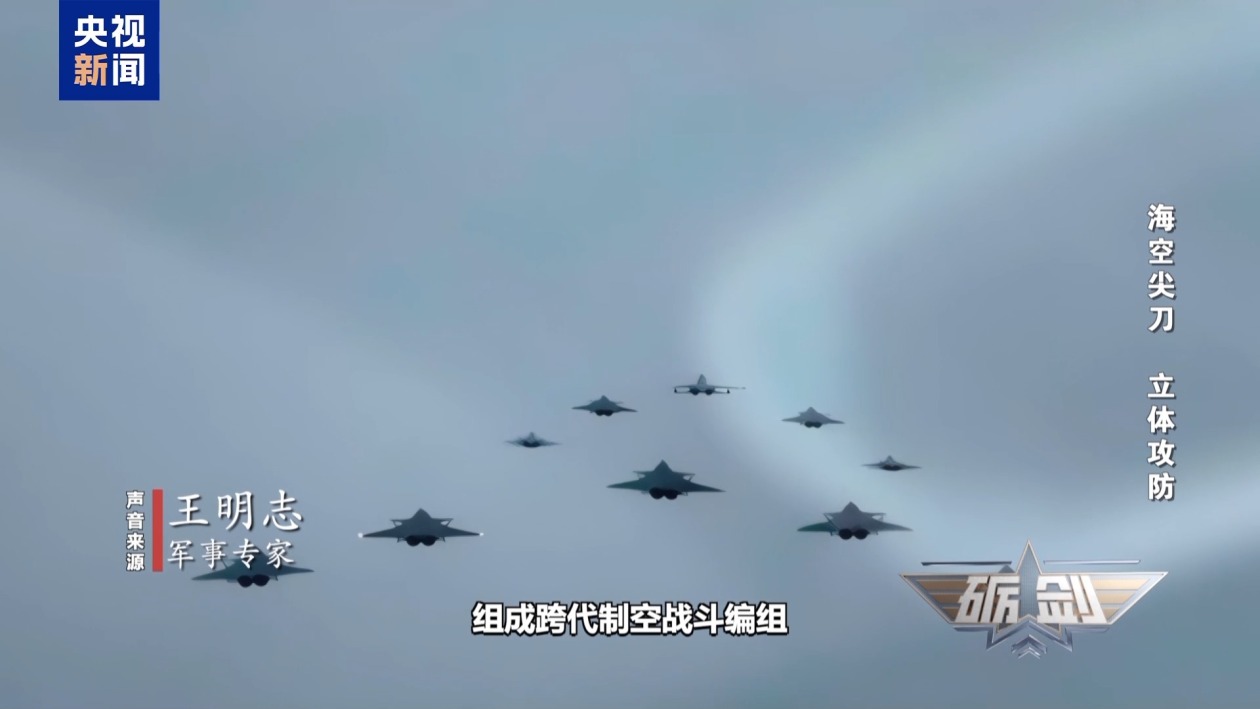
Military Expert Wang Mingzhi: An important principle of military training is that the way future battles will be fought is how current troops should train. The coordinated training of J-16 and J-10 formations is just a microcosm of the air force's need for practical combat, conducting networked multi-type formation coordinated tactical training.
Relying on advanced data links and command platforms, various aerial combat task formations and precise strike links can be constructed. Representative networked formation coordination forms can include:
A cross-generation air superiority combat formation composed of J-16 and J-20, executing air supremacy tasks;
A cross-generation suppression combat formation composed of J-16, J-16D, and J-35A, executing tasks to suppress enemy air defense systems and open the opponent's gates, shaping the battlefield situation for subsequent attacks;
A cross-generation standoff combat formation composed of J-16 and J-35A, executing precise strike tasks against land and sea targets;
A manned-unmanned mixed combat formation composed of J-16 and intelligent unmanned wingmen, executing air superiority and land-sea strike tasks.
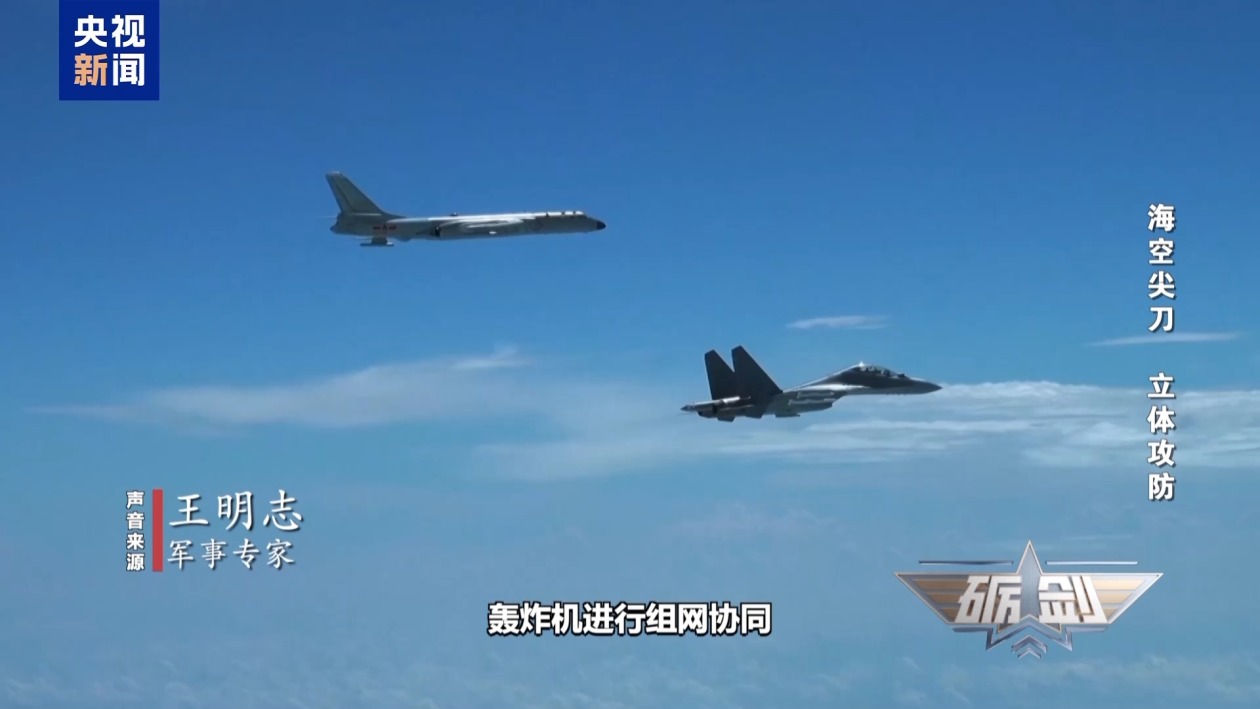
Moreover, based on advanced data links, J-16 aircraft can also network and coordinate with airborne early warning aircraft and bombers, constructing complex long-range air-to-air, air-to-ground, and air-to-sea integrated strike chains. J-16 aircraft can also network and coordinate with early warning aircraft, ground air defense fire units, and surface vessels to build multi-domain strike chains, completing more complex and efficient group combat tasks.
Wherever the flight path leads, warships cut through the waves, showcasing deep blue power; wherever the wings spread, war eagles soar, guarding the vast sea and sky.
(Source: CCTV Defense Military Channel's "Forging Sword" program)
Multiple J-16 fighter jets of the People's Liberation Army Air Force conducted integrated combat training in China at the start of the New Year. The training involved coordination with J-10 and J-20 aircraft, showcasing new combat formations and advanced data links for real-time situational sharing. This exercise emphasized the importance of multi-domain operations and innovative tactics in modern warfare.
- Multiple J-16 fighter jets conducted integrated combat training.
- Training involved coordination with J-10 and J-20 aircraft.
- New combat formations were publicly demonstrated for the first time.
- Advanced data links were established for real-time situational sharing.
- The training emphasized the importance of multi-domain operations.