
Drone boats used by U.S. Navy get AI-powered vision
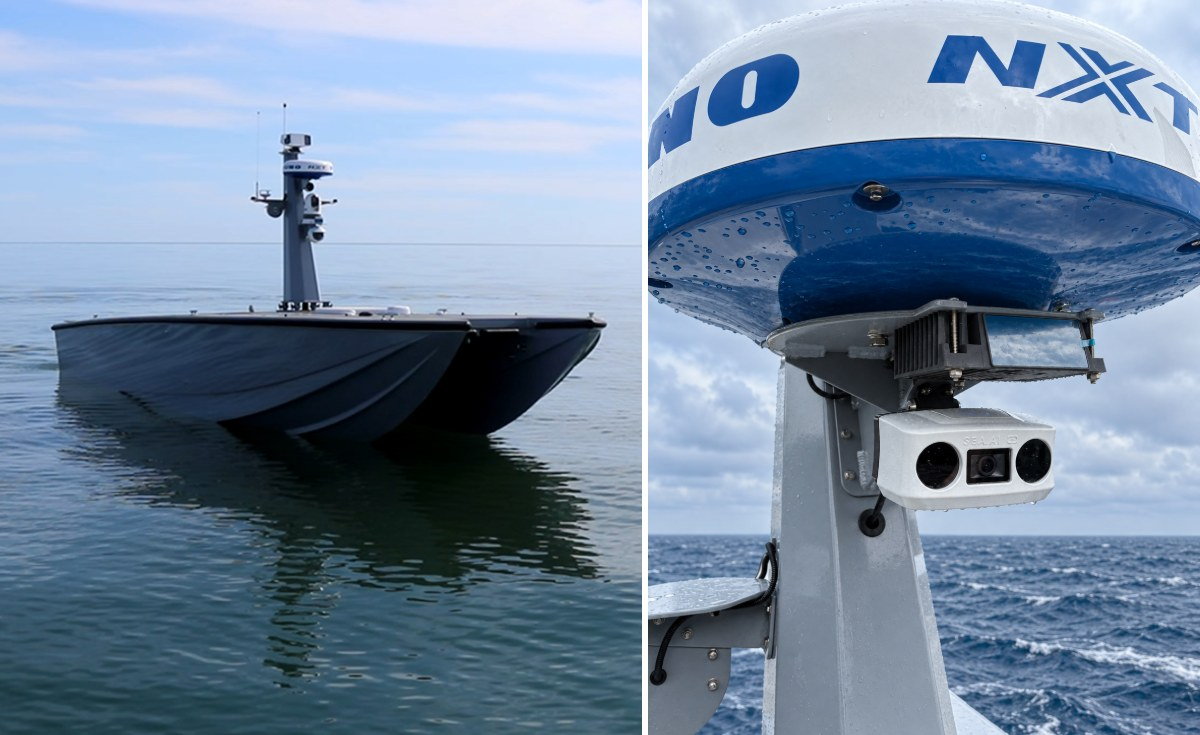
MARTAC, the Florida maker of high-speed unmanned surface vessels used by the U.S. Navy, has selected SEA.AI’s maritime machine vision system for its drone boat fleet, adding cameras that spot and classify other vessels on their own without a human watching a video feed.
SEA.AI announced the integration on Oct. 13, saying MARTAC has made its system part of the sensor architecture for its vessels across surveillance, security and patrol missions. The MARTAC range covers the MANTAS T12 and a family of larger boats that includes the Devil Ray T18, Muskie M18, Devil Ray T24 and Devil Ray T38.
SEA.AI’s system combines electro-optical and thermal cameras with artificial intelligence that runs at the sensor itself, identifying what each contact is, which way it is heading and how close it is, and passing that on as ready-to-use information. On a crewless boat operating far beyond sight of its operators, that lets the vessel understand what is around it without someone back on shore studying hours of footage. The camera picture also fills gaps left by the other sensors such boats carry: radar shows where something is but not what it is, and the Automatic Identification System, the transponder signal ships use to broadcast their identity, can be switched off or spoofed by vessels that want to stay hidden, including fast attack craft that blend into normal traffic.
“We built SEA.AI in 2018 around a conviction that the camera alone was never going to be enough at sea. The intelligence had to be in the system, not in a person watching a screen somewhere. That requirement has only become more urgent as autonomous platforms move from trials into operational deployment,” said Marcus Warrelmann, CEO of SEA.AI.
The need for that kind of independent sensing grows with the distances MARTAC’s boats now cover. In May, a Devil Ray T38 owned by the U.S. Navy’s Naval Air Warfare Center Weapons Division completed an eight-day, fully autonomous mission off the coast of California, running for 192 hours without crew or escort at more than 400 nautical miles (about 740 km) from shore, in seas as rough as Sea State 5, while steering around real vessels it encountered along the way.
“Our platforms are built to carry whatever sensors the mission requires, and we evaluate every integration on one basis: does it make the vessel more operationally capable? SEA.AI’s machine vision, that classifies contacts autonomously and in real time, is a direct solution for closing a real gap. That is why it is on our platforms,” said Jim Harvey, chief technology officer of MARTAC.
The T38 is MARTAC’s flagship, a 38-foot (11.6-meter) carbon-fiber catamaran that can exceed 50 knots (93 km/h) and carry sensors or weapons. The U.S. Navy’s Task Force 59, the 5th Fleet unit that experiments with unmanned systems in the Middle East, brought the T38 into the Arabian Gulf in 2023 and later used it to fire Lethal Miniature Aerial Missile System munitions at targets during exercises, with a human operator ashore making the engagement decisions. MARTAC has also added capacity to build up to 100 Devil Ray vessels a year.
“Operators have sensors, platforms, and more data than their teams can process. What we add to a MARTAC vessel is not another feed to monitor, it is a system that watches, understands, and reports. This partnership with MARTAC puts that capability where it matters: on proven platforms, in real missions,” said Diogo Arreda, managing director of SEA.AI Americas.
SEA.AI, founded in 2018 and based in Austria, began by building camera systems that help commercial ships and yachts avoid collisions with small or floating objects at sea, before expanding into defense and security work, and MARTAC is now offering its vessels with the SEA.AI system to military and government customers.
Content preview only. Full article available at source. View Full Article
MARTAC integrated SEA.AI's maritime machine vision system into its unmanned surface vessels, enhancing their ability to autonomously classify and monitor other vessels. This integration was announced on October 13, 2023, and is part of the U.S. Navy's efforts to improve operational capabilities in surveillance and security missions. The Devil Ray T38 successfully completed an eight-day autonomous mission off California, demonstrating the effectiveness of this technology in real-world scenarios.
- MARTAC has selected SEA.AI's system for its unmanned vessels.
- The integration allows for autonomous classification of vessels.
- The U.S. Navy's Devil Ray T38 completed an eight-day autonomous mission.
- SEA.AI's system enhances operational capabilities of MARTAC vessels.
- MARTAC can build up to 100 Devil Ray vessels annually.