
The EU imposes record sanctions against the Russian defense industry — 1600 targets change the price of war in 2026
 Dmitri Volkov
The EU imposes record sanctions against the Russian defense industry — 1600 targets change the price of war in 2026
Almost 1600 new individuals and legal entities from the Russian military-industrial complex came under EU restrictions on October 12. The sheer number is impressive, but it does not mean an immediate paralysis of the Russian defense industry. Much more important is another aspect: European sanctions are, for the first time in a long time, attempting to strike not at symbolic figures, but at the broad production ecosystem — from electronics and machinery suppliers to intermediaries facilitating circumvention of export controls (according to the EU Council, on October 12, 2026).
This decision comes against a backdrop of conflicting reports from the front. Former Commander of the Armed Forces of Ukraine Valeriy Zaluzhny told the BBC that Russia's offensive capabilities are effectively broken, while Moscow continues to strike at Ukrainian infrastructure and seek vulnerabilities in supply chains. The new package should be understood not as punishment for a single episode, but as an attempt to change the economic arithmetic of a war that is entering its fifth year.
Sanctions hit the network, not just one factory
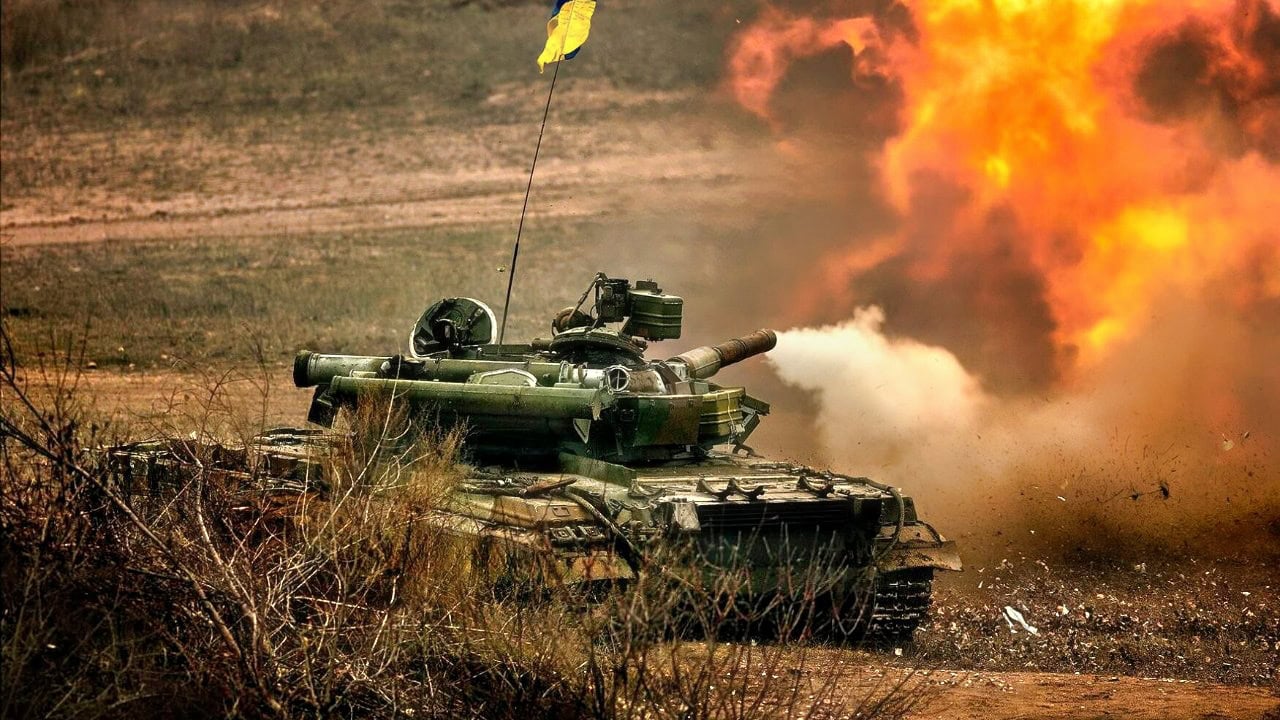
The Russian defense industry has long ceased to be a collection of several giant Soviet-type enterprises. A modern missile, drone, or upgraded tank depends on dozens of contractors, imported components, and financial intermediaries. In the official EU list, the network principle is crucial. Restrictions against the end manufacturer are ineffective if chips, machinery, and optics continue to flow through third countries. Restrictions against the entire supply chain increase transaction costs even when it is impossible to completely cut off the flow.
There is a weak point here. The list of 1600 names creates a political effect but turns control into an administrative task. European customs authorities and banks need to distinguish legitimate trade from re-export for the Russian defense sector. Moscow will break down purchases, change legal entities, and use smaller intermediaries. The sanctions document itself is not a blockade — it is a tool that requires constant investigation and updating.
Why the Russian industry is still maintaining pace
After 2022, the Russian mobilization system for industry demonstrated inefficiency in peacetime but a certain resilience in wartime. The state directs orders to a limited number of priority sectors, accepts more expensive analogs, and tolerates a decline in quality for the sake of volume. For the front, this is rational in the short term. For the economy, it is a path to hidden increases in the cost of each unit of weaponry.
In tank production, this is particularly evident. The Russian army can receive refurbished T-72 and T-80 tanks, but restoring stockpiled equipment does not equal the production of modern machines. Similarly, an increase in the number of strike drones does not prove technological independence: there remains a critical dependence on electronics, navigation modules, engines, and machine tools. Official statements about increased production likely overstate the actual increase in combat value because they count hulls, kits, and repairs on par with completely new equipment.
It is here that the new European package can yield results. It does not have to stop production tomorrow morning. It is enough to increase the delivery time of a critical component from two months to six, and its price — by twofold. The Russian industry will continue to operate but will begin to choose between quantity, quality, and the availability of components. At the same time, dependence on China, Iran, and countries willing to overlook the origins of payments will increase.
Frontline resilience does not equal strategic victory
The BBC's report on Russia's broken offensive capability and Moscow's statements about ongoing pressure do not necessarily contradict each other. The army can maintain the ability to strike, hold certain sections of the front, and replenish tactical losses while simultaneously losing the ability to conduct rapid operational-scale operations. This distinction often disappears in daily propaganda, where every kilometer becomes evidence of victory.
In this sense, EU sanctions work on a longer horizon. Their goal is not to grant Ukraine an immediate breakthrough but to make Russian operations more expensive and slower. If an artillery barrel, thermal imager, or control unit has to be replaced with a lower-quality analog, it reduces not only the reliability of the product but also the load that the entire supply system can withstand. A war of attrition is measured not only by losses of personnel and equipment but also by the number of hours required for repairs.
The American factor increases uncertainty
Additional pressure is created by the discussion in Washington about a possible reduction in intelligence support and supplies to Ukraine amid strikes on Russian oil refineries (The Kyiv Independent, October 12). If this threat is realized, Moscow will receive temporary relief in one area but will not solve the structural problem of access to technologies. In this case, European restrictions will become more important; however, without American control over secondary supplies, their effectiveness will be lower.
Volodymyr Zelensky's statement that Kyiv did not receive intelligence before the missile strike shows the other side of this dependency. Modern warfare requires not just weapons but a constant flow of data, navigation, and warnings. The Russian army itself faces a similar problem, although it compensates for it with massive launches and centralized pressure on industry. Both sides seek to turn external technological ties into a military resource — and simultaneously into a vulnerability for the opponent.
What the package means for Moscow
- Financial effect. More companies will face account freezes, bank checks, and elongated payment chains.
- Technological effect. It will become more difficult to legally acquire machinery, electronics, and dual-use equipment, especially when trying to conceal the end user.
- Organizational effect. Russian enterprises will have to change intermediaries and legal schemes more frequently, which reduces transparency and increases corruption costs.
- Military effect. Supplies will continue, but the share of repairs, cannibalization of old equipment, and simplified products will increase.
“Sanctions do not shut down a factory. They make the factory operate worse, more expensively, and with less time buffer.”
This does not mean an automatic collapse of the Russian defense industry. The Soviet system survived much more severe shocks, and today’s Russia has raw material revenues, a mobilization budget, and external trade channels. But such a model has its limits. It can sustain the war without creating a sustainable foundation for the modernization of the armed forces.
Forecast for 2026
In the coming months, Moscow is likely to respond not by reducing military orders but by further concentrating resources on drones, munitions, electronic warfare, and the repair of armored vehicles. This is the cheapest way to maintain pressure amid deteriorating access to complex components. At the same time, the Kremlin will demonstrate stable production figures, concealing rising costs and declining quality.
The European package will only become significant under three conditions: EU states will uniformly enforce the restrictions, intermediaries from third countries will face real risks of secondary measures, and Ukraine will receive enough intelligence and air defense support to exploit the resulting delays. The Russian defense industry will not collapse from a list of 1600 names. But if control is consistent, it will gradually transform the Russian military industry from a tool of modernization into a mechanism for depleting accumulated stocks. It is this degradation, not the loud date of the next sanctions package, that will determine the price of war by the end of 2026.
The European Union imposed record sanctions on 1600 entities within the Russian defense industry on October 12, 2026. These sanctions aim to disrupt the entire production ecosystem, affecting suppliers and intermediaries, rather than just targeting individual companies. The sanctions are expected to increase costs and reduce the quality of military equipment, while Russia may turn to countries like China and Iran for support.
- EU sanctions target 1600 entities in the Russian defense industry.
- Sanctions aim to disrupt the entire production ecosystem, not just individual companies.
- Russia's military capabilities are reportedly hindered by these sanctions.
- The sanctions are expected to increase costs and reduce the quality of military equipment.
- Russia may increase reliance on countries like China and Iran for components.