
EDA grows to nearly 300 employees and aims to accelerate Europe's defense by 2026
 Dr. Klaus Weber
EDA grows to nearly 300 employees and aims to accelerate Europe's defense by 2026
Berlin/Brussels, September 28, 2026. The European Defence Agency (EDA) is set to grow to nearly 300 employees within a few months — an increase of almost 25 percent. At the same time, it will receive a center for joint procurement, a more ambitious innovation center, and additional responsibilities for capability development. This sounds like an administrative reform. In fact, it is a test for European defense policy: Can an institution that has primarily coordinated until now also deliver?
More personnel, more procurement, more pressure to perform
On September 28, EU defense ministers decided on four focal points in the EDA's board. Research, technology, innovation, and testing are to be strengthened; as well as capability planning and political support from member states. Additionally, a joint procurement center will be established to manage several projects simultaneously and initially procure services and commercially available equipment (EDA, 28.09.2026).
The crucial point lies in the last part. Europe does not primarily have an awareness problem. Member states know that they lack air defense, drone defense, electronic warfare, ammunition, and military mobility. The problem is turning 27 national priorities into an order, from an order into a production line, and from a production line into an operational capability. Up to this point, the EDA has been more of a moderator than a contractor.
Ukraine shows what Brussels has not yet achieved
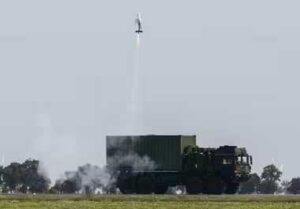
The EDA justifies the reform with the war in Ukraine. New technologies are reaching the battlefield there within a few months, from concept to deployment. Therefore, on September 28, the EU-OPEX campaign was launched in Portugal. More than 200 innovators, soldiers, and users from Europe are testing unmanned systems, loitering munitions, and electronic communication under realistic conditions. Over 40 companies and start-ups are participating in the campaign; the complex cross-domain trials are set to take place on October 7 and 8 (EDA, 25.09.2026).
This is militarily sensible. However, a prototype is not yet a capability. Only when a member state sets a quantity, secures funding, grants approval, and organizes logistics and training does a military benefit arise. Europe's innovation policy has so far produced too many demonstrators and too few standardized procurement decisions. The EDA reform promises to close this gap — it has not yet proven it.
PESCO delivers progress, but no joint army
The new PESCO progress report shows that the EU is not starting from scratch. Of 74 projects, more initiatives are reaching the delivery or procurement phase. There are measurable advances in areas such as cyber defense, artificial intelligence, electronic warfare, and maritime security. 30 PESCO projects are linked to programs of the European Defence Fund and thus receive a funding bonus of ten percent. The Cyber and Information Domain Coordination Centre is to transition into a permanent EU cyber defense facility; a network of logistical nodes is already operational (EDA, 10.09.2026).
But these numbers must also be read institutionally. 74 projects do not mean 74 operational systems. Many start with common requirements, develop demonstrators, and only then seek a national or intergovernmental procurement organization. The time between political approval and military availability remains the blind spot. A project can be European on paper and still function nationally at the airfield, port, or cyber command.
The American withdrawal makes delays more costly
The timing of the EDA reform is no coincidence. NATO Supreme Commander Alexus Grynkewich told Reuters on September 24 that the United States would continue to provide the alliance with critical, but increasingly limited capabilities. At the same time, the U.S. is reviewing its military presence in Europe; currently, around 80,000 U.S. soldiers are on the continent. NATO is also increasing information sharing following several suspected Russian sabotage and hybrid incidents.
For Europe, this results in an uncomfortable calculation. If Washington continues to provide certain strategic capabilities, Europe can treat its dependency as a transitional problem. However, if these capabilities are offered more selectively and conditionally, every delay in European procurement will become a security risk. The EU cannot afford to mirror the American commitment of “critical but more limited” with a European response of “coordinated but not delivered.”
The EDA needs political mandates, not just additional positions
Nearly 300 employees are not a lot for a European agency. Therefore, what matters is not the number of personnel, but their mandate. The new procurement center must receive concrete joint projects, set clear deadlines, and publicly hold member states accountable for moving from requirement to order. Otherwise, the EDA will only be a larger interface between the Commission, member states, industry, and NATO.
The industry must also not be absolved of responsibility. Joint procurement does not always fail due to a lack of money, but due to national work shares, differing certifications, and the political inclination to protect national champions. A European center can moderate these obstacles, but not automatically eliminate them. For that, it requires governments that are willing to accept compromises on quantities, standards, and production locations.
Europe's defense remains an implementation problem
Strengthening the EDA is therefore a necessary but not sufficient step. It institutionally connects innovation, PESCO, the European Defence Fund, and joint procurement more closely. This is more than symbolic politics. However, Europe's strategic gap does not arise because Brussels has too few bodies. It arises because national governments support European cooperation as long as it does not cost them national decision-making power.
The real test begins after the press conference: Will EU-OPEX trials lead to orders? Will 74 PESCO projects result in reliably funded units? And will the EDA center deliver equipment before the next American capability assessment is completed? Europe now has a larger institution. Whether it becomes stronger as a result will not be decided in its organizational chart, but in the production contracts.
Sources: European Defence Agency, “EU Member States approve strengthening of EDA”, 28.09.2026; EDA, “Major European land and air defence experimentation campaign begins in Portugal”, 25.09.2026; EDA, “More PESCO projects enter delivery phase”, 10.09.2026; Defense News/Reuters, “US to provide critical but more limited capabilities to NATO”, 24.09.2026.
The European Defence Agency (EDA) is expanding its workforce to nearly 300 employees to enhance Europe's defense capabilities by 2026. This reform includes establishing a joint procurement center and an innovation hub, driven by the need for improved military readiness in light of the Ukraine conflict. Concurrently, over 200 military personnel and innovators are testing unmanned systems in Portugal as part of the EU-OPEX campaign.
- EDA is set to grow to nearly 300 employees, a 25% increase.
- The EDA will establish a joint procurement center and an innovation center.
- The reform is influenced by the ongoing war in Ukraine.
- Over 200 innovators and military personnel are testing unmanned systems in Portugal.
- The EDA aims to address the gap between national priorities and military capabilities.