

Traffic through the Strait of Hormuz remains well below pre-war levels, with just four vessels transiting through on Thursday, 17th September.
The strait has remained closed ever since the beginning of the Iran war, with Tehran claiming jurisdiction over passage into and out of the Persian Gulf.
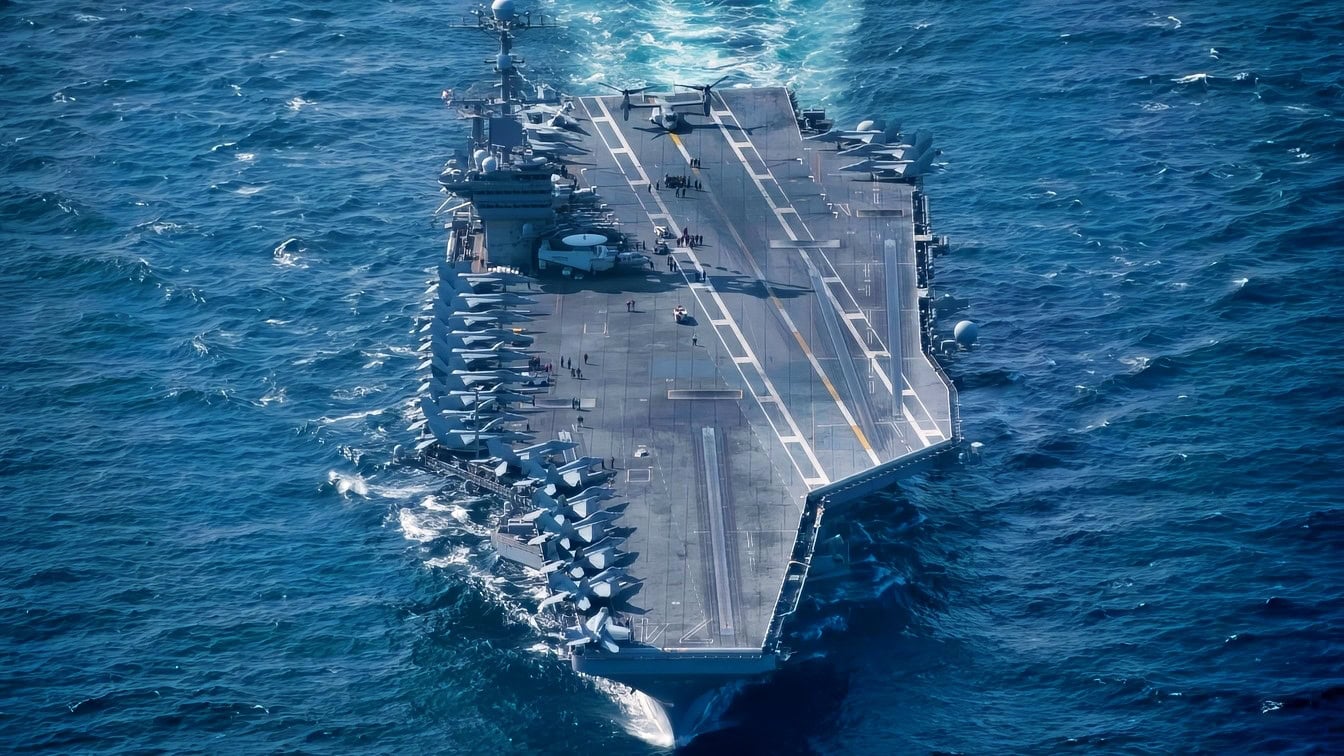
The aircraft carrier USS John C. Stennis (CVN 74) steams through the Arabian Sea, Dec. 14, 2018. The John C. Stennis Carrier Strike Group, Essex Amphibious Ready Group, and 13th Marine Expeditionary Unit are conducting integrated operations in the Arabian Sea to ensure stability and security in the Central Region, connecting the Mediterranean and the Pacific through the western Indian Ocean and three strategic choke points. (U.S. Navy photo by Mass Communication Specialist 3rd Class Connor D. Loessin)
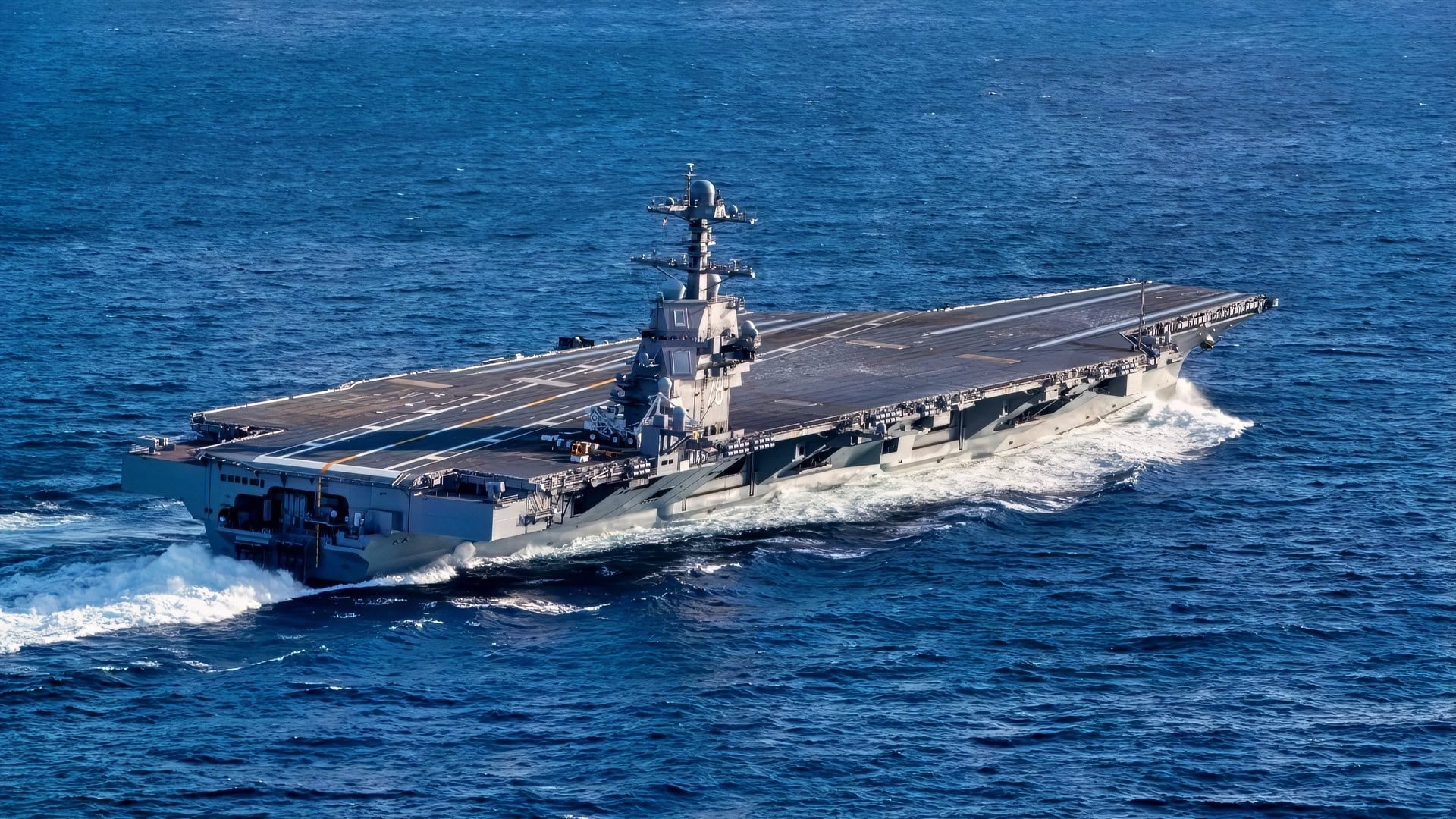
(Oct. 29, 2019) USS Gerald R. Ford (CVN 78) conducts high-speed turns in the Atlantic Ocean. Ford is at sea conducting sea trials following the in port portion of its 15 month post-shakedown availability. (U.S. Navy photo by Mass Communication Specialist 3rd Class Connor Loessin)
The daily figure of four sits well below the ten-day average of 16 per day.
Tankers and Tehran
For centuries, commercial shipping has passed through the Strait of Hormuz without let or hindrance. Bordered by Iran to the north and Oman to the south, the strait provides Gulf nations such as Qatar, Kuwait, the United Arab Emirates and Bahrain with an easy route to export oil worldwide.
At its narrowest, the strait is 24 miles wide – well within range of Iran’s missiles. But until the war began in February this year, Iran had no reason to target non-military vessels which sought passage.
Battered militarily since the war began, Iran’s main leverage has been its ability to render the Strait of Hormuz effectively closed.
On Friday, 18th September, Iran claimed to have struck a Togo-flagged oil tanker, Trend, during what Tehran claimed to be an “illegal attempt” to cross the strait, with the country’s Islamic Revolutionary Guard Corps threatening “destruction” to any vessel which sought to breach its closure.
Traffic Remains Low
On Thursday, just four vessels passed through the Strait of Hormuz: two Panamax tankers, one Supramax, and one Kamsarmax.
Of the four, three entered the Persian Gulf, with another heading outbound.
The Thursday figure marks an improvement of 1, with only 3 vessels crossing the strait 24 hours earlier.
However, the true figures are disputable, as some vessels are believed to turn off transponders to avoid detection as they pass through the strait.
LNG Vessels Reappear
Three LNG (liquefied natural gas) carriers reappeared on Thursday after being absent from tracking data for several days.
The Al Daayen, Al Samriya, and Marigold LNG vessels, last seen inside the Persian Gulf over the weekend and into Monday, reemerged on Thursday after passing through the Strait of Hormuz.
Furthermore, the QatarEnergy-linked Al Rayyan conducted a ship-to-ship cargo transfer with Al Mashabiyyah on Sunday off the coast of Oman.
Both vessels turned off their transponders during the transfer.
Qatar has suffered disproportionately from its inability to export LNG by sea during the war.
Its borders lie entirely within the Persian Gulf, so it cannot use alternative routes like Saudi Arabia and the United Arab Emirates, both of which have ports that bypass the Strait of Hormuz.
Exporters Adapting
Saudi Arabia and the UAE both have oil pipelines that let them bypass the Strait of Hormuz.
The UAE’s pipeline stretches from Habshan to Fujairah – the latter a port beyond the strait leading into the Indian Ocean – while the Saudi’s East-West pipeline extends to the port of Yanbu on the Kingdom’s west coast.
Riyadh, in particular, has increased its reliance on the pipeline during the war with Iran.
Saudi authorities increased the capacity of the 745-mile pipeline to transport up to 5 million barrels per day shortly after the conflict began, which accounts for 4% of the world’s oil supply.
Similarly, the UAE has ramped up efforts to develop an alternative route to the Strait of Hormuz, with a second pipeline expected to be completed next year.
Bab al-Mandeb Problem
A recent Houthi offensive towards the Red Sea on Yemen’s coast has sparked new concerns over oil supply. Attacks on Saudi oil facilities have resumed after a four-year ceasefire, while the Houthis now control the Bab al-Mandeb Strait.
This narrow body of water is Riyadh’s alternative to Hormuz for southern exports, with the Iranian-backed militia group threatening Saudi-flagged vessels that try to transit.
Furthermore, Saudi Arabia’s East-West pipeline is currently closed after a drone attack believed to be the responsibility of Iraqi militias also backed by Tehran.
The pipeline is expected to remain closed for up to five weeks while repairs take place.
With the Strait of Hormuz effectively closed and Saudi alternatives being targeted, oil prices have once again risen this week amid concerns over global supply.
Brent crude, the benchmark for oil prices, peaked at $109 per barrel on Monday, but has steadily fallen throughout the week to hover around $104 per barrel as of Friday.
About the Author: Shay Bottomley
Shay Bottomley is a British journalist. He has written for the Western Standard, Business Insider, Maidenhead Advertiser, Slough Express, Windsor Express, Berkshire Live and Southend Echo.