

While losing its footing as the world’s premier naval power, Britain continued building capable undersea vessels throughout the Cold War. At a time when more attention was paid to US and Soviet models, like the Los Angeles-class and the Typhoon-class, Britain built highly capable diesel-electric attack submarines (SSKs). The Oberon-class entered service in the early 1960s. Developed from the preceding Porpoise-class but substantially improved in acoustic signature and sensing capabilities, the Oberon could provide anti-submarine warfare, anti-surface warfare, surveillance, and intelligence collection. It was neither especially fast nor nuclear-powered. But the Oberon developed a reputation for being extremely quiet and thus stealthy. Ultimately, 27 boats were built. Along with the United Kingdom, Canada, Australia, Brazil, and Chile also operated the Oberon, with several remaining operational into the 2000s, demonstrating remarkable longevity for a vessel designed in the 1950s.
Submarine Hunter: Enter the Oberon-Class
The Royal Navy needed conventional submarines capable of operating against increasingly sophisticated Soviet forces.
The Oberon was basically an evolutionary design (not a revolutionary one).
Built around traditional diesel-electric propulsion, the Oberon offered improvements in machinery isolation, hull construction, sonar, habitability, and acoustic quieting. The first boat, HMS Oberon, was commissioned in 1961.
The class was frequently deployed in the North Atlantic and the Norwegian Sea to address standard Cold War problems, including detecting Soviet submarines, covertly tracking them, protecting NATO sea lanes, and gathering intelligence.
Of course, the limitations of the conventional submarine format were real, but in the right situation, the quietness of the SSK could be highly effective.
Technical Specifications
The Oberon-class was a diesel-electric attack submarine, or SSK, measuring 295 feet long with a 26.5-foot beam.
When submerged, the class displaced approximately 2,400 tons and operated with a crew of roughly 65 to 70 sailors.
For propulsion, she relied on two diesel generators, batteries, electric motors, and two shafts.
With a surface speed of roughly 12 knots, she could reach roughly 17 knots once submerged.
The diving depth is unknown because the figures were not disclosed.
For weaponry, the design featured six forward 21-inch torpedo tubes and two shorter stern tubes for defensive weapons. Weapons and sensors varied considerably across the decades and by which nation was operating the vessel.
For example, Canada eventually equipped its boats with MK 48 heavyweight torpedoes.
Summed Up in 4 Words: Old But Very Stealthy
Diesel-electric submarines have two very different acoustic states.
When running diesel engines or snorkeling, vessels are comparatively noisy, easily detectable, and vulnerable. Once the batteries are charged, however, the submarine can shut down the diesels, and propulsion comes from electric motors.
It’s the same principle we see on the road today: the diesel truck rumbles and makes tons of noise, while the electric Tesla you can barely hear approaching. As you can imagine, when the submarine is operating with the electric motors and crawling at low speeds, the machinery noise can become almost negligible. The Oberon’s designers paid substantial attention to acoustic isolation.
The machinery was mounted to reduce the transmission of vibrations into the hull and water.
The propellers were designed to reduce the acoustic signature, especially at low speeds.
So although it lacked an SSN’s sustained speed, it could become extremely difficult to detect while lying quietly in ambush, with the electric motors barely humming.
Surveillance State
Conventional submarines are especially useful for covert surveillance.
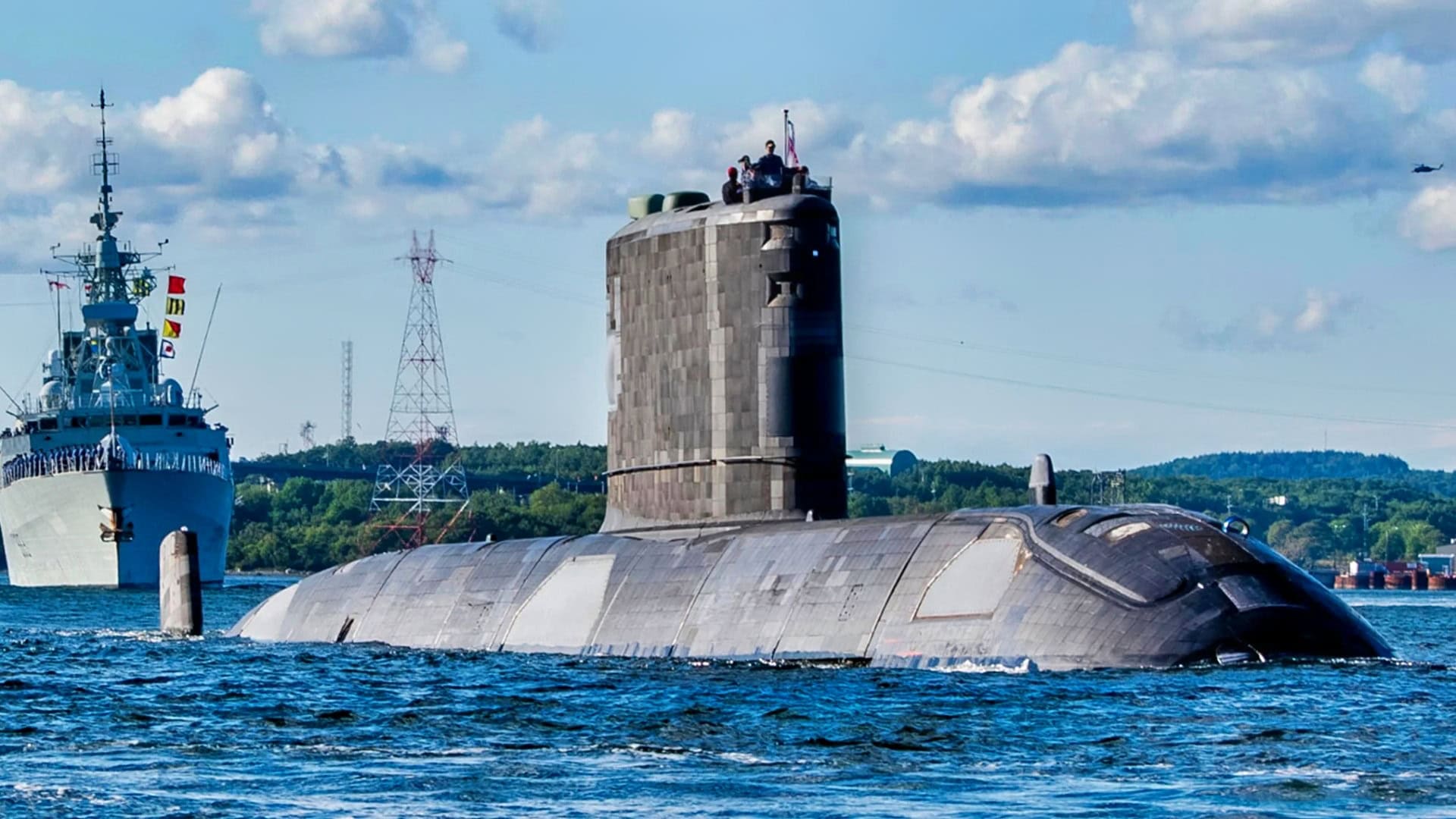
Victoria-Class Submarine Canada.
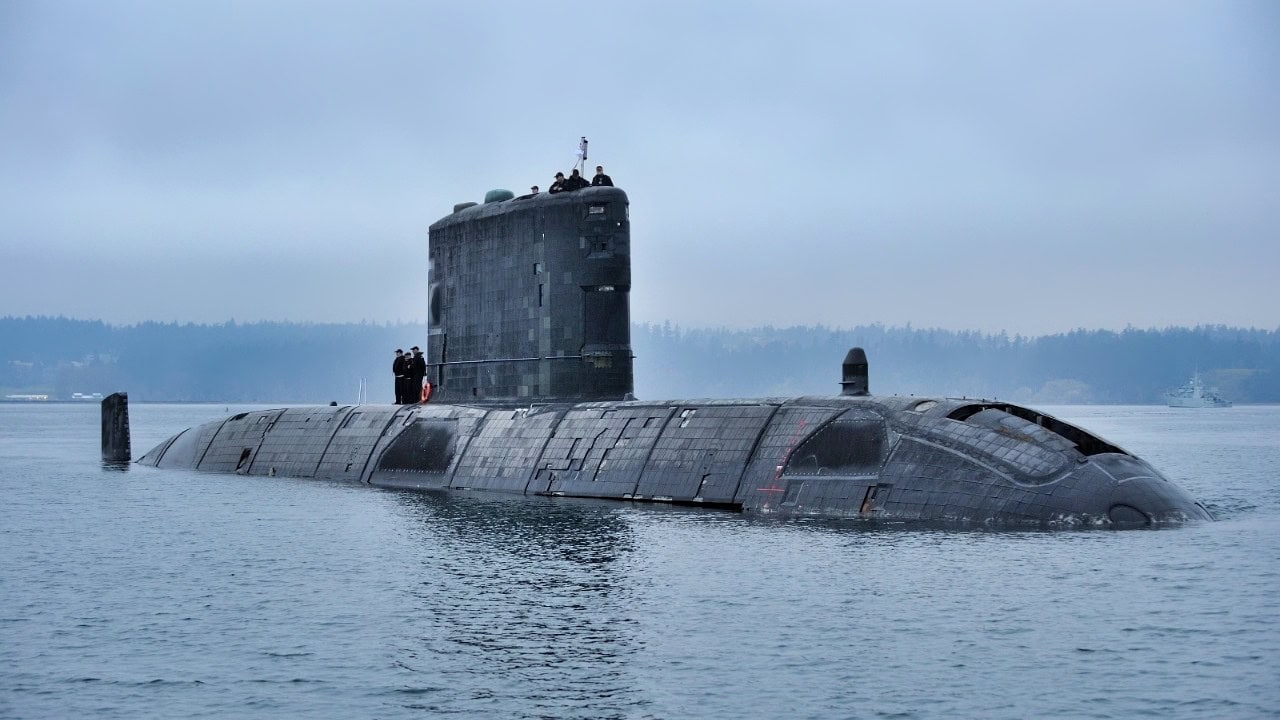
Victoria-Class Submarine from Canada.
A submarine can sit offshore without announcing its presence.
Periscopes and electronic support equipment enabled the collection of data on ship movements, radar emissions, communications and electronic signatures, and acoustic intelligence.
Cold War submarine operations remain partly classified, of course, so it’s hard to confirm exactly what sort of intelligence missions were conducted, but the strategic principle is straightforward here.
The submarine—especially the conventional submarine—adds value not only by sinking enemy forces but also by collecting intelligence on them.
Going Nuclear
Still, the Royal Navy eventually abandoned the conventional attack submarine in favor of nuclear propulsion, as did so many other industrialized powers.
Nuclear propulsion offered enormous advantages for British requirements, like sustained submerged operation, high speed, long-range deployments, the ability to escort carrier and task groups, and the pursuit of Soviet submarines.
The transition to nuclear relegated the Oberon to the past tense, at least in terms of the British Royal Navy, though she continued to serve with international carriers into the 21st century.
About the Author: Harrison Kass
Harrison Kass is a writer and attorney focused on national security, technology, and political culture. His work has appeared in Tablet, City Journal, The Hill, The Spectator, and The Cipher Brief. He holds a JD from the University of Oregon and a master’s in Global & Joint Program Studies from NYU. More at harrisonkass.com.