
Eight Israeli Airstrikes on Abu al-Duhur Base in Idlib: A Dual Message to Damascus and Ankara
 Ahmed Al-Rashid
Eight Israeli Airstrikes on Abu al-Duhur Base in Idlib: A Dual Message to Damascus and Ankara
Before dawn on Tuesday, August 18, Israeli aircraft carried out eight airstrikes on the Abu al-Duhur airbase in eastern Idlib, about 70 kilometers from the Turkish border. No casualties were reported, according to Syrian media, but the strike carried messages far heavier than its bombs: this is the first Israeli strike on assets belonging to the Syrian government since March of last year, and it came at a moment when Ankara and Damascus are speaking in unison about growing military cooperation.
Details of the Strike: A Disabled Base with a Political Message
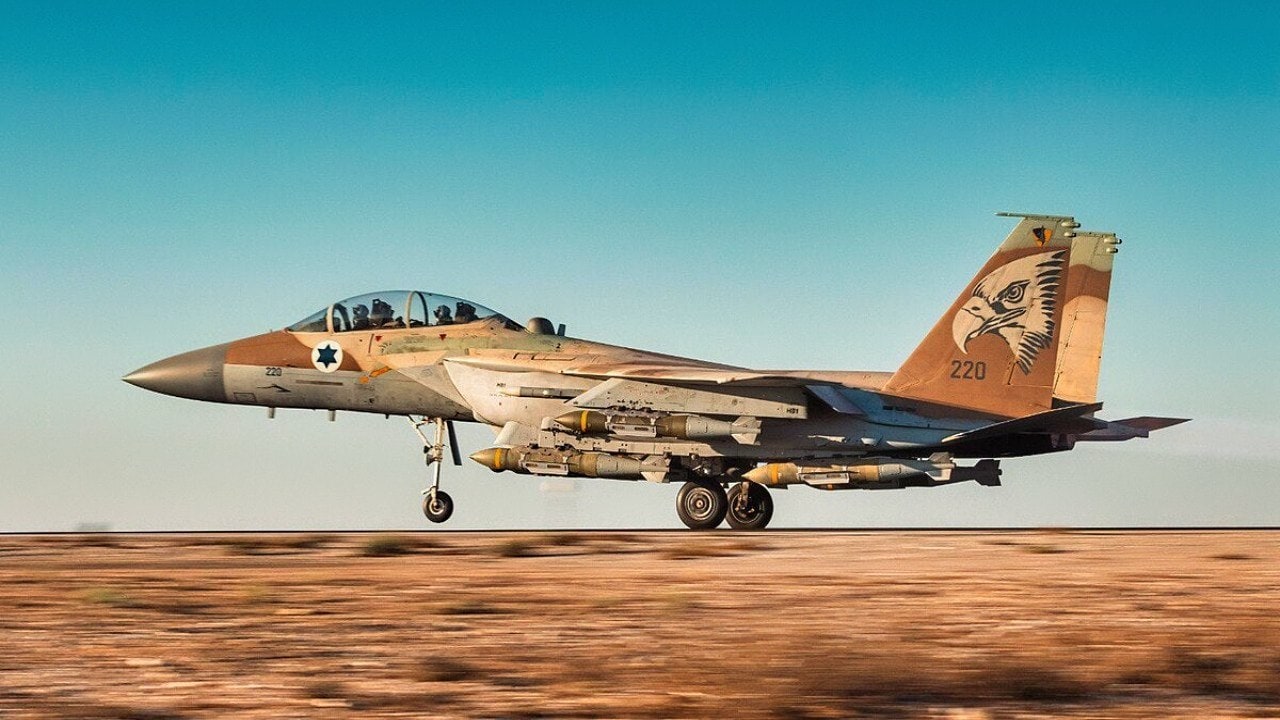
The strikes targeted, according to Syrian state television citing a military source, the runway and storage facilities at the base, which has been out of service as a military airbase since 2013 and has been occupied by various factions throughout the years of civil war. Any military personnel who served in the area knows that bombing a disabled base with this level of precision is not an operational decision but a purely political one.
- Location: Eastern Idlib, about 70 kilometers east of the Turkish border
- Target: The runway and storage facilities, with no human casualties
- Timing: The first Israeli strike on Syrian government assets since March
After a day of official silence, Netanyahu's office issued a statement saying that the strike aimed to prevent the deployment of Turkish forces at the base, adding that Israel and Syria had reached a "status quo on security matters," but Damascus was "on the verge of violating" this agreement. Israel provided no evidence for these claims, while the Turkish presidency described them as "baseless" and a pretext to justify illegal strikes targeting Syria's sovereignty and territorial integrity.
The Message to Damascus: A Ceiling on Any Air Force
The initial reading of the strike is directed at Damascus. Analysts say that bombing an airbase means that the Israeli army does not want the new Syria to have any air force in the coming years. Since the fall of the Assad regime on December 8, 2024, Israel has carried out hundreds of strikes on Syrian military sites, effectively bombing the Syrian air force "out of existence" in the early weeks, as field reporters indicate. However, Damascus has begun, over the past year and a half, attempts to rebuild part of its air capabilities: repairing facilities, rehabilitating aircraft, and training new crews.
The Abu al-Duhur strike came to settle this debate unilaterally: any rebuilding of the Syrian air force will occur under a ceiling imposed by Tel Aviv, and Syria will not be allowed to possess real air defense tools as long as Israel desires absolute freedom of flight over its territory. Practically, this permanently transforms Syria into an open area for Israeli strikes without cost.
The Message to Ankara: A Red Line at the Borders of Turkish Influence
The second message, and the most important in my opinion, is directed at Ankara. Abu al-Duhur is located deep within the Turkish sphere of influence near Idlib, where Turkey has maintained a military presence for years. Israel has not hidden its concern over the Turkish role in Syria: it previously bombed the T4 bases in Homs and Palmyra in March 2025 after Reuters reports about Turkish military delegations visiting them, and former Prime Minister Naftali Bennett has campaigned describing Turkey as the "new Iran."
What distinguishes Netanyahu's office statement this time is that it explicitly linked the strike to the deployment of Turkish forces, meaning that Tel Aviv officially recognizes that the Turkish military presence in Syria poses a strategic threat far exceeding any threat from Syrian forces themselves. Military affairs researcher Nawar Saban summarizes the matter accurately: the strike was less concerned with destroying an immediate Syrian military threat and more focused on preventing the establishment of future military capability, especially where Turkish assistance could enhance Syrian air capabilities or restrict Israeli operational freedom over Syrian airspace.
Washington Between Verbal Condemnation and Strategic Partnership
The American position revealed the contradiction in Washington's policy. The U.S. special envoy for Syria and Iraq, Tom Barak, who is also the ambassador to Ankara, described the strikes as "an unnecessary escalation that does not serve regional stability," calling on all parties to prioritize rational discourse. However, the administration itself has not taken any practical steps against its ally, while Jordan condemned the strikes, describing them as unjustified aggression and a blatant violation of international law, and Syrian Foreign Minister As'ad al-Shibani urged Israel to reconsider its position as it faces not only Damascus but also Syria's allies.
Military Assessment: Who Owns the Skies of Syria?
From a purely military capabilities perspective, the remaining Syrian air force poses no real threat to Israel, as analysts themselves acknowledge. The remaining aircraft are few and old, and air defenses have been destroyed in successive strikes since December 2024. The strike on Abu al-Duhur, therefore, is not about a real threat but about the margin of maneuver: Israel wants to maintain its complete air superiority in the region and draws a red line against any project that seeks to rebuild Syrian military capabilities with Turkish assistance, no matter how small or disabled the base may be.
“The strike was less concerned with destroying an immediate Syrian threat and more focused on preventing the establishment of future military capability, especially where Turkish assistance could enhance Syrian air capabilities or restrict Israeli operational freedom” — Military and security affairs researcher
Conclusion: A New Struggle for the Shape of the Levant
What happened in Idlib is not a passing incident in the context of the raging Iran war, but an indication that the most important axis in the Levant is no longer the traditional Arab-Israeli conflict, but the Israeli-Turkish competition over the shape of the new Syria. Syria, which was once a battleground for settling scores between Tehran and Tel Aviv, has now become a theater where the lines of Ankara, Tel Aviv, and Washington intersect, at a time when Gulf capitals are preoccupied with their own battle in Hormuz and the Red Sea.
And the Gulf states, which are watching from afar, realize that the Israeli message extends beyond Syria: any independent Arab military build-up, no matter how small, will face a ceiling imposed by power. The question that the Abu al-Duhur strike leaves hanging in the air is: if Israel strikes a disabled base to prevent allied forces from reaching a point 70 kilometers from the Turkish border, what will it do when those forces actually arrive?
Israeli aircraft conducted eight airstrikes on the Abu Dhuhur airbase in Idlib, Syria, on August 18, 2025. The strikes, which resulted in no casualties, marked the first attack on Syrian government assets since March 2025. Israel's actions were aimed at preventing Turkish military forces from establishing a presence in the region, reflecting ongoing tensions between Israel, Syria, and Turkey.
- Eight Israeli airstrikes targeted Abu Dhuhur airbase in Idlib, Syria.
- No casualties were reported from the strikes.
- This was the first Israeli strike on Syrian government assets since March 2025.
- The strikes were politically motivated to prevent Turkish military presence in the area.
- Israel aims to maintain air superiority over Syria.