
Russia's Drone Threat to Britain Is NATO's Article 5 Test
 Alexandra Reeves
Russia's Drone Threat to Britain Is NATO's Article 5 Test
Russia's embassy in London said on Monday that British support for Ukraine's long-range drone campaign "will inevitably carry consequences for which it will have to answer." That sentence, posted on Telegram, is not new in form. Moscow has been threatening the UK since 2022, when it warned against supplying Storm Shadows, Challenger 2s, anything with a British serial number. What is new is what Russian officials and ex-officials are saying out loud alongside it: that Moscow believes it can strike a NATO member and the alliance will do nothing.
The Trigger: British Hardware in Russian Wreckage
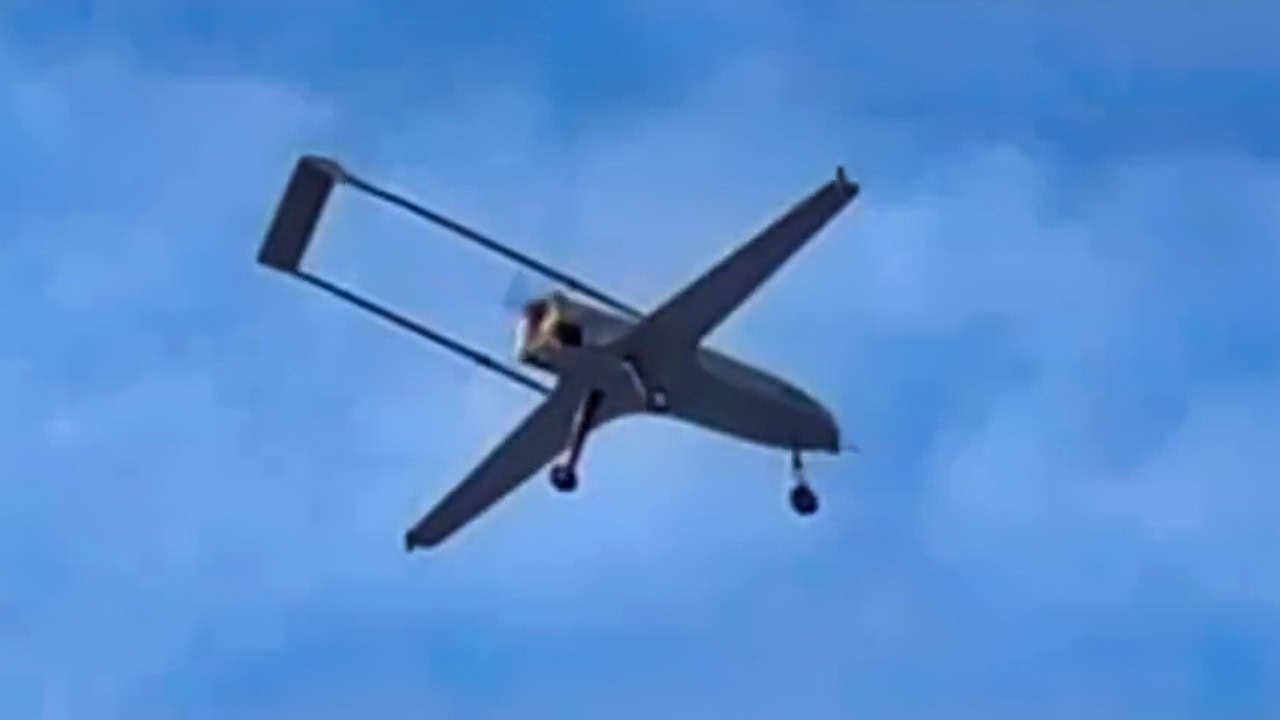
This round of escalation has a specific spark. According to an investigation by The Times, drones produced by two British companies have been used in a series of attacks on targets inside Russia — oil refineries, logistics hubs, and warehouses operated by Wildberries, the Russian retail giant that Kyiv says supplies military components. Russian Foreign Ministry spokeswoman Maria Zakharova has cited "drones containing UK components or configurations" hitting the Kamensky Plant in the Rostov region, a military-industrial facility.
The timing matters. On Monday night into Tuesday, Moscow's mayor said Ukraine launched at least 637 drones toward the capital, with 197 intercepted. That followed a weekend wave of 822 drones that killed seven people in the Moscow region. This is not a one-off strike; it is a sustained campaign that has shifted the war's physical reality to Russian cities, and British-made or British-designed hardware is reportedly in the mix.
London's Careful Ambiguity
Britain's Ministry of Defence has not confirmed that its drones have been used to attack Russian territory. Prime Minister Andy Burnham, responding to the threat, said the UK will support Ukraine "100 percent" and insisted "we are not fair-weather friends." The support itself is not in doubt: in April, London announced its biggest-ever drone package — at least 120,000 drones including "thousands of long-range strike drones" — and in June it added a £752 million ($996 million) package including 150,000 more drones by the end of 2026.
But note the careful line. The UK will not confirm the Times findings, and it will not deny them. That ambiguity is doing real work: it lets London keep supplying capability while avoiding a formal declaration that British weapons are striking Russian soil. Moscow, predictably, reads the ambiguity as complicity. "The deeper its involvement in the conflict and the greater its support for Kiev's terrorist machinery, the higher the price it will pay," the embassy warned.
What "Consequences" Actually Means
Former Russian Deputy Foreign Minister Andrei Fedorov told the BBC that "nothing can be excluded" and that many in Moscow believe "Russia can strike the UK and NATO will do nothing. Trump will not allow NATO to answer."
That quote is the most important sentence in this entire episode. Fedorov is a former official, not the Kremlin's spokesman, but he is describing a consensus he says is real inside Moscow: that the alliance's response to an attack on a member would be a statement, or Article 4 consultations, but not Article 5 collective defence. "Donald Trump is still the keeper of the keys in NATO," he said.
The practical menu of "consequences" is broad. Russia could escalate its hybrid war — cyberattacks, sabotage, attacks on British interests abroad. The EU and UK announced coordinated sanctions against Moscow last month after reports of digital sabotage across Europe, which suggests Western governments already see this as the active frontier. Russian state television, for its part, has moved straight to nuclear rhetoric, with one host calling for a strike on the UK. The noise-to-signal ratio is high, and that is partly the point.
The Real Target Is Article 5
Here is the uncomfortable part that Washington's think-tank crowd tends to skate over: Russia's threat is not really about drones. It is about testing whether extended deterrence still functions when the US president is openly at war with the alliance's assumptions. Moscow watched the US cut its participation in this month's Ulchi Freedom Shield exercises, watched Washington's disputes with NATO allies over the war on Iran, and drew the obvious conclusion — that the American commitment to European defence is now negotiable, transactional, conditional.
The drone supply line gives Moscow a pretext to raise the question it has wanted to raise for years: what happens when a NATO member is struck for supporting Ukraine? Fedorov's framing — that Russia has "the right to strike the country which is supporting Ukraine" — is a legal-theoretical pre-positioning. The Kremlin is building the argument that a British factory, a British intelligence facility, or a British ship is a legitimate target because London is, in Foreign Minister Sergei Lavrov's words, a "party to the war."
What to Watch Next
Three things. First, whether Russia actually moves beyond rhetoric — a serious cyberattack on British infrastructure, or a strike on a British-linked target outside NATO territory, would be the classic escalation ladder. Second, whether Washington pushes back publicly on Moscow's Article 5 theorising, or stays silent; silence is its own signal. Third, whether London starts naming what it has supplied, because once the UK officially owns the drones, the ambiguity that is protecting both sides disappears.
The uncomfortable conclusion is this: Russia's threat to Britain is credible enough to matter, but the deeper problem is that Moscow now openly believes NATO's deterrent has a price tag and a veto. That belief, left unchallenged, becomes the strategy. The question is not whether Putin will strike the UK. It is whether the alliance will ever again convince anyone — including itself — that Article 5 means what it says.
Russia has threatened the UK in response to its support for Ukraine's drone campaign, claiming that British drones have been used in attacks on Russian targets. Moscow believes NATO will not respond to a potential strike on the UK, raising concerns about the implications for Article 5. The UK has committed to significant military support for Ukraine, including a large drone package.
- Russia threatens the UK over support for Ukraine's drone campaign.
- British drones have reportedly been used in attacks on Russian targets.
- Moscow believes NATO will not respond to a strike on the UK.
- The UK has announced significant drone support for Ukraine.
- Russian officials are discussing the potential for hybrid warfare against the UK.