
Elbit's Orders Accumulate to $30.2 Billion in 2026, Revealing the Limits of Israeli Export Power
 Ahmed Al-Rashid
Elbit's Order Backlog Reaches $30.2 Billion in 2026, Revealing Limits of Israeli Export Power
On May 26, 2026, Elbit Systems from Haifa announced that its order backlog had reached $30.2 billion, and that first-quarter revenues amounted to $2.19 billion. The figure appears financial at first glance, but militarily it says something more important: the war in the Middle East has not only increased the consumption of munitions and systems but has also transformed the Israeli defense industry into a global supplier for a prolonged war that does not recognize clear boundaries between the domestic front and the foreign market.
A Financial Figure with the Flavor of Military Operations
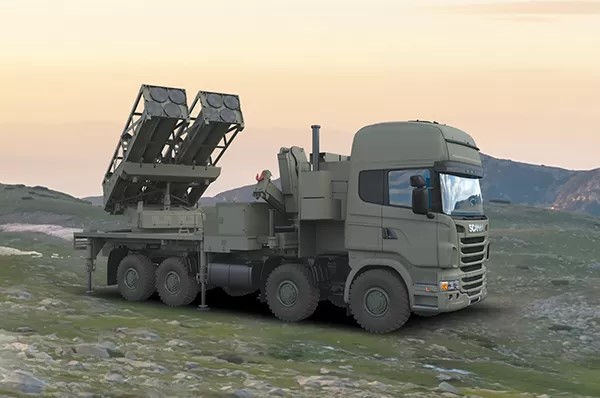
According to the company's first-quarter results, revenues rose from $1.90 billion in the same quarter of 2025 to $2.19 billion in 2026, with net income according to GAAP reaching $160.8 million. More importantly, about 71% of the order backlog comes from outside Israel, and 49% of this backlog is scheduled for execution during the remainder of 2026 and 2027. These are not figures from a company seeking natural growth; this is a map of global demand for precision munitions, combat communications, electronic warfare, night vision, rocket artillery, and reconnaissance systems operating under the pressure of real war.
On the same day, Elbit announced a European contract worth approximately $1.4 billion for military modernization programs extending over five years. The package includes unmanned solutions, networked ground electronic warfare, precision-guided munitions for artillery and air, electro-optical reconnaissance systems, and software-defined radio connectivity. Militarily, this is the shape of the army that Europe wants after Ukraine: smaller, more connected units, and less reliant on a blind armored mass. Politically, it is also the type of customer that the Israeli industry desires: geographically distant from Arab constraints and technically close to the needs of a battlefield that drains munitions and sensors alike.
Why This Figure Matters to the Gulf and Not Just to Israel
It may seem that a European contract and an Israeli company's order backlog are topics outside the interest of Gulf capitals. This is a mistake. The Gulf is purchasing security from almost the same market: missile interception, radar integration, drone resistance, and protection of bases and ports. In early May, Washington approved potential deals worth $8.6 billion for Israel, Qatar, Kuwait, and the UAE, including 200 PAC-2 GEM-T missiles for Qatar, IBCS systems for Kuwait, and APKWS munitions for Israel, Qatar, and the UAE. Here the issue becomes clear: the region does not suffer from a shortage of suppliers but rather from an excess of demand for defensive layers that do not operate alone.
Any military personnel who has served in the region knows that purchasing the missile is not the hardest problem. The challenge is to have a radar, a command center, engagement rules, joint training, and a maintenance chain that does not collapse at the first week of fighting. Elbit sells part of this equation, the United States sells another part, and Europe has begun to compete for the same production lines. Therefore, an order backlog of $30.2 billion means something practical for a Gulf state: longer delivery times, higher prices, and production priority often given to the customer who has political leverage or urgent operational needs.
Israel Exports Its War Experience and Imports Its Constraints
It is easy to describe Elbit as an economic winner from wars, but the picture is more complex. The company itself noted that conflicts in the Middle East have increased demand from the Israeli Ministry of Defense, but they have also created disruptions in supply chains, increased transportation costs, shortages of materials and components, the calling up of reservists, and political restrictions in some countries on dealing with Israel. In other words, the combat experience that enhances the appeal of the Israeli product is the same that makes its supply less straightforward and more sensitive.
This is an important paradox for Arabs. Many of Israel's defense systems gain their reputation because they operate under fire, not because they look good at exhibitions. But operating under fire also means that the Israeli army comes first when production lines tighten. If Israel needs air munitions or electronic warfare systems after a round of fighting in Lebanon, Gaza, or Iran, will export contracts remain on the same schedule? No company will say this publicly, but every sensible procurement officer takes it into account.
The Gulf Lesson in the Triangle of Capability
From Ahmed Al-Rashed's old perspective, the issue returns to the triangle of capability: equipment, training, institution. The Gulf excels in the first side. Qatar may request additional Patriots, Kuwait may integrate IBCS, the UAE may buy APKWS components, and Saudi Arabia is watching all of this while wanting a local industry that does not remain merely an assembly depot. But the question is not how many batteries or how many missiles or how many platforms. The question is whether these countries can build an institution that knows how to make American, Israeli, European, and local systems speak a common operational language on a night crowded with missiles and drones.
Here, Elbit appears as an example, not just a supplier. Its success lies not in a single platform but in selling the integration between the platform, sensor, munition, and operator. This is what many Arab armies lack. We buy the shiny piece and leave the system engineering to the foreign consultant. Then we ask why the money does not translate into readiness. The old military adage says that the sword does not fight alone; the hand that holds it and the system that directs it are half the battle.
Security Normalization Without Political Comfort
The coincidence of these figures with renewed American pressure on Arab and Islamic countries to join or approach normalization arrangements with Israel adds a political layer that cannot be ignored. Reports of American communications with Saudi Arabia, the UAE, Qatar, Egypt, Jordan, Bahrain, Turkey, and Pakistan regarding post-escalation arrangements with Iran mean that air and naval defense is no longer separate from diplomacy. Washington wants the Gulf to see Israel as a security partner in facing Iran. But Arab public opinion, the Gaza war, and sovereignty calculations make this partner politically costly even if it is technically beneficial.
Therefore, Elbit's rise to a record order backlog does not mean that the path is open for broad Arab-Israeli cooperation. Silent cooperation may occur in early warning, drone interception, or aerial imagery exchange through an American intermediary. However, large-scale public purchases from an Israeli company remain much more difficult. The Gulf wants the technology that has been tested in war, but it does not want to pay the political price for it in front of its public. This, in my opinion, is not a temporary gap but a continuous structure.
Conclusion
The figure of $30.2 billion in Elbit's order backlog is not just a stock market news item. It is an indicator of the transition of modern wars from a battle of platforms to a battle of networks: the one who sees first, connects faster, and fires more accurately. But it is also a reminder that the Middle East cannot buy independence from abroad. The more demand there is for Israeli, American, and European suppliers, the more Arab armies depend on production schedules and political decisions that they do not control.
Practically, the biggest lesson for the Gulf is not to buy an Arab version of everything Elbit produces. The lesson is to build the institutional capability that makes any system, from any source, part of an army that knows what to do with it at three o'clock in the morning. Until then, the region will remain rich in weapons but poor in full control over them; and this is the paradox that no new contract or record number in a company's order backlog can solve.
Sources
Elbit Systems announced a backlog of $30.2 billion in military orders, reflecting a growing demand for advanced weaponry in the Middle East. The company reported Q1 2026 revenues of $2.19 billion, with a significant portion of orders coming from international clients. Concurrently, the U.S. approved $8.6 billion in arms sales to Israel and Gulf states, indicating a strategic shift in regional defense procurement.
- Elbit Systems' order backlog reached $30.2 billion as of May 2026.
- 71% of the orders are from outside Israel, with 49% to be executed in 2026 and 2027.
- The company reported Q1 2026 revenues of $2.19 billion, up from $1.90 billion in Q1 2025.
- A $1.4 billion European military modernization contract was announced on the same day.
- The U.S. approved potential arms sales worth $8.6 billion to Israel and Gulf states.