

The United States Air Force (USAF) has not procured an F-16 for its own use in more than twenty years. The aircraft has become an entirely for-export platform, and the most advanced version of the single-engine fighter, the F-16V, has become the consolation-prize acquisition for nations that cannot purchase the F-35. This may be about to change with a new variant of the aircraft, with the working designator F-16G.
The F-16G Fighter: Coming Soon to the U.S. Air Force?
A few individuals with insight into the design and production of this concept, who spoke to Air & Space Forces Magazine, told the publication that this aircraft would not be a slightly improved version of the long-running F-16C/D Block 50 model.
As one of those quoted by the AFA publication stated: “If the Air Force were to buy a new F-16, this would not be your grandfather’s F-16. This would be more akin to buying an F-15EX.”
According to those who have seen or been shown portions of the proposed configuration, the F-16G would carry conformal fuel tanks, 600-gallon wing tanks, an infrared search-and-track (IRST) pod, a Sniper targeting pod, and a new drag chute.
What Makes a “G” Model
This “G” model, should it come to pass, would be based on the F-16V Block 70/72 “Viper” airframe and could be fitted with some version of the model’s self-protection system.
This Integrated Viper Electronic Warfare Suite (IVEWS), also known as the AN/ALQ-257, is an advanced electronic warfare system.
This system provides radar warning, active jamming, and the detection, identification, identifying and locating of potential threats.
One of the sources who has spoken to European media said as early as late last year that this new F-16 would be equipped not only with IVEWS but also with a slew of other new on-board systems.
In total, this proposed “G” version of the F-16 would feature so many new capabilities that its performance would be well above the C/D models and the Block 60 E/F version sold to the United Arab Emirates.
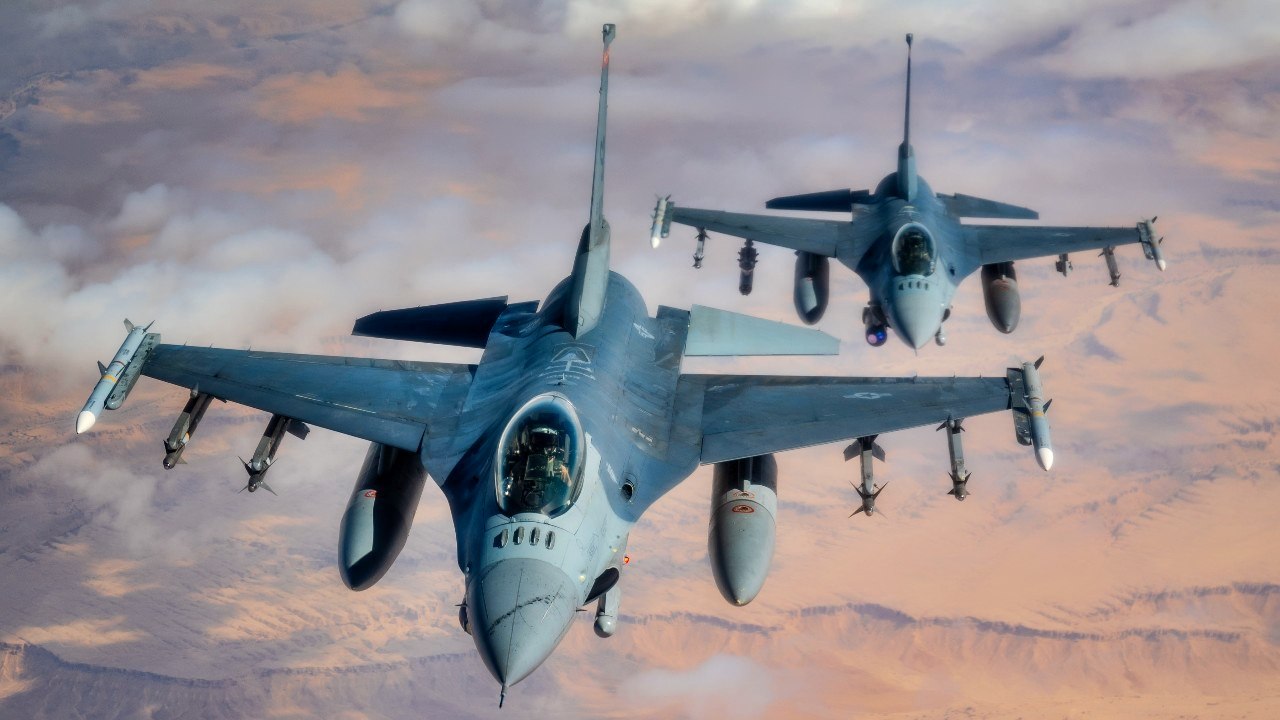
U.S. Air Force F-16 Fighting Falcons fly a routine presence patrol mission over the U.S. Central Command area of responsibility, Jan. 25, 2025. As a highly maneuverable and agile platform with a proven record in air-to-air combat and air-to-ground attack, the Fighting Falcon is well-equipped to engage with threats to regional security and deter further aggression in the AOR. (U.S. Air Force photo by Staff Sgt. Jackson Manske)
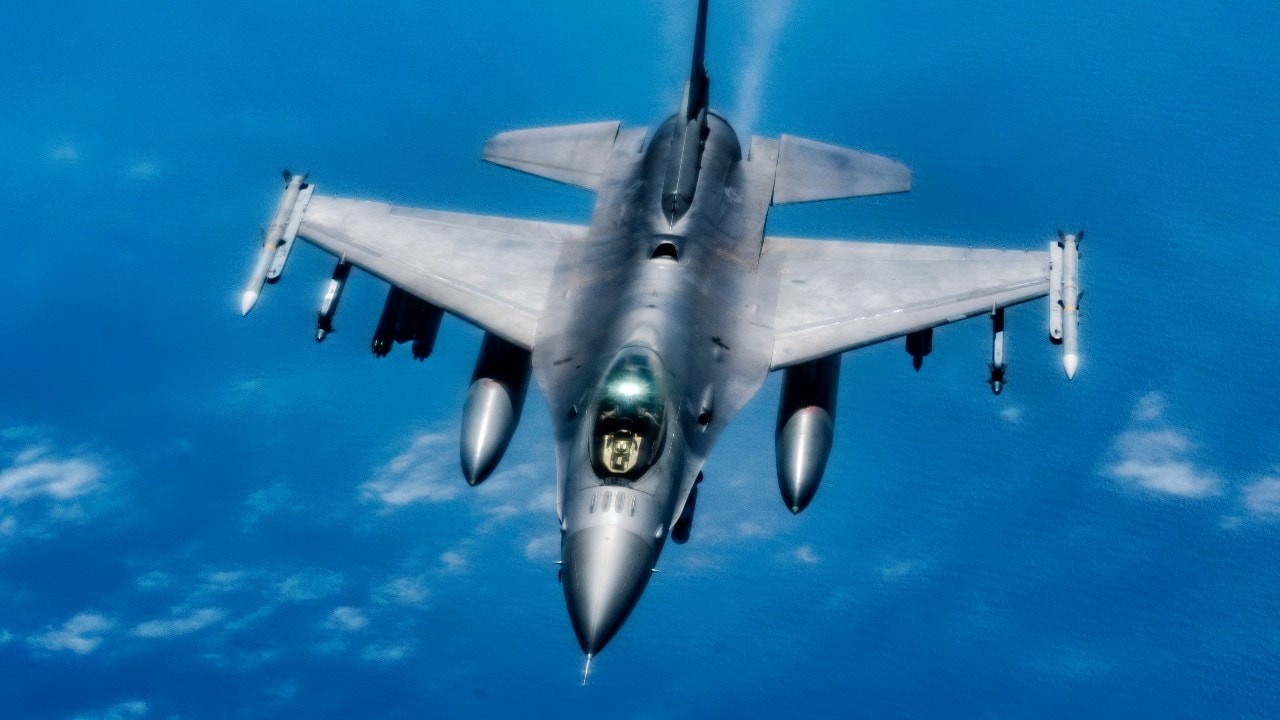
A U.S. Air Force F-16 Fighting Falcon flies a presence patrol over the U.S. Central Command area of responsibility, Feb. 9, 2025. The Fighting Falcon’s advanced capabilities provide flexible options to coalition leaders directing air operations throughout the Middle East, including contingency response capabilities and deterrence missions, while supporting Operation Inherent Resolve’s “Defeat-ISIS” mission. (U.S. Air Force photo by Staff Sgt. Jackson Manske)
Overall combat potential would exceed that of the Block 70/72 fighter Lockheed is currently producing.
Additionally, given Lockheed’s legacy of experience with signature-reduction techniques, it is expected that an F-16G would have a lower RCS than any other model of the aircraft ever designed.
The sum total of all these improvements would constitute the most advanced F-16 ever.
It would create a jet with the range, sensor capacity, carriage capability, and survivability that is constantly being spelled out as the new baseline in tactical aircraft.
It is the new baseline because weapon systems operating in the Asia-Pacific theatre will require increases in all of these and other performance parameters.
Plugging Gaps
Basis of Requirement for Notional F-16G
-Current USAF F-16C/D/MLU fleet: 826 aircraft, 484 of Active Duty
-Average age of airframes: 34 years; newest have been flying since 2005
-Status: No decision, no requirement defined, and no funding committed
This week’s reporting in Air & Space Forces Magazine quoted several people saying the USAF sees a need for new-build F-16s to plug gaps in the current fleet’s capacity.
This is due to the service now operating — when considering the median age of current airframes — the smallest and oldest fighter fleet in USAF history.
In May 2026, the Air Force had 1,098 fighters, 47 aircraft below the congressionally mandated minimum of 1,145. The service further plans for a fleet of 1,369 fighters by 2030 and 1,558 by 2035.
Meeting these targets cannot be achieved by upgrading the airframes already in service.
It will require aircraft that do not yet exist.
Those non-existent-as-of-today fighters must come from a production line that is not already at peak capacity and can, in theory, be ramped up to a higher output rate.
Lockheed/Fort Worth and Boeing/St. Louis are both capacity-constrained, meaning they can produce only a limited number of F-35As and F-15EXs in a single year.
As one commentator wrote this week, “you cannot buy your way out of a fighter shortfall from a production line that is already flat out.”
That would force the USAF to use the F-16V manufacturing facility in Greenville, South Carolina, as the only potential production site within CONUS.
Otherwise, it would require going offshore to build in a third country.
The latter may be impractical, so a new, modernized F-16 built in South Carolina appears to be the only practical option if the USAF is to maintain required force levels.
About the Author: Reuben F. Johnson
Reuben F. Johnson has thirty-six years of experience analyzing and reporting on foreign weapons systems, defense technologies, and international arms export policy. Johnson is the Korea Fellow at the Casimir Pulaski Foundation. He is also a survivor of the Russian invasion of Ukraine in February 2022. He worked for years in the American defense industry as a foreign technology analyst and later as a consultant for the U.S. Department of Defense, the Departments of the Navy and Air Force, and the governments of the United Kingdom and Australia. In 2022-2023, he won two awards in a row for his defense reporting. He holds a bachelor’s degree from DePauw University and a master’s degree from Miami University in Ohio, with a specialization in Soviet and Russian studies. He lives in Warsaw.