
PLA HQ-9B Intercepts Two Types of New Missiles Continuously, 2026 Air Defense Test Reveals Systematic Upgrades
 Li Minghui
PLA HQ-9B Successfully Intercepts Two Types of New Missiles, 2026 Air Defense Test Reveals Systematic Upgrades
On November 3, the South China Morning Post cited public information reporting that China, in a PLA air defense test, used the HQ series system to simultaneously intercept two types of new missile targets. Jane's Defence subsequently followed up with the headline "Simultaneous Interception of Two Missile Targets." The report did not disclose the model of the targets, flight paths, or hit distances, which are significant gaps: air defense tests are often exaggerated in promotional narratives; what truly matters is not just the phrase "hit," but whether the system can complete detection, allocation, and continuous firing under complex target conditions.
What New Information Did This Test Actually Provide?
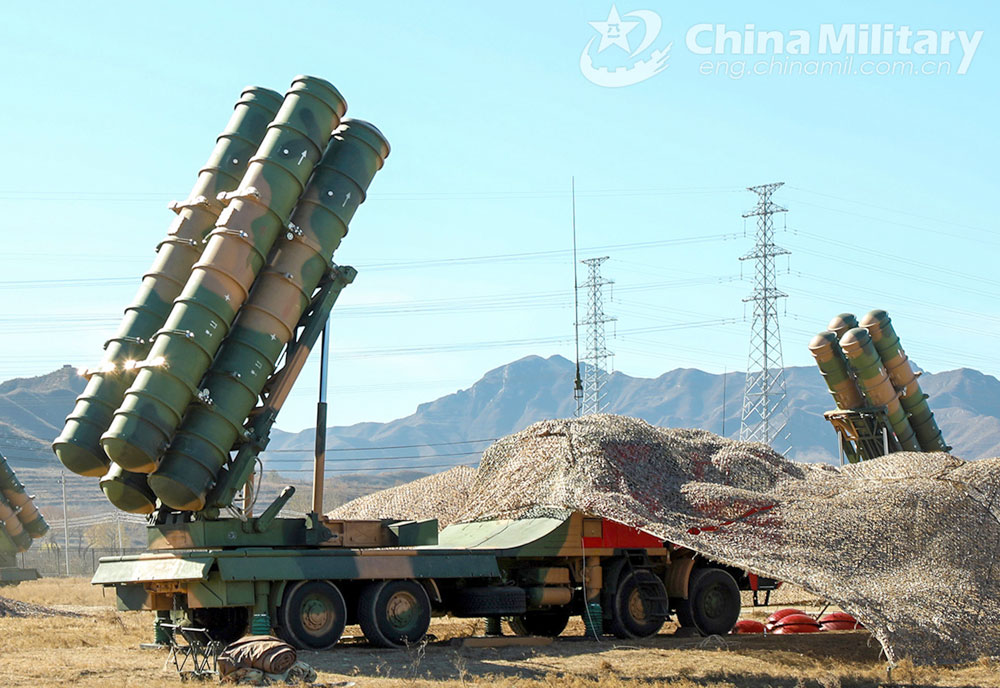
The HQ-9B is not an isolated interceptor missile but part of a surface-to-air missile system composed of phased array radar, command vehicles, launch vehicles, and communication nodes. Public data typically estimates its interception range at about 120 to 200 kilometers, but different missile types, target altitudes, and engagement conditions can cause significant variations. Chinese state media had previously described the HQ-9B as capable of dealing with cruise missiles, aerial bombs, and some maneuverable targets; a Global Times report on November 2 linked this round of tests to "new mobile missiles."
Therefore, "two types of targets" provide more analytical value than simply adding a range number. It suggests that the focus of the test may be on target identification and fire control: after a radar detects multiple incoming targets, can the system distinguish target characteristics, select different interception trajectories, and maintain the capability for a second round of firing after the first engagement? In simple terms, the challenge for the air defense network is not just to shoot down a single target but to simultaneously handle incoming combinations with different speeds, altitudes, and maneuvering methods.
Shifting from Individual Performance to Network Coordination
If the "simultaneous interception" reported is supported by more complete test data, then the upgrade focus of the HQ-9B is likely not just on the missile body. Modern air defense systems rely more on sensor fusion and the resilience of command chains. Early warning aircraft, long-range ground radar, electronic reconnaissance equipment, and forward radar need to form a common situational picture within seconds to tens of seconds; interception units must also avoid redundant attacks on the same target, reserving limited missiles for subsequent threats.
This also reflects a microcosm of the PLA's emphasis on system warfare in recent years. In the Taiwan Strait context, the air defense system faces not just traditional single batches of aircraft but potentially mixed formations of cruise missiles, glide munitions, drones, and decoys. If the HQ-9B can implement reliable engagement management between different targets, it can provide a thicker medium- to long-range protective layer for airfields, command posts, and large vessels; however, if the test is only conducted in a preset flight path with limited electronic interference, its proof of effectiveness in real battlefields remains limited.
Shortcomings That Cannot Be Ignored
I believe the most common mistake outsiders make now is equating a successful test with mature regional air defense capabilities. First, the public reports did not clarify whether the two types of targets appeared simultaneously, nor did they specify whether the same radar and fire unit were used for engagement. Second, the publicly available parameters of the HQ-9B have long had discrepancies in caliber, and maximum range cannot substitute for effective kill zone. Finally, the consumption rate of the air defense system, ammunition replenishment, radar resistance to interference, and distributed command often determine sustained combat capability more than a single interception rate.
The reports from the South China Morning Post, Jane's, and Global Times point to a trend: the PLA is advancing air defense tests from "single target hits" to multi-target, heterogeneous targets, and complex engagement management. However, the bottleneck still lies in the system, not the number of launch vehicles. The next step truly worth tracking is whether China will disclose target types, interception windows, and electronic interference conditions—if these data remain absent, then whether this interception by the HQ-9B is a technical demonstration or a replicable battlefield capability remains unanswered.
References: South China Morning Post (November 3, 2026); Jane's Defence Intelligence (November 3, 2026); Global Times (November 2, 2026).
The People's Liberation Army conducted a defense test on November 3, 2026, successfully intercepting two types of new missile targets using the HQ-9B air defense system. This test demonstrates the system's capability to manage multiple incoming threats simultaneously, indicating advancements in China's air defense strategy. However, details regarding the specific missile types and test conditions remain undisclosed, raising questions about the operational effectiveness of the system in real combat scenarios.
- The PLA successfully intercepted two types of new missile targets during a defense test.
- The HQ-9B system is part of a larger integrated air defense system.
- The test highlights the system's ability to manage multiple targets simultaneously.
- There is uncertainty regarding the specific types of missiles intercepted and the conditions of the test.
- The report suggests a shift towards networked operations in air defense.