
Elevator Size Needs Modification, Pilot Training Not Unified, "Rafale" Makes First Landing on Indian Aircraft Carrier, Troubles Ahead
[Global Times Special Correspondent Wu Yan] The Indian Navy's long-delayed next-generation aircraft carrier-based fighter project has finally reached a landmark moment—the French-made "Rafale M" fighter jet successfully landed on India's indigenous aircraft carrier "Vikrant" for the first time on October 29, sparking cheers from Indian media. However, as the excitement gradually subsides, it becomes apparent that the new carrier-based aircraft for the Indian Navy faces a series of challenges.
"Milestone Progress"?
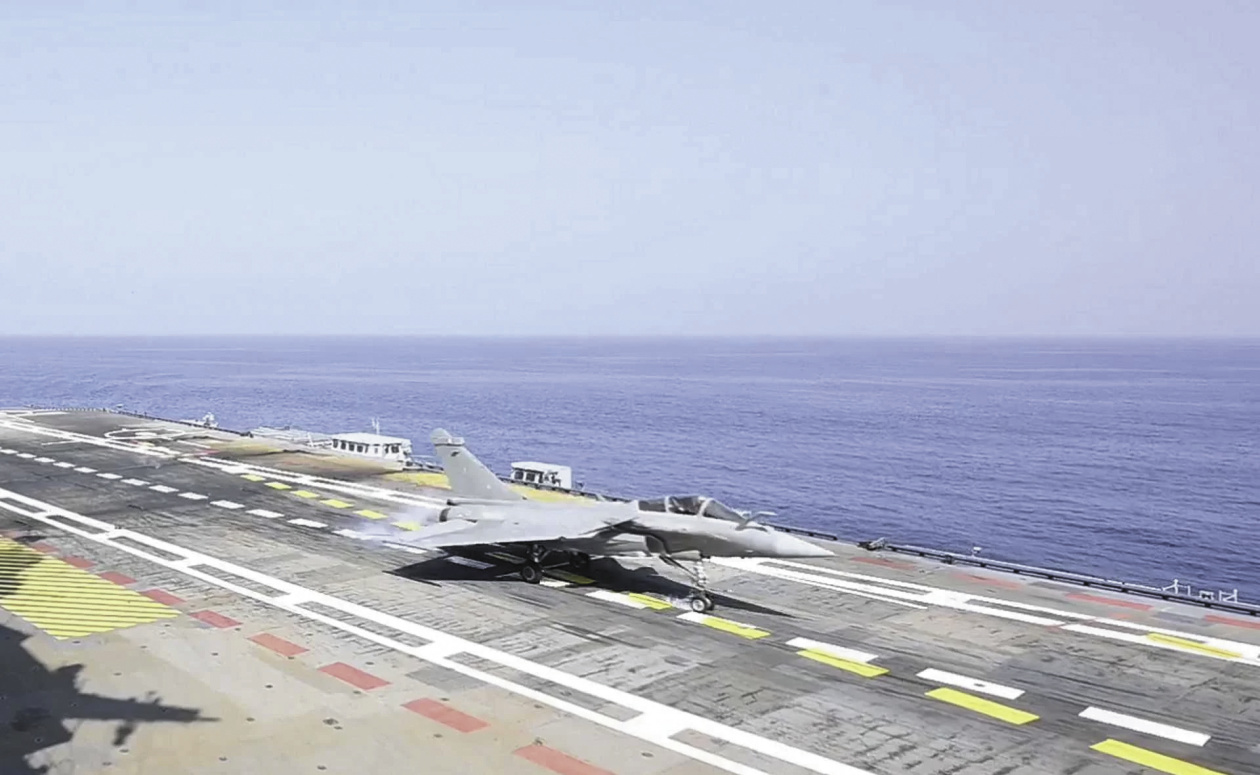
According to a report from the Belgian website "Military Recognition" on November 1, a French-made "Rafale M" carrier-based fighter jet completed its first arrested landing on the Indian indigenous aircraft carrier "Vikrant" on October 29, followed by a takeoff from the ski-jump deck. The Indian Navy released related news and landing photos on social media the next day, stating in an official announcement: "The ongoing tests mark the first step for the 'Rafale M' fighter jet to enter operational use in the Indian Navy."
Indian media celebrated this as a "milestone progress." The website "India Today" described this landing test as a "critical step" for the integration of the "Rafale M" fighter jet into the Indian Navy's aircraft carrier combat system. The Indian website "News18" reported under the headline "Vikrant Makes History," stating that this move would "substantially narrow the gap in India's aircraft carrier delivery capabilities." The "Hindustan Times" emphasized that the "Rafale M" can be equipped with the "Meteor" beyond-visual-range air-to-air missile, "Exocet" anti-ship missile, and "Scalp-EG" cruise missile, which will provide the Indian Navy with a "game-changing" long-range strike capability.
However, the Italian website "Aviation" noted that the "Rafale M" fighter jet that landed was not part of the Indian Navy, and the pilot flying it was a Dassault test pilot from France. Photos from the scene showed that the aircraft did not have Indian Navy markings on its wings, indicating that its landing and takeoff on the Indian carrier was merely a technical validation, far from being a sign of the Indian Navy's combat capability.
Struggling Through a Lengthy Selection Process
The excitement of Indian media over the "Rafale M" fighter jet's landing on the indigenous aircraft carrier stems from the excessively long selection process for the Indian Navy's carrier-based fighter aircraft.
The "Times of India" mentioned that the Indian Navy has long been troubled by its carrier-based aircraft. After the retirement of the British "Sea Harrier" vertical takeoff and landing fighter on the "Viraat" aircraft carrier, the Indian Navy initially planned to use the Russian-made MiG-29K as the standard carrier-based aircraft for the new generation of aircraft carriers, for which the hangar and elevators of the indigenous aircraft carrier "Vikrant" were specifically designed to match the dimensions of the aircraft. However, the Indian Navy later discovered that the MiG-29K fleet faced continuous issues during use, particularly with engine and radar reliability. A report from the Indian National Audit Office in 2016 indicated that the overall operational availability of the MiG-29K fleet was only between 16% and 38%, meaning that the aircraft were in an unserviceable state for most of the time.
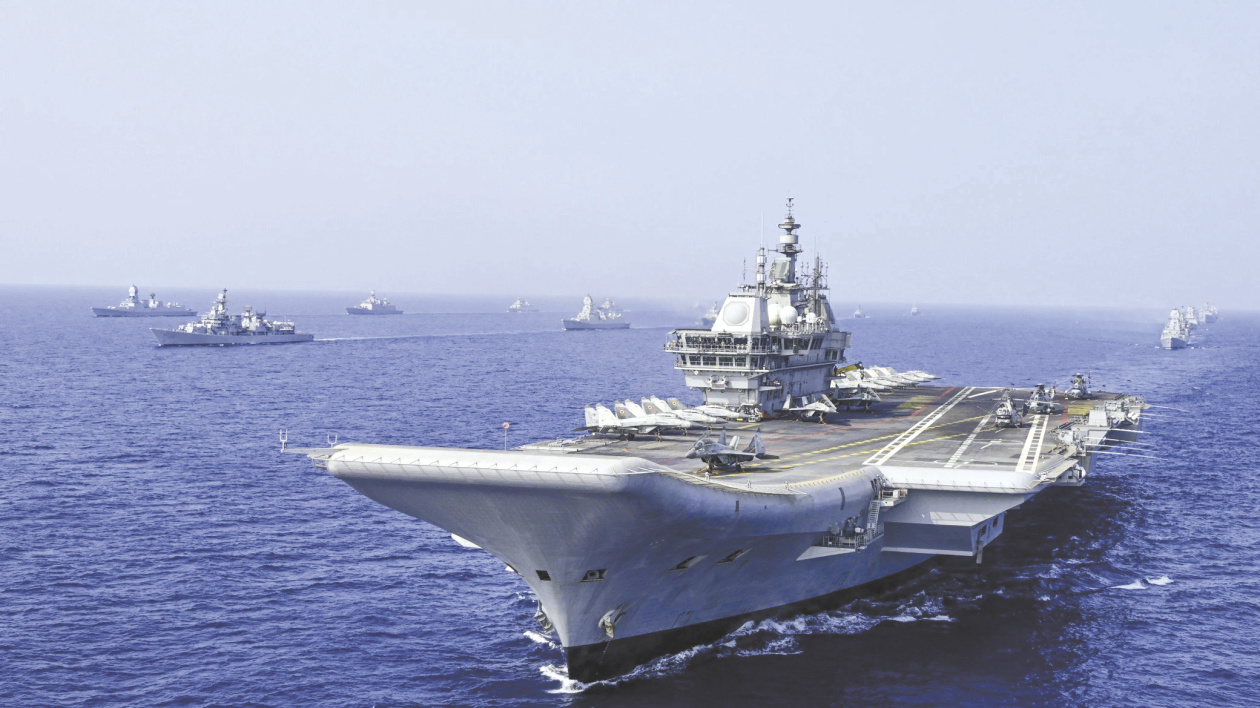
In 2017, overwhelmed by the frequent issues with the MiG-29K fleet, the Indian Navy issued a request for information for a new multi-role carrier-based fighter. The American F/A-18E/F "Super Hornet" and the French "Rafale M" subsequently entered into fierce competition. However, the Indian Navy was unable to make a decision on whether to continue importing mature carrier-based aircraft or to shift to the indigenous "Tejas" fighter jet variant. Meanwhile, since both the "Super Hornet" and "Rafale M" were originally designed for catapult launches, they had to undergo ski-jump takeoff simulation tests at the Indian Navy's shore-based testing facility in Goa to adapt to the ski-jump deck of the Indian carrier. This necessary technical validation step further extended the final decision-making timeline. It wasn't until 2022 that the "Rafale M" and "Super Hornet" completed their ski-jump takeoff tests.
Ultimately, the Indian Air Force's decision to procure 36 "Rafale" fighter jets led the Indian Navy to sign a procurement agreement with France in April 2025 for 26 "Rafale M" carrier-based fighter jets, including 22 single-seat fighters and 4 twin-seat trainers, at a total cost of approximately 630 billion rupees (about 75 billion USD), which includes weapons, simulators, training, and logistical support, as well as technology transfer clauses for airframe manufacturing facilities, engine and sensor maintenance facilities. The first delivery is expected between late 2028 and early 2029, with all deliveries completed by 2030 to 2031.
However, according to the Indian Navy's plans, the procurement of the "Rafale M" is merely an emergency measure, and the future main carrier-based aircraft for Indian carriers will be the indigenous "Twin Engine Deck-Based Fighter" (TEDBF).
Subsequent Challenges Are Far From Over
The "Military Recognition" website stated that this test only verified that the "Rafale M" can take off and land on Indian aircraft carriers, and a series of challenges still lie ahead.
Reports indicate that Dassault has announced that the "Rafale M" fighter jet has a maximum takeoff weight of 24.5 tons and a maximum external payload of 9.5 tons, but these figures may have certain discrepancies for the Indian Navy. This is because the aircraft was originally designed for catapult launches from the French aircraft carrier "Charles de Gaulle," while the Indian "Vikrant" aircraft carrier's ski-jump deck provides a departure speed far lower than that of a catapult. In the hot and humid environment of the Indian Ocean, the reduction in engine thrust further compresses the margin for heavy takeoff. According to photos released by the Indian Navy, the "Rafale M" took off from the "Vikrant" using a "clean configuration" (without external stores). Future tests of the aircraft must gradually expand the flight envelope and verify takeoff weight limits under different weapon configurations and weather conditions, which will require a lengthy testing period.
An even bigger problem is that the "Rafale M" carrier-based fighter jet has non-foldable wings, with a wingspan of 10.9 meters. In contrast, the elevators of the "Vikrant" aircraft carrier were designed for the foldable-wing MiG-29K, with a width of about 10 meters. Another Indian aircraft carrier, "INS Vikramaditya," has even smaller elevator dimensions. The "New Indian Express" reported that, for this reason, the "Rafale M" may need to have its wingtip pylons removed during elevator operations to compress its wingspan to about 9.6 meters, and it must be parked at an angle to fit into the elevator. This means that the future efficiency of transporting the "Rafale M" fighter jet between the carrier deck and hangar, the rhythm of flight deck turnover during wartime, and the process of loading munitions will all be severely affected.
Indian media revealed that the Indian Navy is considering modifying the elevator dimensions of these two aircraft carriers during future upgrades or requesting Dassault to develop a foldable-wing version of the "Rafale M," but either option is not something that can be completed in the short term.
Additionally, the training of Indian Navy pilots poses another challenge. Indian Navy carrier-based fighter pilots transitioning from the familiar Russian MiG-29K to the French "Rafale M" must adapt to unfamiliar avionics architecture, weapon management systems, and operational directives. Dassault has never produced a twin-seat carrier-based version of the "Rafale M," so the planned delivery of 4 twin-seat trainers is limited to shore-based use, meaning all Indian carrier-based fighter pilots must complete all carrier takeoff and landing qualification certifications on the single-seat "Rafale M," which carries higher training risks and difficulties compared to the twin-seat trainer model.
The Dassault Rafale M fighter jet successfully landed on the Indian aircraft carrier Vikrant on October 29, 2023, marking a significant milestone for the Indian Navy. However, challenges remain regarding pilot training and the aircraft's compatibility with the carrier's lift system. The Indian Navy plans to procure 26 Rafale M aircraft to enhance its naval aviation capabilities, but the transition from the MiG-29K poses difficulties.
- The Rafale M fighter jet landed on the Vikrant aircraft carrier on October 29, 2023.
- The Indian Navy plans to procure 26 Rafale M aircraft from France.
- The Rafale M's landing is a technical validation rather than a full operational capability.
- The Indian Navy faces challenges with pilot training and aircraft compatibility due to the transition from MiG-29K to Rafale M.
- The Rafale M's wingspan may require modifications to fit the carrier's lift.