
Enduring Stirling Access Can't Fix AUKUS's Submarine Math
 Marcus Chen
Enduring Stirling Access Can't Fix AUKUS's Submarine Math
The number that matters is not four, and it is not 2027. It is the gap between them: the distance between Australia's promise of a permanent American submarine presence and the number of boats the U.S. Navy can actually spare to fill it.
On August 4, Australia's Chief of the Defence Force, Admiral Mark Hammond, formally confirmed that U.S. Navy attack submarines will retain "enduring access" to HMAS Stirling in Western Australia under Submarine Rotational Force-West. That declaration buried a policy fight that had been running for weeks. The question was never whether Stirling would host American boats. It was whether the Americans would still be there after Australia's own Virginia-class boats arrive in the early 2030s.
The Whiplash Was the Story
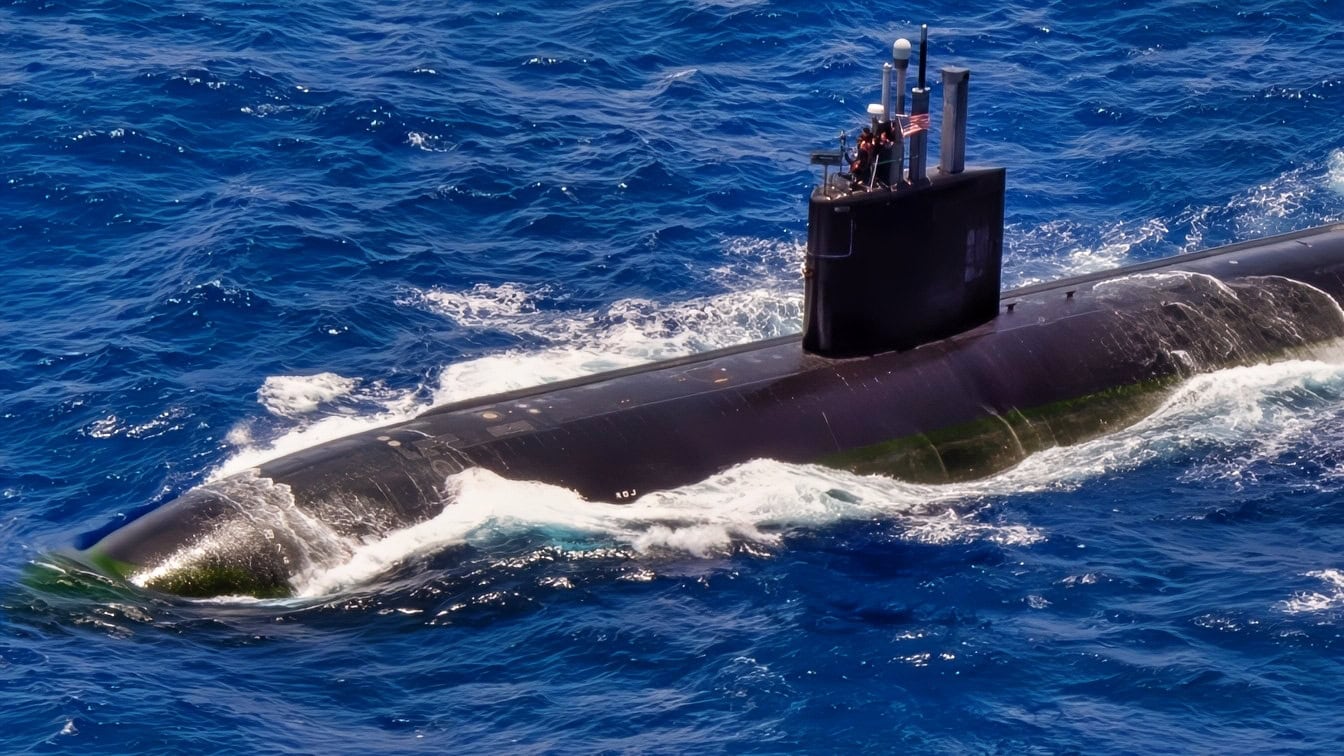
Defence Industry Minister Pat Conroy started it, telling reporters SRF-West was a five-year commitment that would end once Australia became "sovereign ready." Defence Minister Richard Marles walked it back, insisting the arrangement was meant to be enduring. Then Hammond repeated that position publicly, and Washington asked for 48 hours of clarification because a hard 2032 termination date changes personnel assignments, maintenance detachments, command structures and billions in investment decisions.
The difference is operational, not semantic. A rotation that ends in 2032 makes Stirling a transition facility: a place to train Australians while they wait for their own hulls. Enduring access makes it a permanent node in U.S. Pacific submarine planning, built to handle American, British and Australian boats for decades. That is a real distinction for anyone who has watched a forward-deployed submarine force try to plan maintenance windows and crew rotations five years out.
A Base Is Not a Fleet
Stirling is being built to handle the load. The base, commissioned in 1978 on Garden Island, already supports all six Collins-class boats, four Anzac frigates, the replenishment ship HMAS Stalwart, and roughly 3,400 personnel. The SRF-West expansion adds an A$8 billion package of nuclear-certified berths, maintenance spaces, logistics infrastructure and accommodation, with 2,300 U.S. defense personnel rotating through. From 2027 the facility is designed to support one British Astute-class and up to four U.S. Virginia-class attack submarines at a time.
That is the easy half of the problem. Submarines spend up to 80 percent of their operational life at sea, so the bottleneck was never pier space. The bottleneck is the hulls themselves, and here the arithmetic gets uncomfortable.
Enduring access solves the political question of whether American boats can return to Stirling for decades. It does not solve the industrial question of whether those boats exist.
In June, Washington, London and Canberra quietly revised the AUKUS pathway: Australia will no longer receive a new-built Virginia-class submarine. Instead it gets three used Block IV boats drawn from the SSN-792 to SSN-800 cohort, some of which have not even finished sea trials. Those three hulls leave the U.S. inventory before replacement capacity is stable. On July 30 the Navy finally signed the $76.6 billion Block VI contract for nine Virginias, material for a tenth, and five Columbia-class boats — but those deliveries run into the late 2030s, and Columbia takes production priority because it carries the nuclear deterrent.
Count the Boats That Are Left
Run the numbers the way a squadron commander would. The U.S. Navy needs Virginias to hunt Chinese submarines, escort carriers, launch land-attack strikes and support special operations across an ocean that is wider than the Atlantic. It has promised three in-service boats to Australia outright. It now plans to rotate up to four more through Stirling, where they will need maintenance, crew rotations and depot availabilities that pull them out of the Pacific Fleet's own deployment pool. A boat tied to a Western Australian maintenance cycle is a boat not covering the Luzon Strait.
The build rate is the binding constraint. Washington's goal has been roughly two Virginias per year, and recent output has been below that, squeezed by welder shortages, nuclear-qualified labor gaps and wage pressure. The Block VI contract creates demand certainty, but a demand signal is not a delivered submarine. Anyone who has served on a ship knows schedules fail at the yard floor, not in the PowerPoint.
The Steel Is Real, the Timeline Is Not
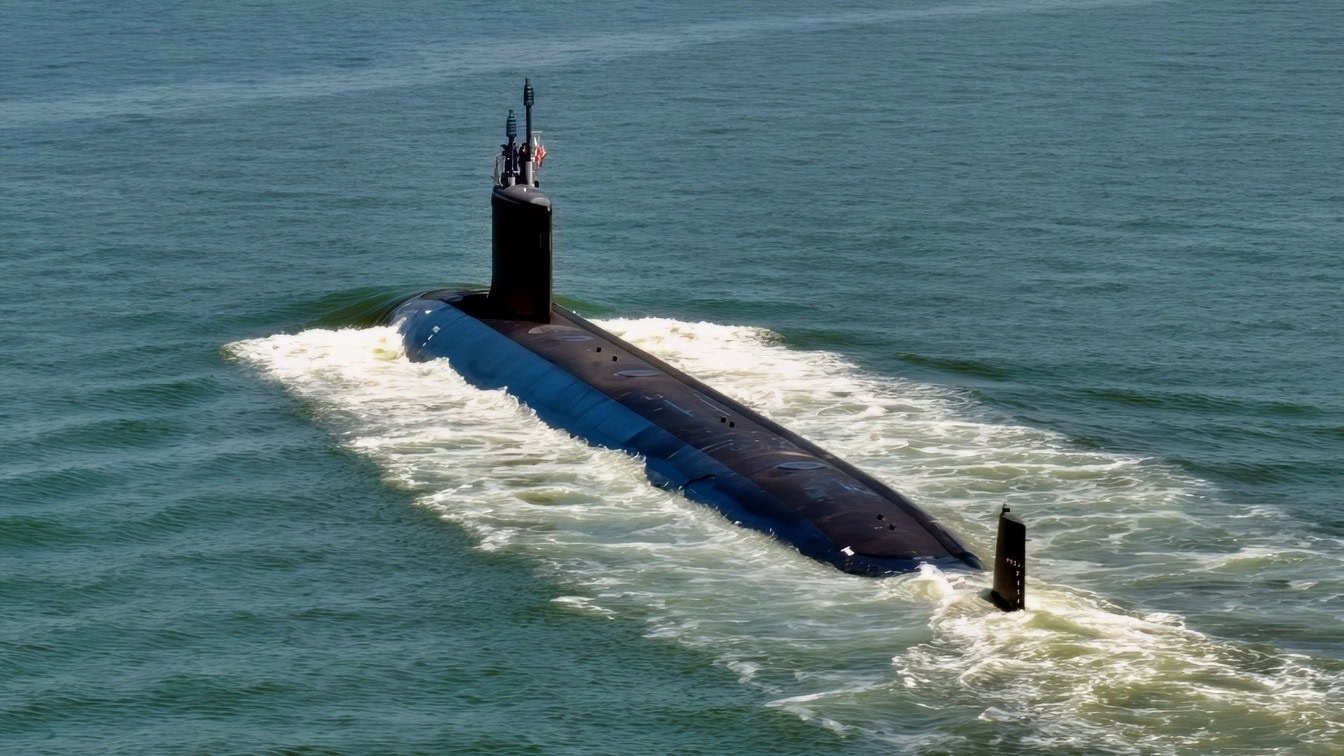
There is genuine progress underneath the politics. Australian-produced submarine-grade steel is now certified for use in U.S. Virginia-class construction, a first for the partnership, and the Australian Submarine Agency marked three years of operation with delivery timelines holding. The dry dock design for Australia's first Virginia is under contract. These are the unglamorous layers that make a submarine program survivable, and they deserve credit.
But steel is not the constraint. Boat throughput is. Australia has been promised its first used Virginia in the early 2030s, and the enduring-access declaration means American hulls will keep coming to Stirling after that. Fine. The U.S. Navy now has commitments for roughly seven boats — three sold, four rotating — on top of its own minimum force-level requirements, with a production line that still cannot reliably hit two boats a year.
The Math Still Does Not Work
Hammond's declaration was the right call politically. A fixed sunset date would have made Stirling a monument to a transition that never arrived, and Washington needed the certainty to commit the next decade of maintenance money. Canberra got what it asked for.
It just did not get more submarines. Enduring access is a promise about the base. The fleet is a promise about the yards. Until those two lines converge — until American production actually delivers the boats this arrangement presumes — Stirling will be the best-supported submarine base in the Indo-Pacific, waiting on a schedule it cannot control. That is not a failure of the declaration. It is the bill for a partnership that keeps committing hull numbers the shipyards have not yet built.
On August 4, 2023, Admiral Mark Hammond confirmed that U.S. Navy submarines will have enduring access to HMAS Stirling in Western Australia. Australia will receive three used Block IV Virginia-class submarines, while the facility is being expanded to support additional U.S. and British submarines. However, the U.S. Navy faces production challenges that may impact the availability of submarines for deployment.
- U.S. Navy submarines will have enduring access to HMAS Stirling in Western Australia.
- Australia will receive three used Block IV Virginia-class submarines instead of new builds.
- The facility at Stirling is being expanded to support additional submarines and personnel.
- The U.S. Navy's submarine production is currently below the required output due to various constraints.