
Engineer acquitted of charges in probe into fatal 2017 Marine plane crash
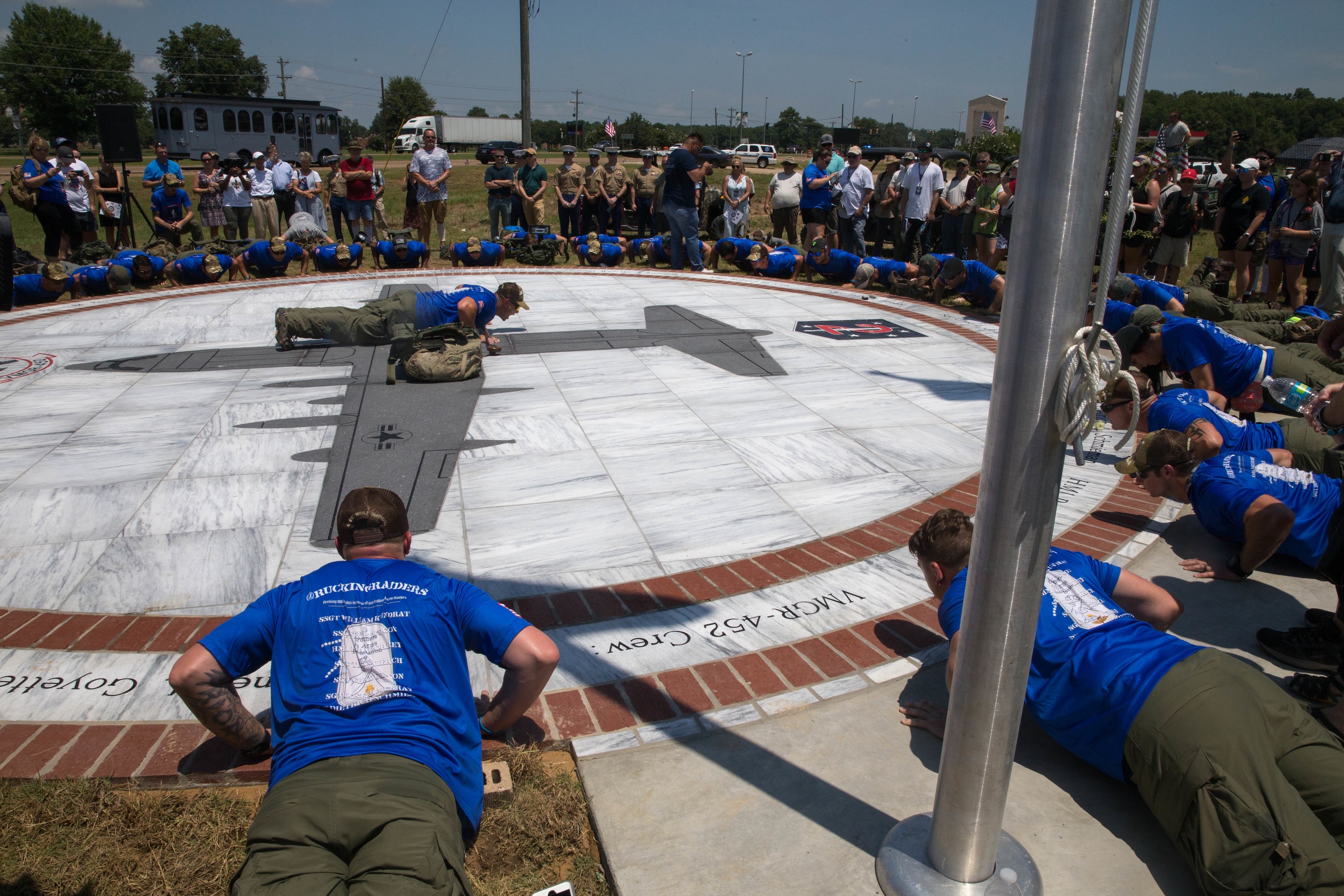
A former Air Force engineer who was charged with making false statements and obstructing justice during a criminal investigation into a 2017 military plane crash in Mississippi that killed 16 service members was acquitted Thursday.
James Michael Fisher, a former Robins Air Force base employee, was found not guilty on all charges at trial last week, according to court records. The 2017 Marine Corps Reserve plane crash killed 15 Marines and one Navy corpsman.
Fisher, a C-130 propulsion engineer at the Georgia base’s Warner Robins Logistic Center at the time of the crash, was arrested in July 2024 for allegedly knowingly concealing documents from criminal investigators and making false statements about his past engineering decisions, according to a 2024 Department of Justice statement.
Fisher was charged with two false statements and two obstruction of justice charges, and if convicted, he would have faced up to 20 years in prison, according to the department’s release.
On July 10, 2017, the KC-130 transport plane with the call sign “Yanky 72” crashed near Itta Bena, Mississippi. The investigation into the crash revealed that it was caused by a deteriorating propeller blade that was corroded when it went to an Air Force maintenance depot in 2011, but workers neglected to fix the propeller and instead sent it back unrepaired.
The Air Force maintains C-130 propeller blades for the Navy, and the service’s neglect let the corrosion turn into a crack that caused the propeller to shoot into the aircraft’s side and break the plane into three pieces, the investigation discovered, killing all on board.
The investigation, conducted by the Marine Corps, also found that the Navy did not ensure that the work conducted by the Air Force was properly completed. The report said that insufficient blades were sent to aircraft for the Navy and Marine Corps for many years.
The crash resulted in the grounding of the aging Marine Corps Forces Reserve KC-130 aircraft and the Navy’s C-130 aircraft.
DOJ claimed that Fisher “engaged in a pattern of conduct intended to avoid scrutiny for his past engineering decisions related to why the crash may have occurred.”
Fisher was the C-130 lead propulsion engineer at Robins Air Force Base from 2011 to 2022, so he was tasked with assisting federal agents during the investigation with information on the inspection procedures during 2011, when the propeller blade was sent to the depot, according to the indictment.
The indictment claimed that Fisher withheld documents that showed he removed a critical inspection procedure. The indictment claimed that in August 2011, a maintenance technician supervisor emailed Fisher requesting the penetrant requirement for C-130 propellor blade taper bores be removed, and Fisher responded approving the request.
After that date, the penetrant inspections for Air Force and Navy propeller taper bores were no longer used, per the indictment, until December 2013.
These inspections required a technician to apply fluorescent within the taper bore and let it stay for a period of time. The penetrant would then be removed and a light would be shined in the taper bore to identify any cracking.
Penetrant inspections were the most time consuming of the inspections, and the technician cited that as the reasoning for requesting its removal.
The investigation into the crash found that the propeller had cracking and corrosion in the taper bore before heading to inspection at Robins in 2011. The indictment says that the Navy and the Air Force were not told about the removal of the penetrant inspections.
“The culture at [Robins] from 2011 to 2017 resulted in gross negligence of depot level maintenance personnel and practices that are the direct causal factor for the mishap,” the investigation report states.
Steve Farese, one of Fisher’s attorney’s, said that the jury saw through the “false premise” that Fisher waived the procedure to check the blade.
“We were able to show that he did not sign that form. Someone had cut and pasted an email that he had sent to someone else and used that as their validation for removing the process,” Farese said in an interview Tuesday with 13WMAZ, a television station in Georgia.
After the verdict, Fisher told 13WMAZ that the case showed broader issues within the maintenance process at Robins and everyone collectively let the service members down.
“To have the entirety of the DOJ working against you to try to make you a scapegoat for that horrible tragedy, it was awful,” Fisher told the outlet. “And to get to the point where it was over, it was amazing.”
James Michael Fisher was acquitted of charges related to the 2017 KC-130 plane crash that killed 16 service members in Itta Bena, Mississippi. The crash was attributed to a corroded propeller blade that was not repaired by Air Force maintenance. The investigation revealed systemic negligence in maintenance practices, leading to the grounding of similar aircraft.
- James Michael Fisher was acquitted of charges related to the 2017 Marine plane crash.
- The crash killed 15 Marines and one Navy corpsman.
- The investigation revealed negligence in maintenance procedures by the Air Force.
- Fisher was accused of making false statements and obstructing justice during the investigation.
- The crash led to the grounding of KC-130 and C-130 aircraft.