
EU and Ukraine 2026 — Why Europe's Reform Conditions Turn Aid into a Veto Instrument
 Dr. Klaus Weber
EU and Ukraine 2026 — Why Europe's Reform Conditions Are Turning Aid into a Veto Instrument
Berlin, September 23, 2026. The European Union is linking additional financial aid for Ukraine to accelerated economic reforms. This is not a technical footnote of Brussels bureaucracy. It is the most visible indication that Europe's support for Kyiv is entering a new phase: Member states want to continue financing the war, but they also want to tighten political control over the conditions, timeline, and domestic use of the funds in Ukraine.
The new condition is more political than it sounds
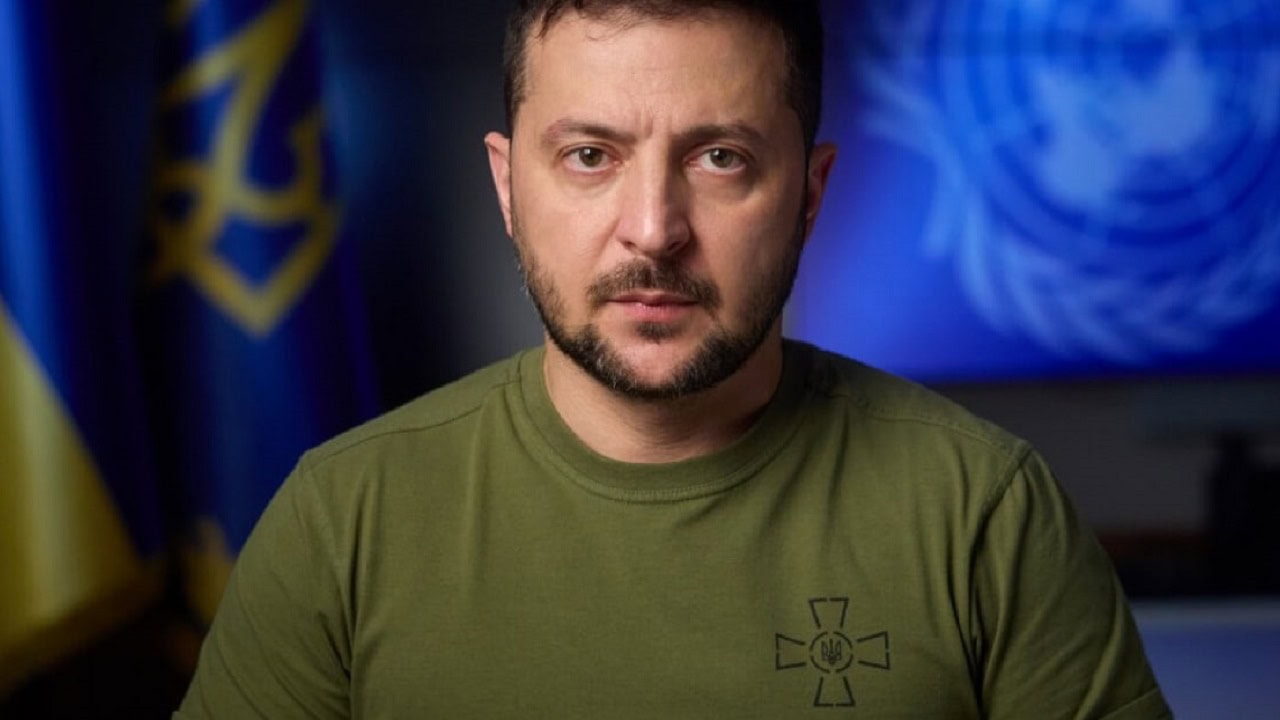
According to reports from Bloomberg, which were picked up by Ukrinform on September 23, EU representatives are urging the Ukrainian leadership to implement faster reforms before further aid is released. The focus is primarily on economic and institutional changes. At the same time, a meeting between Volodymyr Zelenskyy and Ursula von der Leyen in New York reportedly remained tense. The message from Brussels is therefore not: "We are withdrawing." It is: "We will continue to pay, but not without conditions."
This shift is significant because European policy towards Ukraine has so far mixed two objectives. It had to secure liquidity and military supplies in the short term while aiming to transform the Ukrainian state for a possible EU accession in the long term. In wartime, the priority was clear: money and ammunition had to arrive quickly. Now the EU is trying to squeeze accession logic and war financing into a single control system. This creates order on paper but friction in reality.
More control does not automatically mean more combat power
The crucial difference lies between budgetary aid, military support, and industrial capacity. The Ukraine Support Tracker from the Kiel Institute has long shown that European commitments do not equate to immediate deliveries. The European credit framework of 90 billion euros, which Weber has already analyzed, does not automatically solve this problem. A loan can keep the state solvent, but it does not produce a Patriot missile or a 155-millimeter shell.
Reform conditions can limit corruption, improve procurement processes, and increase the trust of European finance ministers. This is necessary. However, each additional checkpoint simultaneously extends the gap between political decision-making and military effect. For a ministry in Brussels, a delayed payout is a governance issue. For a Ukrainian brigade, the same delay can mean that spare parts, drones, or air defense arrive too late.
This is where the institutional dilemma lies. The EU wants to prove that it has learned from the mistakes of previous aid programs. However, Ukraine needs not only better control mechanisms in the fall of 2026 but also reliable monthly inflows. Whoever makes each tranche a political lever gains influence but risks operational unpredictability.
The member states do not pursue a unified strategy
Behind the term "Europe" stand at least three different interests. Germany and the Nordic countries want to make support more predictable and legally secure because their taxpayers must stand behind long-term commitments. France is pushing more for European industrial policy and a larger role for European companies. Countries on the eastern flank assess every delay primarily based on whether Russia can gain a military advantage from it.
These interests cannot be harmonized through another summit decision. The EU can demand reform progress, but it must define which conditions are immediately security-relevant and which belong in a later accession agenda. Independent procurement control is urgent in wartime. A comprehensive administrative reform may be strategically correct but must not become a prerequisite for a urgently needed air defense delivery.
The alternative would be a two-tier process. Military and humanitarian payments would be tied to narrowly defined, verifiable immediate criteria. Long-term budget aid and investments in reconstruction would receive stricter reform milestones. This would be less elegant than a unified conditionality mechanism but strategically smarter. Institutional elegance has yet to intercept a missile.
The underestimated conflict with Kyiv
For the Ukrainian leadership, the new line is politically sensitive. Zelenskyy must demand European support without giving the impression that his government is merely implementing the conditions from Brussels. At the same time, Ukraine relies on European loans, weapons, and political backing. Any public dispute over reforms can be portrayed in Moscow as evidence of Western fatigue.
Brussels also underestimates the domestic political dimension. Reforms during an ongoing war redistribute scarce resources, change power centers, and create winners and losers. A procurement law may look reasonable at the European level but be understood in Kyiv as an attack on a specific coalition. Therefore, the EU must not only control but also take political responsibility for the consequences of its conditions.
What the new phase means for Europe's security
Conditionality is a sign of European maturity, provided it improves the quality of aid. It becomes a sign of European weakness if it primarily serves to secure national finance ministries. The EU has learned in recent years to mobilize large sums. It has not yet proven that it can translate these sums into uniform military effect.
The strategic metric for the coming months is therefore not the size of the next package. What matters is the pace of disbursement, delivery capability, and additional European production capacity. If reform conditions increase transparency while ensuring predictability, they strengthen Ukraine. If they only delay the release of further funds, they turn solidarity into a veto instrument.
Europe faces an uncomfortable contradiction: It wants to help Ukraine like an ally but increasingly controls the aid like a lender. Both are legitimate. Doing both simultaneously without clear priorities is strategically reckless.
Sources
- Bloomberg report, quoted by Ukrinform, September 23, 2026
- European Commission, EU support for Ukraine
- Kiel Institute, Ukraine Support Tracker
The European Union is linking additional financial aid to Ukraine with accelerated economic reforms as of September 23, 2026. This shift indicates a move towards conditional support, with EU representatives urging faster reforms from Ukrainian leadership. The EU aims to maintain financial assistance while increasing political control over the aid's conditions and usage, reflecting a complex relationship amid ongoing military needs.
- The EU is conditioning financial aid to Ukraine on the implementation of economic reforms.
- EU representatives are pressuring Ukrainian leadership for faster reforms before releasing further aid.
- The relationship between the EU and Ukraine is shifting towards more political control over aid conditions.
- There is a tension between immediate military needs and long-term reform requirements.