
Germany Wants PAC-3 Missiles as NATO Air Defense Shortage Deepens
 Alexandra Reeves
Germany Wants PAC-3 Missiles as NATO Air Defense Shortage Deepens
Europe has discovered that buying an air-defense system is easier than keeping it loaded. Germany now wants to manufacture Lockheed Martin’s PAC-3 MSE interceptors at home, a proposal that sounds industrial but is really about alliance power: who controls the missiles, the production lines, and the permission to use them when the next crisis arrives.
The shortage is the story
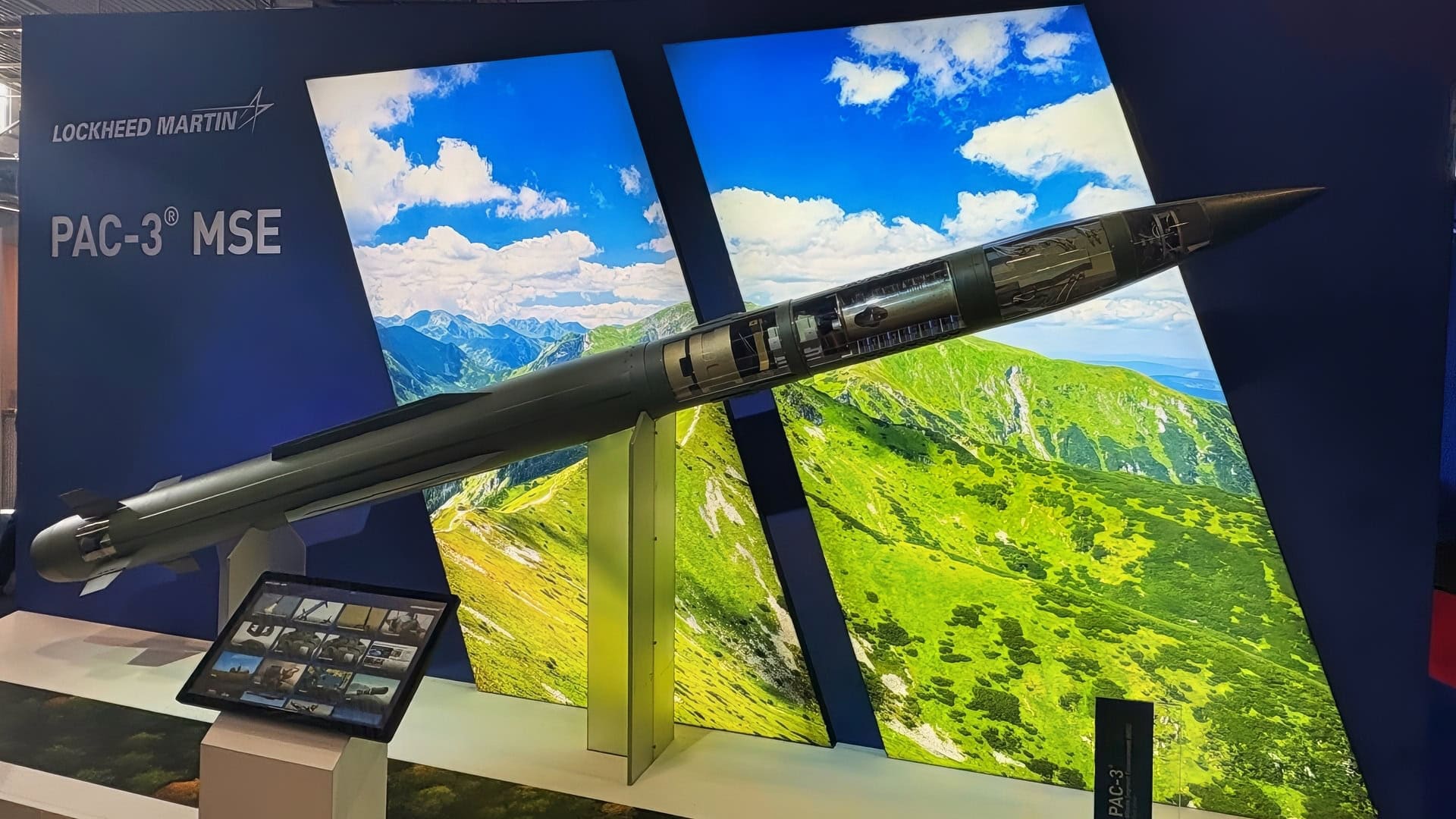
German Defence Minister Boris Pistorius said on September 23 that Berlin wants the United States to allow production of PAC-3 MSE missiles in Germany. His comments followed a September 16 agreement with U.S. Defence Secretary Pete Hegseth to expand licensed production and maintenance of American weapons on German soil. Germany already produces the older PAC-2 family through MBDA; production of the PAC-2 GEM-T is expected to begin at Schrobenhausen later this year, according to Defense News.
That distinction matters. PAC-2 is a blast-fragmentation interceptor. PAC-3 MSE is the more modern hit-to-kill missile designed to destroy ballistic missile warheads through direct collision. Its detailed performance is deliberately classified, as Defense News reported, because revealing the envelope would help an adversary design around it. The public can still see the strategic fact: PAC-3 MSE is among the most valuable and constrained air-defense munitions in the Western arsenal.
Ukraine has consumed the political attention, but the industrial problem is wider. European governments have transferred Patriot batteries and interceptors to Kyiv to defend cities against Russian missiles and drones. They are now trying to rebuild national stocks while also meeting new plans for protecting air bases, ports, energy infrastructure and troop concentrations. A missile that takes years to replace is not a comfortable symbol of solidarity. It is a liability if the alliance has to fight a high-volume campaign.
Germany is offering capacity, not autonomy
Berlin’s pitch is straightforward: use German factories, German engineers and German money to add another production node to a supply chain dominated by U.S. design authority and American companies. MBDA Germany already makes Patriot interceptors, while Lockheed Martin produces PAC-3 MSE and has an established industrial relationship with Rheinmetall. On paper, the arrangement looks like the sensible answer to a bottleneck.
But a German assembly line would not make the missile European in the political sense. Washington and Lockheed Martin would still determine what work can move abroad, which components can be made locally, and how technical data is released. The Pentagon’s export rules would remain part of Germany’s air-defense posture. That is a very useful partnership. It is not strategic independence.
This is where Europe’s argument about autonomy runs into the physics of time. France has pushed European funding toward European-designed systems such as the French-Italian SAMP/T rather than licensed American weapons. That is a coherent long-term position. It is also a poor answer to an air-defense shortage that exists now. SAMP/T can contribute to Europe’s layered defence, but it cannot instantly replace Patriot inventories, American logistics or the combat experience accumulated around the Patriot network.
The Ukraine lesson is brutally practical
Russia’s missile and drone campaign has made air defence a rationing problem. Commanders do not merely ask whether a system can intercept a target. They ask whether the target is valuable enough to justify spending an interceptor that may not be replaced for months. That changes the meaning of deterrence. A battery can be technically excellent and still fail politically if its magazines are empty.
PAC-3 MSE is not a magic shield. It is expensive, finite and dependent on radar coverage, command networks, reloads and trained crews. It is intended for the hardest part of the air-defense problem, not for wasting on every cheap drone. Europe therefore needs a layered architecture: electronic warfare and guns for low-end threats, cheaper surface-to-air missiles for cruise missiles and drones, and scarce PAC-3 rounds for ballistic missiles and the most dangerous aircraft or missile targets.
Manufacturing more PAC-3 MSE in Germany would help that architecture only if it increases the total number of usable interceptors rather than simply moving a final assembly step across the Atlantic. The relevant metric is not the number of factories announced at a press conference. It is the number of missiles delivered, tested, stored, transported and available to a commander in a crisis.
The alliance politics are unavoidable
Pistorius framed Russia as the central long-term threat to Euro-Atlantic security. That is the easy part. The harder question is what kind of dependence NATO members are prepared to accept while they rebuild their arsenals.
Germany is simultaneously buying American F-35s, seeking American deep-strike weapons and asking to manufacture American interceptors. That may frustrate European autonomy advocates, but it also reflects Berlin’s calculation that the United States still owns the fastest route to credible capability. Europe can complain about dependence, or it can fund the industrial base needed to replace it. So far it has mostly done the former while ordering the latter from Washington.
The United States also has an incentive to say yes. A German production hub could spread cost, reduce pressure on American plants and bind Europe more tightly to U.S. systems. Yet Washington will not surrender the most sensitive parts of the Patriot business simply because allies have discovered the queue. The final deal will reveal whether the alliance is sharing production or merely sharing vulnerability.
What to watch next
Three tests will show whether this is a real shift. First, Germany and the United States must identify a concrete PAC-3 MSE workshare, not just express political support. Second, Lockheed Martin must commit to a timeline and a supply chain that can produce complete, certified rounds. Third, European governments must fund the lower layers of air defence so that PAC-3 missiles are not used as extraordinarily expensive answers to ordinary drones.
Germany’s proposal is therefore good news, but it is not the solution Berlin would like it to be. It exposes NATO’s real vulnerability: the alliance has learned to integrate air-defense batteries faster than it can manufacture the ammunition that gives them meaning. The next war will test factories as much as radars. If Europe wants an air shield it can control, it will eventually have to build one. Until then, NATO’s most advanced interceptor remains European only after Washington says it is.
Sources
Germany seeks to manufacture PAC-3 MSE interceptors to address NATO's air defense shortages, following discussions with U.S. officials in September 2026. This initiative aims to enhance production capabilities while maintaining reliance on U.S. technology and oversight. The move reflects the urgent need for effective air defense systems amid ongoing threats, particularly from Russia.
- Germany wants to manufacture PAC-3 MSE interceptors domestically.
- The U.S. has agreed to expand licensed production of American weapons in Germany.
- PAC-3 MSE is a modern missile designed for high-value targets.
- Germany is currently producing older PAC-2 interceptors.
- The air defense shortage is a pressing issue for NATO.