
EU approves 3.3 billion euros for Patriot and drones — Europe's air defense remains dependent
 Dr. Klaus Weber
EU approves 3.3 billion euros for Patriot and drones — Europe's air defense remains dependent
On September 18, the European Commission disbursed an additional 3.3 billion euros from the 90 billion euro Ukraine Support Loan for Ukrainian drones and missiles. At the same time, on September 11, it approved a package of 6.1 billion euros for air and missile defense, including PAC-3 missiles for Patriot. The figures are substantial. However, the strategic question is not whether Europe can mobilize money, but whether it can turn that into a robust air defense architecture in a timely manner.
The cost logic of the Russian drone war
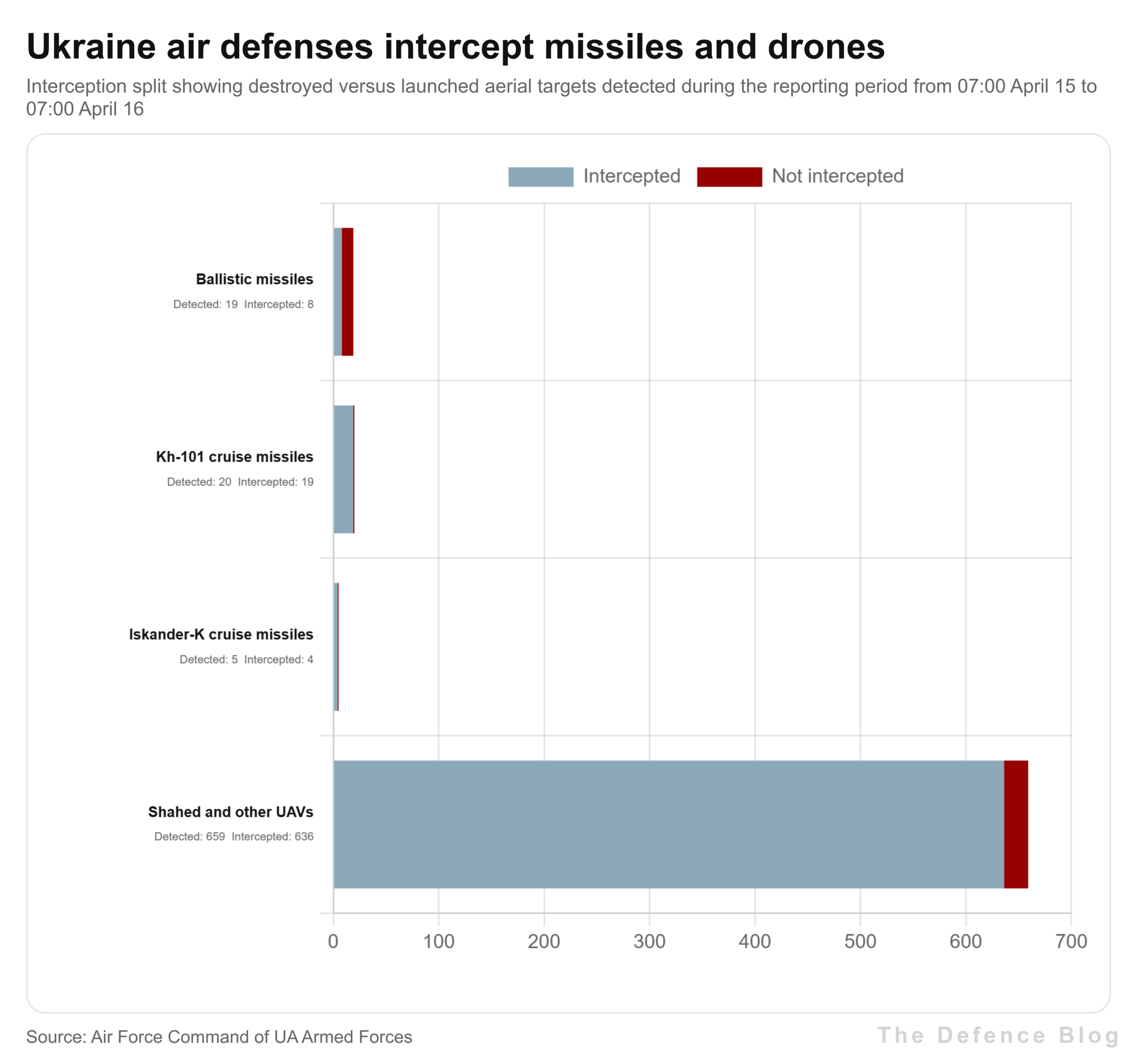
The recent attacks illustrate why this question is urgent. According to the Ukrainian Air Force, Russia deployed 172 drones on the night of September 20 to 21, including 64 jet-powered variants. 147 drones and another unmanned aerial vehicle were destroyed or suppressed, but impacts were reported at 14 locations. Faster Shahed variants shorten the response time and shift the burden on radar and fire control across the entire munitions chain.
The problem is of an economic nature. A PAC-3 MSE missile is essential for ballistic missiles and other high-value targets, but it is not a reasonable standard means against a large number of relatively cheap drones. Every expensive interceptor missile used against a low-value target may be missing later against a ballistic missile. Therefore, air defense is not just a matter of hit rate, but of cost per intercepted effect.
33 billion euros are not yet a capability
The Commission describes the disbursement as the fourth payment from the defense window of the Ukraine Support Loan. Of the total 90 billion euros, 60 billion are earmarked for defense and 30 billion for budgetary assistance in 2026 and 2027. For 2026, up to 28.3 billion euros have been planned to strengthen the Ukrainian defense industry. This is a remarkable institutional step: the EU is not only financing finished systems but is also trying to integrate the Ukrainian industrial base into the European defense technological and industrial base.
However, political accounting must not replace industrial reality. The Commission itself mentions decommissioning from stocks, reallocating existing orders, and accelerated production as necessary measures. This is a polite euphemism for a structural deficit. Europe's stockpiles are limited, its production lines are only just being expanded, and Ukrainian demand is oriented towards days and weeks, not multi-year procurement cycles. Allocations are not deliveries; loans are not interceptor missiles.
FREYJA and the European promise
The Commission also announces a joint EU-Ukraine program for a European air and missile defense system, which is to build on the anti-ballistic FREYJA project. The logic is compelling. Ukraine has real combat experience against drones, decoys, and missiles; Europe has capital, sensors, industrial competencies, and a single market. Together, this could lead to systems that not only complement Patriot but also provide a European response to the mass of low and medium threats.
But this is precisely where the institutional test begins. A new European system needs uniform requirements, a clear leading nation, secured development budgets, and a production responsibility that does not break at the first distribution of industrial work. FCAS has shown how quickly a strategically necessary project can fail due to leadership and control issues. A FREYJA program that merely produces further studies and national sub-projects would not be autonomy, but rather its bureaucratic simulation.
The NATO connection remains American
NATO Secretary General Mark Rutte stated on September 8 that allies had provided more than 10 billion US dollars to Ukraine through PURL and American Foreign Military Sales over the past year, including 3.5 billion dollars from the EU-Ukraine Support Loan. This is practical transatlantic cooperation: European money is buying American capabilities in the short term. For Ukrainian air defense, this currently makes sense, as Patriot is available more immediately than a European equivalent.
Strategically, however, the contradiction remains. The European Court of Auditors warned in September that the EU could miss its goal of defense readiness by 2030 due to fragmented systems, industrial bottlenecks, and dependence on the United States. Between 2020 and 2025, defense spending by EU member states increased by 79 percent; yet, between February 2022 and June 2023, about 78 percent of their defense procurements came from abroad, with 63 percent alone from the USA. More money has thus initially increased dependence, as only Washington could deliver the urgently needed systems.
The real judgment
The 3.3 billion euros are politically important and militarily necessary. They prove that the EU can respond financially to acute threats. They do not yet prove that Europe has the capability to sustain this response itself. For that, the Union would need to master three time horizons simultaneously: procure Patriot and other high-performance systems immediately, scale cheap interceptors for the mass of drones within months, and build its own industrial architecture with FREYJA over the years.
This is the core of the European dilemma. Those who only buy European today risk protecting Ukraine too late. Those who permanently buy American shift the strategic dependence into the future. Therefore, Europe's air defense will not be measured by the size of the next financial package, but by whether European money finally leads to European production and decision-making power.
Sources
- European Commission — Disbursement of 3.3 billion euros, September 18, 2026
- NATO — Support for Ukraine and PURL, September 8, 2026
- The Guardian — Report of the European Court of Auditors on EU defense readiness, September 3, 2026
- Army Recognition — Russian drone attacks and cost logic of Ukrainian air defense, September 21, 2026
On September 20-21, 2023, Russia launched an attack using 172 drones against Ukraine, with the Ukrainian Air Force reporting the destruction of 147 drones and one additional unmanned vehicle. The EU approved 3.3 billion euros for Ukrainian defense, including drones and PAC-3 missiles, while emphasizing the need for a robust air defense architecture. Concerns remain about Europe's dependency on U.S. military systems for immediate defense needs.
- EU approved 3.3 billion euros for Ukrainian drones and missiles.
- Russia deployed 172 drones in an attack on Ukraine.
- 147 drones and one unmanned vehicle were destroyed during the attack.
- The EU aims to strengthen Ukraine's defense industry with 28.3 billion euros planned for 2026.
- The EU's defense readiness by 2030 is at risk due to reliance on U.S. systems.